By Clemson plant pathologist Tony Keinath.
The unusually cool weather in South Carolina the past two weeks and the rain from the tropical storm system over the Memorial Day weekend create favorable environmental conditions for late blight to develop on tomatoes that have not been sprayed with a fungicide in the past week. However, I’ve checked fields in Charleston and Beaufort counties this week and saw no symptoms of late blight. This blog is simply a caution.
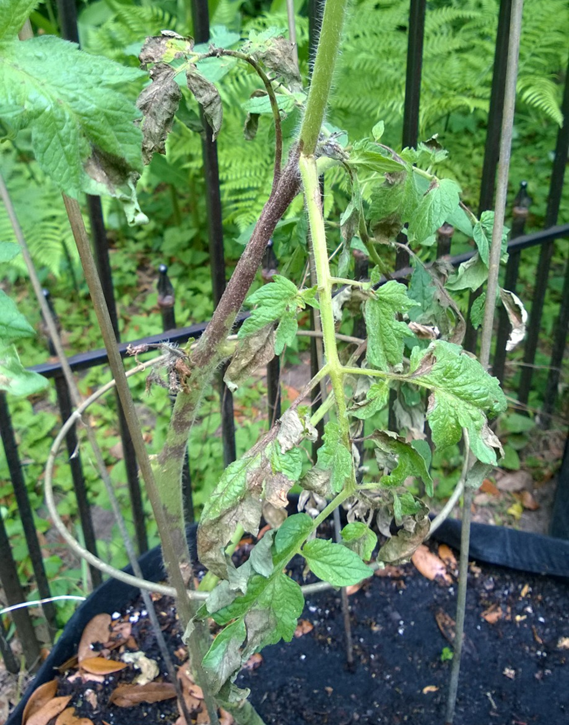
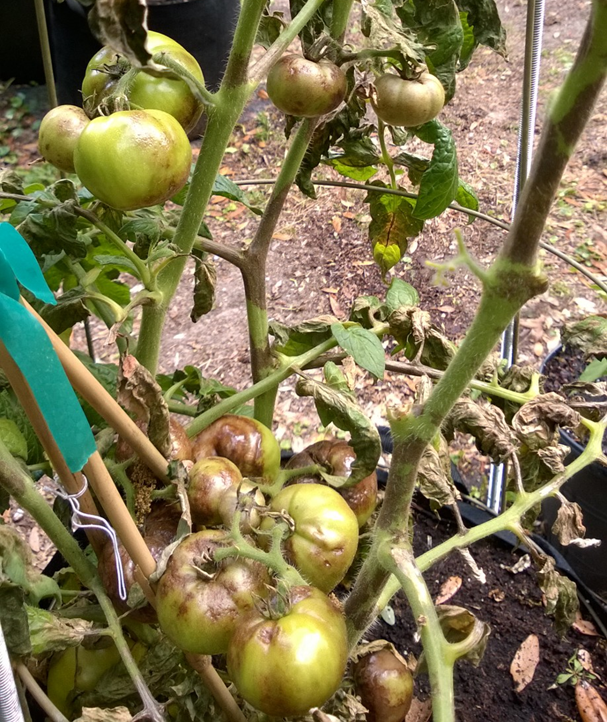
Over the past 30 years, every time I have found late blight on tomato in Charleston County has been after 3 days of temperatures in the low to mid 70s. Chlorothalonil is an excellent protectant against late blight. If late blight develops in tomato, use a rotation of two products listed in the tomato late blight section of the 2023 Southeastern Vegetable Crop Handbook on p. 300-301. Organic growers should use an organic-approved formulation of a copper fungicide.
 The South Carolina Grower