From Extension Vegetable Entomologist Tom Bilbo
Last week, we covered identification and management strategies for the squash vine borer, the first of three common cucurbit caterpillar pests. This week, we will discuss the other two.
Melonworm (Diaphania hyalinata) and Pickleworm (D. nitidalis)
These closely related insects are tropical species that are only known to overwinter in areas farther south of central Florida. This means that they must fly northward and reinvade South Carolina every summer. Currently, the only reliable way to determine when either of these pests has invaded SC for the season is to scout for infestations in cucurbits.
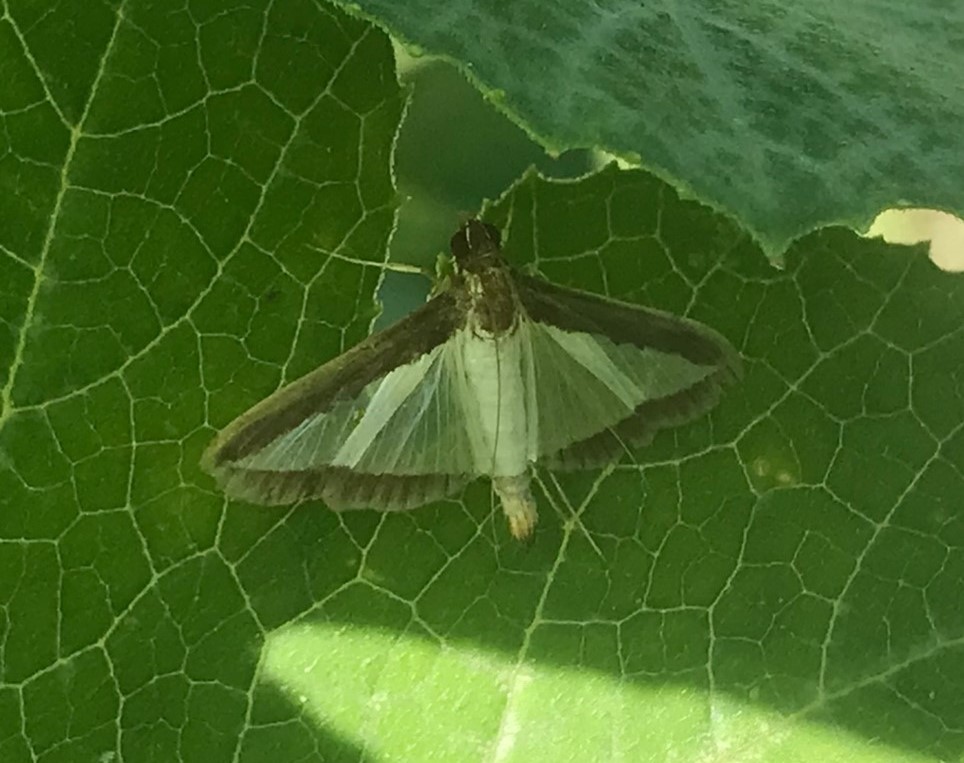
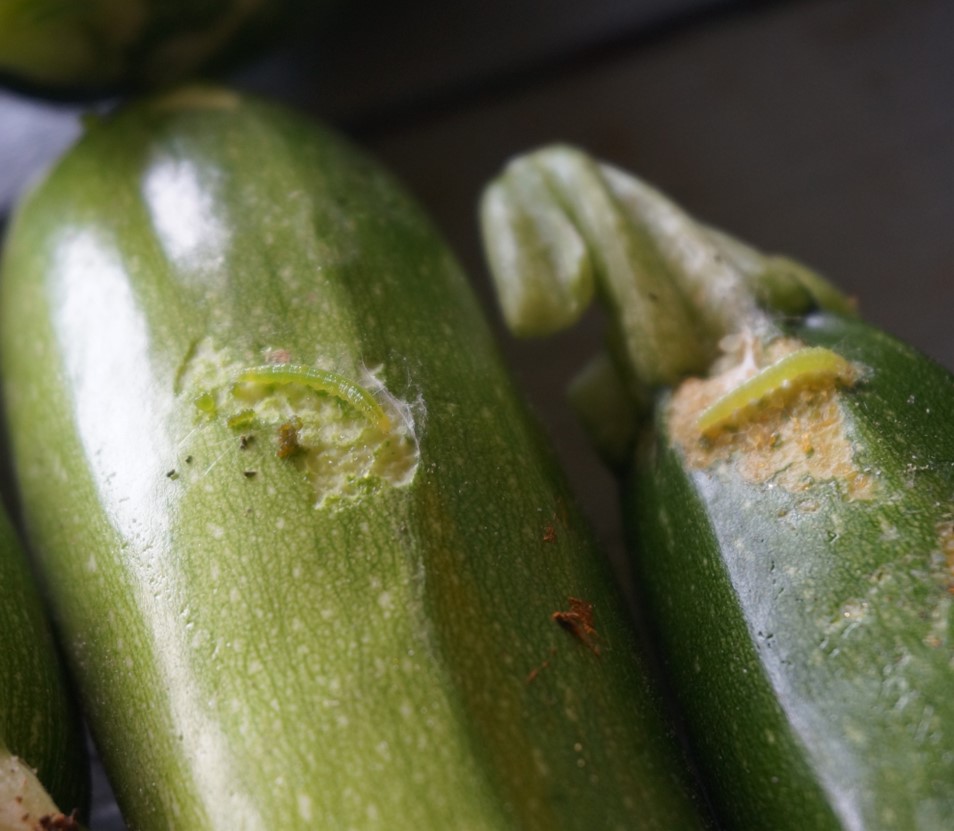
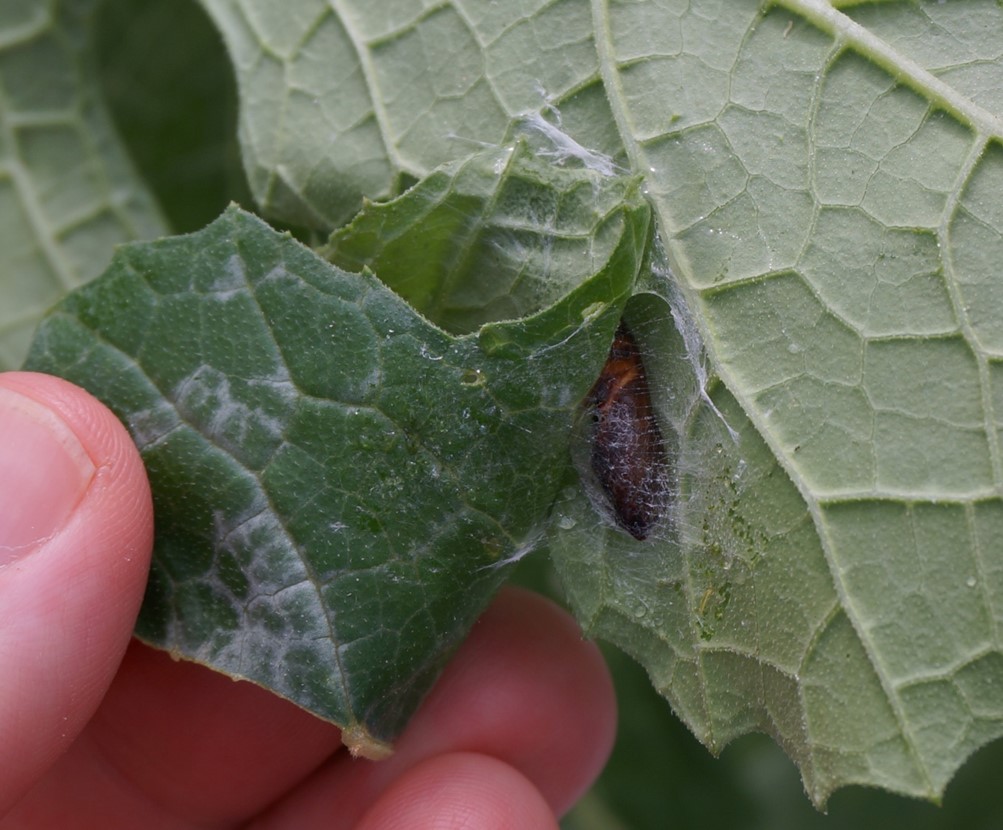
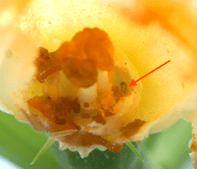
Pickleworm larvae are pale-colored with dark spots along the body. Melonworm larvae are usually greenish with two white stripes down its back. However, when both larvae are fully mature and about to pupate they lose their spots or stripes and can be difficult to distinguish from each other. Pickleworm always feed within flowers or fruit, and the best early detection of this pest is to tear open male flower buds. Melonworm are traditionally reported to be foliage feeders where they can be found as larvae feeding on leaves or pupating in leaf folds. However, research in SC and VA commonly finds melonworm feeding on fruit rind or tunneling into fruit similar to pickleworm.
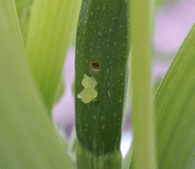
Management
Management of pickleworm and melonworm is similar to that of SVB (with the exception of crop rotation and tillage, since they do not overwinter in SC). Predation and parasitism are limited so the most reliable way to suppress these pests currently is by spraying insecticides. The same insecticides effective for SVB are effective for pickleworm and melonworm but the insecticide needs to be present on the plant when the eggs hatch so that the larvae are exposed and killed before they tunnel into flowers and fruit. Active scouting of flower buds and foliage for larvae is the best way to decide when to initiate insecticide sprays, and all growers need to be on the lookout for these pests starting in July (usually). Trap cropping has potential as a management strategy (e.g. using squash to lure these pests away from cucumbers) but more research is needed.
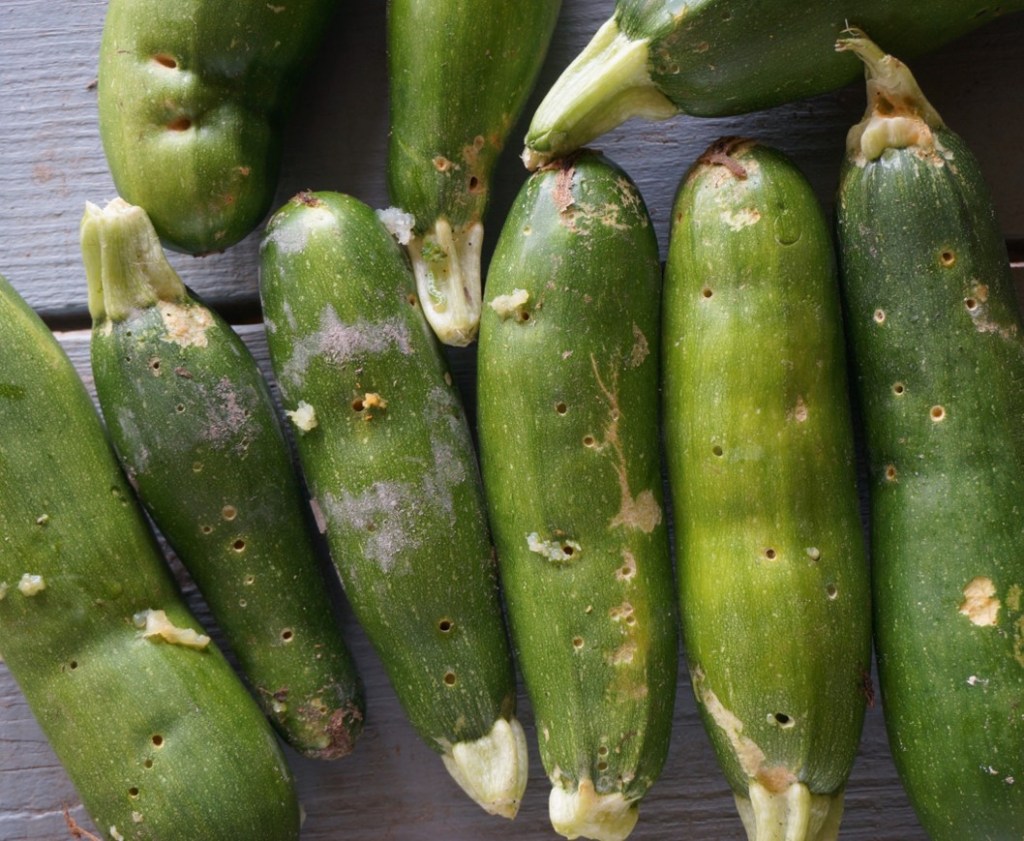
Future research in my lab at Clemson will continue to evaluate moth traps and moth pheromones to be used as early-detection monitoring tools, and perhaps one day a monitoring network can also be established for this pest to alert growers when they first invade different regions of SC.
 The South Carolina Grower
5 responses to “The Pesky Caterpillar Pests of Cucurbit Crops: Part 2”
[…] This week’s question is a review from a post Tom Bilbo wrote recently about pickleworms. Pickleworms feed on the blooms and tunnel into the developing fruit of cucurbit crops, such as cucumbers, squash, zucchini, and cantaloupe. They feed and develop within the fruit, creating extensive cavities by the time they exit to pupate in folded leaf tissue. Needless to say, once pickleworms bore into the fruit, it is unmarketable. For management tips, look back at Dr. Bilbo’s recent post. […]
LikeLike
[…] Pickleworms also feed within flowers, so unless we catch them in the act, it can be difficult to determine which worm was the culprit. Even then, distinguishing them can be a challenge as pickleworms lose their spots as they near pupation. Luckily, management strategies for both species are similar. Refer back to this recent post for some of those strategies. […]
LikeLike
[…] Pickleworms have arrived in Charleston already. Keep a look out to protect your cucurbits, especially your cucumbers and summer squash, which they prefer, but they can also be damaging in melons, pumpkins, and others. Pest pressure from this pest complex will only increase from here until the first frost, and it only takes one worm to ruin a fruit. Scout male flower buds to determine when they have arrived on your farm. When pest pressure is low you can use selective Bt sprays, but later in the season you will want a product with longer residual, such as Coragen, Exirel, or Radiant/Entrust. If whiteflies are a common issue on your farm later in the summer then Exirel or Coragen will also be effective against that pest. Refer back to this post for more info on pickleworms. […]
LikeLike
[…] Melonworms and pickleworms can cause a lot of damage quickly if fields are left untreated. The best approach currently is […]
LikeLike
[…] For more info on managing pickleworm, see this post from Entomologist Tom Bilbo. […]
LikeLike