From Clemson Plant Pathologist Tony Keinath and Food Crops Agent Zack Snipes
“Stem and root rot” is the term used to describe a disease on recently transplanted vegetable crops, like tomato, pepper, watermelon, cantaloupe, and cucumber. Tomato transplants with stem rot were observed last week along the coast of South Carolina.
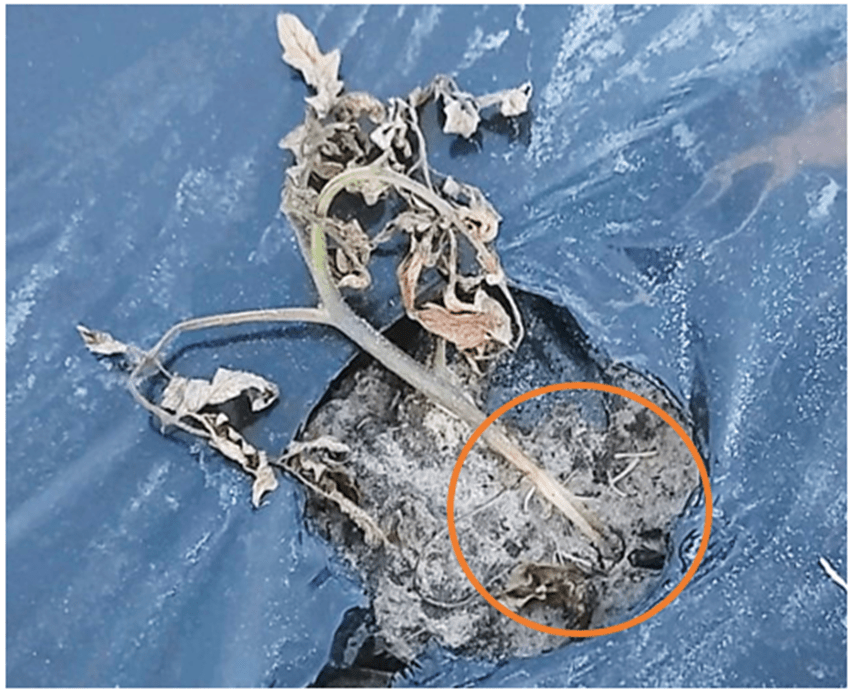
A proper diagnosis of this problem would include culturing pieces of the diseased stem in the lab to figure out which soilborne pathogen infected the tomatoes. Based on circumstantial evidence (without culturing), the mostly likely cause is the water mold Pythium for the following reasons.
- Tomato is more susceptible to Pythium than Rhizoctonia or Fusarium, so Pythium is the most likely pathogen based on the host.
- Yemassee, SC, received over 6 inches of rain so far in March 2024, three times the 30-year normal amount.
- Excess soil moisture enhances the activity of Pythium. In saturated soil, tomato root exudates spread to nearby Pythium oospores, the long-term survival structures. These root chemicals trigger oospores to germinate and produce swimming spores (called zoospores).
- Saturated soils allow the swimming spores to spread and infect the lower stem or roots of susceptible crops.
- Tomato growers along the coast of South Carolina typically do not rotate tomatoes at all or crop them too frequently in the same fields. These short crop rotations allow Pythium to build up in soil. A common rotation of spring tomato and fall watermelon is particularly risky for buildup of Pythium, as the same species attack both crops.
This wet spring, conventional growers who have not yet transplanted tomatoes and other susceptible vegetables may want to consider applying Ridomil Gold through the drip irrigation the day after transplanting to help prevent Pythium stem rot and post-transplanting stand loss.
 The South Carolina Grower