From Clemson Plant Pathologist Tony Keinath
As part of a new grant on cucurbit anthracnose with the University of Georgia, we sampled 68 pumpkins, gourds, and winter squash from “cull piles” at 7 pumpkin patches and small farms in South Carolina in October, November, and December 2023. Two-thirds of the 10 types of cucurbits sampled were jack-o-lantern pumpkins (including new warty types), along with 4 types of gourds, 4 types of winter squashes, and a few giant pumpkins. Fruit were produced in South Carolina (36 fruit) and other states (North Carolina, Virginia, and New Mexico).
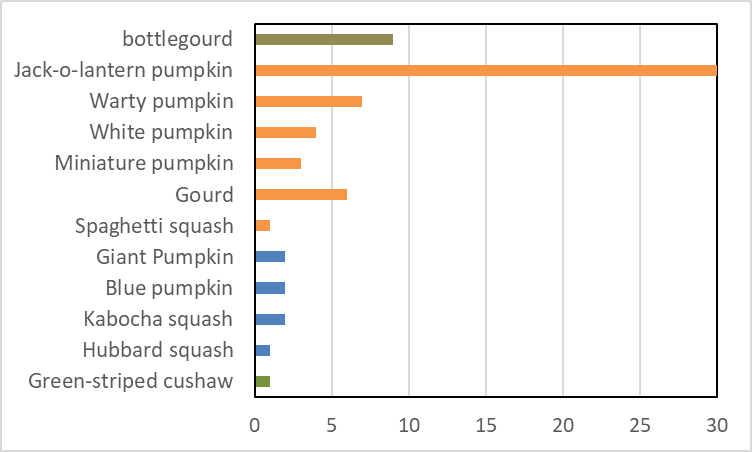
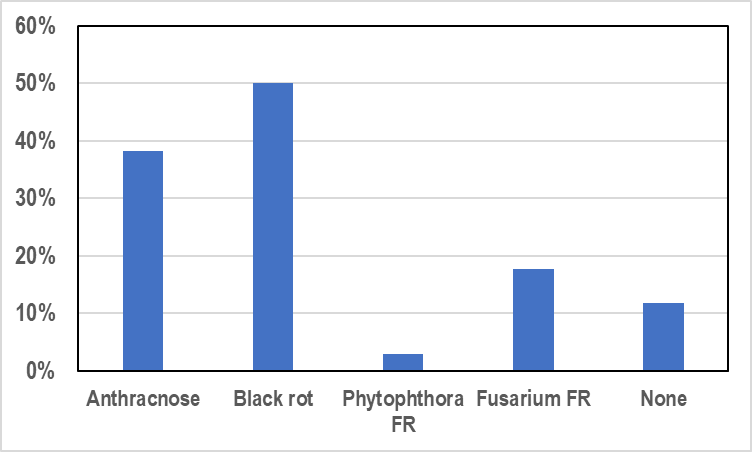
The symptoms on the fruit were quite variable, from small, dry, white flecks to large, soft, black spots. It was not possible to reliably classify the fruit rots based on symptoms, so we cultured fungi (and a water mold) out of the fruit in the lab. The graphs are based on recovery of pathogens from 60 fruit; 8 fruit had no pathogens.

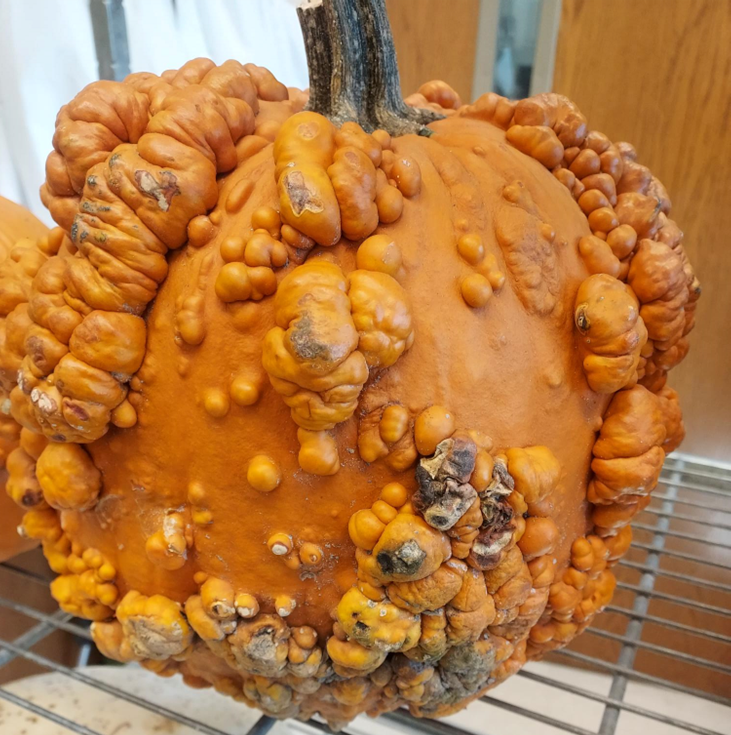
Two major and two minor fruit rots (FR) were found, pretty much as expected. Black rot (the fruit rot phase of gummy stem blight) and anthracnose were the most common fruit rots, while Fusarium fruit rot and Phytophthora fruit rot were less common. Note that anthracnose on fruit is not the same anthracnose that occurs on leaves of watermelon and cucumber. Colletotrichum magna, the fungus that causes fruit rot on pumpkins, gourds, and squash, does not infect leaves.
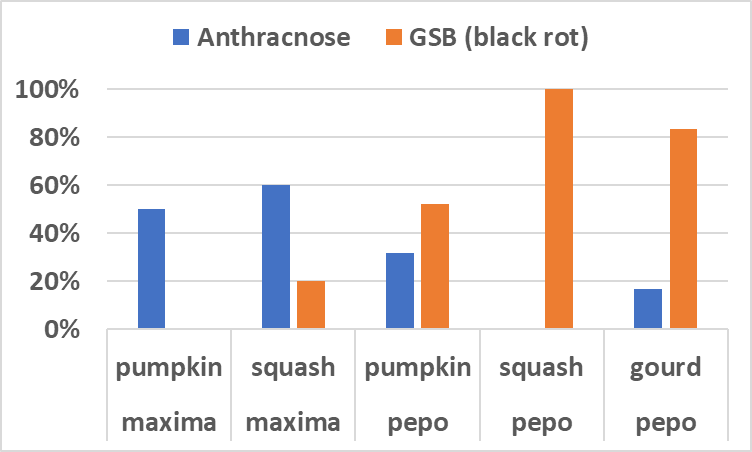
Growers of susceptible Cucurbita pepo crops, which include jack-o-lantern pumpkins, mini-pumpkins, miniature gourds, and spaghetti squash, should consider protecting fruit from black rot with fungicides recommended for gummy stem blight: one application at flowering and another when small (about 4-6 inch-long) fruit are set. Acorn squash, also in Cucurbita pepo, is not considered to be susceptible to black rot, although none was sampled in 2023.
For susceptible fruit that will be stored after harvest, such as jack-o-lantern pumpkins and gourds, dipping in a dilute solution of sodium hypochlorite may prevent fruit rot, if the fruit is not already infected, which is difficult to know. You must use sodium hypochlorite labeled for agricultural uses, not household chlorine bleach. See Table 3-49 in the 2024 Southeastern U.S. Vegetable Crop Handbook for sample products and amounts to use.
There are no organic biopesticides that work against the two main fungal diseases I found on pumpkins, squash, and gourds in fall 2023, anthracnose fruit rot and black rot.
- Crop rotation is the main organic management technique. Do not plant one cucurbit (vine crop) after any other cucurbits, especially watermelon, cucumbers, or melons. Leave 2 full calendar years between plantings of cucurbits in any section of the farm.
- Remove all diseased fruit from the field and destroy it; burn or bury, do not compost.
- Keep notes on the number of rotted fruit you see, and if the number is too high (I’d use 10% as a threshold), try a different cultivar next time.
 The South Carolina Grower
3 responses to “Fruit Rots on Pumpkins, Gourds, and Winter Squashes”
[…] fall crops of pumpkin and winter squash progress, see this recent post for management strategies on fruit […]
LikeLike
[…] Keinath, A. 2024. Fruit Rots on Pumpkins, Gourds, and Winter Squashes. SC Grower blog. https://scgrower.com/2024/07/31/fruit-rots-on-pumpkins-gourds-and-winter-squashes/ […]
LikeLike
[…] Keinath, A. 2024. Fruit Rots on Pumpkins, Gourds, and Winter Squashes. SC Grower blog. https://scgrower.com/2024/07/31/fruit-rots-on-pumpkins-gourds-and-winter-squashes/ […]
LikeLike