By Clemson Plant Pathologist Dr. Anthony Keinath
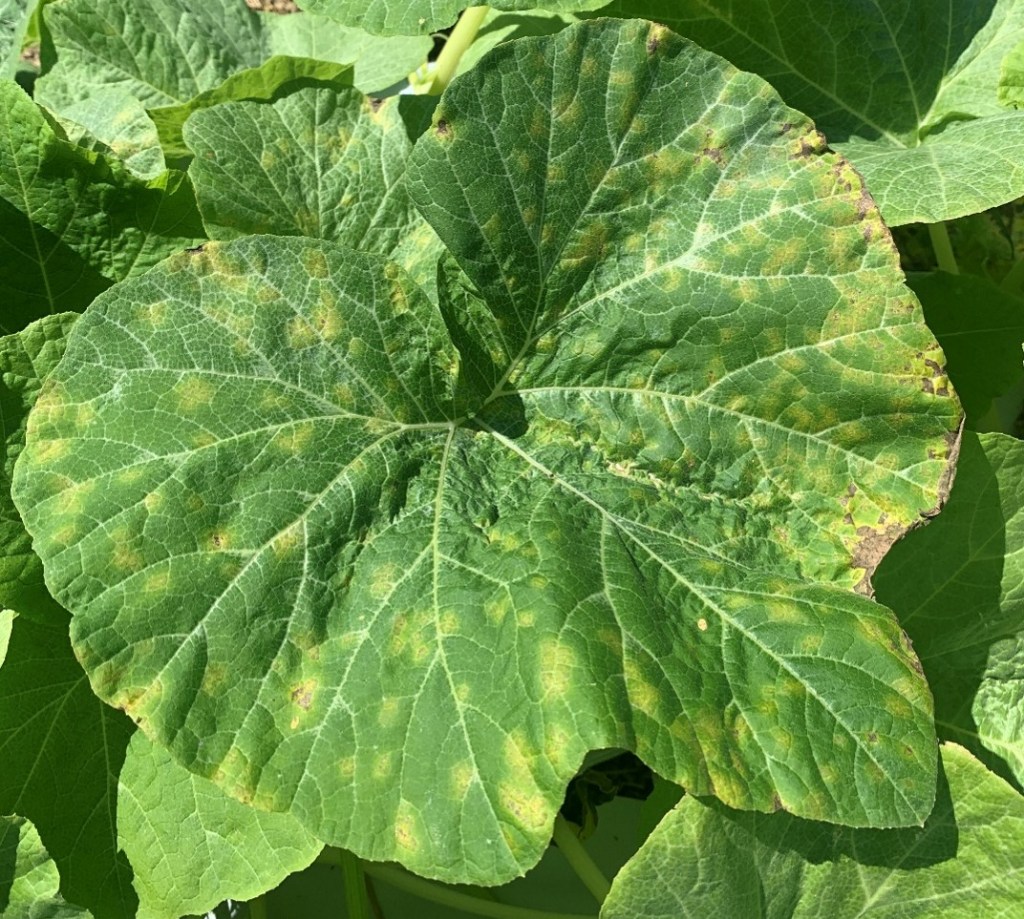
Similar to 2023, cucurbit downy mildew was found at Coastal REC in mid-September, last Friday the 13th, on cucumber and butternut squash transplanted August 15. Interestingly, cucumbers transplanted about 2 weeks ago didn’t have downy mildew…yet. Symptoms on both cucumber and squash means that both strains of cucurbit downy mildew are here, the cucumber-cantaloupe strain and the squash-watermelon strain.
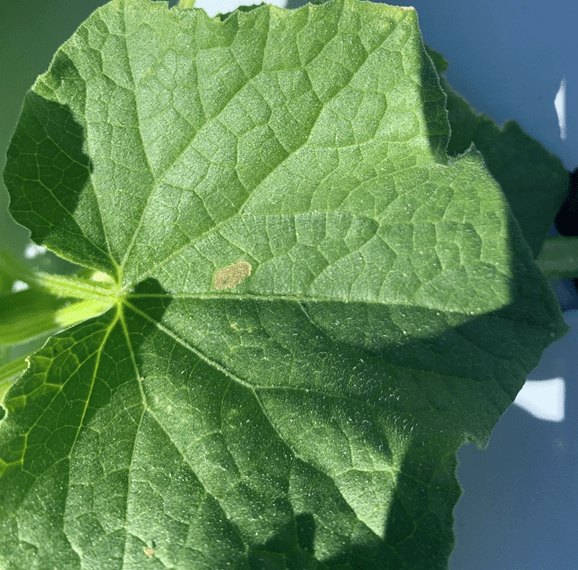
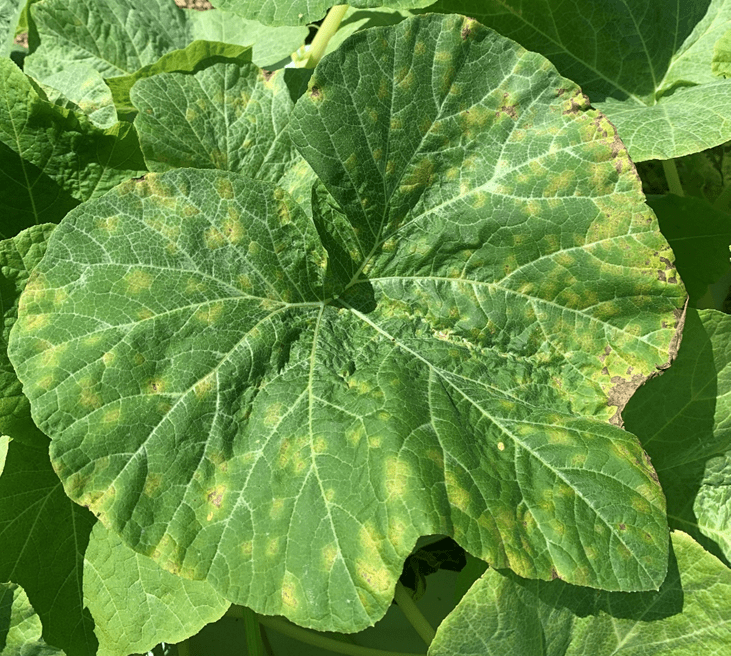
Downy mildew seems to be developing rapidly, as shown below by the range of symptoms seen on the same day in a 0.5-acre planting. At the same time, over half of the plots had no symptoms…yet. Growers should check 3 to 5 spots in a field before they conclude they don’t have downy mildew…yet.
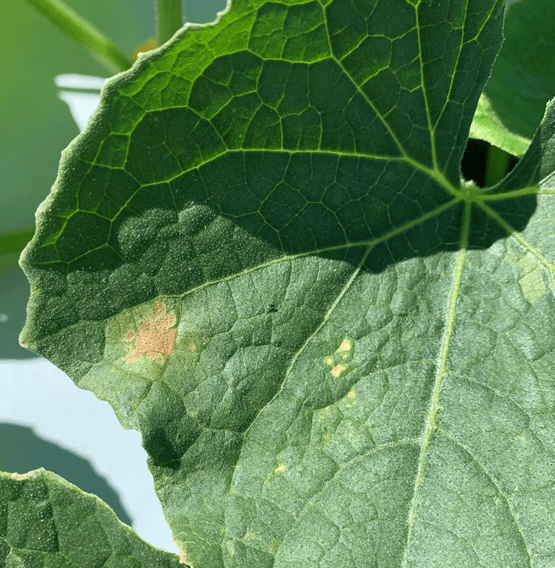
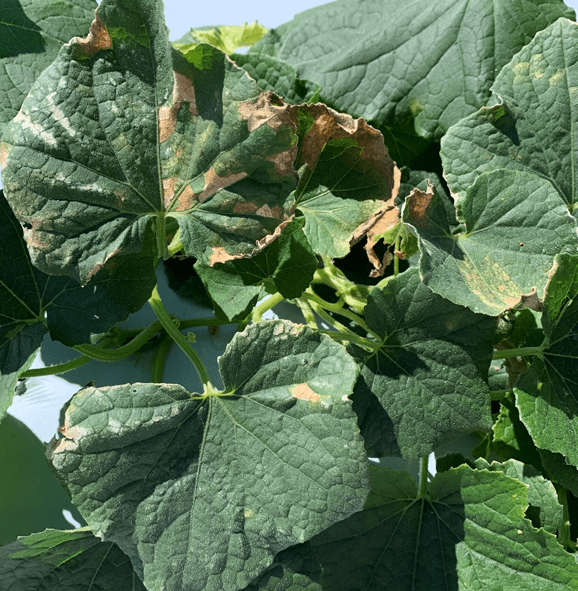
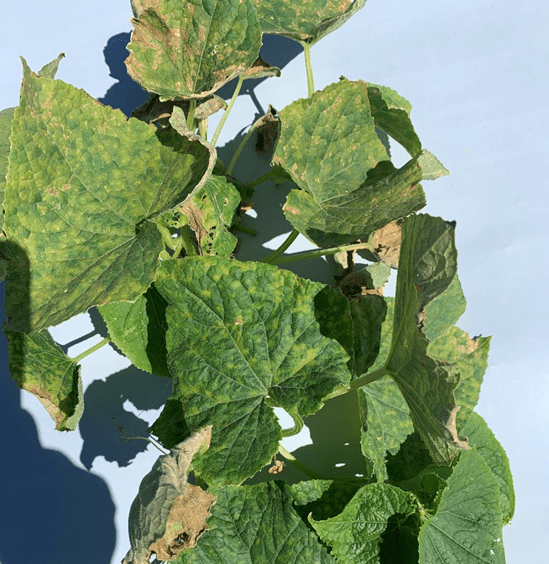
Figure 1. Progression of symptoms of downy mildew on susceptible pickling cucumber ‘Gershwin’ from a single lesion to almost 50% severity.
Temperatures in the 70s to low 80s are ideal for downy mildew, a water mold that prefers warm but not hot weather. The long dew periods in the fall provide plenty of moisture for downy mildew, even during this dry period.
All cucumber and cantaloupe crops should be sprayed weekly for downy mildew from now until 1 week before the last harvest. Crops most at risk of yield and quality losses are pickling cucumber (yield) and muskmelon/cantaloupe (sweetness). Downy mildew can reduce yields of any cucurbit, even zucchini, if it affects more than 50% of the leaf area.
Fungicide recommendations have not changed in the past 2 years. The only organic-approved product recommended for downy mildew is fixed copper.
Note that not all squash-watermelon strains actually infect watermelon, some infect just squash. The watermelon fungicide guide includes fungicides in the spray program to protect crops against downy mildew. These applications are enough until downy mildew is seen in a field. Then a downy mildew-specific fungicide should be applied every week.
 The South Carolina Grower