From Clemson Plant Pathologist Tony Keinath
Cucurbit Downy Mildew This Fall
Warm days and cool nights help create long dew periods in the fall, weather is ideal for cucurbit downy mildew (CDM) to start and spread, as reported in the Weekly Field Update – 9/15/25. We have not yet seen CDM in our fall sentinel plots at Coastal REC, but it is present in other parts of South Carolina.
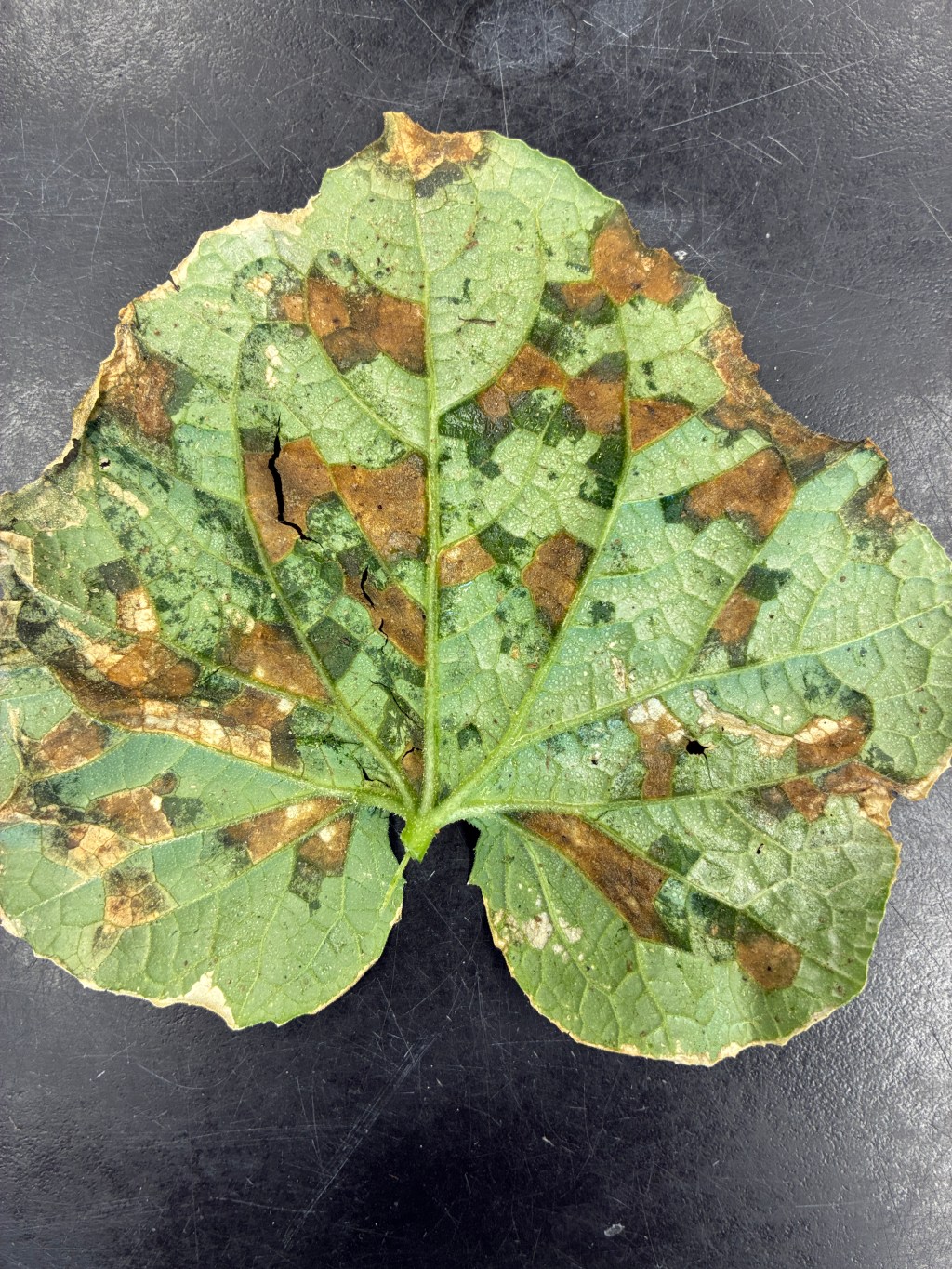
Typical Symptoms of Cucurbit Downy Mildew Angular, brown leaf spots, sometimes with water-soaked areas around or between them, are typical symptoms of CDM. Browning seems to be a bit more common than yellowing in the fall.
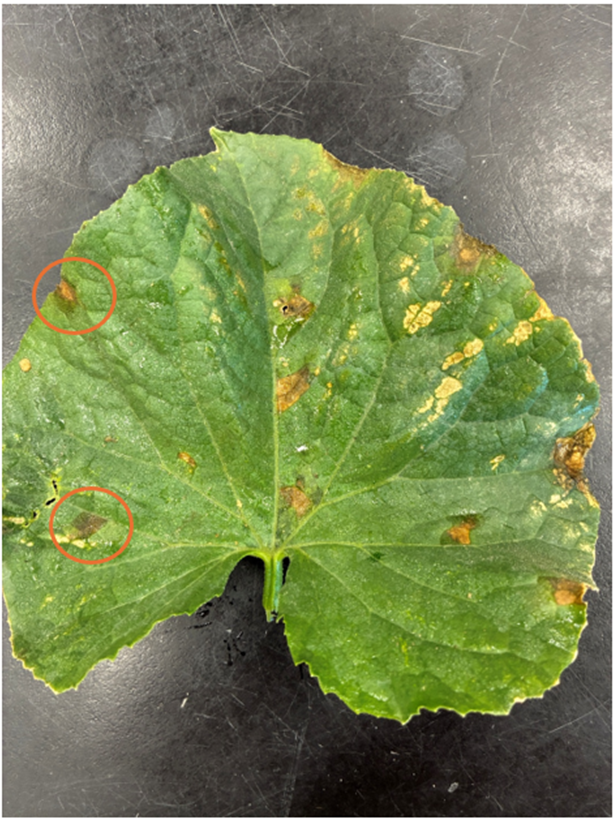

Early symptoms of downy mildew on top and bottom a pickling cucumber leaf. Note the water-soaking around some of the brown spots (circled) that is visible if leaves are checked in the early morning.
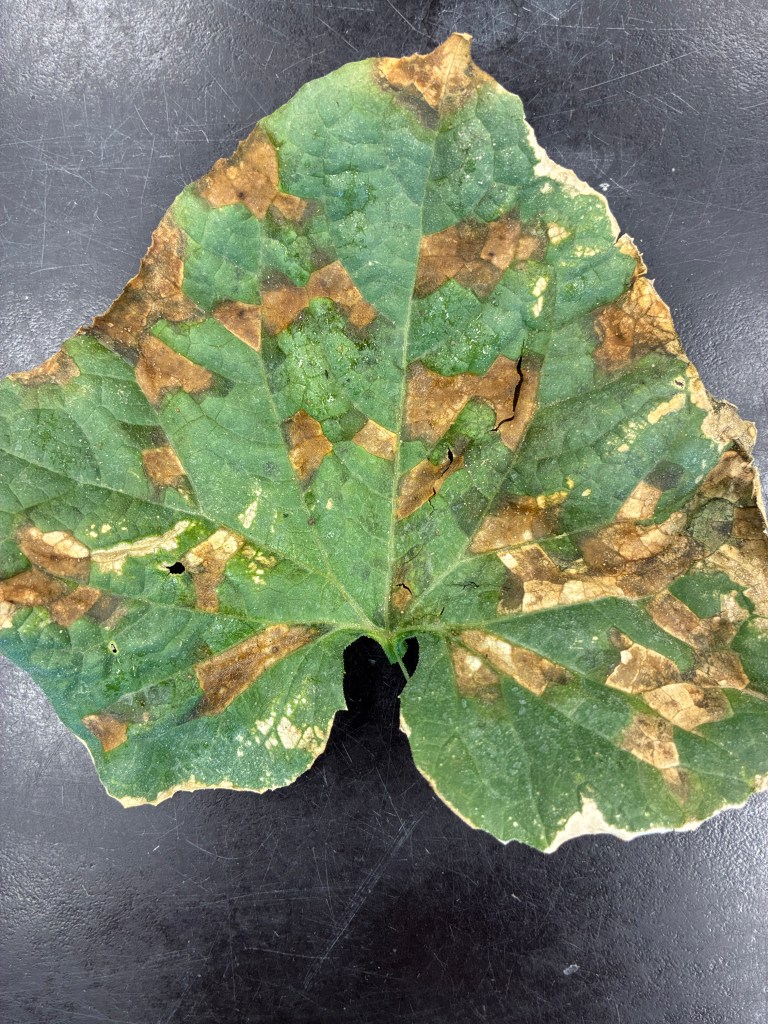

Advanced symptoms of downy mildew on top and bottom of a pickling cucumber leaf. Note the characteristic “checkerboard” pattern of brown and water-soaked diseased spots among the healthy green leaf area, visible on both sides of the leaf. Disease this severe can reduce yield.


Top and bottom of a leaf with abiotic injury symptoms, possibly sandblasting, but no downy mildew symptoms. Although the color of the injury is similar to downy mildew symptoms, the pattern is not.
Best Fungicides for Cucurbit Downy Mildew
Ranman is still the best fungicide to manage CDM, followed by Orondis Opti. These two fungicides should be rotated with a third fungicide, either chlorothalonil or Presidio plus chlorothalonil, based on results from my field trials in 2021 and fungicide bioassays since then.
Even the best fungicide program provides only 60% control on a susceptible cultivar of pickling cucumber like ‘Gershwin.’ Do not expect a fall cucurbit to be free of CDM.
Start Spraying Before Symptoms Show up
The most important part of using fungicides to manage CDM is to spray before symptoms appear. For fall-grown pickling cucumber, start sprays 1 week after emergence. For squash, start sprays approximately 3 weeks after emergence. Starting sprays when disease is seen in the field is too late, and you will never catch up.
Use a minimum of 50 gpa water; 75 gpa is better for crops with heavy vine growth later in the season.
Downy Mildew and Sugar Content of Cucurbit Fruit
Cucurbit fruit that accumulate sugar, including cantaloupe, watermelon, acorn squash, and butternut squash, are affected by CDM. Even though downy mildew doesn’t directly affect fruit, loss of healthy, green leaves reduces sugar content of fruits. For direct marketing, a few fruit on diseased plants should be sampled at harvest (by taste or with a refractometer) to make sure the flavor and sugar content is acceptable to customers. Fruit from any plants without CDM symptoms on the leaves (in the same field, if there are any) can be harvested without sampling.
 The South Carolina Grower