By Clemson Plant Pathologist Tony Keinath
Southern blight is rarely seen on kale or any other brassica crop. In the United States it’s been reported on other brassica vegetables grown in Alabama and Texas. This week, I was surprised to see southern blight causing stem rot just above the soil line on several plants of ‘Oldenbor’ kale.
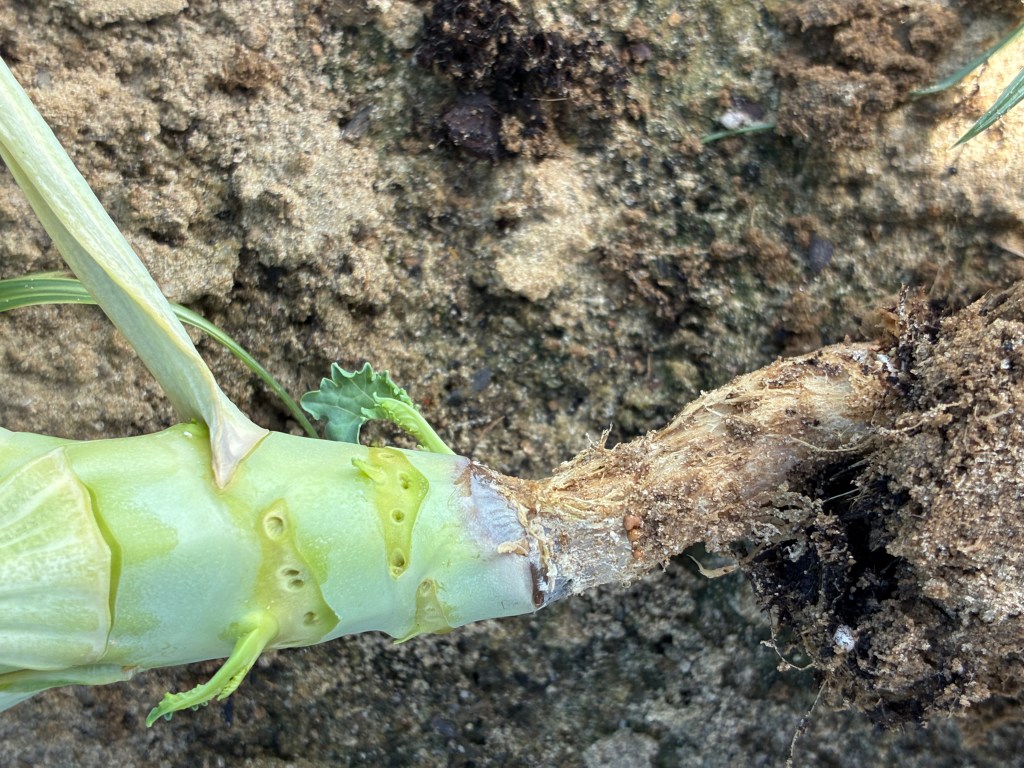
As with other crops affected by southern blight, the leaves turned yellow and wilted. The stem rot was longer, relative to the short kale stems, than the typical collar rot seen on tomato affected with southern blight. The outer stem layers were rotted away. Characteristic white fungus growth and three tan sclerotia, signs of the causal fungus, confirmed the diagnosis.
The kale was transplanted on Sep. 2 into raised beds covered with white plastic mulch to cool the soil. The southern blight fungus, recently renamed Agroathelia rolfsii, likes warm soil, but the white plastic did not cool the soil enough to prevent the fungus from infecting a few kale plants, about 10 of 264.
Wirestem, another stem rot seen on brassicas, typically affects younger plants and isn’t seen more than 6 weeks after transplanting. The stem lesion is narrower, deeper, and darker than stem lesions of southern blight. Leaves on plants affected by wirestem turn bluish, not yellow, and plants are noticeably stunted.
Several fungicides labeled for use on kale also help manage southern blight on other vegetables, so they should be effective if applied to kale. These fungicides include Priaxor, Miravis Prime, Fontelis, and Endura. Because related fungi cause southern blight and wirestem, Endura and Luna Experience that are labeled against wirestem also should help reduce southern blight.
No organic products are effective against southern blight. Diseased plants should be removed from the field and burned, not composted, as the sclerotia may survive composting.
Because less than 1% of my plants had southern blight, I am not recommending preventative sprays on kale or any other brassica vegetable for southern blight. This blog is mainly for information about unusual symptoms.
 The South Carolina Grower