Guido Schnabel, Extension Plant Pathologist
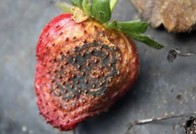
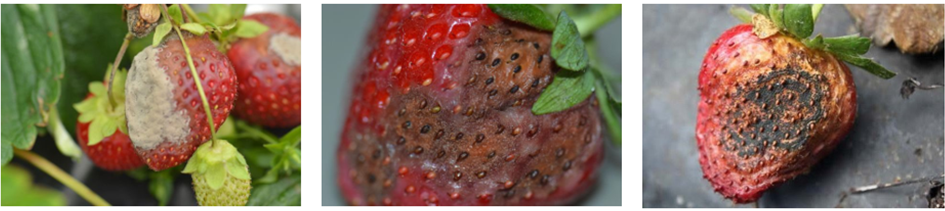
Disease management is essential for growing high-quality strawberries in plasticulture. While Botrytis fruit rot (BFR) is a disease you can expect every year, Anthracnose fruit rot (AFR) and the more recently introduced Neopestalotiopsis fruit and crown rot (Neo-P) may or may not appear (Fig. 1). This largely depends on how clean the transplants were when planted, as the primary pathway for these pathogens to reach your field is via transplants. At the very least, you will need to protect your crop from BFR, and in the worst-case scenario, you will have to protect your plants from all three diseases. Regardless, a fungicide program must be initiated. This article discusses fungicide options and the best timing for sprays. You may notice that thiram is still listed as a core component of the spray programs. There is ongoing uncertainty about thiram’s availability in 2026, and this article is written assuming it will still be available then, or that you have enough in existing stocks and that the EPA will permit their use until depleted. If that situation changes and thiram was banned, I will have to substantially revise this article since captan is restricted to 8 applications per season if used at full label rate.
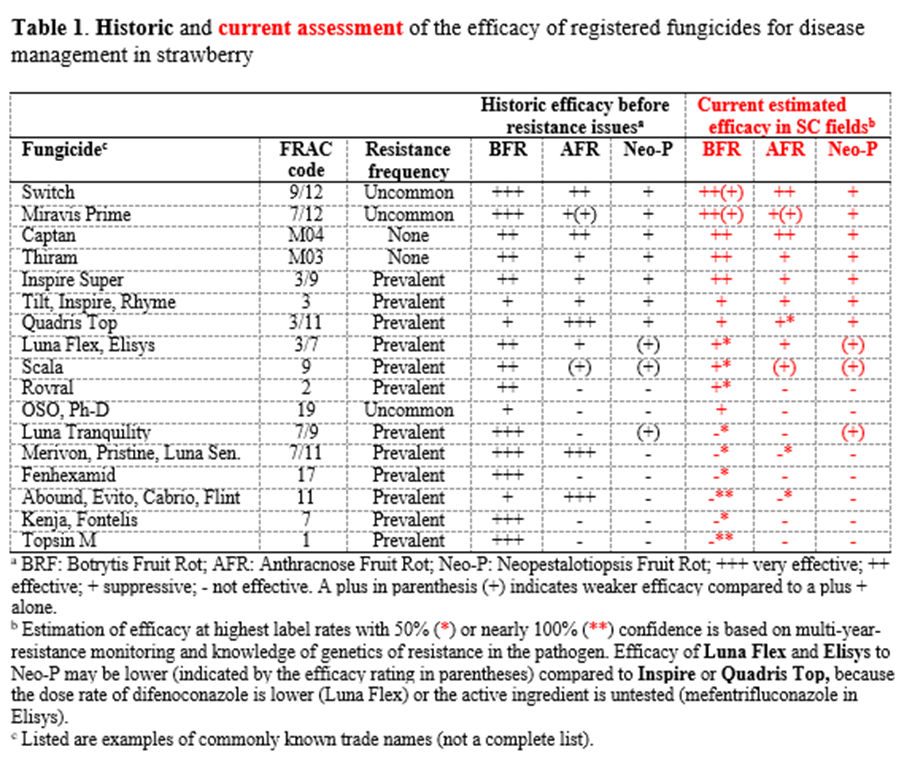
Let’s first discuss what to spray. I wish I could recommend biorationals (i.e., biologicals, plant and bacterial extracts, or simple molecules generally considered “safe”), but except possibly for polyoxin D (OSO 5%SC; Ph-D fungicide), I have not seen any trustworthy data supporting their use in strawberry at this time. Synthetic fungicides vary in their efficacy spectrum (the diseases they target), their efficacy against specific diseases (specifically the sensitivity of the pathogens causing the disease to the fungicide), and their susceptibility to resistance development in the pathogen population. Table 1 lists registered fungicides, their FRAC codes, resistance levels in the southeastern U.S., their initial, historic efficacy against BFR, AFR, and Neo-P at the time of product launch, and their current efficacy (in red text; after the fungus developed resistance). I want to stress at this point that the efficacy ratings (+++ very effective; ++ effective; + suppressive; – not effective), especially those in red are my own subjective assessments.
For thiram and captan, there has been no change in efficacy over time against these three diseases, because these fungicides do not select for resistance (Table 1). All other fungicides are vulnerable to resistance development. Efficacy assessments displayed in red letters are based on years of resistance monitoring and consideration of the genetic basis of resistance in the pathogens. While it is impossible to know the precise resistance situation at your farm without testing the fungal isolates against specific fungicide groups (testing is available at reasonable pricing at the Clemson University Plant Problem Clinic (https://www.clemson.edu/public/regulatory/plant- problem/), the ratings in red have about a 50% (indicated as *) or nearly 100% (indicated as **) chance of being accurate for the specified disease in your field. The accuracy of my efficacy assessments in red depends on what fungicide and how much the NURSERY has already applied to the transplants, as well as what fungicide and how much YOU have already applied to your field. Here are a couple of examples of how to read this table. Rovral was effective (++) against BFR when it was first registered in 1972 (historic assessment of efficacy), but today there is a 50:50 chance that there is only suppressive action (+*) in any given South Carolina strawberry field.
For FRAC 11 fungicides Abound, Evito, Cabrio, and Flint, there is a nearly 100% chance that the suppressive action (+) is no longer there (-**).
Miravis Prime and Switch clearly are today’s front-runners. Efficacy mainly depends on the fludioxonil component (FRAC 12) in these products, and efficacy against BFR remains excellent because resistance, although present in the causal agent Botrytis cinerea, has not yet become widespread. Part of the reason is that we use it in a mixture with either captan or thiram, which slows down the spread. Resistance in Colletotrichum species that cause anthracnose and N. rosae that causes Neo-P has not yet been reported in the USA. However, it is likely to appear relatively
soon given the number of applications we are using in nurseries and grower fields per year; resistance in Colletotrichum to FRAC 12 fludioxonil is already spreading in Asia. I am concerned that resistance in the causal agents of BFR, AFR, and Neo-P will develop quickly if nurseries and fruit growers reach their maximum application limits each year. You may apply a total of three sprays of Miravis Prime and five of Switch when using the low rate. At the high rate, the limit is two for Miravis Prime and four for Switch. Because both products contain fludioxonil, you cannot apply two or three sprays of Miravis Prime and four or five sprays of Switch. If Miravis Prime is used, the total number of allowed Switch applications is reduced. If Switch is used to the fullest extent of the label, you are no longer allowed to use Miravis Prime. My plea to nurseries and fruit growers is: Use these products sparingly, only when necessary, and only in combination with thiram or captan. The efficacy of thiram and captan is consistent, providing good protection against all three diseases, making them an ideal backbone of your spray program.
Over time, we have lost many products to the development of fungicide resistance in the pathogens causing BFR and AFR. They include Topsin M, Kenja, Fontelis, Abound, Evito, Cabrio, Flint, Fenhexamid, and even the commonly used Merivon, Pristine, and Luna Sensation. Due to incomplete cross resistance within the FRAC 7s, some of these 7/11 mixtures may still work better than others, but for simplicity’s sake I am treating them all as one in this article. Bottom line: don’t use them at all or use them once per season in mixture with captan or thiram. As solo applications, they are simply not trustworthy fungicides at this point.
Inspire Super (FRAC 3/9) contains two active ingredients, each with at least some suppression or efficacy against BFR, AFR, and Neo-P. Conversely, the FRAC 3/7 combinations Luna Flex and Elisys, as well as the FRAC 3/11 combination Quadris Top, are probably no more effective than the FRAC 3s alone.
Taking all of this into consideration, the spray strategies in Figure 2 are suggested examples for two scenarios. They both use a limited number of fungicides (thiram, captan, Switch, Inspire Super, and Rhyme). The application intervals are shortened if there are documented problems with AFR and Neo-P. I am recommending Switch over Miravis Prime (both contain fludioxonil), because the cyprodinil active ingredient in Switch offers more reliable suppression against the three diseases than the pydiflumetofen active ingredient in Miravis Prime (based on the resistance situation). If transplants look good, you may not need to spray at all in the fall since there is no fruit to protect and weather conditions are mostly not conducive to infection (Fig. 1A). The exception might be if you use row covers to push the plants. This will create a moist microclimate under plastic, and a spray application is recommended prior to covering the fields (Fig. 1A). If you use row covers for frost protection with the intent to uncover the plants soon thereafter, then you don’t need a fungicide application. Also, if you regularly encounter fall leaf spot diseases or notice them in the field to substantially impact photosynthetic activity, you may want to choose fungicides to treat these as well. In the spring, prior to a major rain event, add Switch or Inspire Super to the thiram or captan spray tank. Captan is recommended later in the season instead of thiram because it is more effective against AFR (a disease that tends to show up when the weather warms up; Fig. 1A). The same strategy of using combinations when weather conditions favor disease is recommended if transplants were affected by either Neo-P or AFR, but tighter spray intervals are recommended (Fig. 2B). The addition of Rhyme or Inspire to thiram will help with Neo-P management when the weather turns wet. Tilt and other products containing propiconazole would also be an option instead of Rhyme or Inspire for plugs, but do not use Tilt or other propiconazole generics more than once in fall and once in spring to avoid stunting. This was discussed in detail previously: https://smallfruits.org/2025/09/dmi-fungicides-for-neopestalotiopsis/. If you planted cut offs, I would wait at least four weeks before using Tilt in the fall.

Conclusions
Sustainable disease management in strawberries is becoming increasingly difficult. Table 1 lists the products we’ve already lost for use against three key diseases due to the development of resistance, as well as those that have lost at least some efficacy. We are now left with only a few options that are effective against key diseases. Without thiram (still scheduled to be phased out), the situation would be even more dire. Regulators need to recognize that we depend on multisite fungicides, such as thiram and captan, to reduce selection pressure and prolong the
effectiveness of at-risk fungicides. Compounds containing fludioxonil (Switch and Miravis Prime) still perform well, but resistance poses a real threat for all diseases. Nurseries and growers alike must use them strategically and minimally to extend their effective life span.
 The South Carolina Grower