From Tony Keinath, Clemson Extension Plant Pathologist
Last week, I advised South Carolina brassica growers to spray brassica crops to protect them from white mold, based on symptoms seen on kale and stock, a brassica winter annual, in Charleston. The initial symptoms were triggered by the cold temperatures of Dec. 16 and 17 that completed the chilling hours necessary for the Sclerotinia fungus to release airborne ascospores.
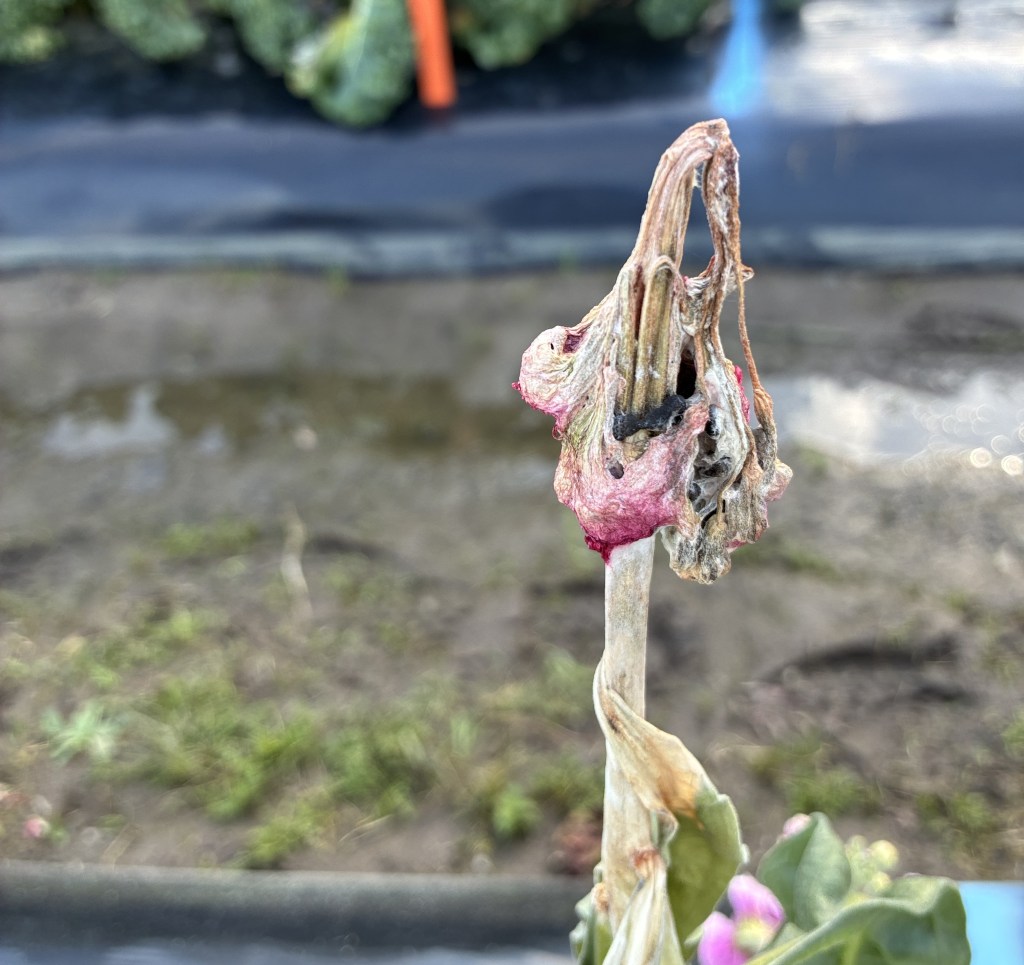
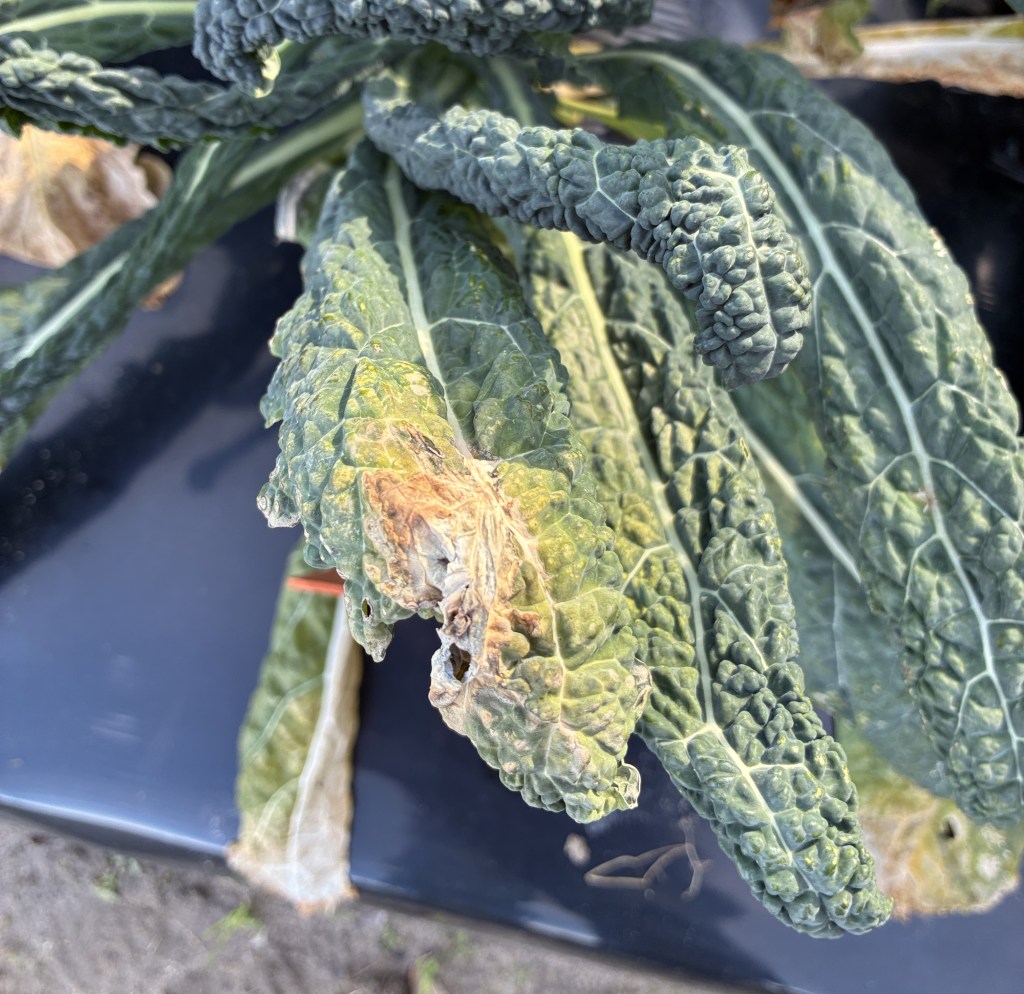
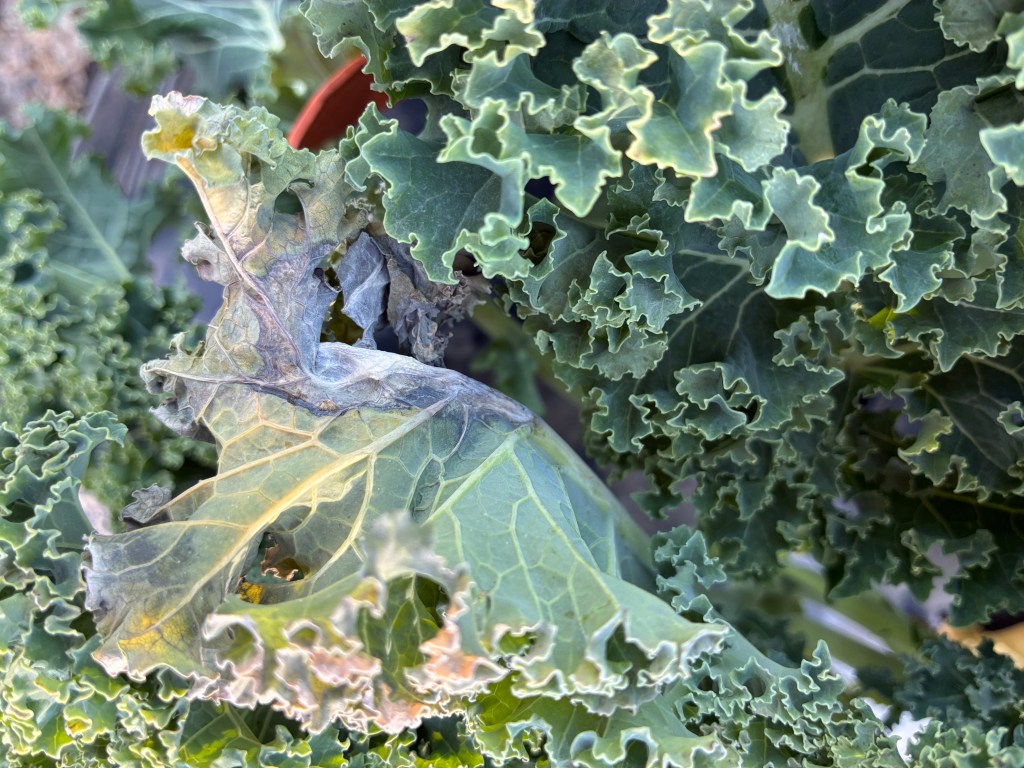
Since then, temperatures have been well below average in the eastern United States. Consequently, symptoms on kale have not spread, and only a few more unsprayed plants became diseased in the meantime. Temperatures below 50°F. are not optimal for white mold. Hold off spraying again until daytime temperatures are above 50°F for a couple days in a row.
The reason to be cautious spraying conventional crops for white mold is that only 2 applications of the best fungicides are allowed, that is, those with FRAC Code 7, such as Endura, Fontelis, and Miravis Prime. These three fungicides cannot be rotated with each other (!) but can be rotated with Switch.
Organic growers can apply Contans, but this biopesticide is best used at transplanting and applied to soil, as it takes some time for the beneficial fungus active ingredient to kill sclerotia of the white mold fungus. As a reminder, Brassica oleracea crops are the brassica vegetables most susceptible to white mold. The list includes collard, kale, broccoli, cabbage, Brussels sprouts, kohlrabi, and cauliflower (if any is left in the field). Mustard and turnip greens (and probably turnip roots and rutabaga) are less susceptible and do not necessarily need to be sprayed.
 The South Carolina Grower