Lindsey Thiessen and Guido Schnabel
South Carolina is warming up following several bouts of freezing temperatures. Many used frost-protection covers to keep fruit crowns from freezing. To add some additional stress following the freezing temperatures, growers are reporting significant gray mold presence after frost protection covers have been removed.
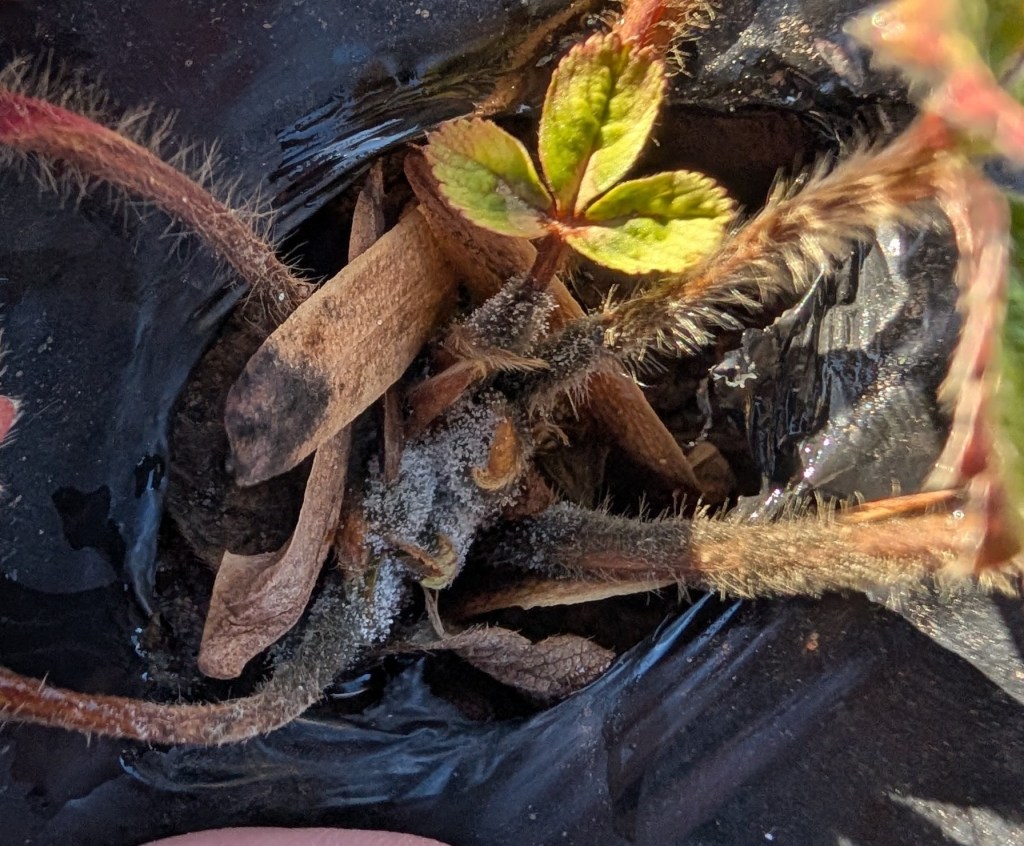
Gray mold is caused by a fungus, Botrytis cinerea, which is always present at some level in our environment. The pathogen grows best in cool, wet temperatures and can affect the leaves, flowers, crowns, and fruit. Symptoms include brown leaf spots that expand to entire leaves or flowers. As the lesions expand, gray fuzzy mold will develop. Within the gray fuzzy growth, there are abundant spores that can spread and cause disease on new, healthy tissue.
During the freeze, plants were in a cool, wet environment with minimal air flow underneath frost-protection covers. This has let the fungus take off, even with preventative fungicide sprays prior to covering. Spring showers in our forecast will also put plants at a disadvantage to further spread and injury from gray mold.
In the ideal world, we would recommend sanitation at this point. Removal of dead leaves and flowers following the freezing temperatures would prevent the fungus from continuously growing on the dead plant material and spreading from dead tissue to healthy, unprotected plants. Plant debris would need to completely be removed from the field and none should be left in the row middles. While this practice might be feasible for some, it may be cost prohibitive for others.
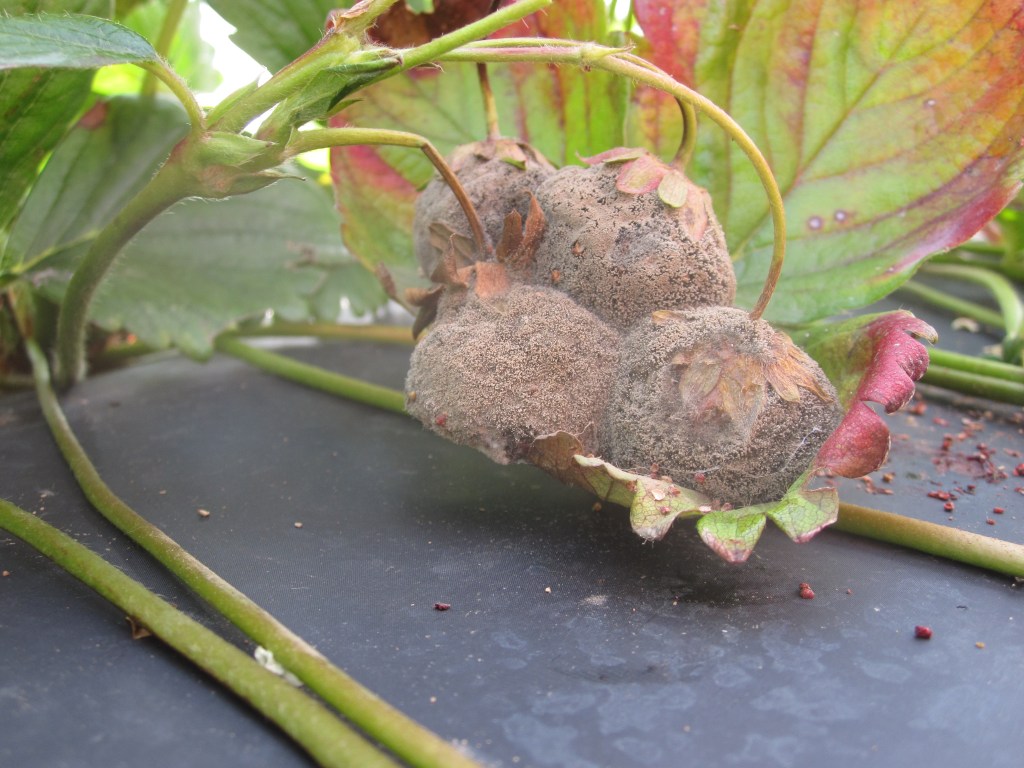
It’s important to protect strawberry plants going into cool, wet spring weather conditions. The gray mold fungus is at high risk for fungicide resistance, so a multi-site fungicide (e.g., captan, thiram) should be included in a fungicide spray. For sites where gray mold spores are visible on the plants, a product containing iprodione, like Rovral 4F or Nevado 4F, at the maximum rate (2 pt/acre) in combination with a multi-site fungicide would protect new foliage and manage resistance development concerns. For all fungicide applications, be sure to follow the label recommendations for use and tank mixing.
Other plant pathogens can cause symptoms like gray mold. For further assistance, contact your local extension agent for guidance on identifying the problem and determining next steps for disease management.
 The South Carolina Grower