By Tom Bilbo, Extension Entomologist
Scouting for spider mites in strawberries will be especially important in the coming weeks as warm, dry weather continues in the lowcountry. The possible rain in the midlands and upstate may help buffer against surging spider mite numbers.
Some growers may find themselves needing to spray a miticide. This post will highlight the importance of good spray coverage, but it also provides a few other important considerations to keep in mind:
1. If you haven’t already done so, check out the downloadable chemical control guide for spider mites in field-grown strawberries. Now that plants are larger and fruiting, they can tolerate more spider mite feeding, so the treatment threshold is an average of 15 mites per leaflet. From the miticide table, you’ll be drawn to products with a shorter PHI, like Nealta or Acramite. These are also more selective options that will conserve beneficial predators (see more below).
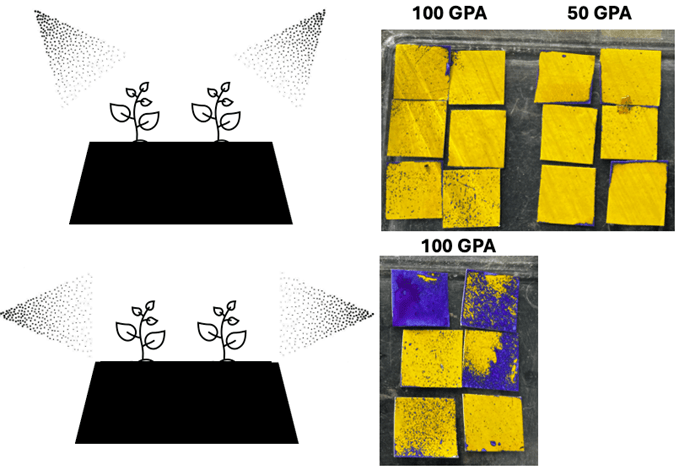
2. Spray coverage. Good spray coverage is critical for effective spider mite suppression. This is especially true for organic products, which must come into direct contact with the spider mites. Spider mites primarily reside in the difficult-to-reach nooks and crannies on the underside of leaves. My colleague, Aaron Cato, at the University of Arkansas, conducted a sprayer selection trial comparing a drone sprayer, an air blast sprayer, and a boom sprayer at different GPAs on spray coverage. I encourage you to read the full article, but the results show that boom sprayers achieved the greatest and most consistent coverage, and 100GPA provided more coverage than 60GPA.
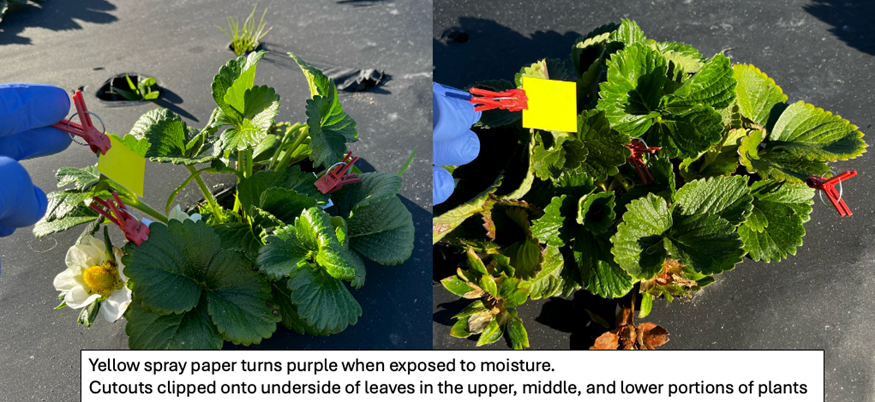
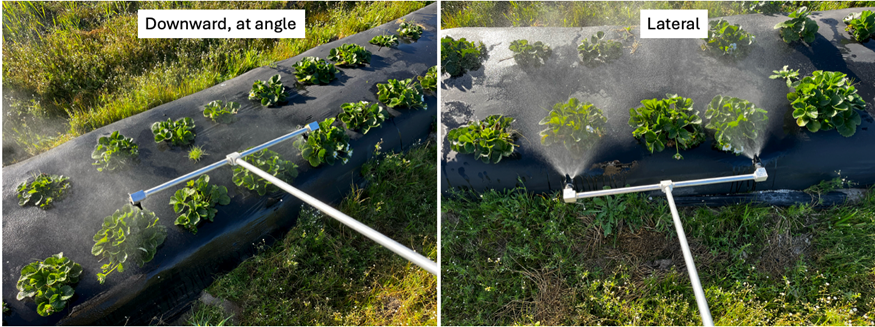
I conducted my own simple spray demo a few weeks ago, comparing 50GPA to 100GPA, using a boom sprayer (2-boom CO2 backpack sprayer, hollow cone nozzles, 60 PSI) at either a downward or a lateral angle. The lateral spray was to reflect drop nozzles and compare coverage on the underside of the leaves, and spraying the plants this way achieved much better coverage to the undersides of leaves, as did increasing GPA.
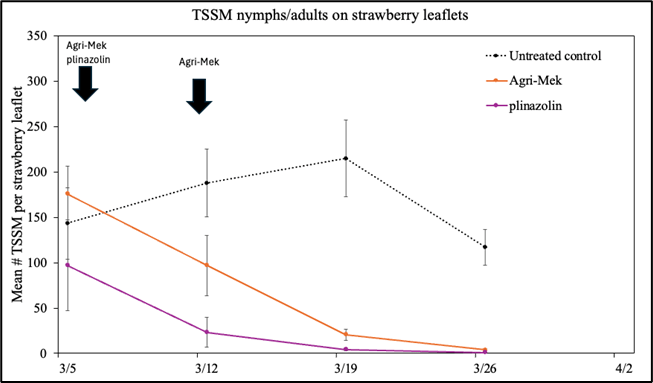
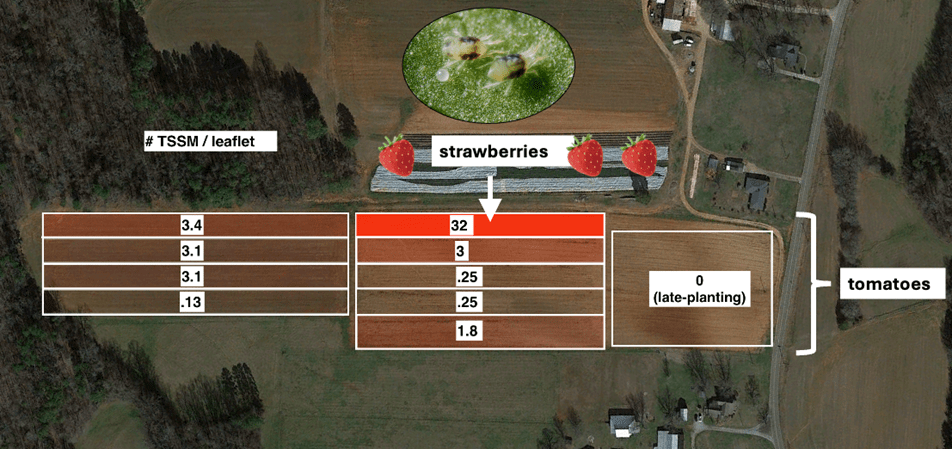
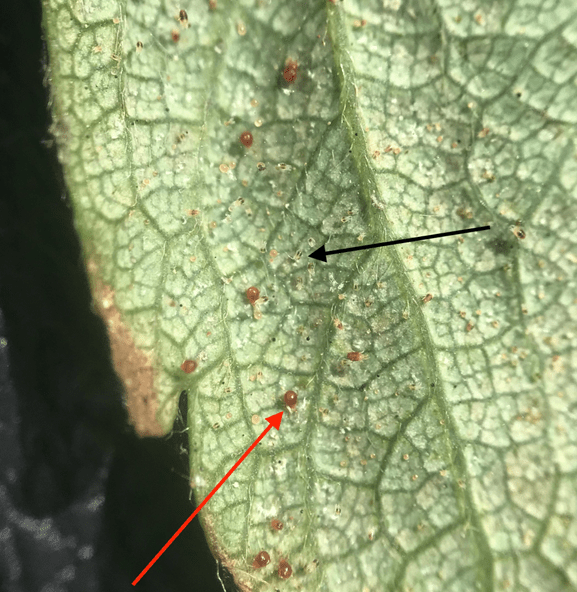
3. Late-season mite management and predatory mites. Good spider mite management in strawberries is especially important for farms growing summer vegetables. This is because any lingering spider mite problems can spill over into nearby vegetables, such as tomatoes. The image below shows a real situation I observed in North Carolina some years ago. Many farms in SC have naturally occurring populations of the predatory mite Phytoseiulus persimilis that appear near the end of the crop cycle. By conserving these beneficial predators with selective insecticide/miticide use (e.g. Acramite, Nealta) they can help you out a lot at the end of the season and likely also in your vegetables, directly or indirectly.
 The South Carolina Grower