
LATEST POSTS
-

Weekly Field Update – 9/25/23
Clemson and UGA have teamed up to offer a Strawberry Production Webinar Series. Each week, for 3 weeks, a pre-recorded presentation will be sent to registrants. Topics include weed management, neopest, and managing cold events. participants will have one month from the date of release to watch the presentation and earn pesticide credits. Participants can…
-

Question of the Week – Virus
This week, the question was: What is wrong with this squash? This squash is showing symptoms of a virus. There are numerous viruses that affect cucurbit crops, which may be transmitted in a variety of ways, such as, by insect (aphids, whiteflies, cucumber beetles), through seed, or mechanical damage. Symptoms may include mottled or mosaic…
-

Weekly Field Update – 9/18/23
Recently, the results of the 2022 Farm Gate survey were posted showing data for several crops grown in SC. In the coming weeks, we will be collecting data for 2023 on a new set of crops. Extension Agents from around the state will be contacting growers to ask about this data. Our goal will be…
-
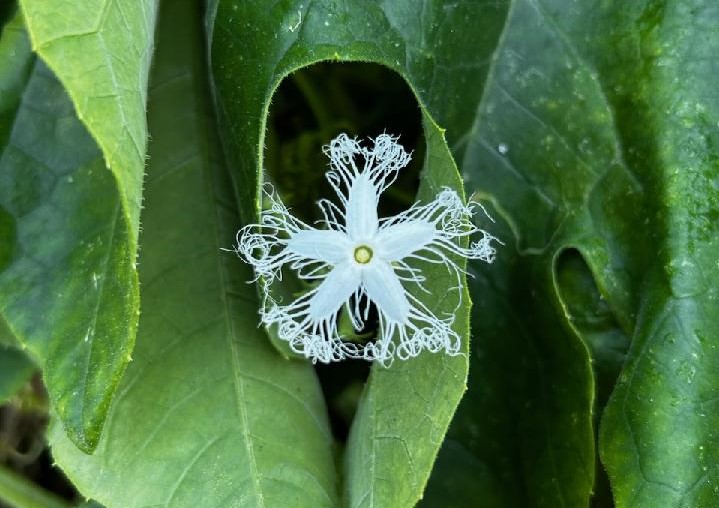
Question of the Week – Snake Bean
This week, the question was: What will develop from this this hairy-looking flower? I recently visited a community garden and was stumped when the groundskeeper asked me if I knew what plant this crazy looking flower belonged to. After I blanked for some time, I was informed that this flower belongs to the Python Snake Bean…
-
Weekly Field Update – 9/11/23
Recently, the results of the 2022 Farm Gate survey were posted showing data for several crops grown in SC. In the coming weeks, we will be collecting data for 2023 on a new set of crops. Extension Agents from around the state will be contacting growers to ask about this data. Our goal will be…
-

Question of the Week – Passionflower
This week, the question was: What is this crazy looking flower? This is a passion flower (Passiflora incarnata). Passion flower is fast-growing vine that is native to the Southeast. It shows up on the edges of fields and wooded areas, and many grow it in their yards as an ornamental. The flowers are attractive to…

