
LATEST POSTS
-
Weekly Field Update – 8/21/23
Recently, the results of the 2022 Farm Gate survey were posted showing data for several crops grown in SC. In the coming weeks, we will be collecting data for 2023 on a new set of crops. Extension Agents from around the state will be contacting growers to ask about this data. Our goal will be…
-
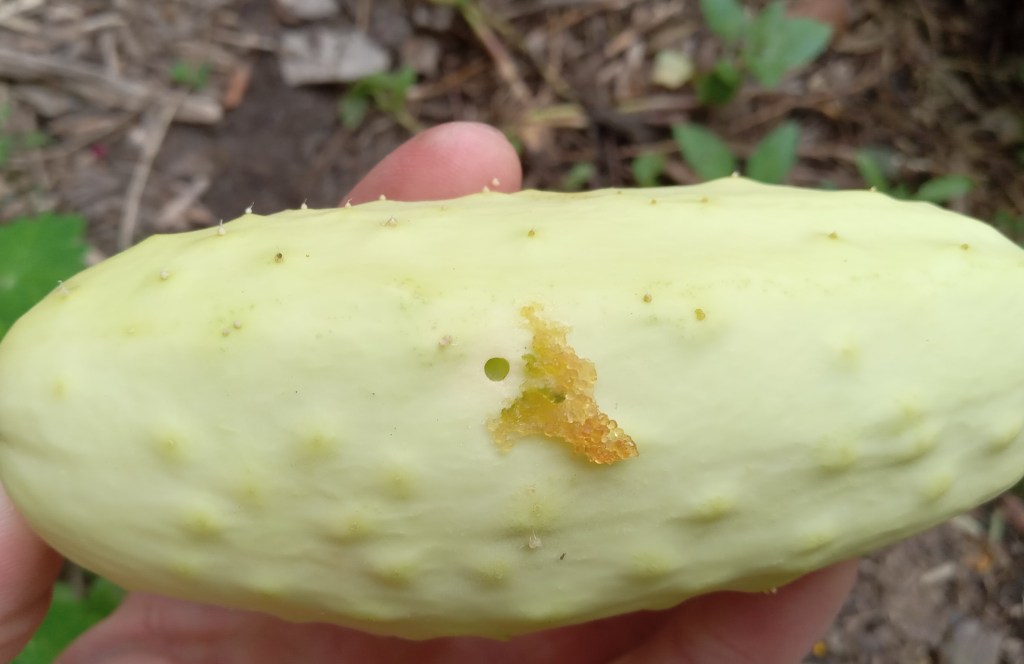
Question of the Week – Pickleworm
This week, the question was: What caused the hole in the side of this cucumber? (Nothing is wrong with the color. This cultivar is called Silver Slicer.) This week’s question is a review from a post Tom Bilbo wrote recently about pickleworms. Pickleworms feed on the blooms and tunnel into the developing fruit of cucurbit…
-

Weekly Field Update – 8/14/23
Check out upcoming meetings on the Upcoming Events tab, and don’t forget to look at our Resources tab for links to crop handbooks, helpful websites, and related blogs. Also, check out the latest episode of the SC Grower Exchange Podcast. Be sure to scroll all the way to the bottom to see this week’s Question…
-

Question of the Week – Assassin Bug
This week, the question was: What is going on here, and which one of these is the good guy? Here we see an assassin bug that has caught and is feeding on a lady beetle. Normally, both of these insects are good guys, though when assassin bugs get hungry, they will eat just about anything…
-

Brad O’Neal Named Sunbelt Ag Expo Farmer of the Year For SC
Brad O’Neal of Coosaw Farms in Fairfax, SC is this year’s Sunbelt Ag Expo Farmer of the Year (formerly Swisher Sweets Farmer of the Year) for South Carolina. Brad as nominated by Midlands Extension Agent Rob Last. Last said of O’Neal, “He’s an outstanding example of someone who’s open to innovative ideas, practices, and technology,…
-
Weekly Field Update – 8/7/23
Check out upcoming meetings on the Upcoming Events tab, and don’t forget to look at our Resources tab for links to crop handbooks, helpful websites, and related blogs. Also, check out the latest episode of the SC Grower Exchange Podcast. Be sure to scroll all the way to the bottom to see this week’s Question…

