We hope everyone has a safe and happy Independence Day!
Check out upcoming meetings on the Upcoming Events tab, and don’t forget to look at our Resources tab for links to crop handbooks, helpful websites, and related blogs. Also, check out the latest episode of the SC Grower Exchange Podcast.
Be sure to scroll all the way to the bottom to see this week’s Question of the Week, and check back on Thursday for the answer.
Coastal Region
Zack Snipes
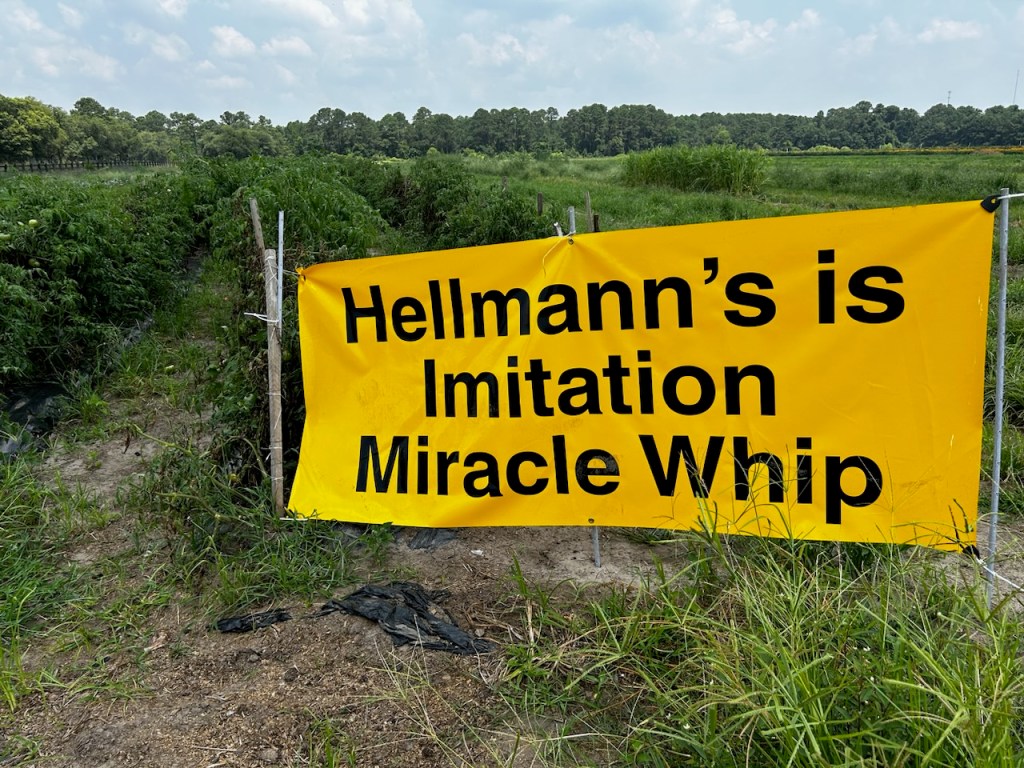
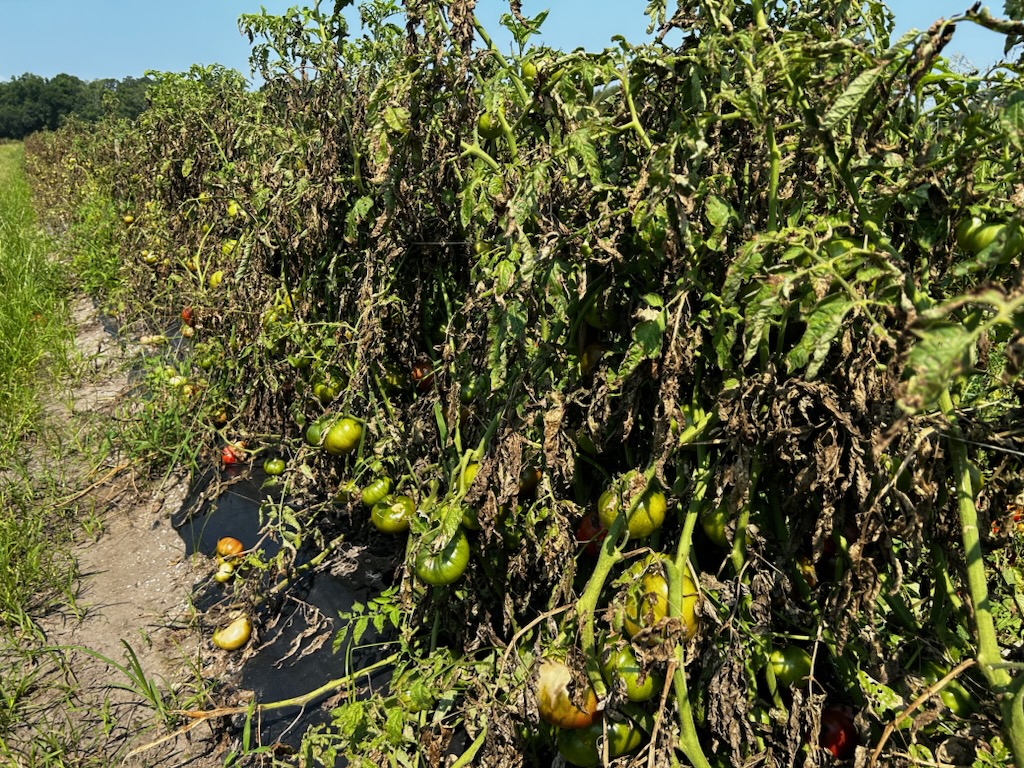
- Its been such a good tomato crop this year that Dukes Mayonnaise came to do a photo shoot on Johns Island. The crop is coming in at exceptional volumes and market prices still solid. Most growers are using commercial varieties (Red Snapper, Roadster, etc.) with great production and very little disease. Cultivar selection is so crucial to disease management. Many of the heirloom varieties planted right beside the commercial varieties are inundated with disease, primarily bacterial spot and bacterial wilt.
- Growers are extremely busy harvesting what seems like every crop under the sun right now and getting them to market.
- The rains we have had have really caused a good bit of disease.
Midlands
Phillip Carnley
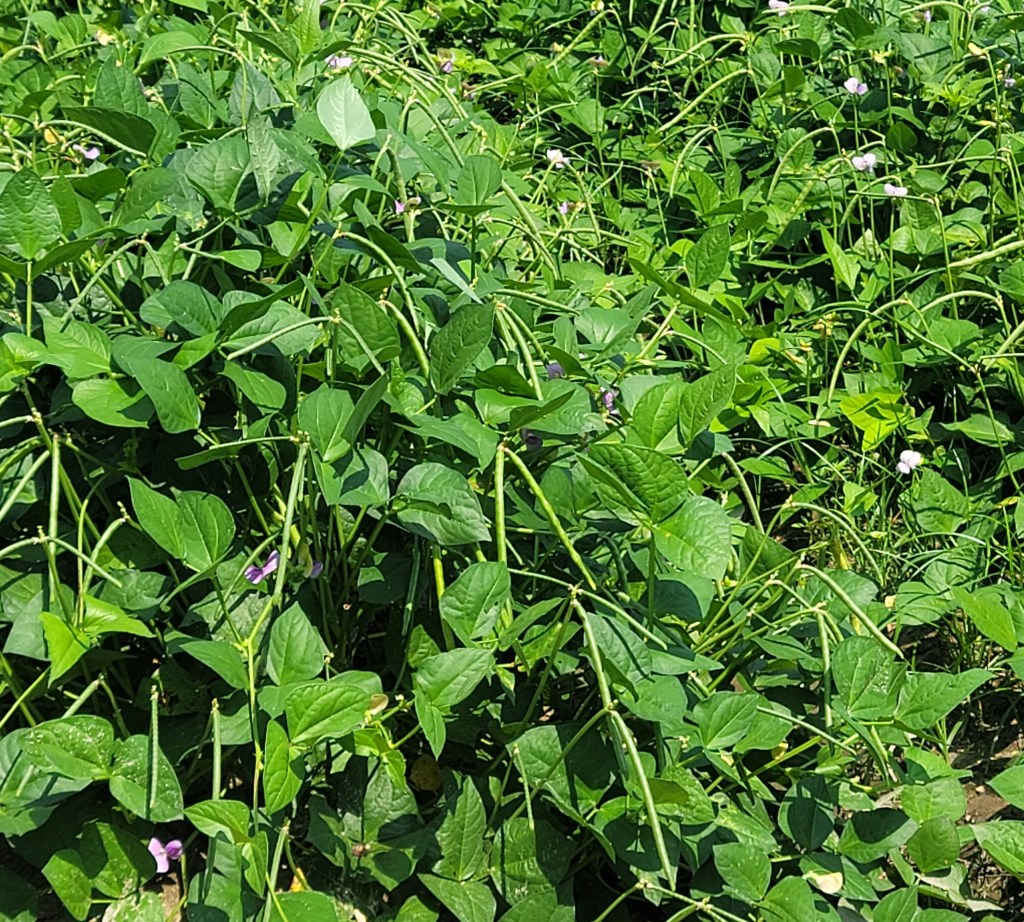
- Peas are coming in nicely with high yields expected. Make sure to keep them sprayed on a 5 to 7 day rotation with a pyrethroid to manage cowpea curculio.
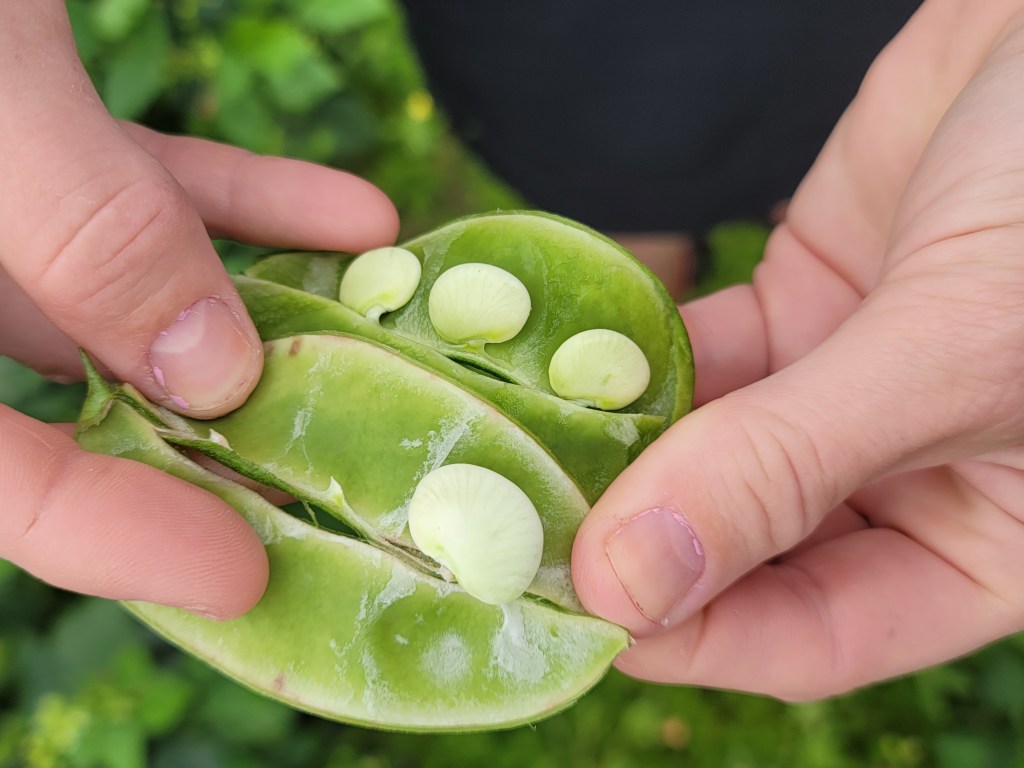
- Butterbeans are doing great and the cooler start to the summer has definitely helped with pod set and development. Picking has just started and will continue to ramp up this coming week. Keep a close eye on bean size and tenderness as picking can cause yield loss.
- Squash are still being picked with good quality and quantity with anthracnose being present at greater frequency. Mosaic virus has also been more prevalent.
- Tomatoes saw a hit this week with high winds blowing trellises over, but yields have been very good with hardly any disease pressure. The occasional plant with bacterial speck or southern blight has occurred.
- Watermelons are looking great and are coming out of the field in good numbers. Vines this year have been a little light on canopy cover.
- Okra is finally starting to come into it’s own. With this heat wave, we should start to see increased yields.
Rob Last
- Bacterial and Fungal diseases are becoming more and more apparent. Remember, fungicides WILL NOT control bacteria. Remember to rotate different modes of action to prevent resistance development.
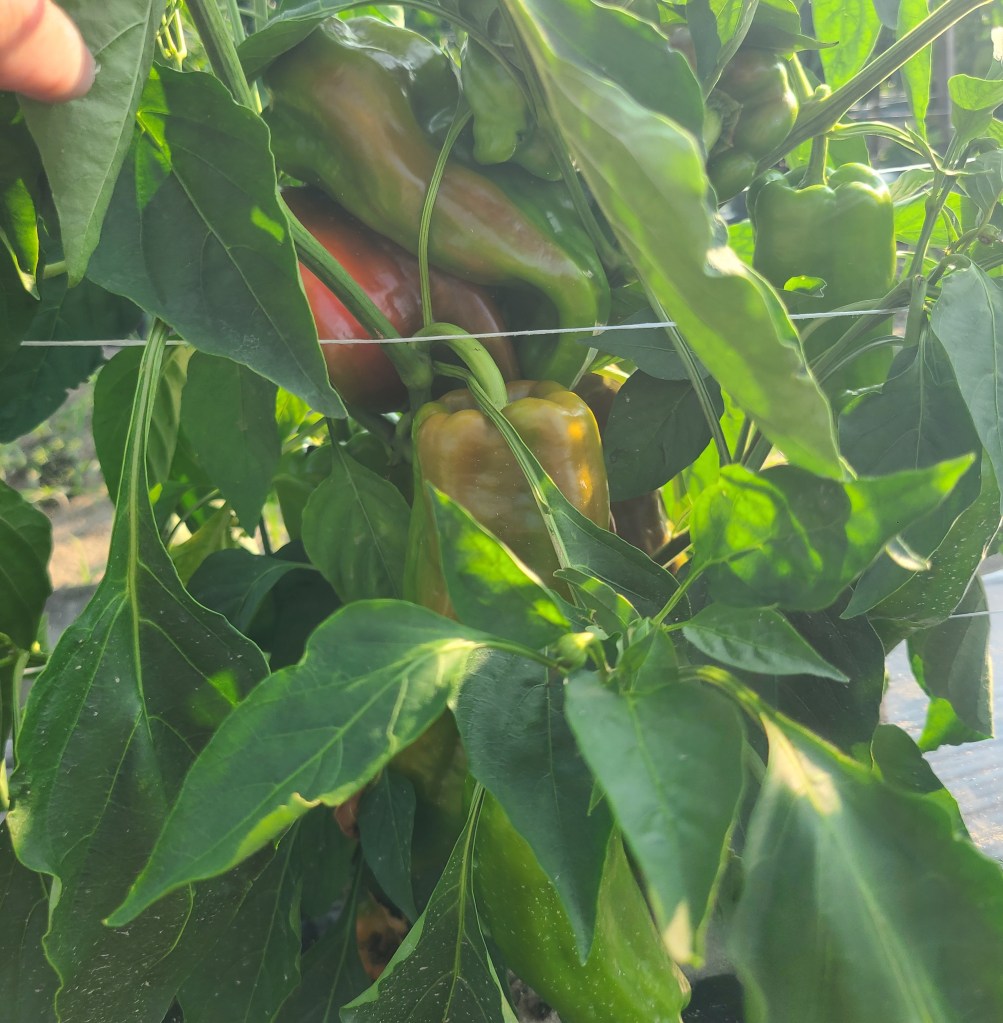
- Tomato and pepper crops are heavily loaded and ripening.
- Watermelons and cantaloupes are coming to harvest in good volume. Mini-watermelons are ripening well, whereas standard-sized seedless watermelons are a little behind.
- Blackberries are coming off in good volumes with great quality.
Sarah Scott
- We are harvesting are heaviest producing peaches of the season. The crop is about 10 days ahead of our usual season so varieties like O’henry will be ready for harvest starting the end of this week.
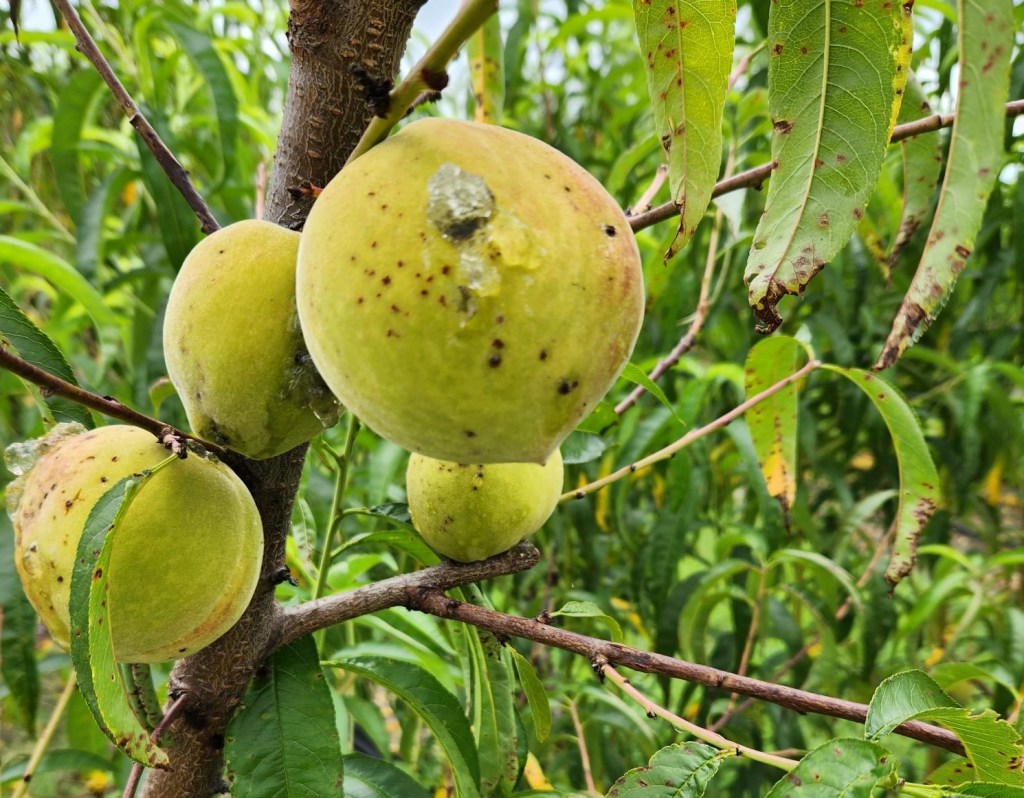
- Bacterial spot is an issue on fruit. Infections would have come in earlier in the season, but lesions tend to grow and show up close to harvest time. Jelly is another symptom that can occur.
- Summer crops are growing nicely with the hot temps and rain from last week.
- Disease pressure is high and we are keeping an eye out for pests.
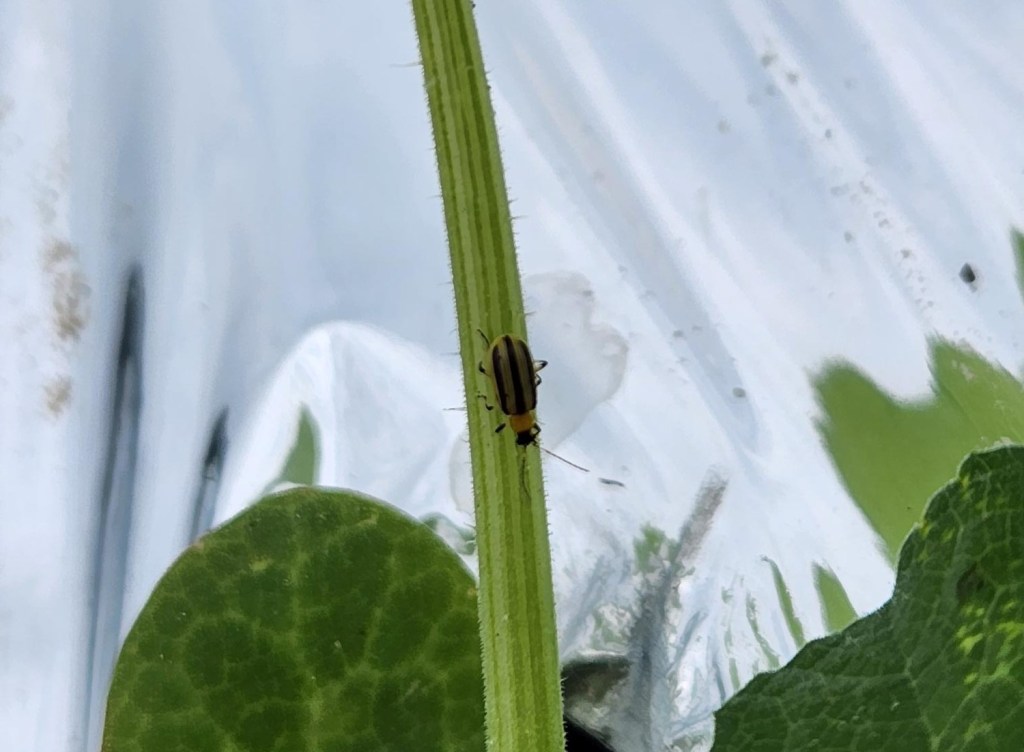
- Striped cucumber beetle populations have exploded in the last few days.

Pee Dee
Bruce McLean
- Rabbiteye blueberries and blackberries are still harvesting well. Fields that received heavy rain are experiencing some damaged fruit, such as fruit splitting in blueberries and soft, crumbly fruit in blackberries. Watch harvesting damaged, leaky fruit, as it will quickly mold in the clamshell. Also, water imbibed fruit has lower brix/sugar content (therefore reducing fruit taste and quality) and will not have the expected shelf life.
- Peaches are really in stride right now. I have seen some peaches that are being harvested that are soft on the blossom end. Low calcium and/or excessive rain could be the cause. Unfortunately, their shelf life is reduced because of it.
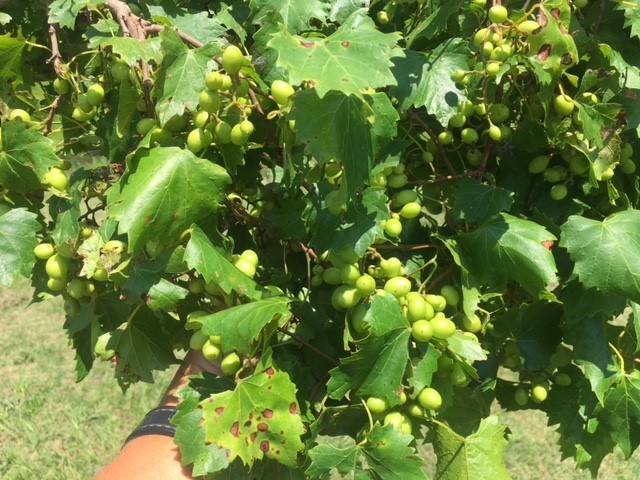
- Muscadines are starting to size up. Fruit set is a little off, likely to dry calyptra and possibly thrips. Fruit sizing is all over the place, even on varieties that usually have concentrated bloom and fruit set. Black Rot is starting to become apparent on leaves, as is Angular Leaf Spot (ALS) in limited vineyards. Most broad-based fungicides are effective at keeping Black Rot under control. Myclobutanil is the best product for ALS control. If left untreated, ALS can cause defoliation, and over time lead to plant decline.
- Cucumbers, squash, sweet corn, eggplant and tomatoes are all harvesting well – good quality and volume.
- Watermelons, cantaloupes, and peppers are starting to pick well.
- Beans and peas are just coming into harvest.
- Sweetpotatoes are looking good, with most fields seeing lapping in the row middles.
- Okra is finally starting to get some growth on it since the heat has finally arrived.
Question of the Week
What is growing at the base of this peach tree?
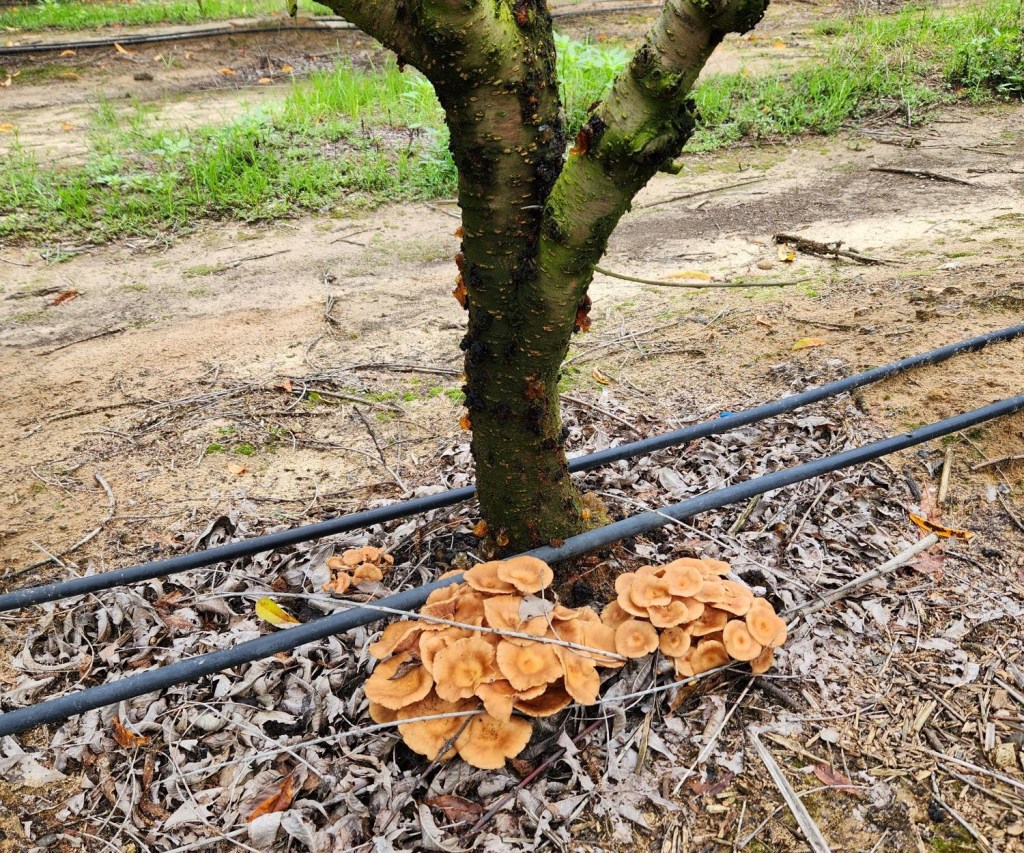
Answer in the comments below and check back on Thursday to see the answer.
 The South Carolina Grower