
We have lots of meetings coming up over the next few months, so be sure to keep a close eye on the Upcoming Events tab so you don’t miss anything.
Also, check out the latest episode of the SC Grower Exchange Podcast below.
Don’t forget to look at our Resources tab for links to crop handbooks, helpful websites, and related blogs. Be sure to scroll all the way to the bottom to see this week’s Question of the Week, and check back on Thursday for the answer.
Statewide
Lacy Barnette, Climate-Smart Leafy Greens Program
- We have a few months left in Year 1 of the program before we start Year 2 in June. We still have quite a few visits and verifications to do between now and then!
- Most producers that had winter cover crops have terminated them and completed their reduced tillage or mulching to prepare for their spring greens.
- Greens are looking good so far. Some are still being planted as fields dry, and the whole state is now in the recommended planting windows.
- For those with cover crops growing in the alleyways, keep an eye on management so that your cover crop doesn’t become unwanted pressure on the greens. Cover crops can be mowed.
- Please remember to be in touch with Extension Associates to set up visits for verification in order to receive incentives!

Coastal Region
Anna Sarah Hill
- Growers are laying plastic and running drip lines on beds in preparation for watermelon planting.
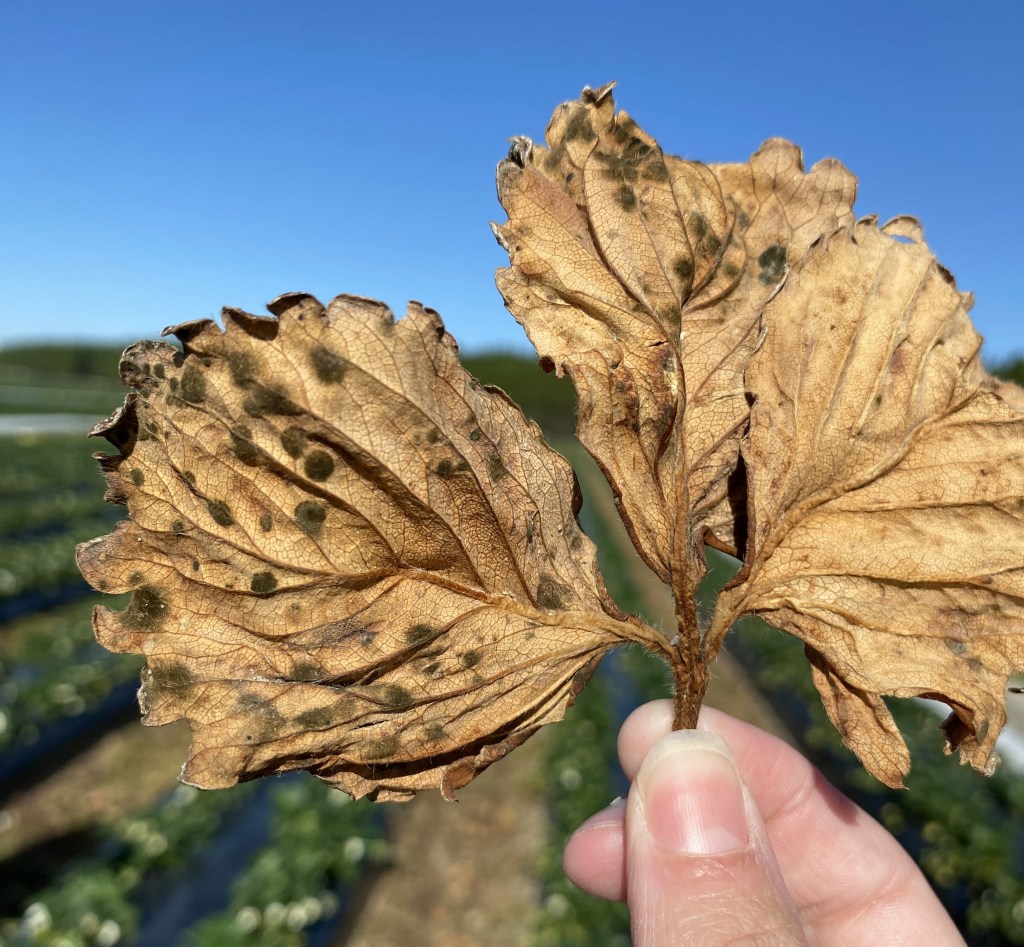
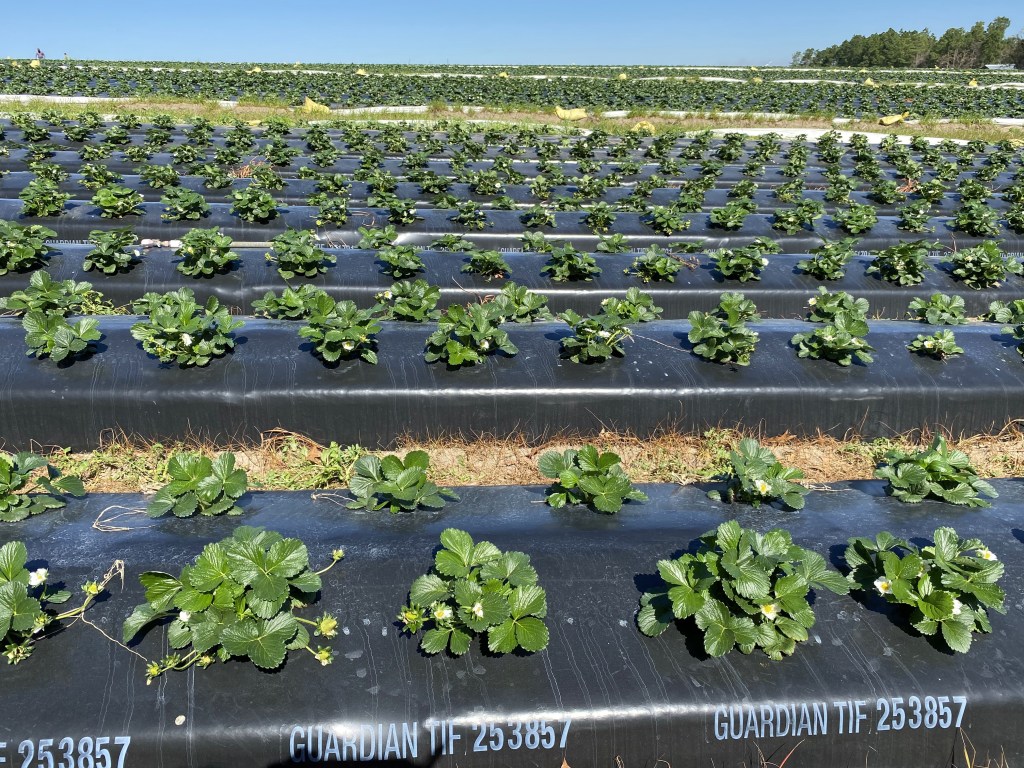
- Strawberries are beginning to ripen, should be ready in a few weeks, but pay close attention to the weather, as we could get another frost. As in other locations, grey mold and other diseases are prevalent. Be vigilant with Captan sprays to protect from this and other diseases, alternating with Switch and other fungicides with different MOA’s.
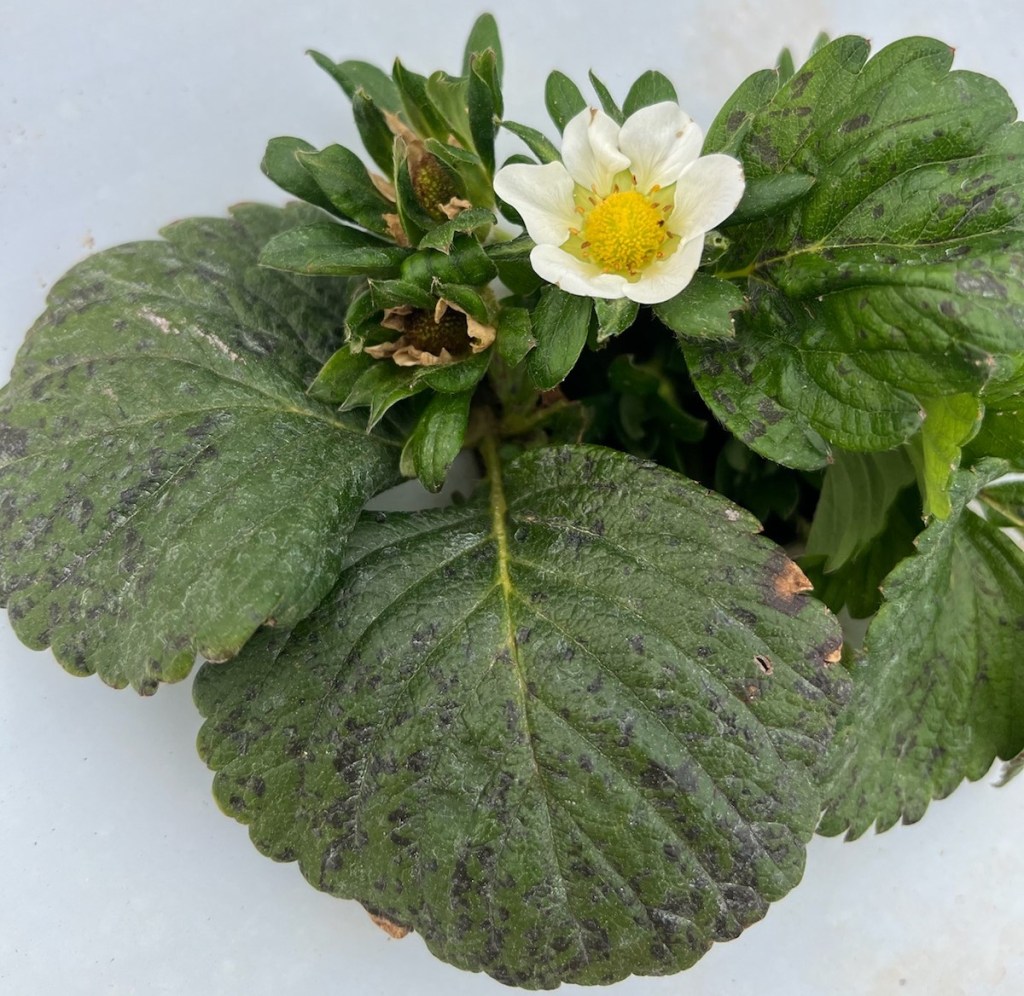
- Spider mites continue to be a huge problem this time of year. Heavy rain will wash them off, but as soon as things dry out, they will be back. As soon as you see 5 mites per leaflet, start spraying. Alternate between Acramite, Abamectin, and Nealta. Don’t wait until you have a heavy infestation. If you see webbing, it’s going to be much more difficult to regain control. Remember to check other crops as mites will harbor in them and return to the strawberries within a few days, after spraying.
Zack Snipes
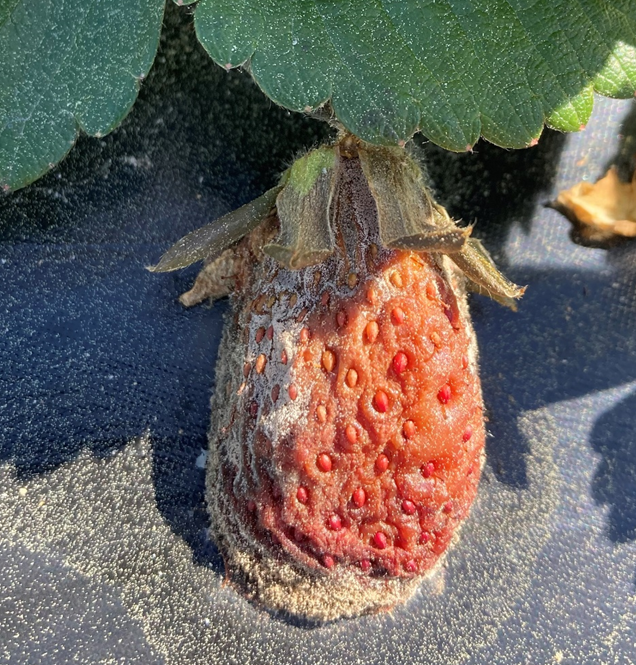
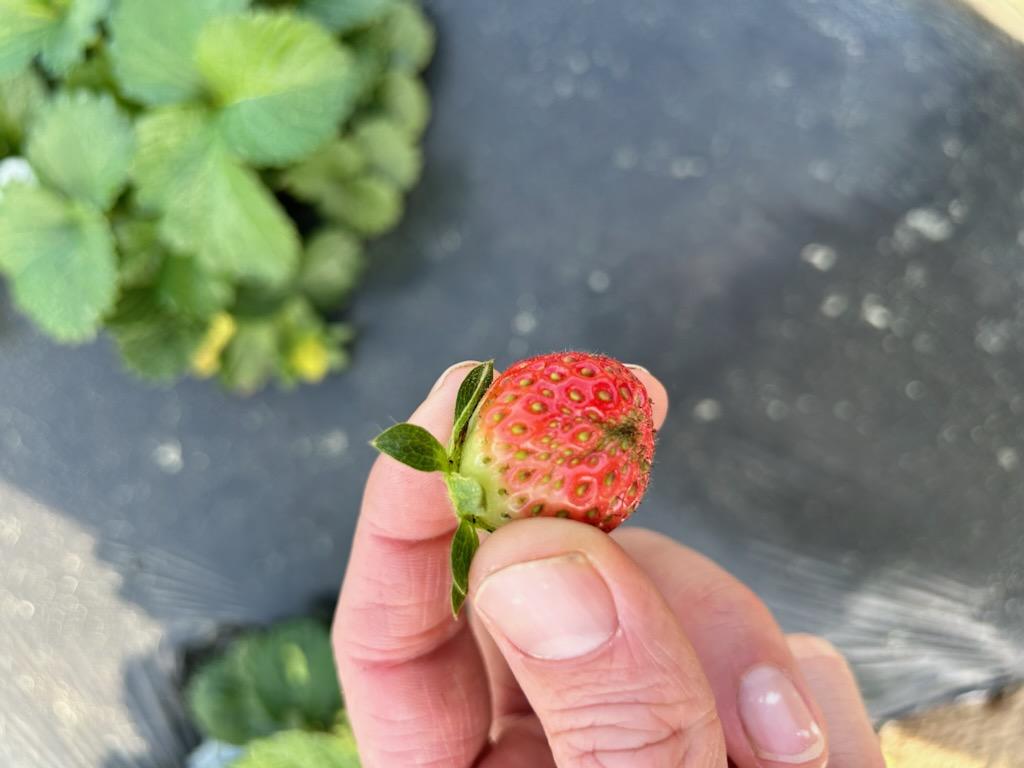
- We are in the middle of our first big flush for strawberries. They look great considering all the rain we have had. I am seeing a few bull-nosed berries on farms that missed or were late with their boron application. I have seen a few berries with botrytis (gray mold) but for the most part everything is clean. I think our preventive neopest sprays have helped out with early season berry rots.
- Spring crops such as lettuce, greens, onions, carrots, and beets are coming in at heavy volumes.
- Summer crops such as zucchini, squash, beans, and tomato are being planted this week.

Midlands
Phillip Carnley
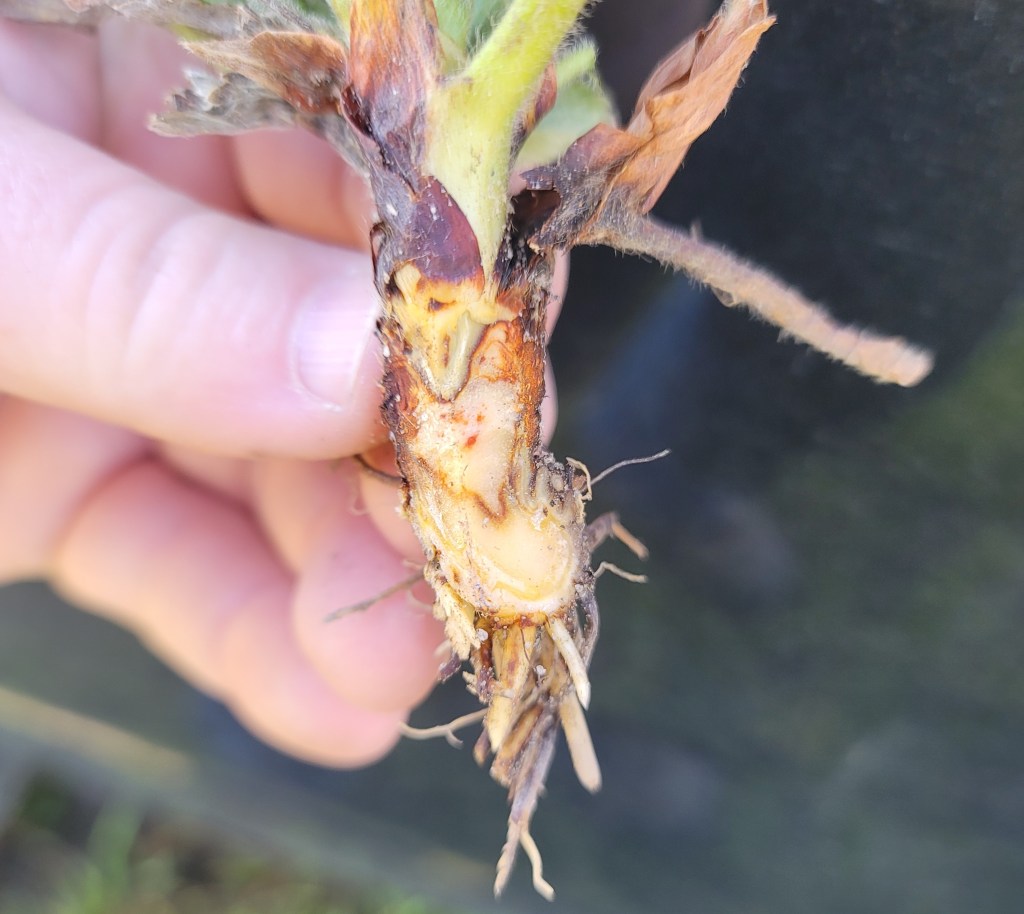
- Strawberries are growing well in the Midlands with little in the way of foliar diseases. I have observed an increase in anthracnose and phytophthora crown rots. If the field has a history of either, products like Ridomil Gold, Miravis Prime, Orondis Gold should all be kept in rotation.
- Onions are doing well and starting to size up nicely, with leaf spot still being seen.
- Leafy greens are still being harvested in good quantities with new plantings getting prepped for planting. Most all the older plant material that has bolted is being used as a green manure.
- If you haven’t done so, it is time to prepare fields and aquire sweetpotato slips. If you are in the eastern part of the state, recommended planting dates range from 4/15 to 6/15, and for the western part of the state 5/1 to 6/15.
Rob Last
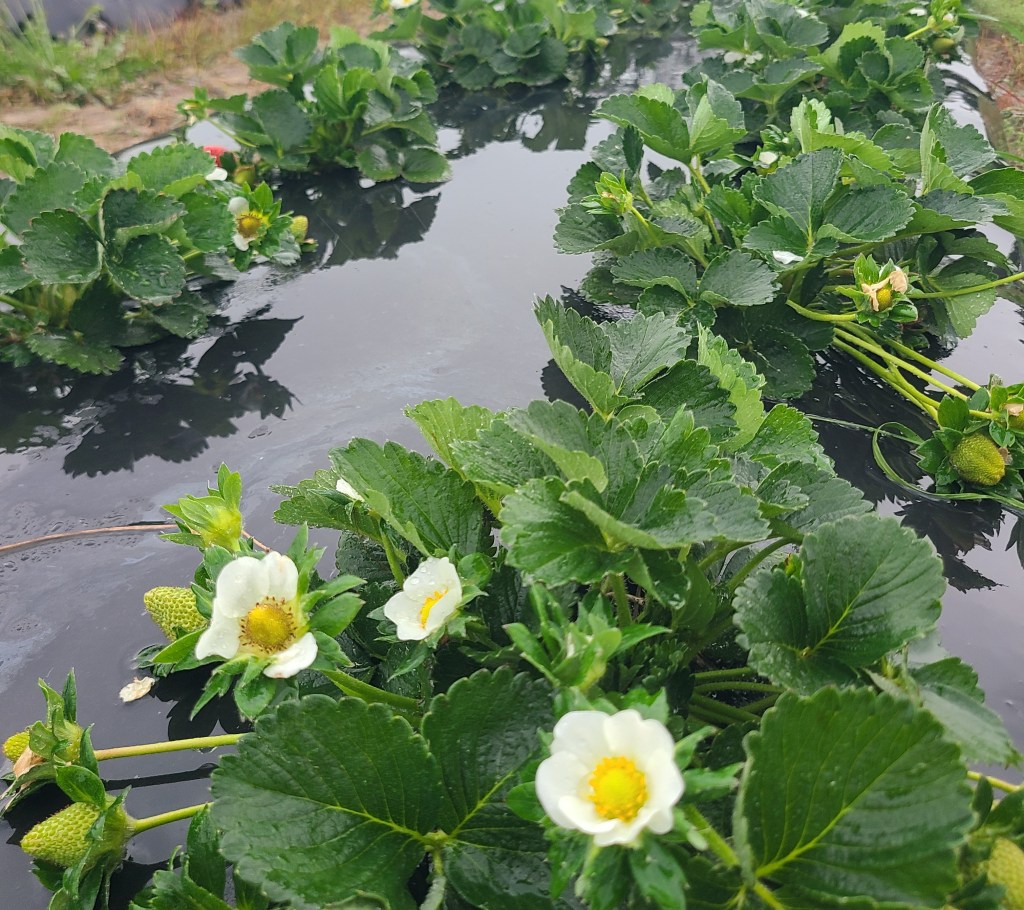
- Strawberries continue to develop well. Remove any over-ripe fruit and water-soaked berries. I am seeing low incidences of botrytis (gray mold) in some fields. Rotations of Thiam and Captan can be effective as preventative applications. Two-spotted spider mites are being seen, with miticide applications being warranted.
- Leafy greens, brassica transplants, and sweetcorn are all developing well.
- If you still have brassica transplants, remember to check the plants before transplant for any signs of black rot. Black rot is bacterial and will continue to progress when transplants are put into the field. The best method for control is to not plant diseased plants.
- Monitor the weather forecast for tonight, there is a potential for a freeze, current forecast temperatures are 34F but it wouldn’t take much of a drop to cause damage to strawberry flowers and developing blueberry fruit.
Sarah Scott
- Warmer temperatures and some rain showers last week have led us into a small cold snap. Temperatures are forecasted to dip near 30 tonight for areas along Aiken and Edgefield Counties which will put us under a frost/freeze warning. We will keep an eye on those “lows” overnight by monitoring our weather stations around the area.
- We were busy in the peach fields to stay ahead of the rain. Fertilizer applications went out as well as fungicide sprays. Growers are also bloom thinning some heavy-producing varieties and wrapping up pruning.
- Strawberries are ripening and some growers have even begun to skim fields and pick a few berries. Mites continue to be an issue as populations seem to be high. Growers should avoid using pyrethroid insecticides as a control for mites as this could kill non-target insects such as predatory mites. I’ve started to see a bit of botrytis on berries. We’ll monitor this closely with berries coming along. Growers can collect samples for fungicide resistance testing and are encouraged to do this twice during the growing season.


Pee Dee
Brittney King
- Things are looking pretty good in the Pee Dee. The rain did help us out with soil moisture, but I am seeing some instances of Botrytis in strawberry fields, mostly in the row middles. It is important to remember that any dead plant material left in the row middles (especially during rain) will be a target for bacteria and fungi to invade and eventually spread to your crop. Using a multi-site fungicide like Captan will help prevent disease resistance. Spider mites are active, but growers have been doing a great job at scouting and spraying ahead of the mites, so I am seeing a decline in the amount I am seeing. Besides that, strawberries are looking awesome, with the leaf spot completely resolved with warmer weather and a good spray program.
- I have seen some instances of Botrytis leaf blight in onions from the rain, but otherwise, they look great.
- Tomatoes are being planted in the next week or two.
Upstate
Andy Rollins
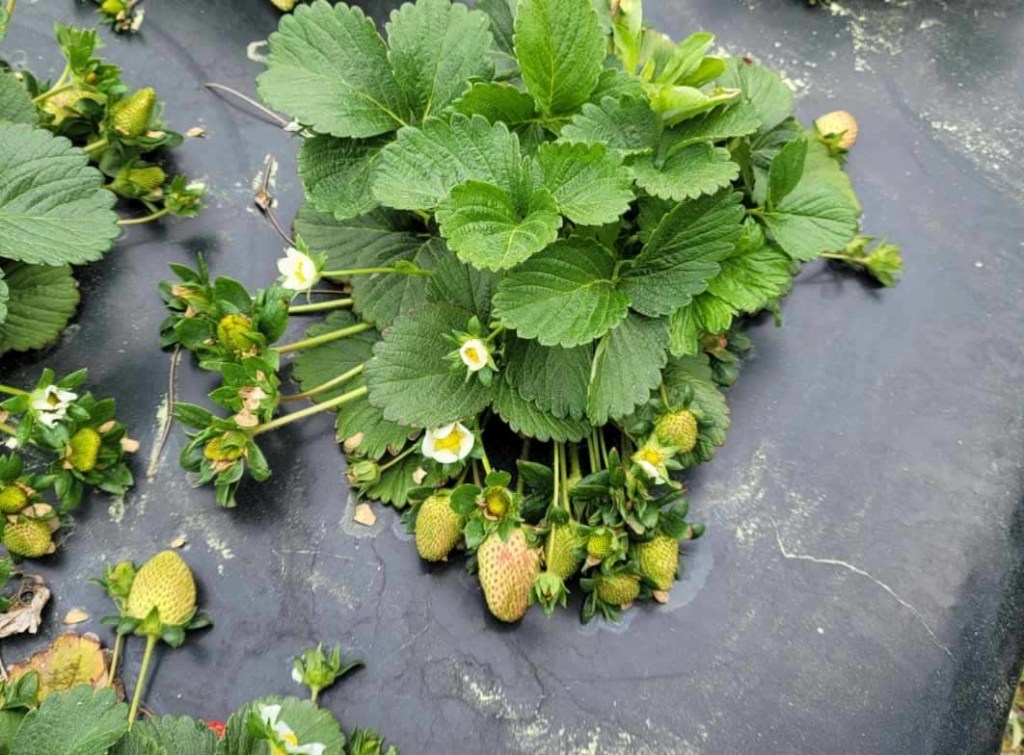
- Strawberry production is going well but haven’t started picking any volume yet. Many growers have varying degrees of mite infestation. Acramite, Oberon, Portal, or Nealta are all good choices with higher temperatures. Other oil based products should not be used as I have seen burning from this. With regular rainfall, I have continued recommending protectants captan or thiram. Be careful not to mix too many fungicides together. Fungicides do not need to have surfactants added to them. If growers have average of 3-4 green fruit per plant, fertilization should be increased to 1 lb actual nitrogen per acre per day or 7lbs/week. Potassium should also be at atleast that same rate.
- A freeze is possible tonight. Projected temperatures make losses possible for strawberries, but more importantly for peaches. Thankfully, the NWS is only calling for a low of 29F at 8am tomorrow morning. Winds should help prevent frost, if predictions hold. We are currently between full bloom and petal fall in the Upstate. We will sustain some damage if temperatures dip to 28 and below for an hour or more. Hopefully, this will not occur as we have had short peach crops for the last few years. Bloom sprays were put on last week. Many are using Bravo, Initiate, or Echo in the bloom as these all have the same active ingredient Chlorothalonil. This is a long lasting protectant fungicide that works well. Most are spraying at 1-2 quarts per acre.
Question of the Week
What caused the damage found on a dead branch of this peach tree?
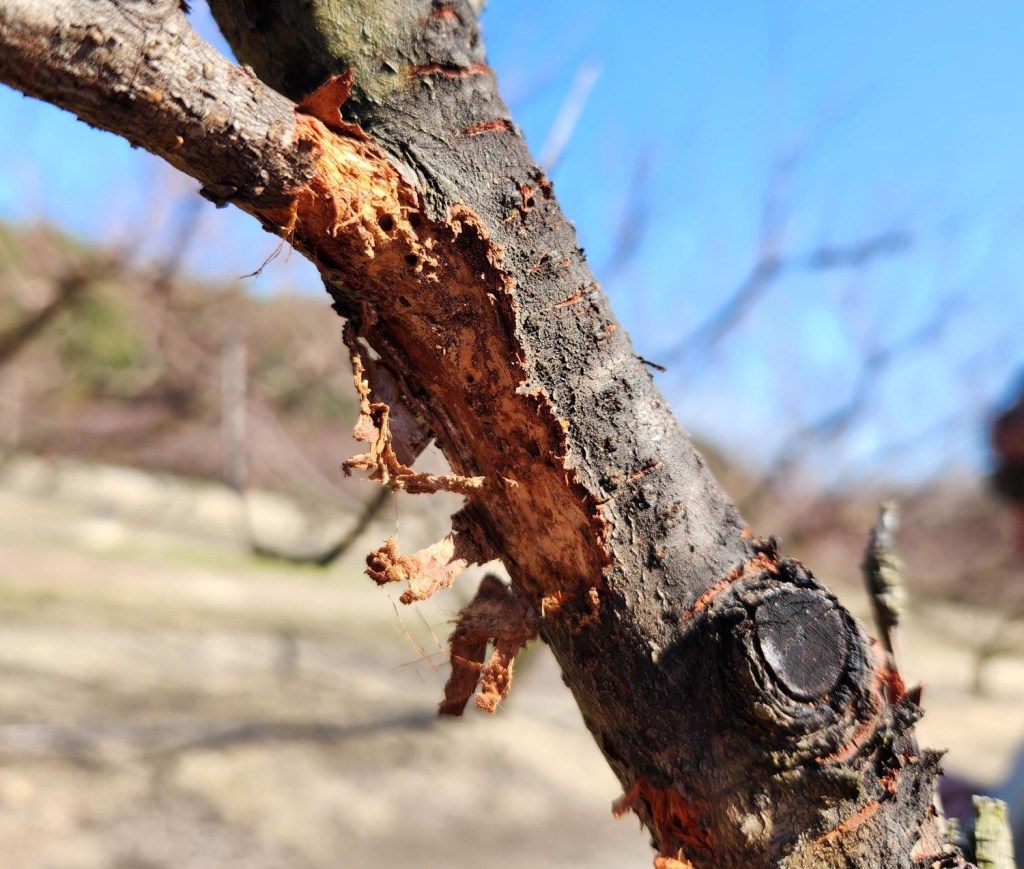
Answer in the comments below and check back on Thursday to see the answer.
 The South Carolina Grower
One response to “Weekly Field Update – 3/18/24”
Damage from deer!
LikeLike