Finally, a little rain fell around the state, though things remain fairly dry overall. Disease and insect pests are becoming more common as tomatoes, cucurbits, and sweet corn come to harvest. See details below.
Keep an eye on the Upcoming Events tab periodically so you don’t miss anything. Also, check out the latest episode of the SC Grower Exchange Podcast below.
Don’t forget to look at our Resources tab for links to crop handbooks, helpful websites, and related blogs. Be sure to scroll all the way to the bottom to see this week’s Question of the Week, and check back on Thursday for the answer.
Statewide
Tony Keinath, Extension Plant Pathologist
- As we get into June, growers are more concerned about preventing and managing foliage diseases on cucurbits. The Watermelon Fungicide Guide and Cucurbit Downy Mildew Management Land-Grant Press publications were last updated in 2022. Rest assured that the 2022 information is still valid, and there aren’t any changes to the spray programs. Miravis Prime is still the best fungicide for gummy stem blight, especially against isolates resistant to tebuconazole. One of the FRAC 11 products plus mancozeb or chlorothalonil is best for anthracnose on watermelon. I’ve been checking powdery mildew and downy mildew fungicide sensitivity on potted plants, and I haven’t seen any new resistance issues the past 2 seasons.
Coastal Region
Zack Snipes
- We finally got some rain but could really use some more.
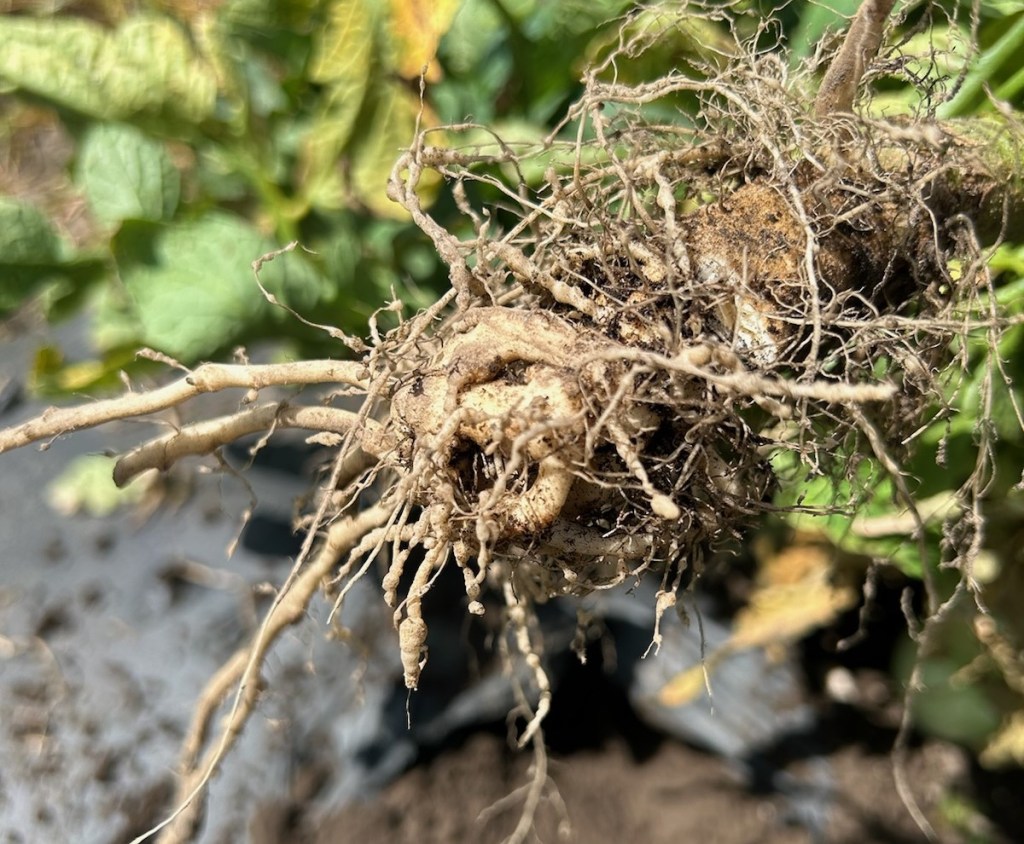
- Tomatoes of all types (grape, cherry, slicer, Roma) are all coming to market and should come to market in heavy volumes this week. It seems that our fruit set this year isn’t as great as the past few years, but we still should have good yields. I am seeing an uptick in bacterial spot on the leaves and bacterial wilt and Southern blight to the entire plant. I noticed some smaller plants that just aren’t doing as well as they should. I pulled a few up and found some root-knot nematode symptomatic galling of the roots. Taking notes of wilts or poor performing plants this year can help with recommendations and management next season.
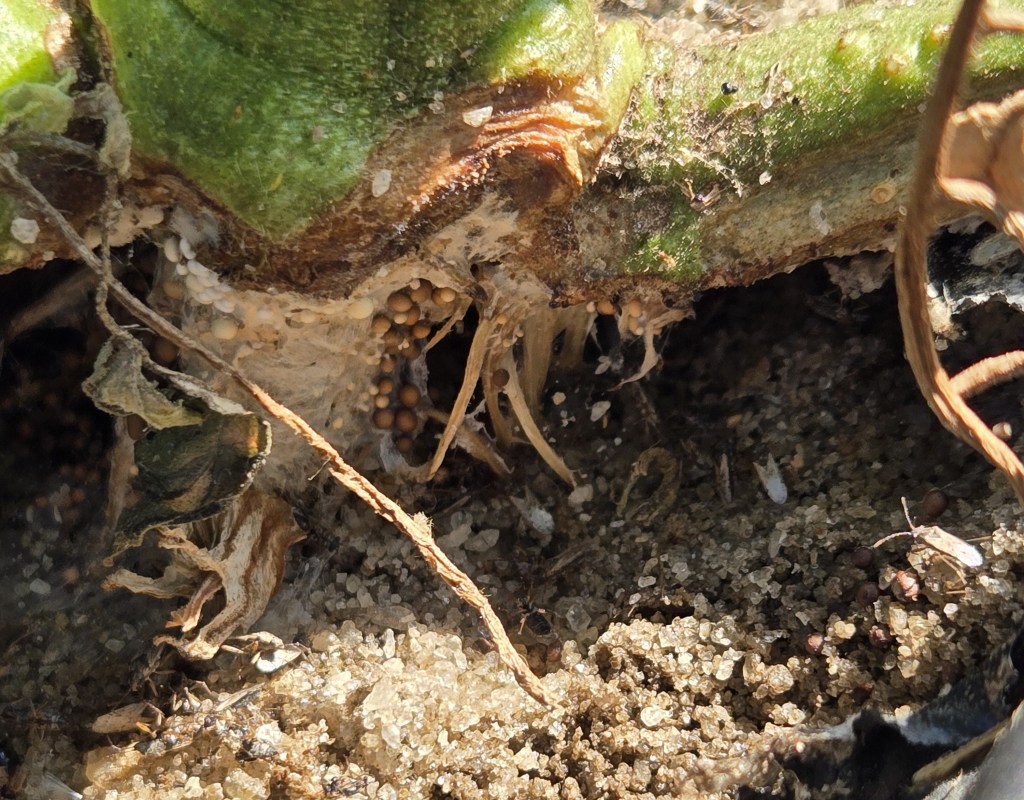
- I saw at least one million squash bugs last week on squash and zucchini. Populations of these insects will build and cause wilting and entire collapse of the plant. Scout your fields and take action before this occurs.
- I am seeing increased downy mildew in cucumber across the region as well.

Midlands
Phillip Carnley
- The Midlands received some much needed rain early this morning, but we are still short on water.
- Cucumbers are being harvested with excellent yield and so far very little disease pressure. One planting is showing signs of a split crop meaning that there are two distinct size variations on the plant, more than likely due to a lack of sunny growing days.
- Blackberries are still being harvested with great quality and quantity. With this heat and rain, I expect to see spotted wing drosophila start to be an issue. There are still a few remnants of leaf and cane rust floating around.
- Watermelons are growing well in most areas, but there are some dry land melons that could use more rain. Right now the biggest disease issue in melons in the Midlands is gummy stem blight.
- Tomatoes seem to be a mixed bag this season compared to last year. There is no shortage of disease or insects. Tomato fruitworm is already starting to move in, in which case you should be treating proactively with chemicals like Coragen or Radiant.
- Sweet corn, depending on planting date, is being picked for early plantings and the later plantings are coming into tassel.
- Peas and butterbeans are growing well currently. Peas are flowering nicely and starting to set plenty of pods with no sign of the curculio yet, but its only a matter of time. Butterbeans have set a few pods and are flowering continuously. There has been some anthracnose seen early but nothing substantial as the plants have matured. As the beans set pods, keep a close eye on them as anthracnose on the pod does decrease yield. If warranted a spray of Quilt Xcel will clear it up, if caught early enough.
Rob Last
- There is lots of excellent quality produce coming to market right now in the Midlands.
- Keep scouting crops closely as we have had some rainfall increasing humidity and hence disease pressure.
- Cucurbit powdery mildew is active. Vivando or Gatten are good options.
- Cucurbit downy mildew is also active. Remember, if you are using Orondis products, limit applications to one third of the total applications, so six downy mildew sprays would equate to two applications of Orondis.
- Bacterial diseases may increase with rainfall, rainsplash of soil onto the leaves, or from wounding.
- Diamondback moth numbers are decreasing but imported cabbage worm and cabbage looper numbers are present.
- Southern blight and bacterial wilt are present in many crops.
Pee Dee
Christiana Huss
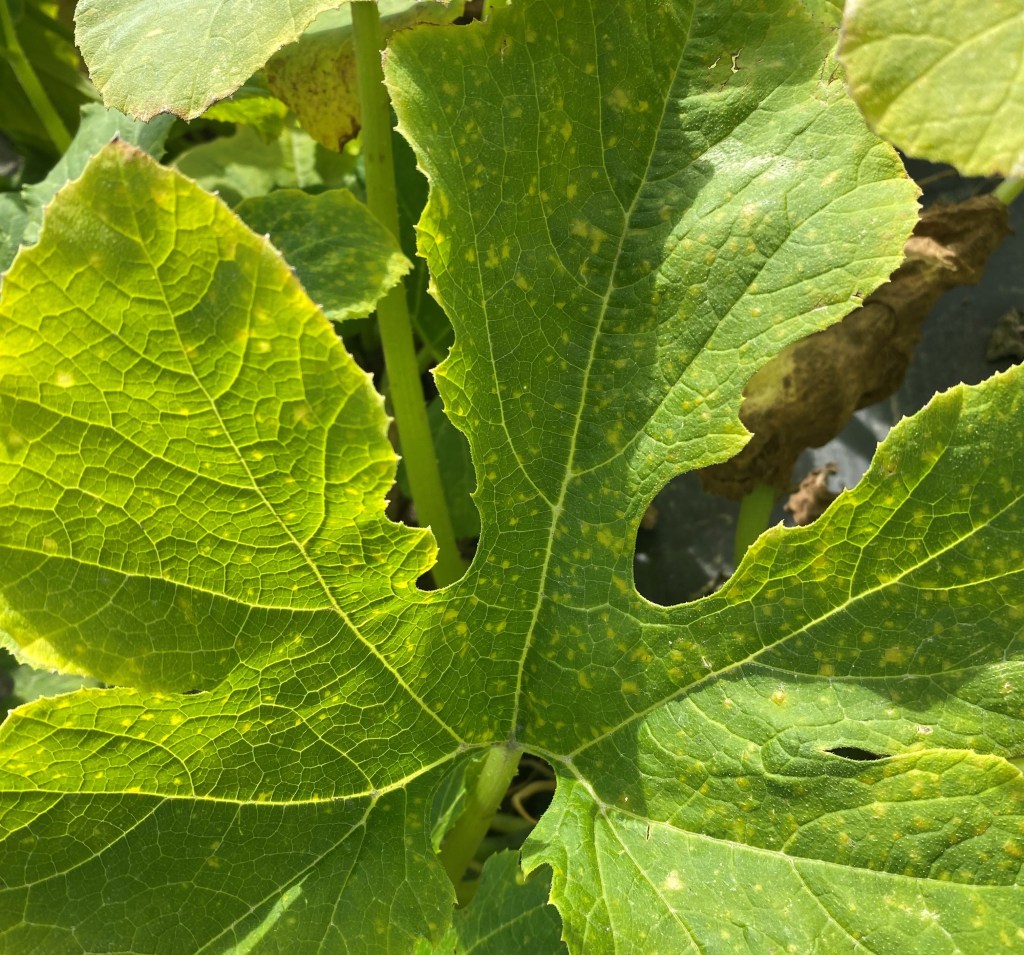
- I’ve found suspected powdery mildew on yellow squash and neighboring rutabaga.
- Potato and green beans are being harvested in good numbers.
- Blueberry and blackberry harvests are ramping up. Muscadine grapes are loaded with small fruits, but won’t be ready for a few more weeks.
- Okra is looking good. It thrives in the hot, dry weather we’ve been having. Many farmers are starting to prune the lower leaves of their plants.
- Diamondback moth continues to be a major pest on a number of brassica greens.
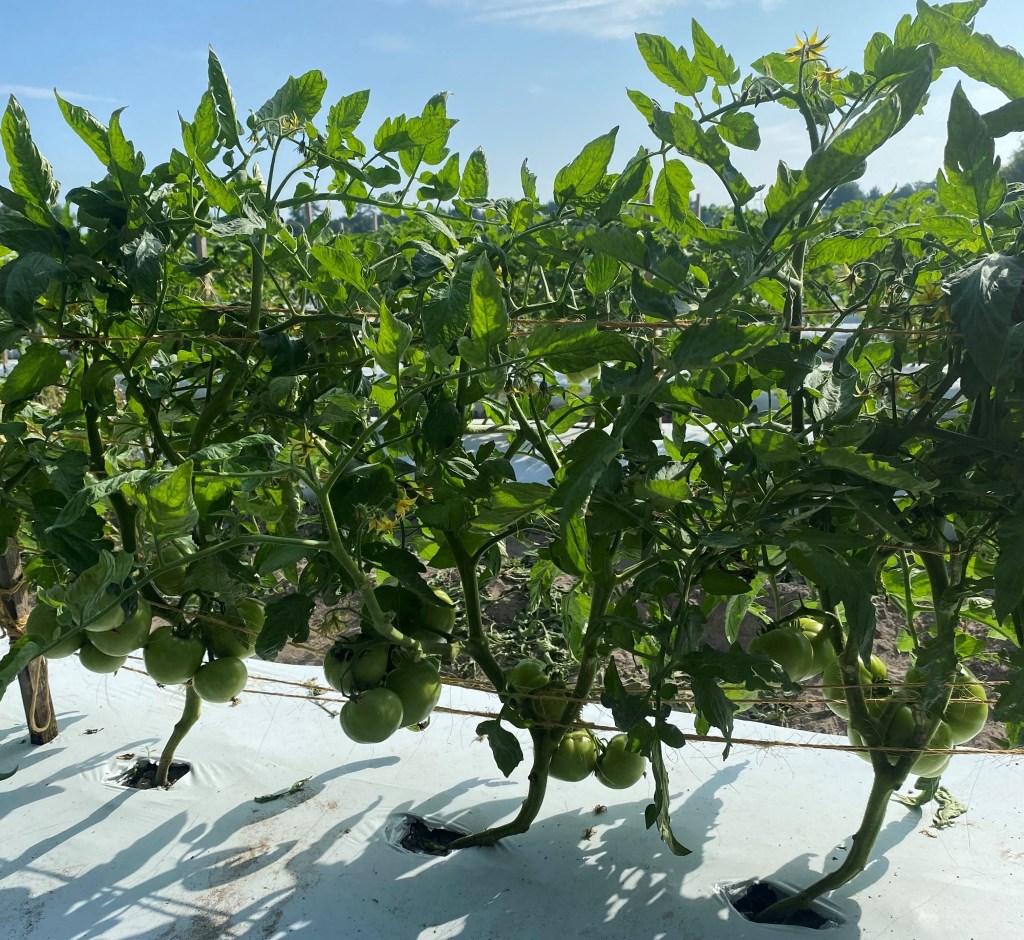
- Tomatoes look great and have lots of fruits. However, alternaria early blight and anthracnose have become a problem in some fields.
Question of the Week
What kind of caterpillar is feeding on this buckeye leaf?
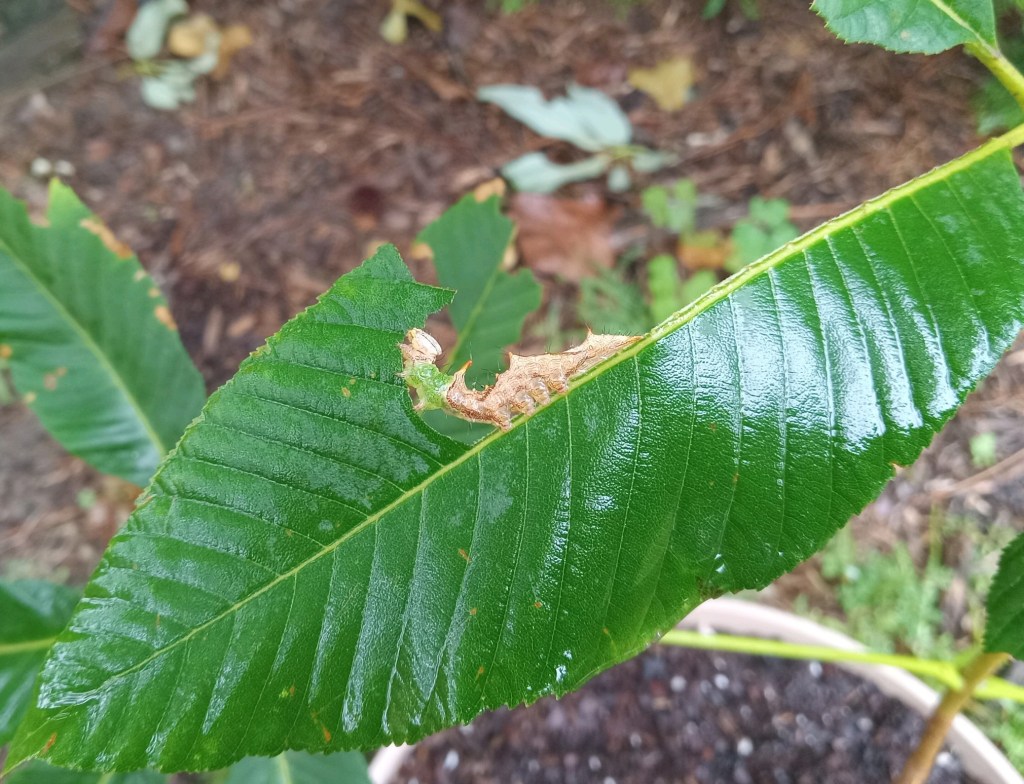
Answer in the comments below and check back on Thursday to see the answer.
 The South Carolina Grower