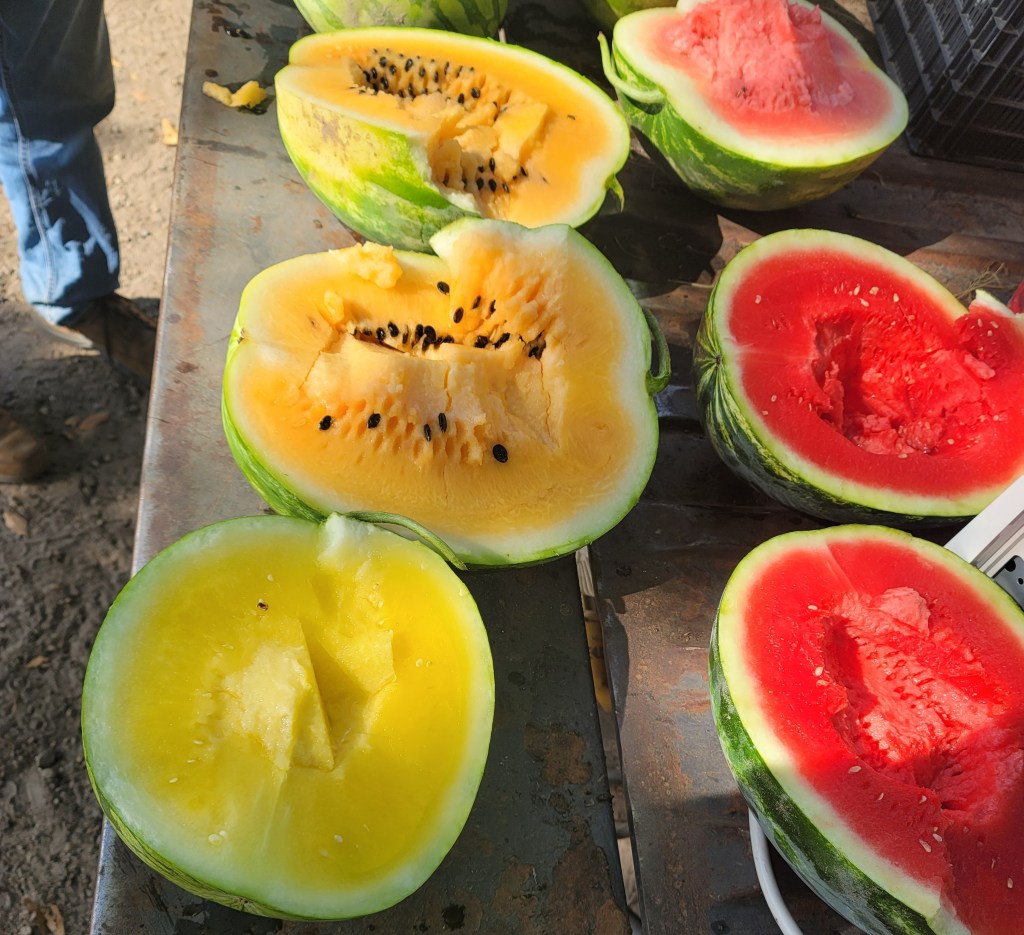
We hope everyone has a safe and happy Independence Day later this week!
Parts of the state received some much-needed rain over the past several days. Hot weather is causing many crops to come to harvest faster than normal. Insect pressure is high, as is blossom end rot, and other heat-related issues. See details below.
Keep an eye on the Upcoming Events tab periodically so you don’t miss anything. Also, check out the latest episode of the SC Grower Exchange Podcast below.
Don’t forget to look at our Resources tab for links to crop handbooks, helpful websites, and related blogs. Be sure to scroll all the way to the bottom to see this week’s Question of the Week, and check back on Thursday for the answer.
Coastal Region
Anna Sara Hill
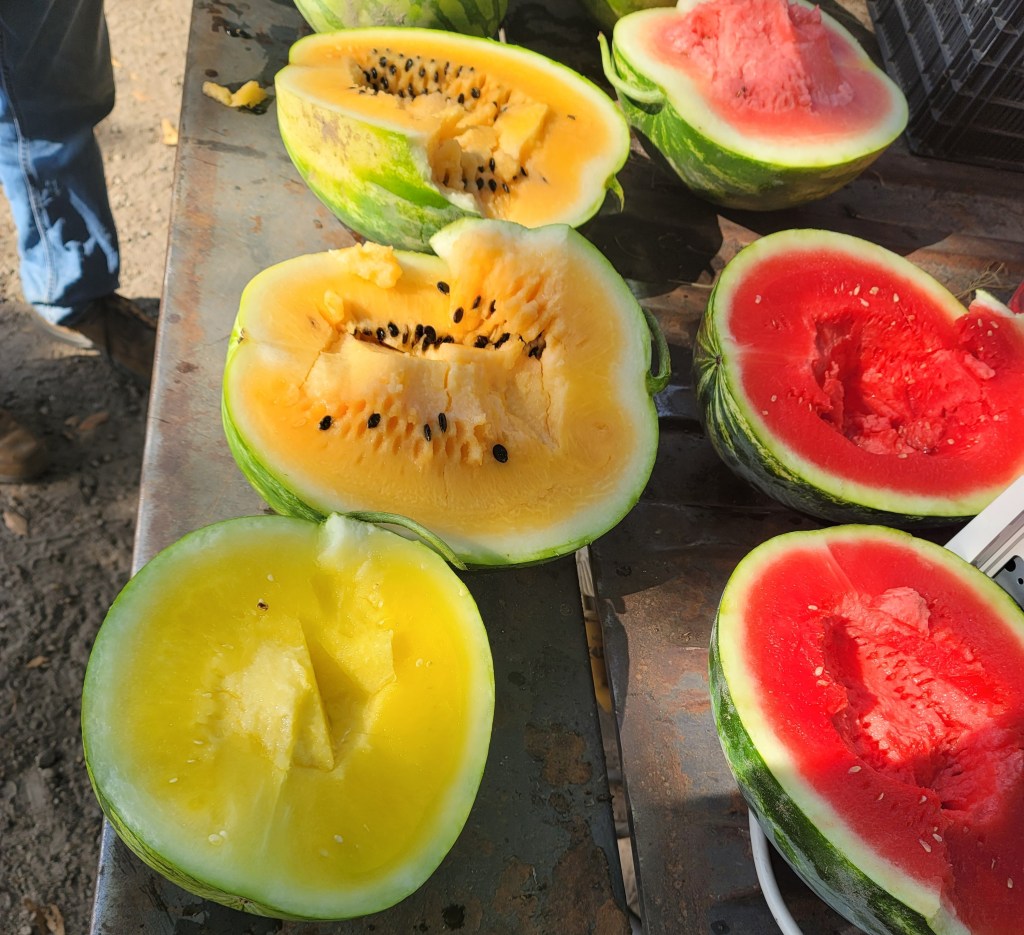
- July is national watermelon month, and there are several more weeks of the harvest season left. Continue to protect crops from late-season diseases and insects by protecting plants with 1- and 0-day PHI pesticides.
- The weather is hot and dry, and crops are showing signs of heat stress and need rain. Disease pressure seems to be high, despite the dry weather. Sometimes it is hard to distinguish between wilt caused by heat and lack of water and wilt caused by disease. For example, symptoms of bacterial wilt and Southern blight, which are both prevalent in tomatoes and peppers, resemble water stress at first glance.
- Anthracnose and bacterial leaf spot have also been noted in various vegetables this week.
- The last blueberries of this season were picked last week, and blackberry harvest will be wrapping up within a few days. Both crops had outstanding yields this year.
- I am seeing the mysterious bronzing of blueberry leaves and death of young plants in this area consistent with the previous reports recorded across the state. The primary cause of this problem is still under investigation.

Zack Snipes
- It is incredibly hot and humid in the Lowcountry. Some areas have received just enough rain to settle the dust, while others received a good amount. With the heat and wind, we need all the rain we can get. The heat is making crops come to market quickly but also shortening our season. Most crops are winding down with tomatoes, eggplant, pepper, and watermelons still hanging on.
- I am seeing lots of stink bug and leaffooted bug damage on tomato, as well as sunscald on plants that have lost many leaves due to bacterial spot. Peppers are spotty this year as well, with not as much foliage as normal. This is also causing some loss due to sunburn/sunscald.
Midlands
Phillip Carnley
- The Midlands received some much needed rain, but could still use some more.
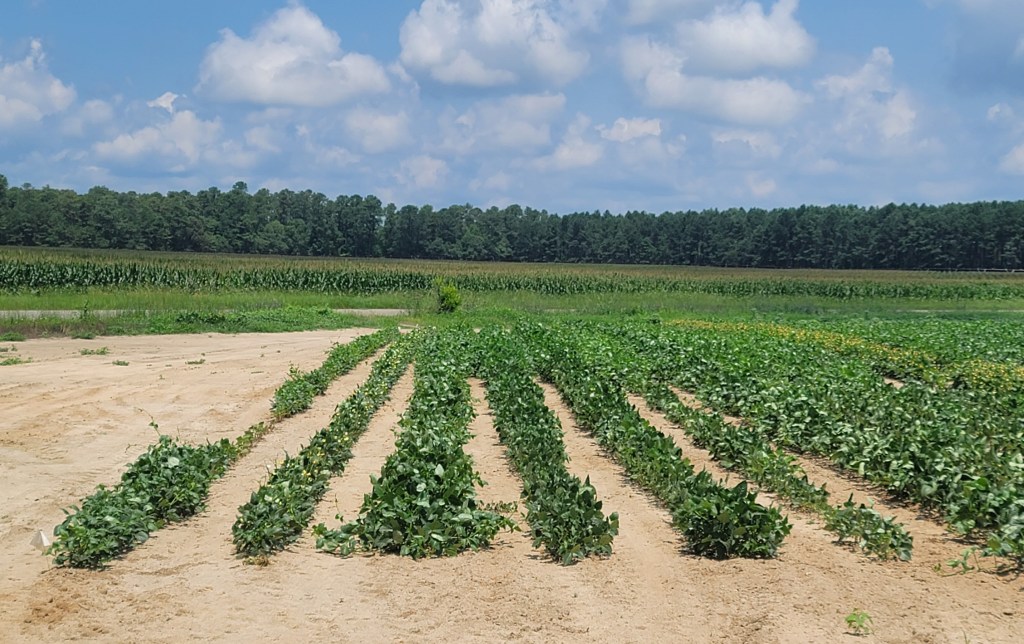
- Cowpeas are coming in nicely at the moment with shellers putting in the work during the past hot week. Yields are looking good in the Midlands, and with the advent of the rain, should continue to increase. Disease and insect pressure has been minimal so far, but growers have been on top of insecticidal sprays. The cowpea variety comparison is doing excellent with some varieties setting pods and some coming into flower. More to come on a drop-in field visit, so stay tuned.
- Watermelons continue to be harvested, but vine quality is on a sharp decline attributed to higher levels of gummy stem blight and other environmental factors. With the rain in the area, I expect to see more split melons in the field and higher disease pressure.
- Tomatoes are continuing to produce well. Southern stem blight and Sclerotinia are the biggest issues I am seeing so far, as well as blossom end rot.
- Peppers are being harvested in great quantity with little in the way of defects.
- Leafy greens are wrapping up for processing, and fields are being prepped for different crops.
- Sweetpotato slips are still being planted in an effort to work around our dry conditions, but potatoes under irrigation look pretty good with decent vine cover.
Rob Last
- Many crops are coming off in good volumes and of excellent quality.
- Areas of the Midlands have seen some welcome rainfall over the last few days, which will help relieve some drought symptoms in crops. Where rainfall was received, amounts have varied from 0” to 1.5”.
- With the rainfall and high temperatures, humidity will rapidly increase, providing excellent conditions for fungal pathogens.
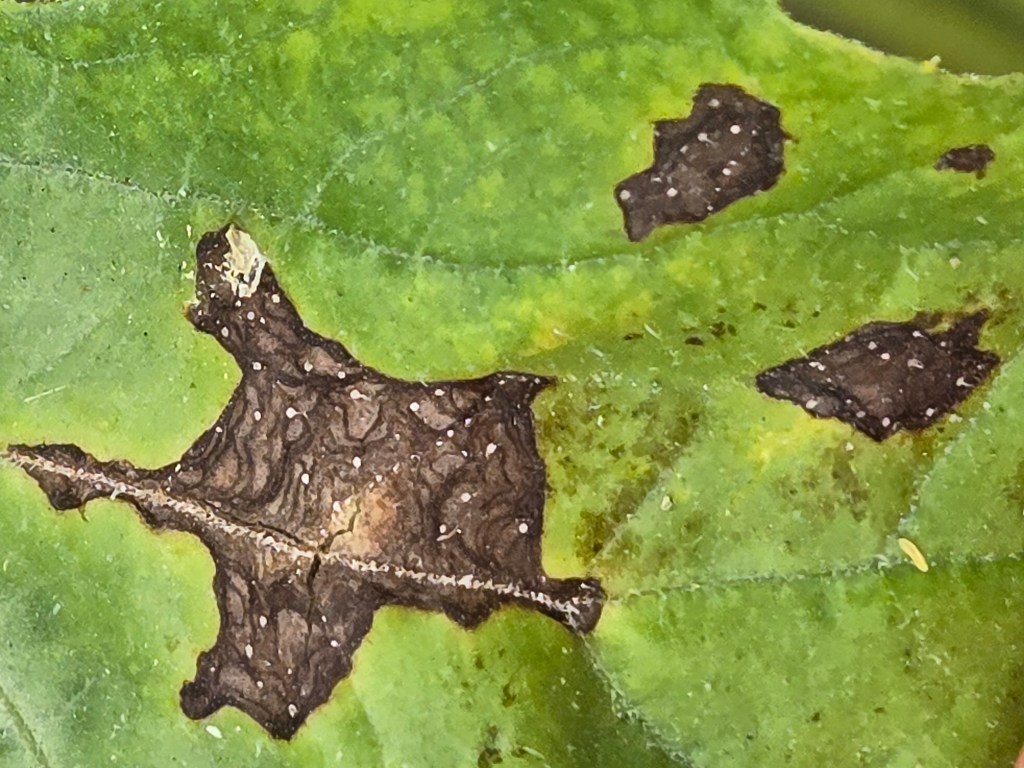
- Anthracnose (Colletotrichum species) is present on the foliage of cucurbits and some fruit infections. Fungicides will be beneficial in managing the spread of foliage and protecting the fruit. Several options are available: protectants such as mancozeb (Manzate) and strobilurins (Evito) can also be useful, penthiopyrad (Fontelis), or combinations of cyprodinil, fludioxinil (Switch), and difenoconazole, benzovindiflupyr (Aprovia Top). Remember QoI fungicides are single-site mode of action products and may develop resistance quickly, so rotate the FRAC codes. Some of the biopesticides may help slow the spread of anthracnose for organic producers, but fixed copper offers poor control. Foliar lesions of anthracnose may look very different on different crops. In watermelon and cucumber, the lesions are dark brown with a more angular appearance to the lesion. The centers of older lesions may drop out, leading to a shot-holed appearance. On fruit, the lesion starts as a small, black, circular, sunken lesion.
- Keep a close eye on tomato and eggplant crops as we progress. The hot, dry weather up to the weekend has seen increasing spider mite populations. Remember to always use a selective miticide for the management of spider mites. Broad-spectrum insecticides will inevitably result in spikes in the population due to the loss of in-field predators. PFR-97 (Isaria fumosorosea) may be an option in an organic situation. Again, avoid using pyrethrins because this activity may cause a flare in the population. Providing habitats for predatory mites may also be beneficial in managing populations.
- Scout frequently, and if you are unsure about the identity of a pest, weed, or disease, reach out to your Extension Agent. We will be happy to help.
Pee Dee
Brittney King
- Most areas in the Pee Dee could still use heavy rain.
- Blueberries and blackberries are still being harvested and have relatively low disease pressure. I have seen an instance of orange cane blotch in a blackberry field caused by a parasitic alga species. Phosphonate fungicides like Prophyt are the best options for managing this disease. The key to managing this disease is prevention. Applications should be done six times every two weeks starting in May. Also recommended are cultural practices like the removal of old floricanes after harvest, promoting rapid drying of the canopy, proper water and nutrient management, and avoiding planting in poorly drained sites.
- Tomatoes, okra, sweet corn, squash, zucchini, cucumbers, and peppers are being harvested with good fruit set. Canopy cover is not as great this year, so sunscald has become an issue with crops like tomatoes and peppers. Kaolin clay (Surround WP) can be applied to tomatoes, peppers, and some fruit crops like watermelon to protect against sunscald.
- Muscadines are starting to size up, and the fruit set seems to be good this year.
- Watermelon and cantaloupe are being harvested just in time for Independence Day!

Upstate
Andy Rollins
- Excessive heat is causing multiple problems in vegetable crops. We have late peppers planted on black plastic instead of white that have burned right where the stem hits the plastic. We also have sunscald on the sidewalls of the peppers. This can also be confused with the calcium deficiency/uptake problem blossom end rot. There is plenty of blossom end rot on commercial tomatoes. Heirlooms, Roma, and large fruited varieties are showing more than others and there are differences within varieties. Foliar products are being pushed on growers that are not effective at fixing this problem. Calcium is a large molecule that is taken up through the roots, not the leaves. It costs the plant energy to absorb calcium. The heat stress we are experiencing causes plants to shut down and movement of nutrients from the roots is hindered. Please focus your efforts on keeping consistent moisture in the beds and consider afternoon waterings to help cool the plants. Soil sampling and tissue sampling can prove what I am speaking of. Next year, please consider using a double drip line as this will help with this the problem.
- In peaches, drought, and heat stress of last week is forcing earlier ripening of late varieties. Julyprince, for example, is supposed to be harvested around July 21st in the Upstate, yet we were picking some last week on several farms. Hopefully, this weekend’s rains will negate some of the damage already caused, although some of the negative effects can’t be reversed at this point. We normally don’t need irrigation on new peach plantings in the heavy clay soils of the upstate, but we are having some young trees die from drought.
Question of the Week
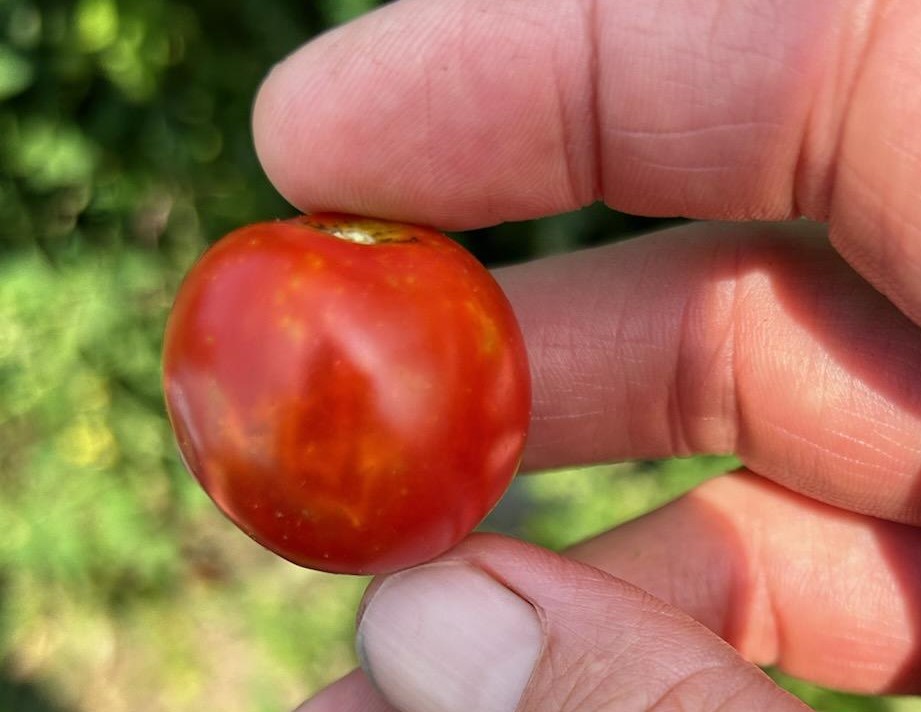
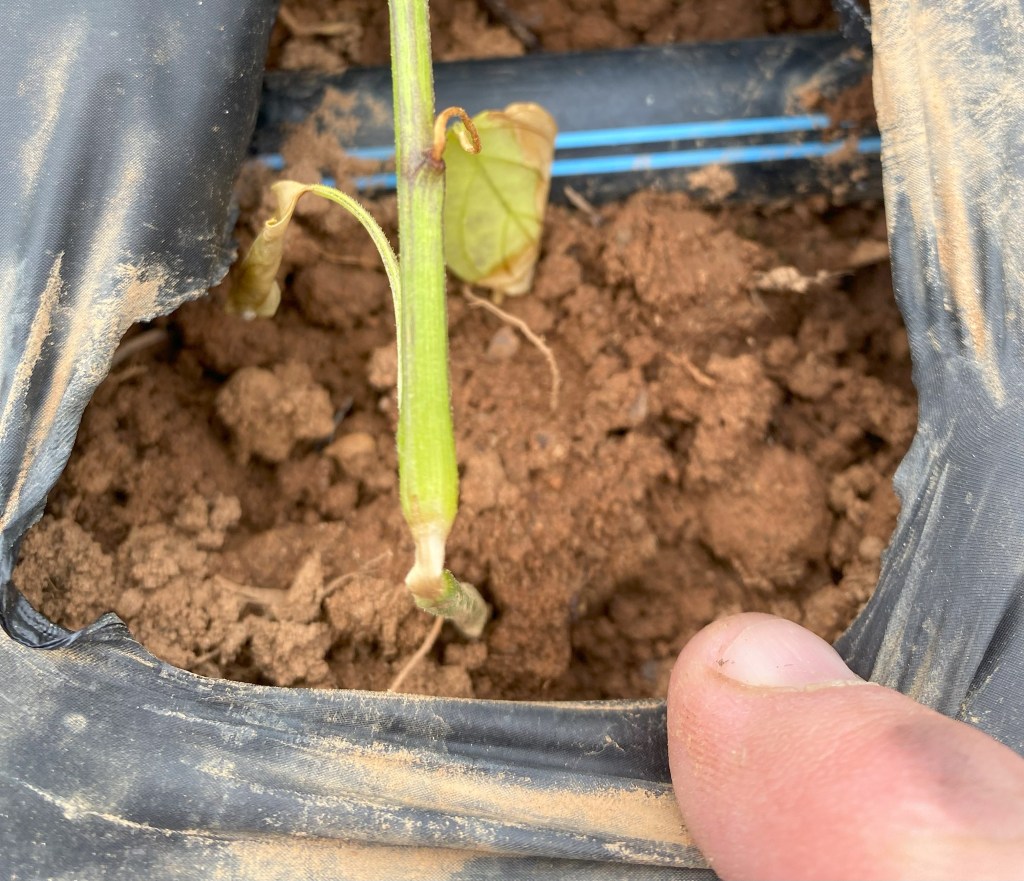
What is going on with this Roma tomato?

Answer in the comments below and check back on Thursday to see the answer.
 The South Carolina Grower
One response to “Weekly Field Update – 7/1/24”
tomato spotted wilt virus
LikeLike