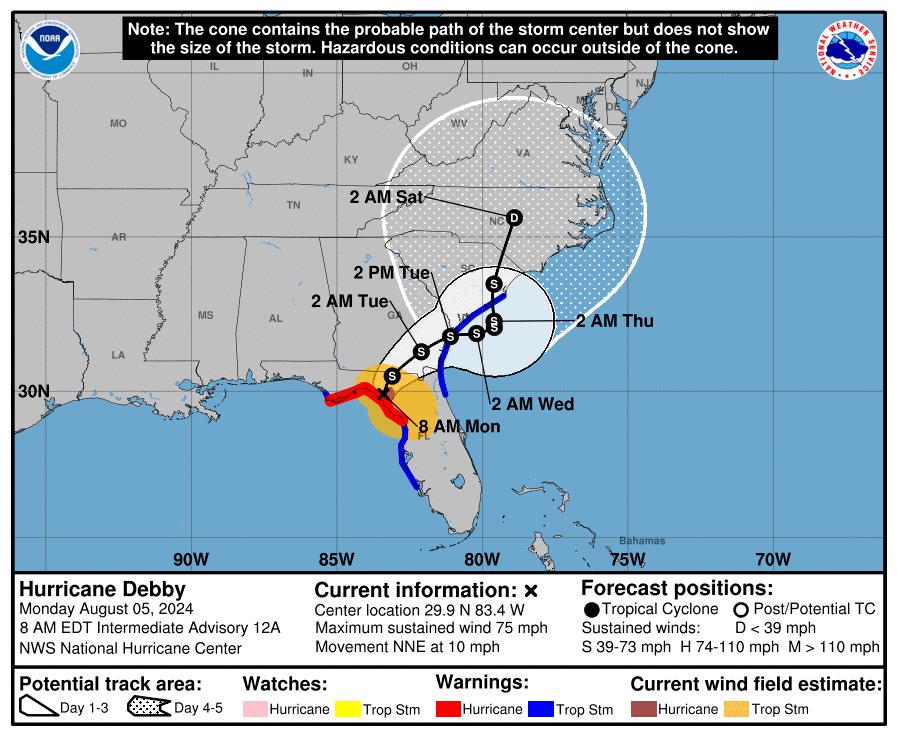
Tropical Storm Debby made landfall in Florida this morning as a category 1 hurricane and is expected to bring significant amounts of rain and winds to South Carolina this week. The latest forecast shows Debby making landfall near Georgetown, SC and traveling north through the Pee Dee region.
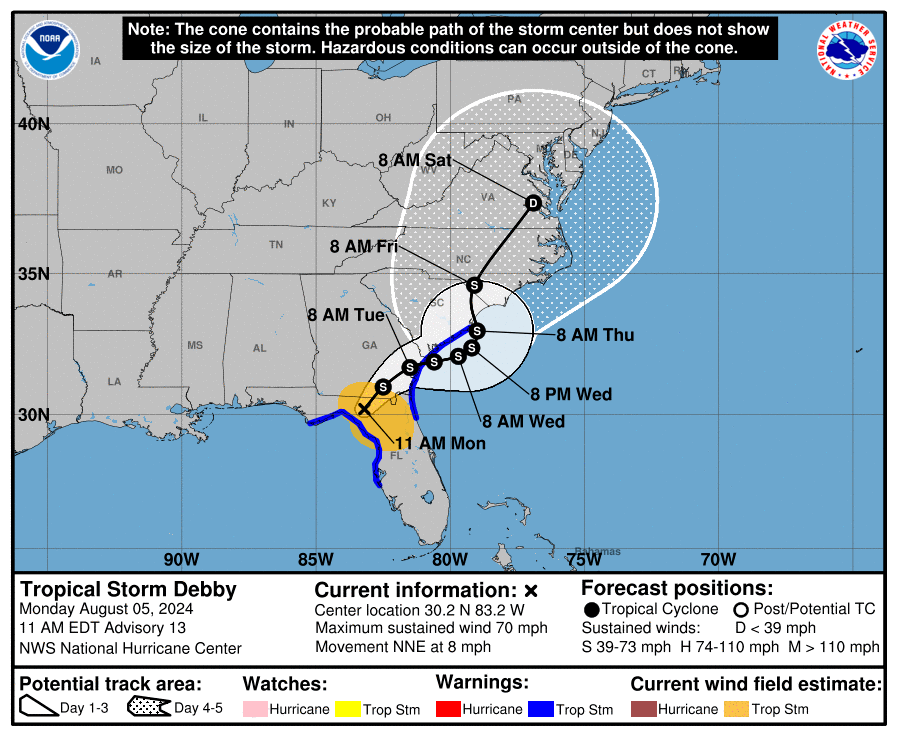

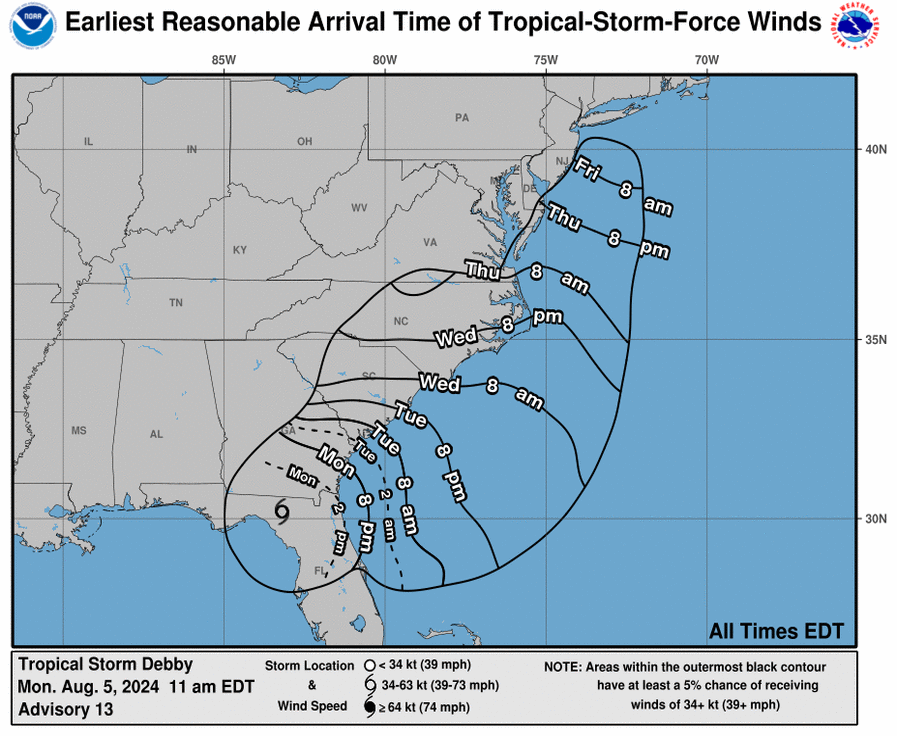
In preparation for the storm, please be safe and take steps to protect yourselves and your families first. Be prepared to experience damaging winds, excessive rainfall, and power outages. After the wind and rain have passed and it is safe to do so, take lots of photos of any damage experienced on your farm, for insurance purposes.
Structural and Land Considerations
Be sure to anchor down or put anything away that may blow away in a stiff wind. Numerous high tunnels were damaged or took flight in Hurricane Matthew in 2016. If possible, it wouldn’t be a bad idea to remove the plastic from the frame to protect its structural integrity in the wind. If that is not possible, cutting the plastic will work if the winds get strong enough to warrant it (but wait until the last minute to make this decision). Make sure ditches are clear around production areas so excess water will be able to drain unimpeded. If there is enough time, digging drainage furrows in areas prone to holding water may be helpful as well.
Disease Considerations
Winds and rain from Hurricane Debby may bring fungal spores or bacterial cells into fields in South Carolina. Before the rain starts, cucumber, cantaloupe, pumpkin, and watermelon crops should be sprayed with a fungicide to protect them from downy mildew; Ranman is suggested. The long periods of leaf wetness will promote the development of gummy stem blight and anthracnose. Systemic fungicides are needed now because they will move into the leaf and provide residual control after the residue on the leaf surface is washed off due to excessive rains. Quadris Top is one of the few fungicides that will protect against both gummy stem blight and anthracnose. Other systemic products include Inspire Super or Miravis Prime for gummy stem blight and Topsin M for anthracnose.
Black rot on brassica crops is typically seen after a hurricane because the wind-driven rain spreads the bacterium. Since black rot is already present in several areas, it is likely to be much worse after the hurricane. No chemicals are effective enough to provide useful protection before a hurricane. Growers should consider harvesting early if the crop is close enough to maturity.
Root rot due to soilborne water molds may be a problem on crops currently in the field. Older plants that were being “held over” to harvest a few more peppers or eggplants should be removed once fields can be accessed. Be sure to remove the roots as well to avoid building up water molds and making infestation worse. On newly transplanted fall cucurbits and fruiting vegetables, damping-off may occur due to Pythium being activated in saturated soil. If transplants are reset to improve stand, do not put them in the same hole; move 6 to 12 inches away from the previous transplanting hole.
Food Safety Considerations
Flood waters resulting from a natural disaster present a food safety risk to food crops. Flooding, as defined by the FDA, is “the flowing or overflowing of a field with water outside a grower’s control.” Pooled water resulting from rainfall or irrigation systems does not pose the same risks as flood water. Flood water can contain hazards from runoff or sewage. These hazards may be biological (bacteria, viruses, parasites) and/or chemical (petroleum, heavy metals, chemicals, etc.), and if present, they may cause illness or injury to consumers.
- If the edible portion of a food crop is contacted by flood waters, that food is considered adulterated (unfit for consumption) and cannot enter into commerce.
- If the edible portion of the crop does not come in contact with flood water, the grower should determine the safety of the crop on an individual basis. If growers are unsure whether their crops are affected, they should contact their State Department of Agriculture, FDA, or University Cooperative Extension Service.
Also, be aware that produce in cold storage can degrade rapidly if power is lost. If backup generators are available, make sure they are in good working order.
Additional Resources
Evaluating the Safety of Flood-affected Food Crops for Human Consumption.
USDA Hurricane Preparation and Recovery Guides for SC Producers.
Contributing authors: Justin Ballew, Tony Keinath, Zack Snipes, Chad Carter
 The South Carolina Grower