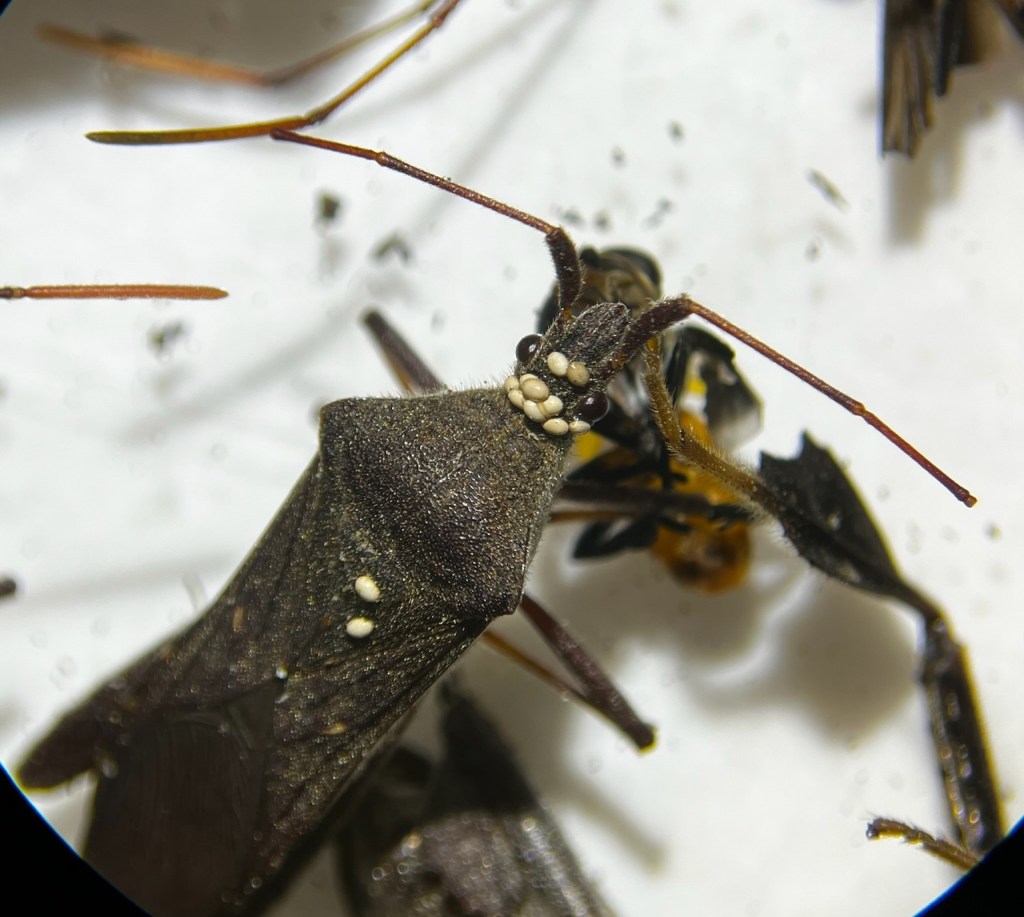
What is on the head and back of this leaffooted bug?

The oblong, white objects on this leaffooted bug (Leptoglossus oppositus) are eggs of a parasitoid fly (Trichopoda pennipes), which will hatch and consume the leaffooted bug. Usually when we discuss parasitoids in pest management we are referring to small wasps, but flies in the family Tachinidae also parasitize other insects and can be beneficial in pest management. This fly genus is sometimes referred to as “feather-legged flies” because their back legs have feather-like hairs sticking out. This fly will parasitize squash bugs and other related stink bug and leaffooted bugs.
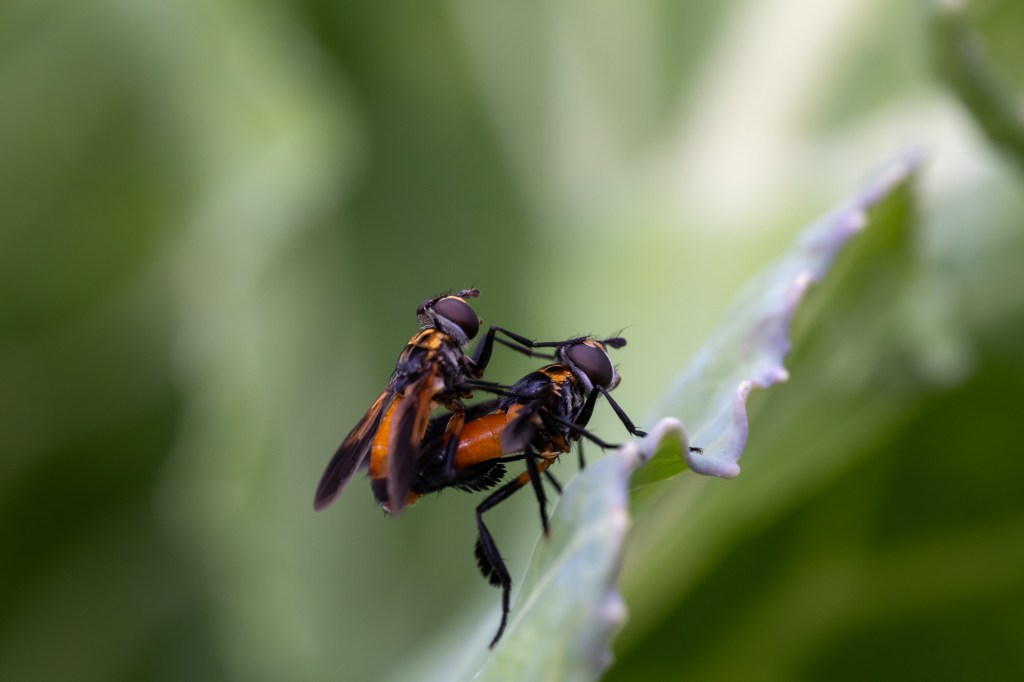
It is very uncommon to see so many eggs on one bug, because a leaffooted bug will defend itself and try to flick away flies before they can deposit an egg (and seal the death sentence). This leaffooted bug was captured alive in a pheromone trap, which was full of bugs and their parasitoid flies, interestingly enough. This demonstrates that the flies track down their prey from the insect odors alone, and don’t rely on host plants’ emitted defense odors (as many parasitoids do).
This week’s question is from Tom Bilbo, Extension Vegetable Entomologist.
 The South Carolina Grower