Category: Question of the Week
-
Question of the Week – Harlequin Bug
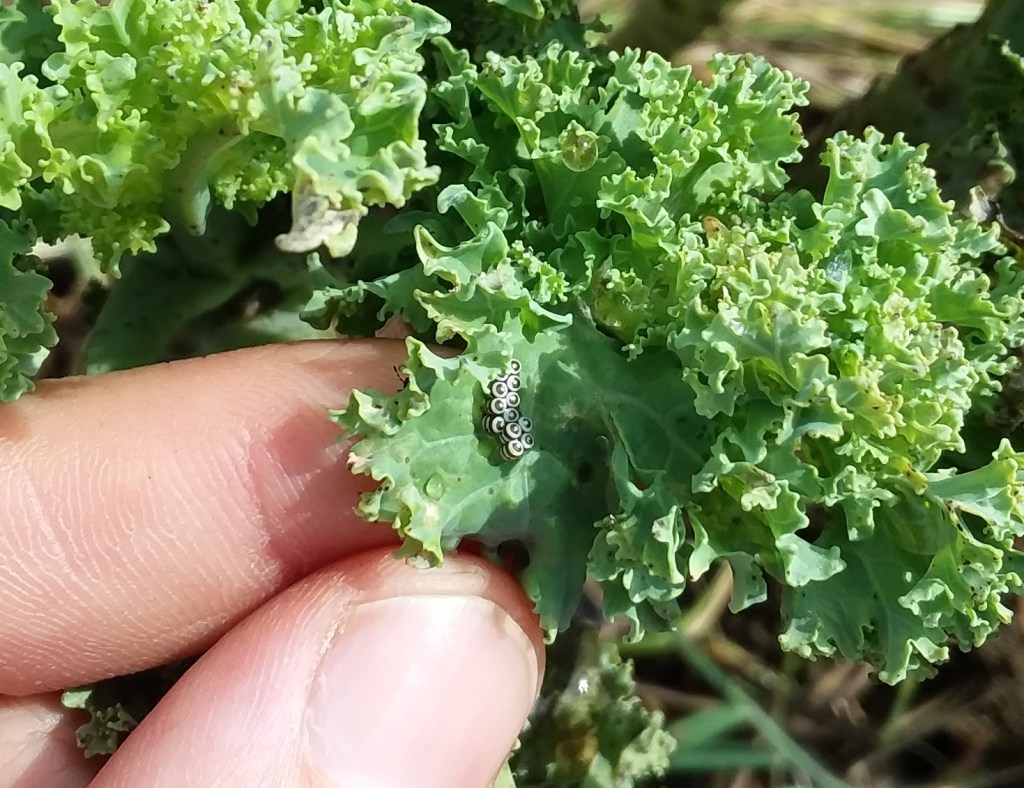
Which insect laid these black and white barrel-shaped eggs? These are the eggs of a harlequin bug (Murgantia histrionica). Harlequin bugs are members of the stink bug family that feed primarily on brassicas, such as collards, kale, cabbage, and broccoli, as well as weeds like wild mustard, bittercress, pepperweed, and shepherdspurse. Like the eggs, adults…
-
October Grower Spotlight – Inspired Greenhouses
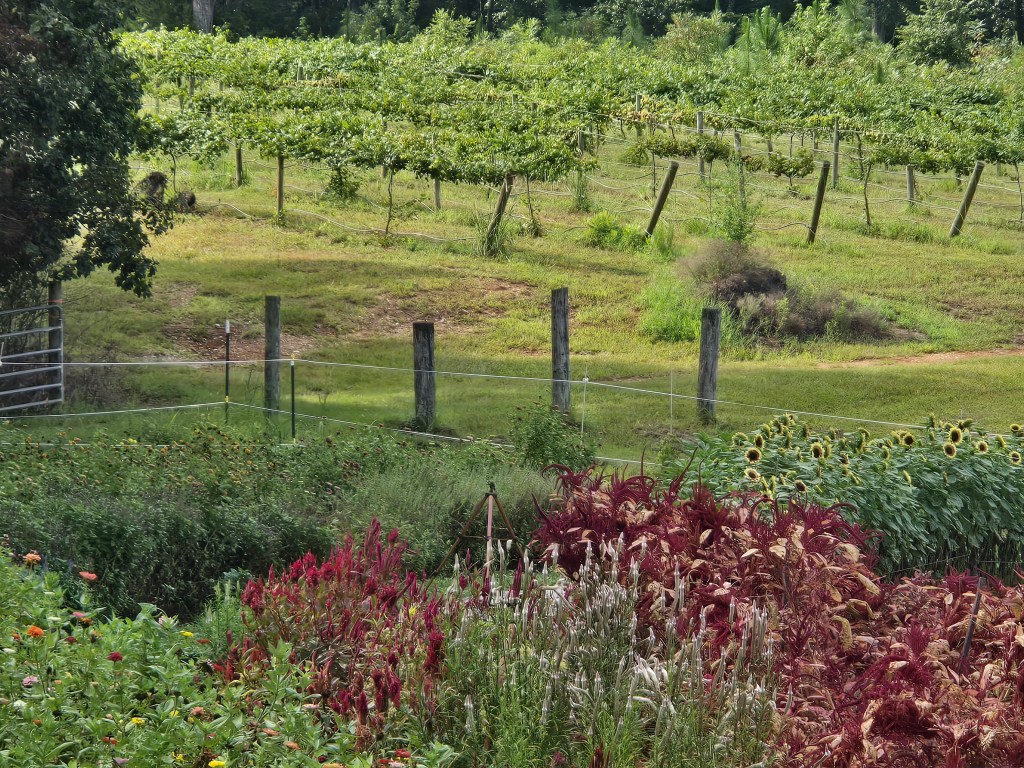
Which Upstate farm is Samantha visiting this week? Inspired Greenhouses Hydroponic Farm is rooted in purpose. The hydroponic farm, based in Anderson County, South Carolina, offers meaningful employment opportunities for adults with intellectual disabilities while producing high-quality, fresh produce. During National Disability Employment Awareness Month, the farm’s mission serves as a reminder that growing local…
-
Question of the Week – Lesser Cornstalk Borer
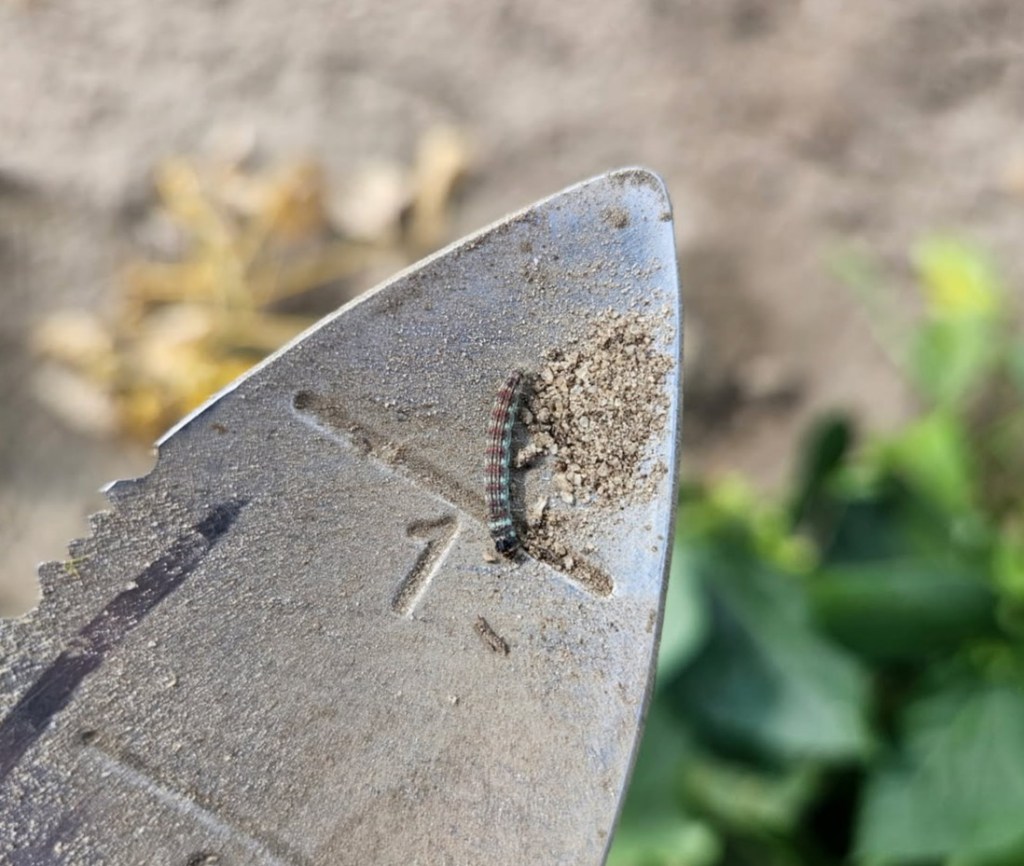
What is this critter that was found in a cowpea stem? This small caterpillar is a lesser cornstalk borer (Elasmopalpus lignosellus)(LCB). LCBs are not commonly found in cowpeas, although they are listed as a host. LCB typically prefers soybeans, peanuts, or corn. Usually, the first symptoms are wilting and plant collapse. Physical symptoms are not…
-
Question of the Week – Bacterial Leaf Blight
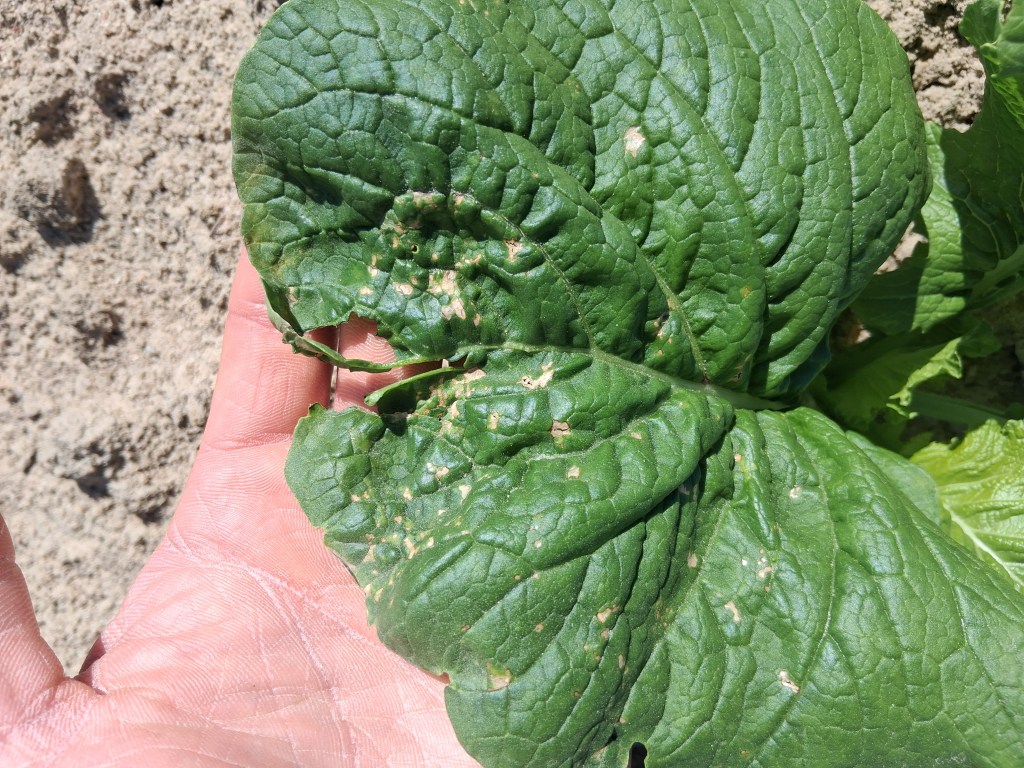
What caused the irregular necrotic spots on this mustard? These irregular spots are a symptom of bacterial leaf blight (Pseudomonas cannabina pv. alisalensis). This bacterial disease of brassicas is most serious on mustard and turnip. Bacterial leaf blight typically appears in the fall or spring and can spread to healthy plants through splashing rain. This…
-
Question of the Week – Synthetic Auxin Herbicide
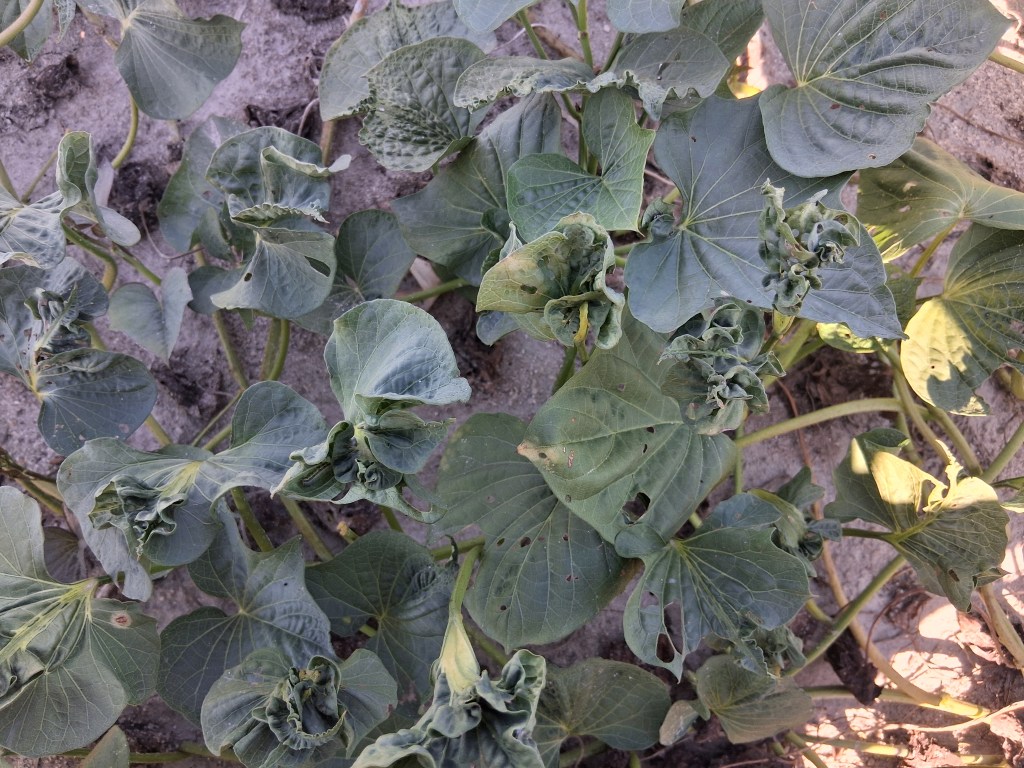
What caused this foliar deformation on sweetpotatoes? This deformation was caused by the drift or volatilization of a synthetic auxin herbicide (including 2,4-D, dicamba, clopyralid, aminopyralid, triclopyr, etc.), though the exact culprit was not known. The damage was pretty evenly distributed across the field, suggesting volatilization from a nearby field is the more likely cause.…
-
Question of the Week – Hornworm Egg
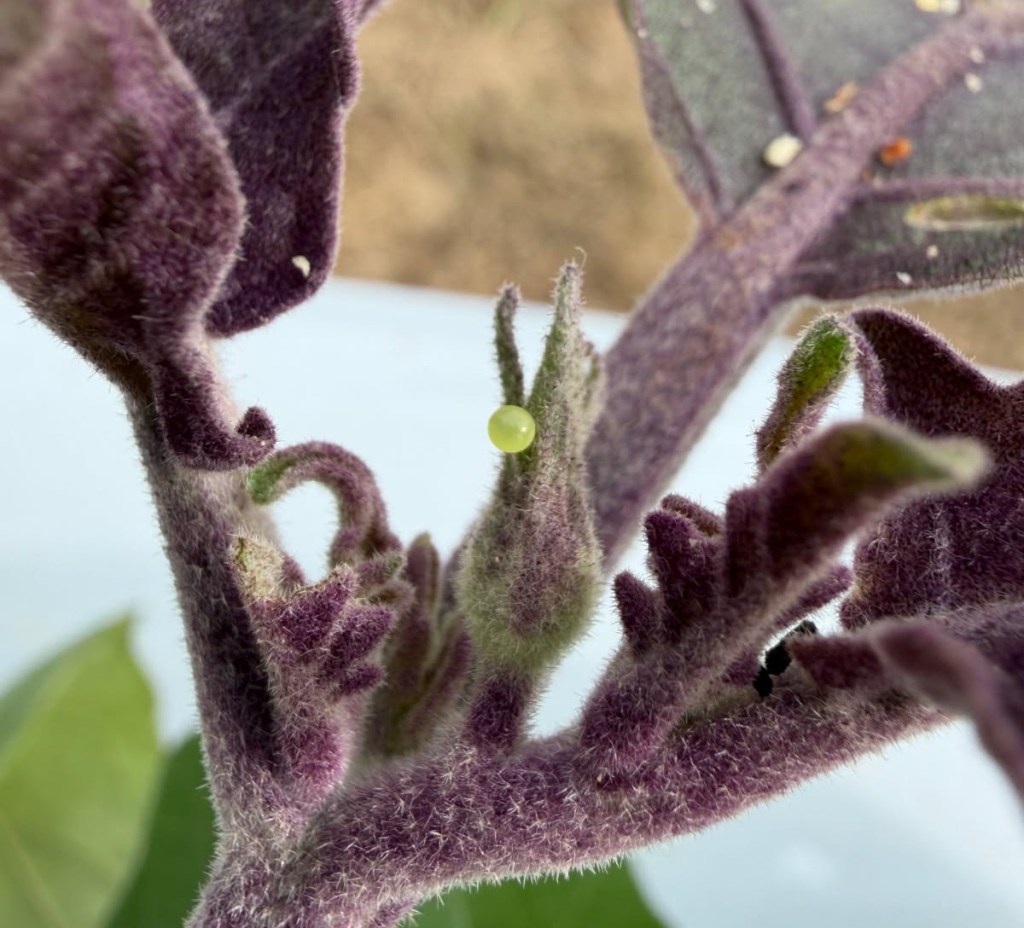
What is the green, shiny thing on this eggplant? This is the egg of a tobacco hornworm (Manduca sexta). If you’ve ever grown tomatoes or eggplant, you’ve probably seen these large, green worms with a long horn on their rear end. Hornworms are a common pest of crops in the Solanaceae family. Because of their…
-
September Grower Spotlight – The Farm 1780
Where is Rob visiting this week? The Farm 1780 is an eighth-generation family farm dating back to the original King’s land grant of 1787. Originally, the grant covered 986 acres; today, the farm comprises 34 acres and is run by Brett and McKenzie Flashnick. The Farm is located off Corley Mill Road in Lexington. Brett…
-
Question of the Week – Pecan Grafting
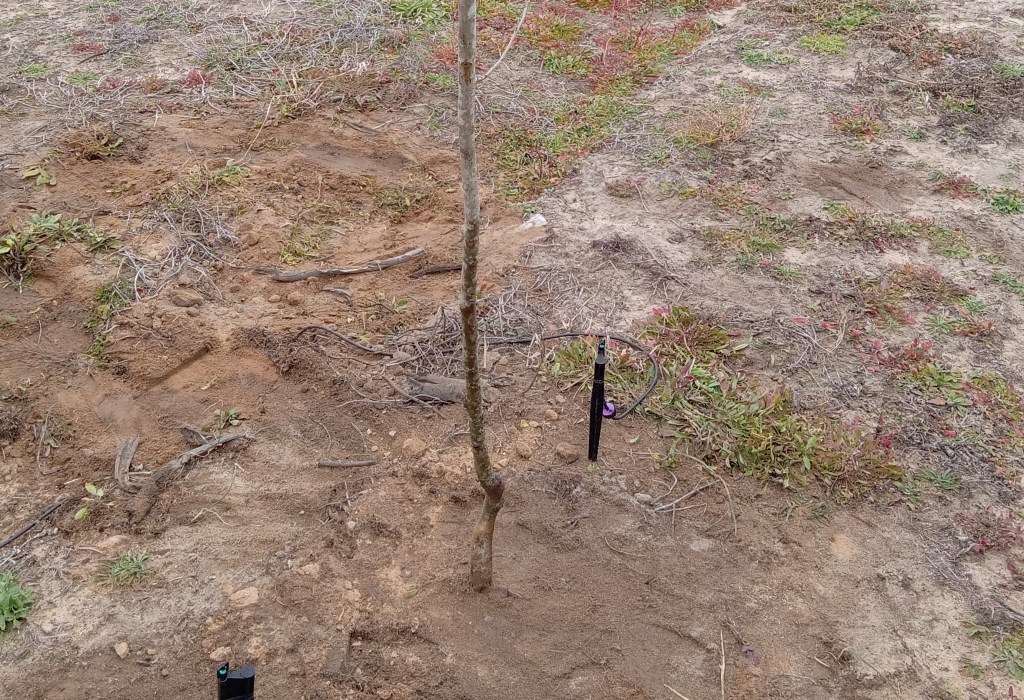
Virtually all commercial pecan trees are grafted. The graft union on this young tree is about 6 inches above the soil line. Where did the first successful pecan grafting occur? The first successful pecan grafting took place in Edgefield, South Carolina, in 1822 by a physician and businessman named Abner Landrum. Though he was not…
-
Question of the Week – Luffa Gourd
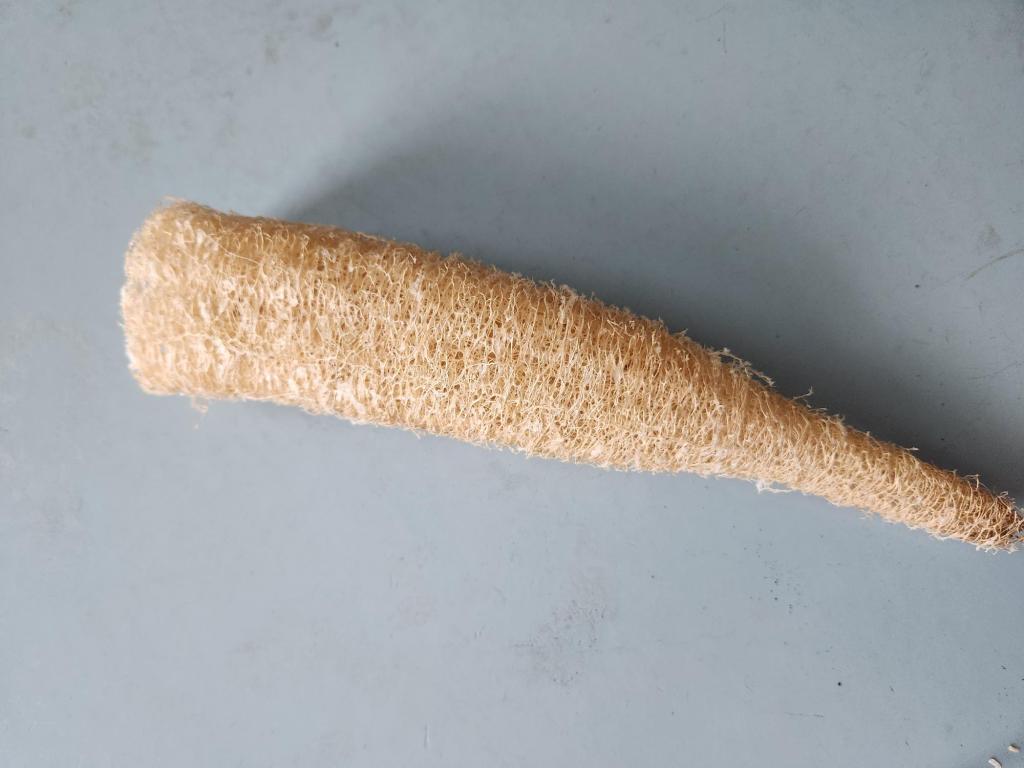
This came from a crop grown in South Carolina. What is it? This is a dried and peeled luffa gourd. This ornamental (and edible) squash grows from a sturdy vine and can produce fruit up to 2 feet long. While most commonly known for its dried use as a sponge or dishcloth, the young fruit…
-
Question of the Week – Spider Wasp
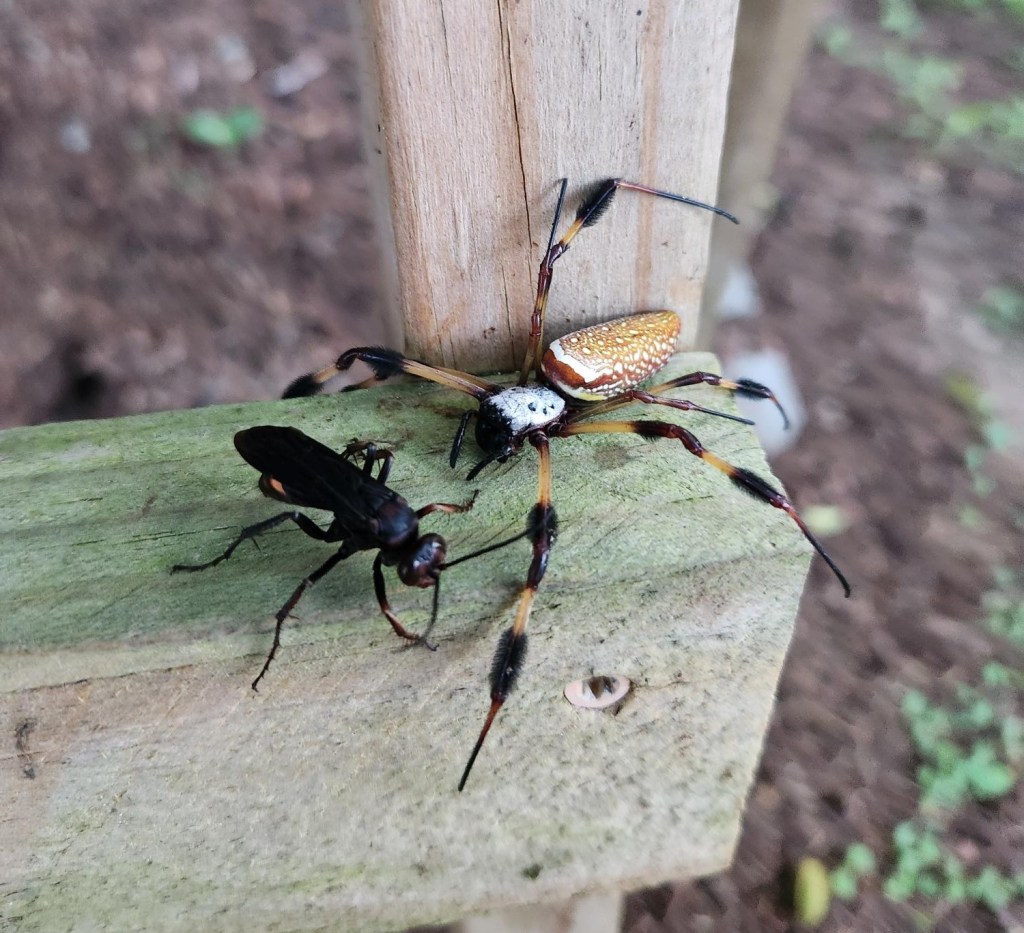
In this battle, who is the aggressor and who is the victim? In this battle, the wasp is the aggressor and the spider is the victim. The predatory spider wasp, in the family Pompilidae, stings and paralyzes this golden silk orb-weaver spider (Trichonephila clavipes) to provide a food source for its larva. Once the wasp…

