Warm, dry weather has set in around the state, though we have some rain in the forecast this week. Disease levels have been low, but that could change with moistre. Mite populations are climbing with the dry conditions. Planting of spring crops is wrapping up. See details below.
The American Farmland Trust is accepting applications for their Emergency Resilience Grant for farmers that have experienced financial disruptions due to natural disasters. Grants up to $10,000 are available. There is a very short application window, so apply now.
Keep an eye on the Upcoming Events tab periodically so you don’t miss any of our winter/spring meetings. Also, check out the latest episode of the SC Grower Exchange Podcast below.
Don’t forget to look at our Resources tab for links to crop handbooks, helpful websites, and related blogs. Be sure to scroll all the way to the bottom to see this week’s Question of the Week, and check back on Thursday for the answer.
Coastal Region
Anna Sara Hill
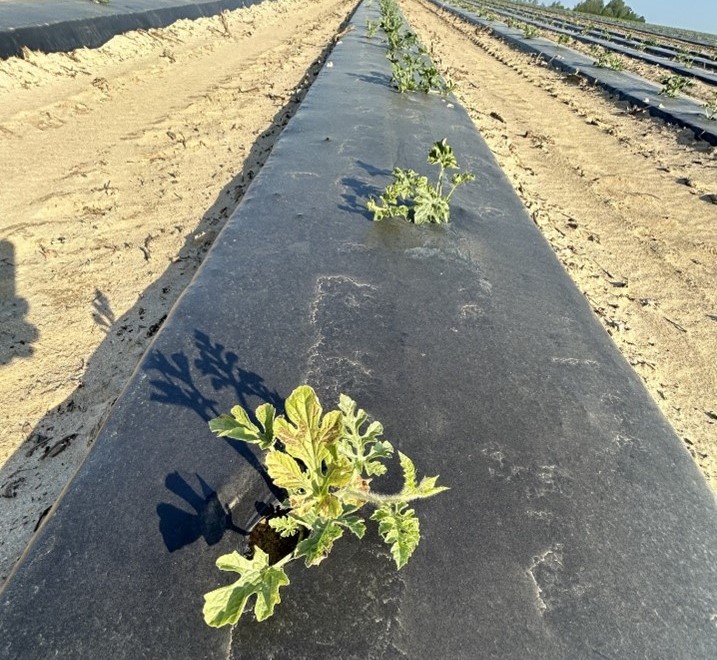
- Many growers are planting a second round of watermelons this week. The first plantings, which are around 2-3 weeks old, are growing nicely. In some cases, vines are just starting to run off the plastic.
- Many plants have taken a beating from the windy conditions we saw at the beginning of April. Large fields without wind breaks were hit harder than fields where wind breaks were planted. Plants in smaller fields had the least damage. A few growers are having to replant some sections of fields where they got the worst wind damage and sandblasting. Most of the plants should grow out of the damage, as the new growth looks healthy.
- I am seeing very little disease or insect problems thus far in watermelons, but stay diligent about scouting as stressed plants are more susceptible than healthy plants. There was a recent report of downy mildew detected in Georgia, so be aware that it may show up earlier here in SC than in other years.
Zack Snipes
- Things are warming up in the Lowcountry with temperatures in the 80s this week. We are getting pretty dry with the lack of rain and very windy weather. Some taller cucurbit transplants have been beaten up by the wind. The wind causes the young plants and vines to twist causing damage to the stem. In many cases, we get lots of sandblasting where winds pick up sand and injures the plant.
- Strawberries are still coming off but are in a reboot phase after our first big flush. Spider mite populations are increasing across the Lowcountry. I am seeing more pressure in the Camino Real variety compared to other varieties.
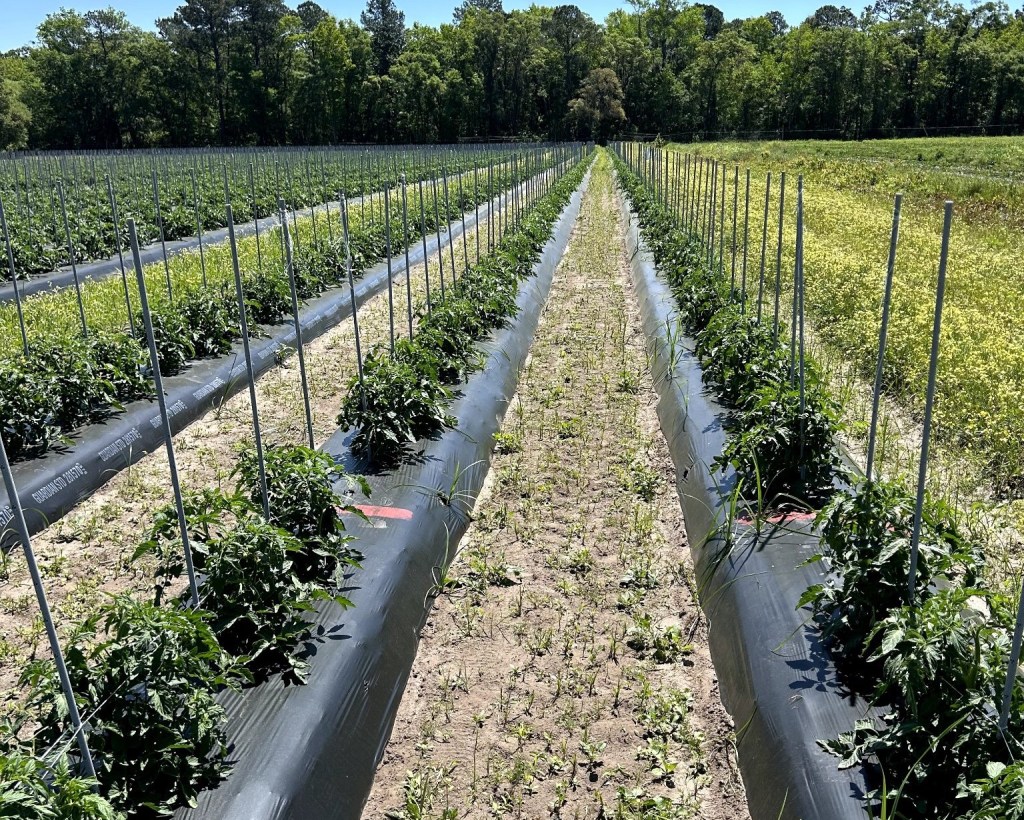
- Tomatoes are in the ground and have the first tie on them. There are no problems as of now with the crop.
- Watermelon looks decent despite sandblasting, and peppers have begun to take off. I have not seen many diseases or insect issues lately, but that doesn’t mean you shouldn’t check regularly.

Midlands
Rob Last
- Another warm, dry week here in the Midlands. Some rainfall would be welcome. Keep monitoring soil moisture as crops grow rapidly, and evapotranspiration rates are high.
- Strawberries are growing well. Mites are an ongoing issue in some situations. Please remember to use a specific acaricide to prevent the population from flaring. Fruit quality looks great with few apparent disease issues. Keep fungicide applications on schedule. Sanitation, removal of overripe or damaged fruit, can help reduce inoculum loading and pressure from sap beetles.
- Tomatoes, eggplant, and peppers are developing well with few disease issues. Two-spotted spider mites are evident in eggplant and tomato crops. Early tomato crops are the stringing stage. I am getting some reports of flea beetle feeding damage in eggplant. The leaves will appear to have small, round shot-holes, which can indicate the pest.
- Brassicas and leafy greens look great with low incidences of diamondback moth activity. Keep monitoring closely as I expect the population will increase.
- Cucurbit establishment looks great. Please keep an eye on cucumber beetles.
Pee Dee
Christiana Huss
- We have strawberries coming out of our ears in the Pee Dee! Disease pressure is low all around, but botrytis grey mold, anthracnose fruit rot, angular leaf spot, and phytophthora are all present in most fields. I’ve also found sap beetles in fields with rotten fruit. Although they are attracted to rotting fruit, these beetles will infest clean fruit if their populations are allowed to build. At this stage, picking your fields clean every day (easier said than done!) and removing rotten fruit ASAP will go a long way in keeping disease and insect pressure low. We have rain in the forecast this week, so be sure to harvest heavily, then apply fungicides before the storms hit.
- Summer crops are mostly planted. We have tomatoes, peppers, squash, cucumber, watermelon, and cantaloupe in the ground.
- Blackberries and blueberries have green fruit and will be ready soon.


Brittney King
- Strawberries are producing large volumes here in the Pee Dee. I am starting to see some fruit rot, so I have sent off samples to the lab for diagnosis. Make sure to get those protectant fungicides out in a timely manner before a rain event to help protect the blooms and fruit. This is the perfect time to be taking leaf and petiole samples to make sure your fertility levels are where they should be. I have seen several plants overloaded with berries which most likely will not be able to size up due to the amount of berries that the plant is producing.
- Veggie crops like tomatoes, onions, cucurbits, and leafy greens are progressing well with no serious issues so far.
- Blueberries are coloring up nicely and should be ready to start harvesting in the next week or so.
- The rest of the watermelons were planted last week with no so serious issues so far. Remember that from now until the vining stage, you want to be putting out .5 lb of N and K/acre/day to maintain good fertility levels.
Upstate
Andy Rollins
- We saw some hail damage in the Upstate last week that has caused damage to the strawberry and peach crops. I recommended growers spray with sulfur and Tilt in peaches and Switch and Captan in strawberries as soon as possible to help manage disease that may follow the damage.
- We’re finding some caterpillar damage in strawberries also. Strawberry growers are also fighting botrytis emerging at the edge of the calyx. Many of these fruits have water damage where they were contacting the plastic. High sprayer pressure is necessary to achieve good coverage and move leaves to try and keep botrytis under control. Continued use of protectant fungicides like Captan or Thiram is especially advisable ahead of projected rain.
- The peach crop is looking very good overall despite the little bit of hail damage. Growers are in the process of thinning their earliest varieties. Where we had some hail damage, growers will try to thin damaged fruit and leave the healthy fruit. This often means fruit hanging below the limbs in more protected positions. Damage is easy to see in nectarines, but the fuzz of the peaches make it a little more difficult to see.


Question of the Week
What is going on with this strawberry plant?
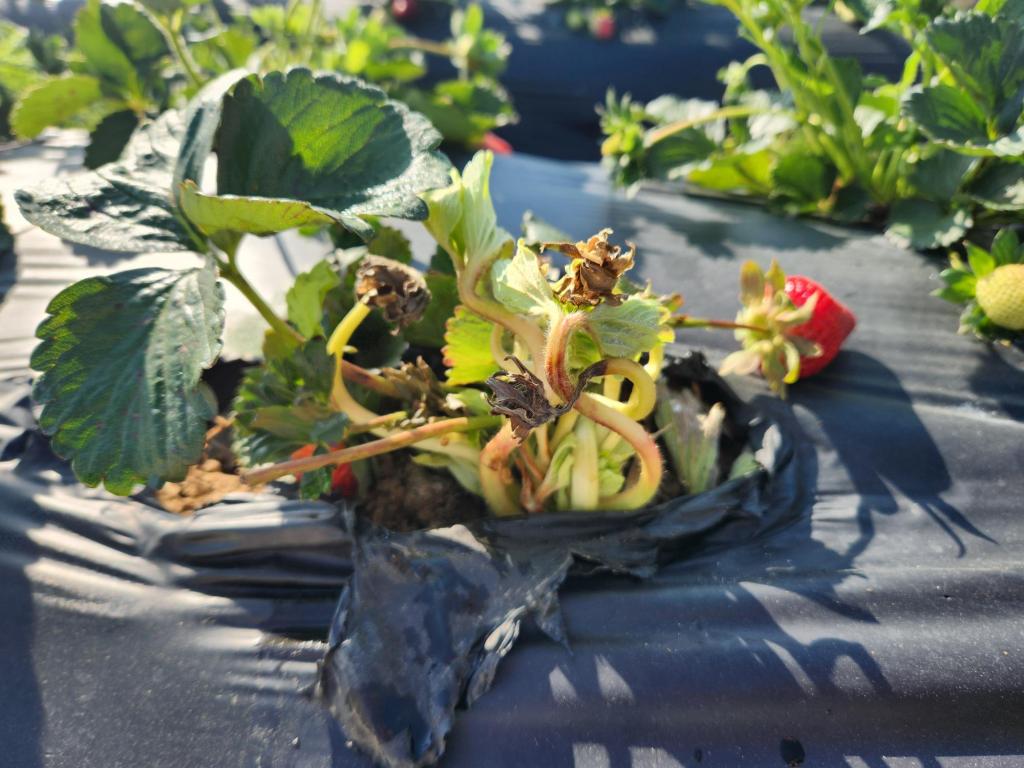
Answer in the comments below and check back on Thursday to see the answer.
 The South Carolina Grower