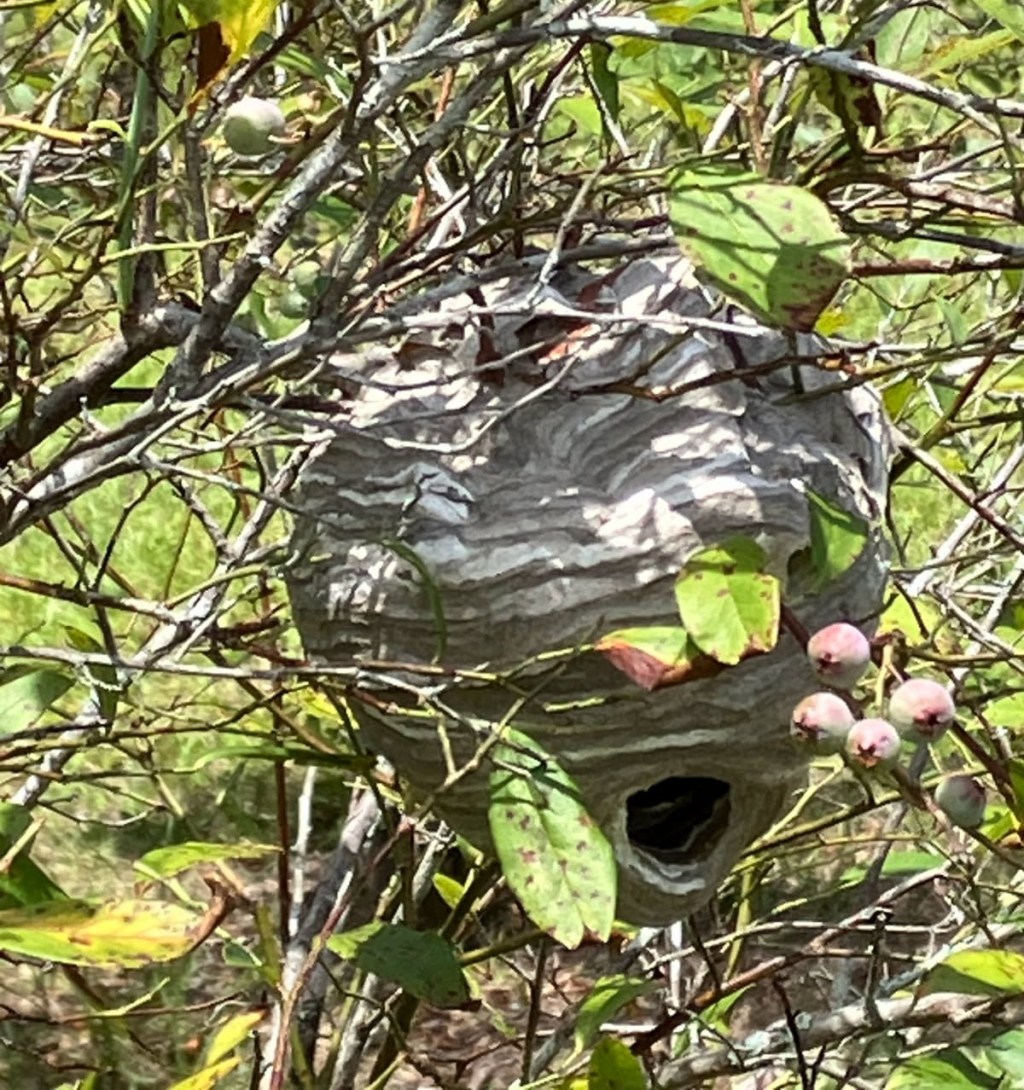
Why did this blueberry grower put a purple martin house in his blueberry bushes?
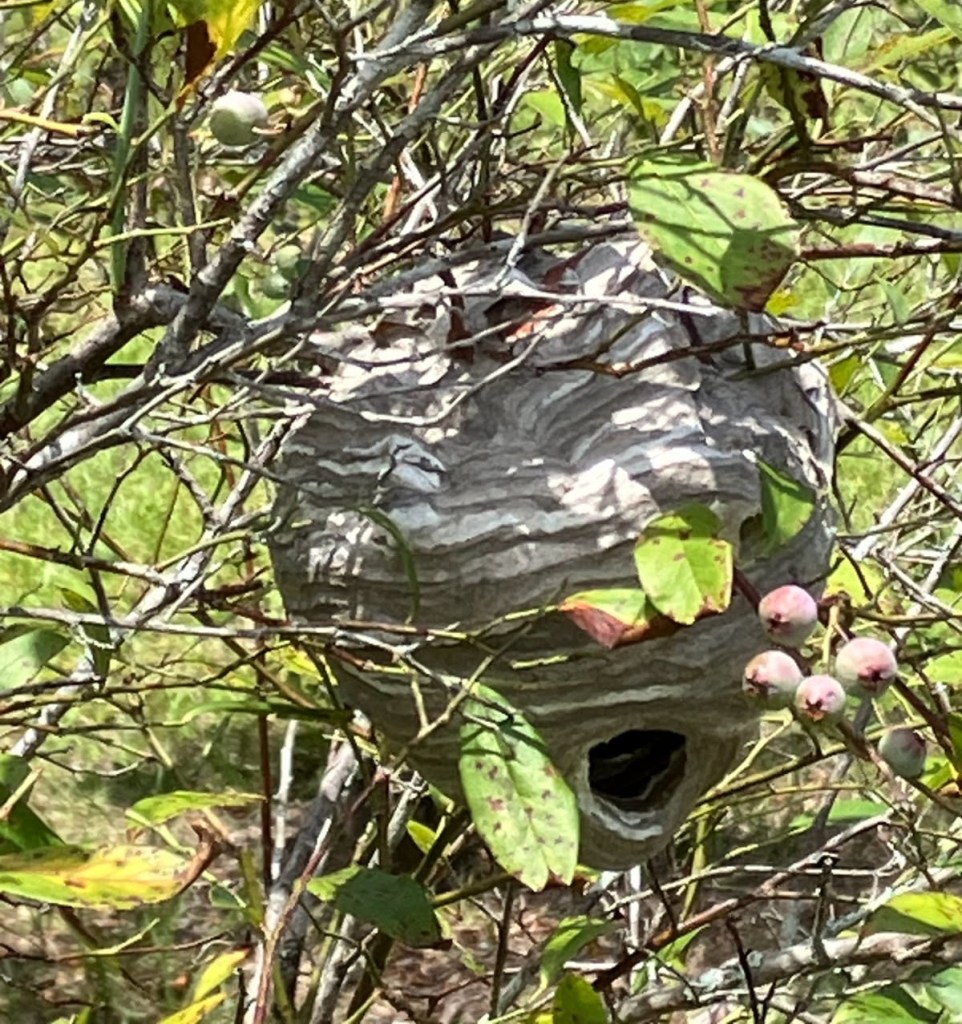
This is not a purple martin house. This is a hornet’s nest!!! Hornets, wasps, and yellow jackets look a lot alike. There is one true species of hornet in South Carolina (and North America), the European hornet. The European hornet is an introduced species that was first documented in the mid-1800s in New York (lucky for us). Most folks are familiar with their nests, which can be a warning that danger is near. Hornets, for the most part, are a beneficial species that help control many of our pests. But, when we find them close to human activities, like blueberry picking, we can have serious issues.
The bald-faced hornet is actually not a hornet as the name might imply, but rather an aerial yellow jacket. They make a nest very similar to the European hornet and only the trained eye can tell the two species apart by their nest. I did not see the pictured nest, or the citizens of the nest myself, but a colleague suggested that it is probably the home of bald-faced hornets.
Speaking of other hornets…Clemson’s Department of Plant Industry is currently monitoring and destroying yellow-legged hornet nests in the southeastern parts of South Carolina. This pest is an invasive species and can cause an issue for beekeepers. To learn more about their efforts, please read this article.
Another hornet lookalike is the often-misidentified cicada killer. This massive scary-looking hornet look-alike is a solitary wasp, meaning you won’t see a nest of them living together. For more information, read this article on Clemson’s HGIC.
This week’s question is from Zack Snipes, Coastal Fruit and Vegetable Extension Agent.
 The South Carolina Grower