Keep an eye on the Upcoming Events tab periodically so you don’t miss any of our winter/spring meetings. Also, check out the latest episode of the SC Grower Exchange Podcast below.
Don’t forget to look at our Resources tab for links to crop handbooks, helpful websites, and related blogs. Be sure to scroll all the way to the bottom to see this week’s Question of the Week, and check back on Thursday for the answer.
Coastal Region
Tom Bilbo
- Pickleworm is now well established in Charleston and has gotten worse since we first picked it up 2 weeks ago. Yield loss is ticking up in organic fields as well as home gardens in zucchini, cucumbers, and melons. This pest will continue to worsen as well as make its northward as the summer progresses. Details on scouting and management can be found here:
https://scgrower.com/2023/08/02/the-pesky-caterpillar-pests-of-cucurbit-crops-part-2/
In short, insecticides will likely be necessary to protect from yield loss. If you’re using organic insecticides like a Bt or spinosad, you’ll need to reapply at least once a week to ensure residues are present when eggs hatch and before larvae tunnel inside fruit and flowers.

Zack Snipes
- We had a warm and humid week last week and it appears that this week will be brutally hot. Recognizing symptoms of heat stress, exhaustion, or stroke is very important for those working in the heat. Take a few seconds and read up on this topic to better take care of yourself and your employees.
- With the warmer weather, peppers have really kicked into high gear and are loaded down with fruit. Tomatoes are ripening extremely fast as are melons and eggplant. Rabbiteye type blueberries are in full swing with heavy volumes coming to market.
- Our cukes and summer squash are finished for the most part. The heat coupled with the downy mildew found a few weeks ago has all but killed everything we had left in the fields.
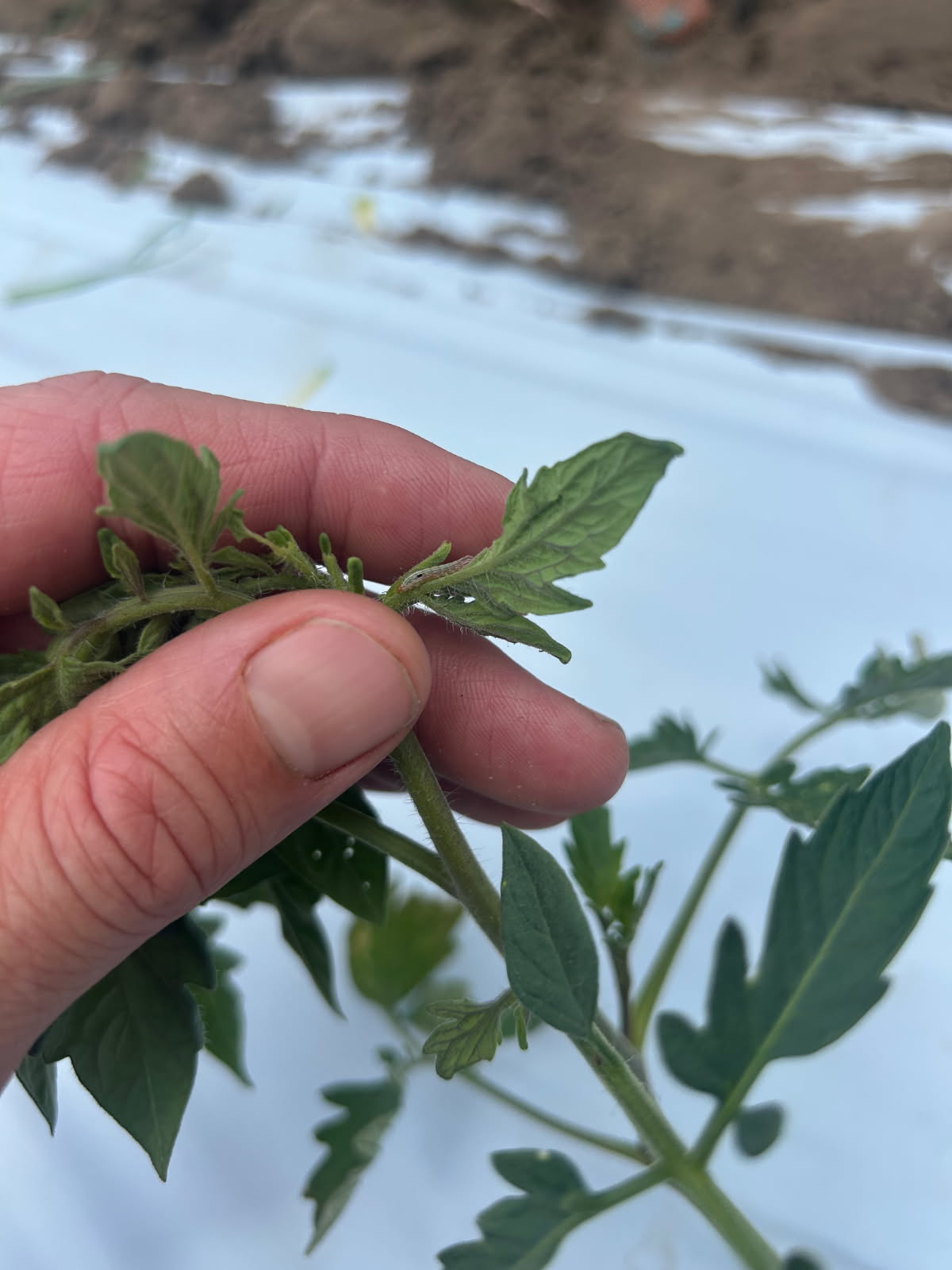
- I am not seeing too many insect pests right now but don’t let your guard down. I did see a few armyworms on tomato last week and in the ears of sweet corn.

Anna Sara Hill
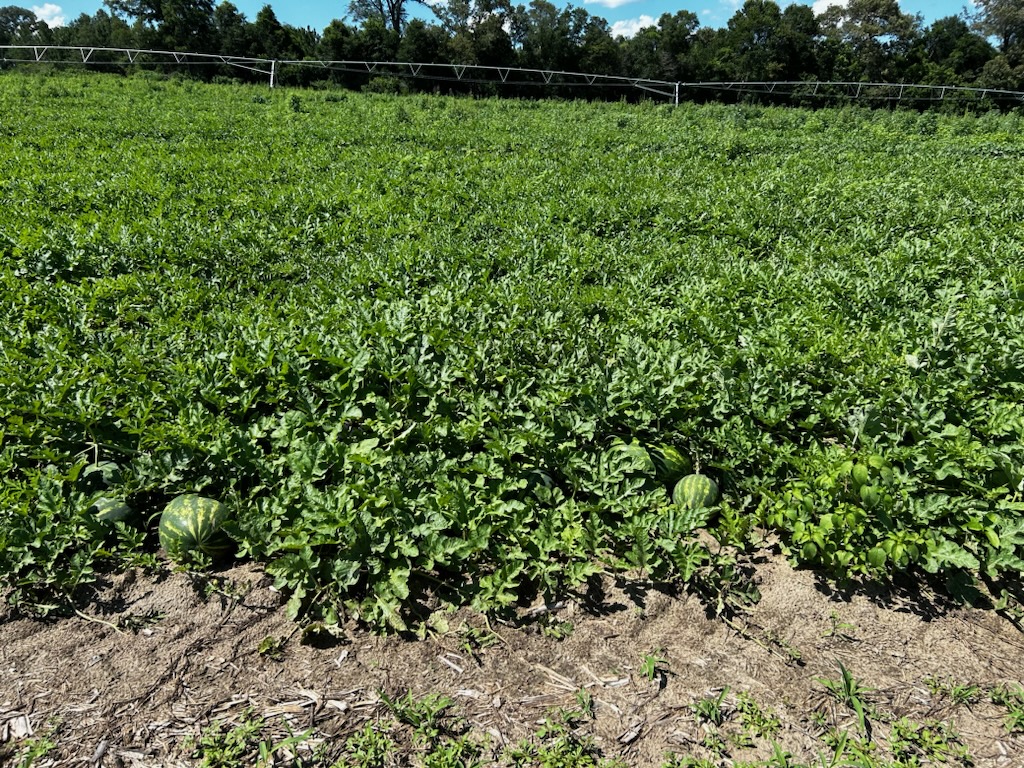
- Watermelon season is finally here! Local farms started hauling watermelons and cantaloupes out of the field two weeks ago. The melons look good, but may not be as sweet as previous years, due to the cool weather and all the heavy rainfall late in the season.
- As vines dry down and ripening melons are exposed to the sun, they can get sunscald. It’s a good idea to protect them with Kaolinite Clay or a calcium-based product.
- Some fields are seeing a good bit of disease pressure, while other fields have very little. It is important to continue scouting and spraying products with a 0 or a 1-day PHI all the way through the end of harvest. Another good strategy for trying to prevent disease spread is to stay out of wet fields. It is best to let the dew dry before picking.
- Good quantities of blackberries are being picked and there are many more berries are still ripening. I have seen some sun scald and a little stink bug damage. Stink bugs feed on the fruit causing a sunken area at the puncture site. They also give an off taste to the fruit.

Midlands
Rob Last
- On the whole crops are looking good with diseases being at the forefront, from gummy stem blight and downy mildew in cucurbits to bacterial diseases and anthracnose in solanaceous crops.
- Keep monitoring crops closely and if in doubt reach out to your agent for help with identification and management.
- Sun scald is a risk and is present right now. An application of Kaolin clay can help to reflect sunlight and reduce sun scald in crops with a reduced canopy.
- Berry fruits are producing well with good quality.
- Fungicide applications throughout harvest to prevent gray mold, and anthracnose fruit rots.
- For conventional growers Captan can be a good choice and for organic producers Howler EVO can be an option.
- Refer to the MyIPM app for more potential options.
- Setting up monitoring traps is critical to detect spotted winged drosophila adults.
- Traps are available commercially or can be created in a 16 oz clear cup with 1/8 to 3/16 holes drilled into the lid.
- Add in 1 oz of cider vinegar and 2 drops of dish soap and put the lid on.
- An alternate method is salt trap the harvested fruit.
- An alternative management strategy can be to encourage hummingbirds to feed in the crops obtaining their protein from spotted winged drosophila.
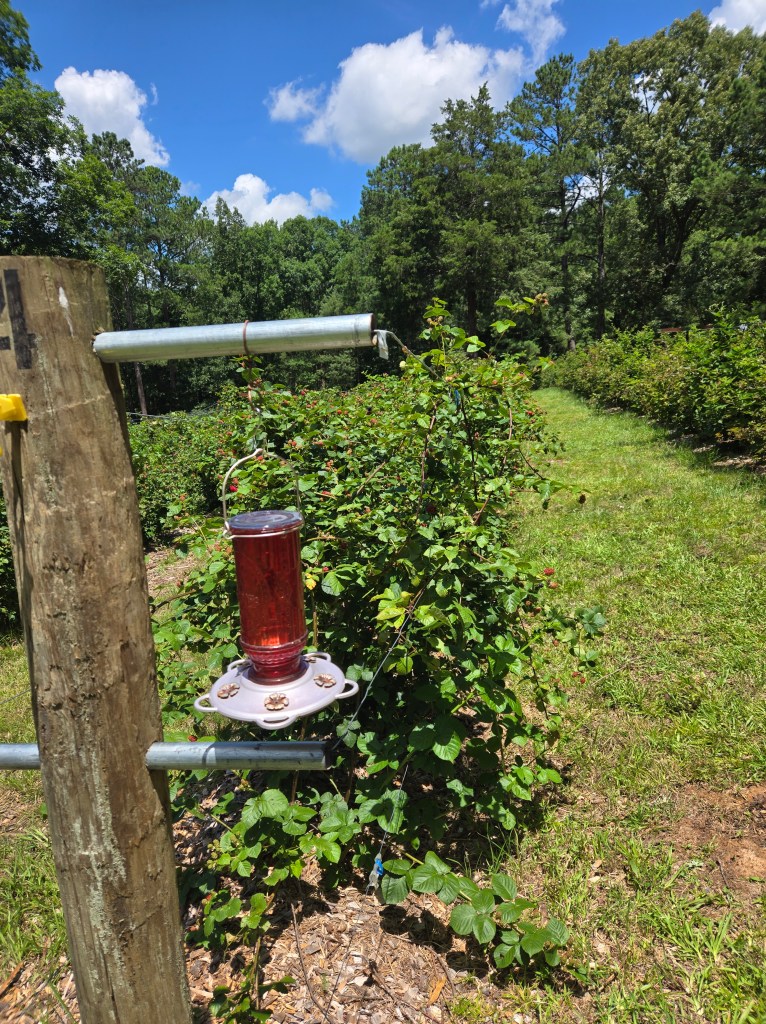
Hummingbird feeders set up in Blackberries to help manage spotted winged drosophila. (R. Last)
Sarah Scott
- Some afternoon thunderstorms have brought spotty rain for some but compared to earlier season weather, things are drying out. A break in the torrential downpours are welcome as crop and field conditions can improve.
- We are entering freestone season for the peach crop.
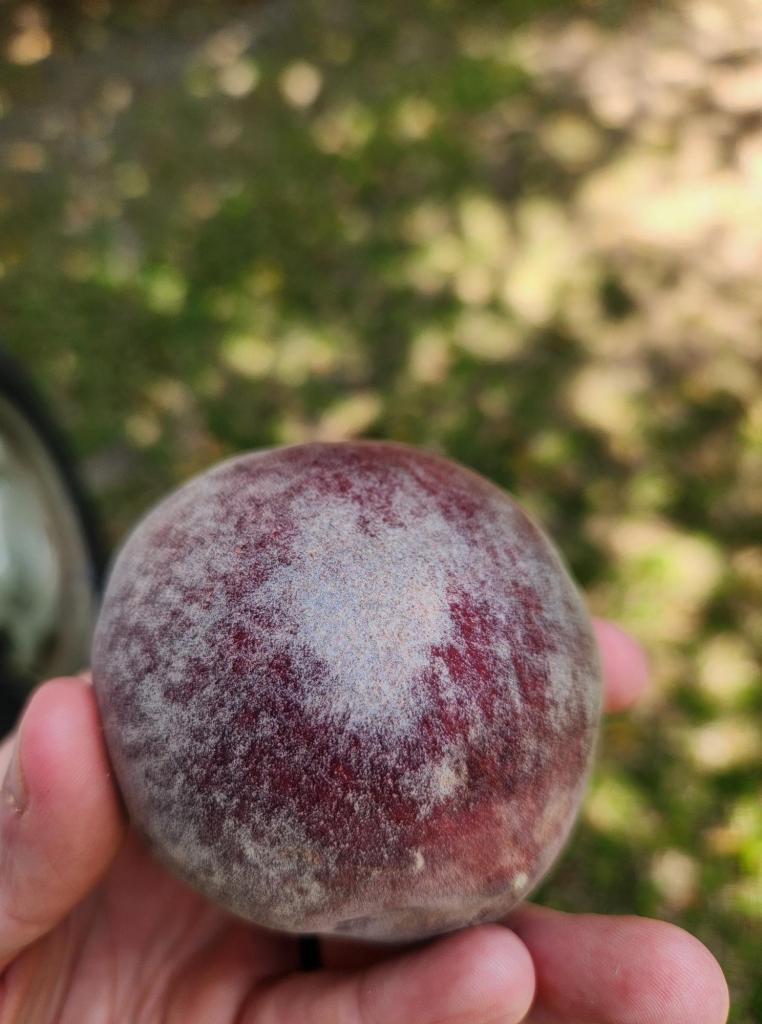
- Thrips are out in full force and damage is an issue, especially, on high color fruit where the silvering is more noticeable.
- Brown rot has started to show up in fields as well.
- Vegetable crops have been hit hard by the heavy rains from a few weeks ago. As conditions dry out some, hopefully they will recover. Tomatoes, squash, melons and peppers are all being harvested heavy now.
- Blueberries are still being harvested but are nearing the end of the season as it heats up. We should be picking blackberries in to July.
Pee Dee
Christiana Huss
- Many areas received several inches of rain in only a few days. Unfortunately, the rain drowned many fields causing plant collapse and split fruit. Phytophthora has been significant and likely spreading due to the excess rain.
- Blossom end rot has been a common issue in both peppers and tomatoes. Possibly due to the inconsistent rain occurring at the beginning of the season causing calcium deficiency.
- Cowpeas are growing and many are close to harvest. I’ve found a small number of cowpea curculio in fields which will need to be sprayed frequently with a rotation of pyrethroid insecticides to keep this pest at bay.
- Grapes are starting to size up nicely. Blueberries and sweet corn are also being harvested.


Upstate
Andy Rollins
- Peach issues include bacterial spot and trips damage. Karla rose nectarine is being picked now in the upstate. As rains have decreased somewhat sugars should be increasing accordingly. Thrips and bacterial issues can only be dealt with preventively next year. We have been ripening about 10 days early all year. Growers are now very concerned as late July peaches like Julyprince are showing color now. They are typically picked third week of July. We are not sure what is causing this. We are hoping Dr. Juan Carlos Melgar our Peach Horticulturalist will figure it out.
- We are close to ripening large tomato farms and are finding some tomato fruit worm. I recommended Coragen/Rynaxypyr. Growers need to watch the post harvest interval on these insecticides. Really should’ve been used about a week or two before now to have prevented this problem.
- We are strong on picking squash and zucchini. A few growers have had issues with soft rot on squash. If you wash them make sure you are using Chlorine or other sanitizer in the water. The bacteria will live on the brushes and equipment. When protective layer around the fruit is brushed off bacterial will enter even more easily if sanitizers are not added. Test strips help to keep free chlorine levels where they have to be to work properly.


Question of the Week
Where is Justin this week? (Hint: May is a good month to see “lightning” here.)

Answer in the comments below and check back on Thursday to see the answer.
 The South Carolina Grower