What has Tom found on stuck to this collard leaf?
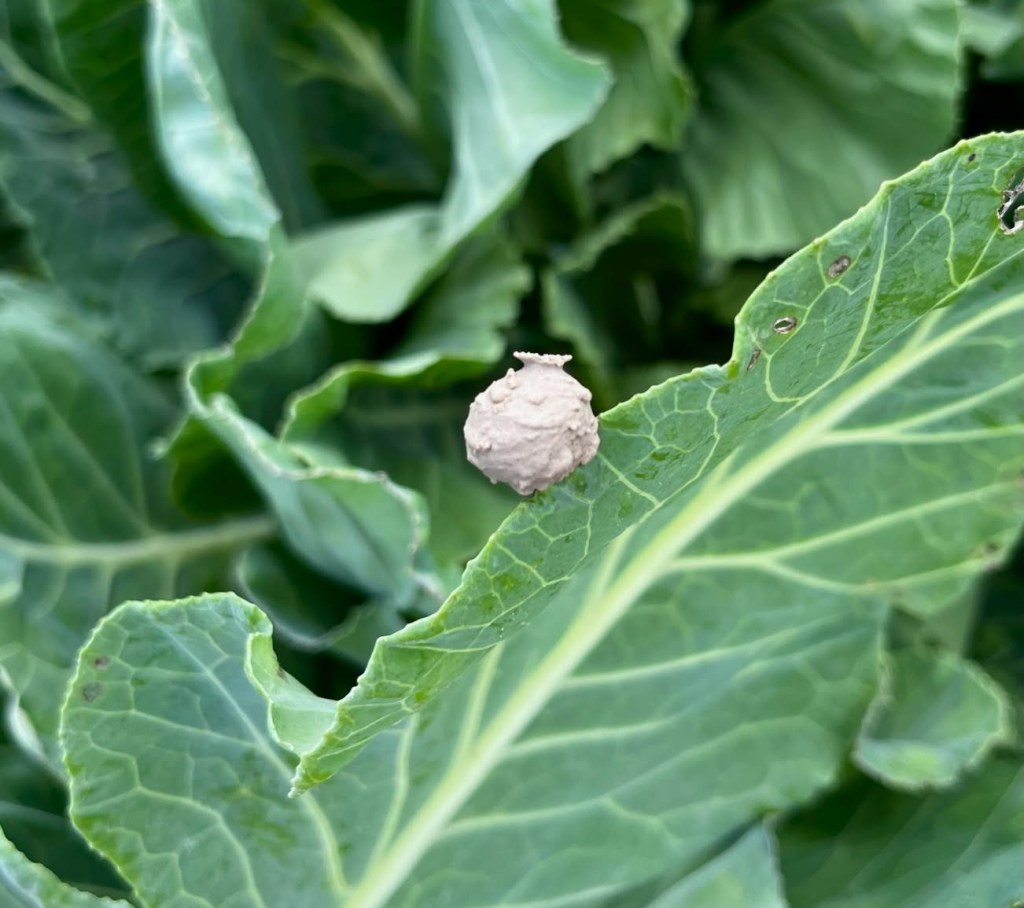
This deft clay creation is the work of a potter wasp. Potter wasps are a diverse group of wasps in the subfamily Eumeninae (which is part of the large and diverse wasp family Vespidae), although only a handful of species make the elegant clay pot-like nests. They build these clay pot homes to shelter their offspring. A wasp will lay a single egg inside each pot and then provision their offspring with parasitized prey, usually a caterpillar, and then seal off the entrance.
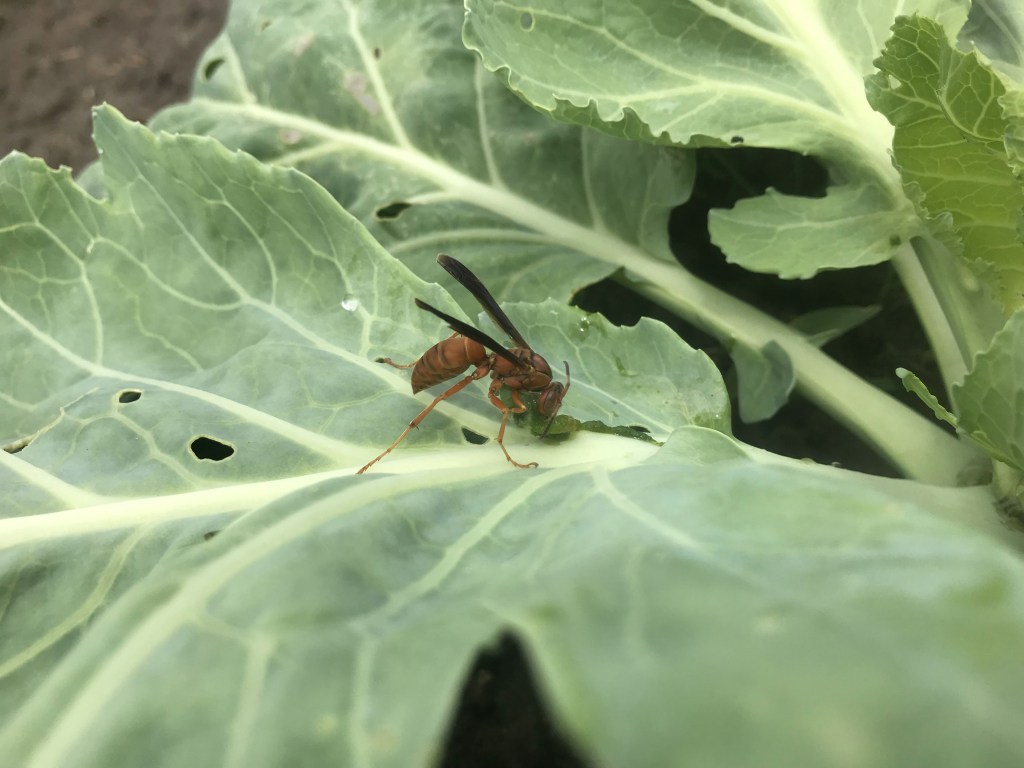
While it is uncommon (in my experience) to find these clay pots inside brassica fields, they could be found anywhere in the vicinity where a wasp finds a suitable structure to attach their nest to and still forage for prey within fields. The biological control potential of potter wasps is understudied, but they are just one of the many parasitoids and predators that collectively contribute reducing caterpillar pests from fields and should be conserved.
See the pottery in action here:
This week’s question is from Tom Bilbo, Extension Vegetable Entomologist.
 The South Carolina Grower