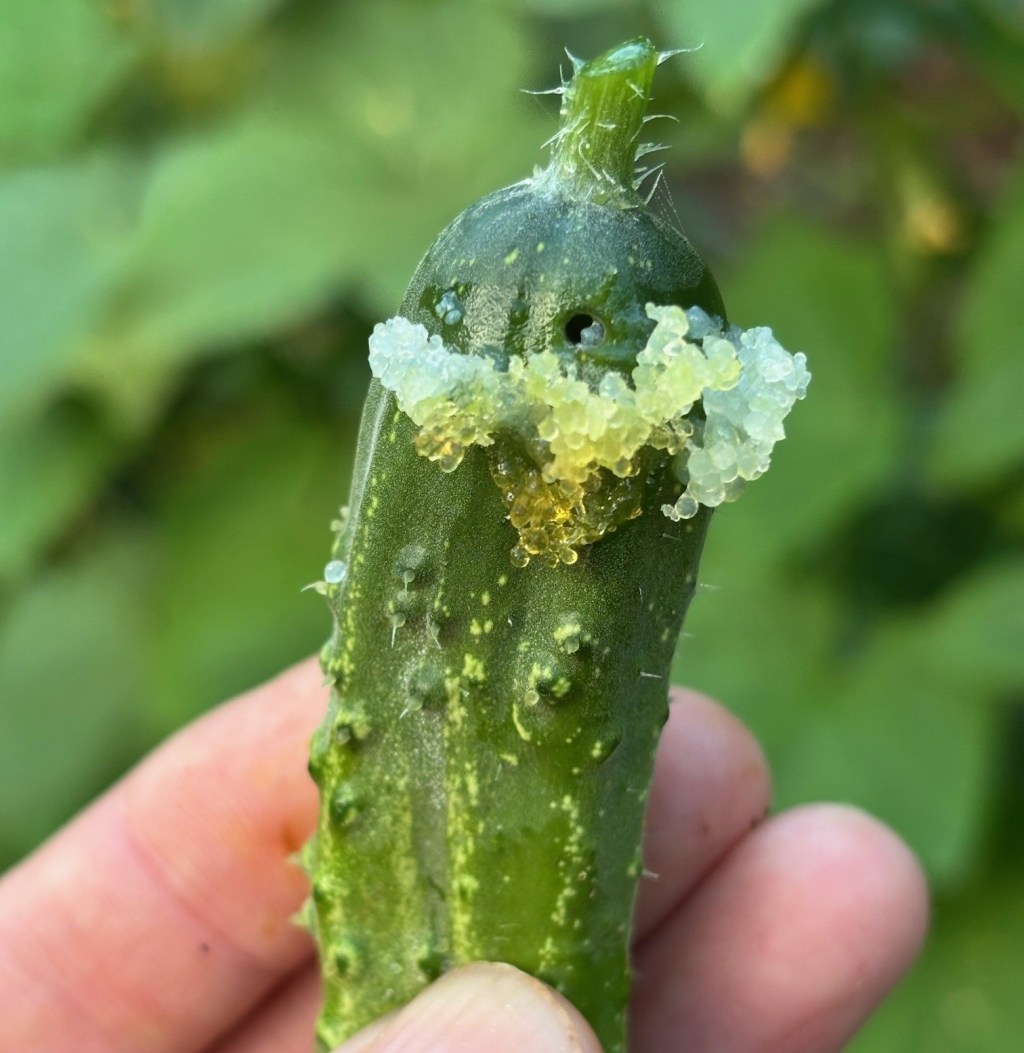
What is going on with this cucumber?
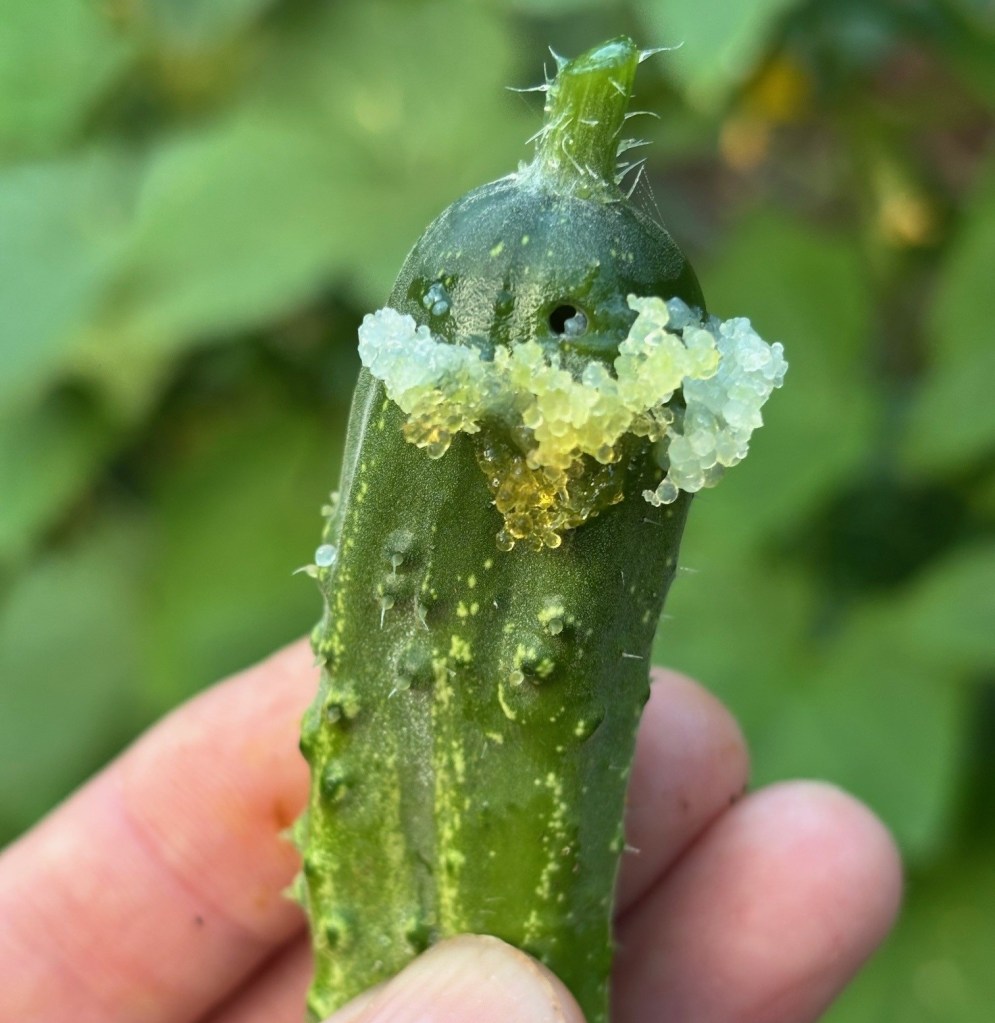
The hole and gelatinous material are clear evidence that the cucumber was recently attacked by a pickleworm. Pickleworms are caterpillars and the larva of pickleworm moths (Diaphania nitidalis). They feed on the flower buds and fruits of cucurbit crops including cucumbers, squash, zucchini, and melons.
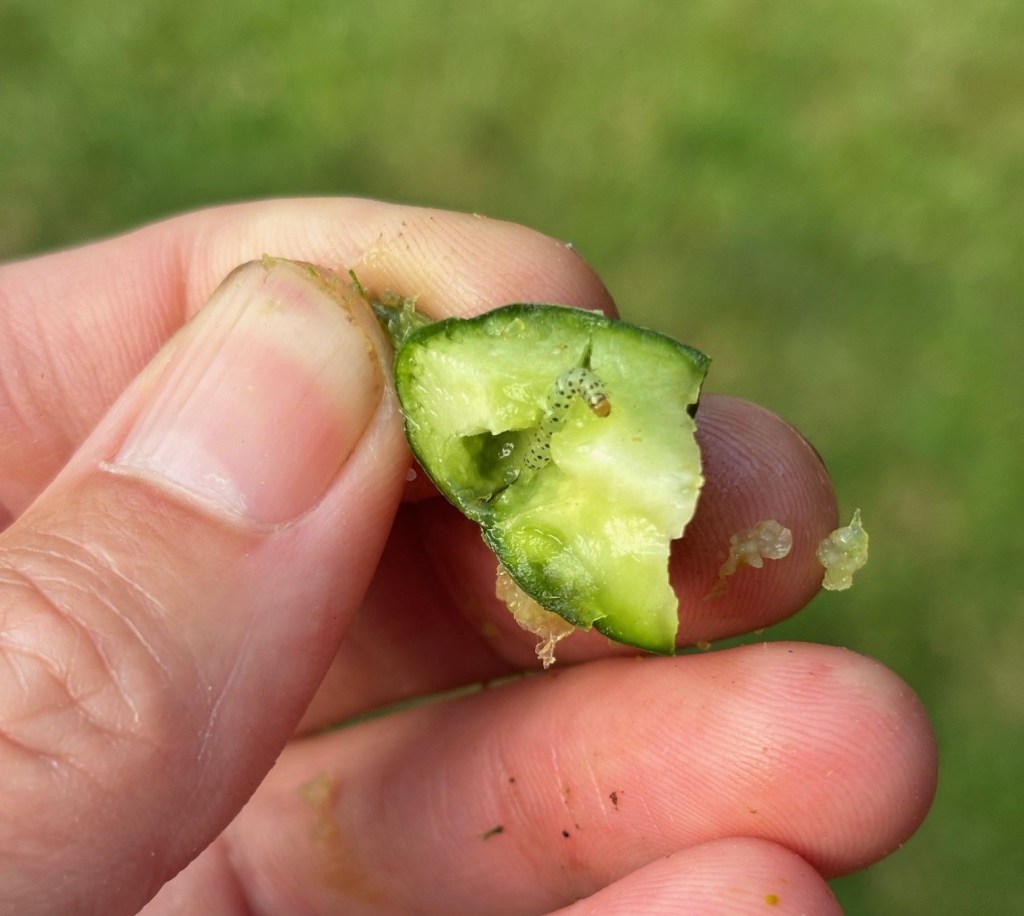
The young caterpillars bore into the fruit and a single attack makes the fruit unmarketable. The gelatinous residue is the insect’s frass extruded from the feeding within the fruit. These pests don’t overwinter in South Carolina and must reinvade our fields from overwintered populations in Florida each year. Therefore, they are late-season pests here that usually don’t show up until July. Scouting should begin in early-July by looking for feeding of small caterpillars in flower buds and fruit. Labeled insecticide treatments should be applied as soon as the pest is detected and should be on the plant prior to eggs hatching for greatest effectiveness. It’s almost impossible for a lethal dose of insecticide to reach them once the caterpillars are inside the fruit.
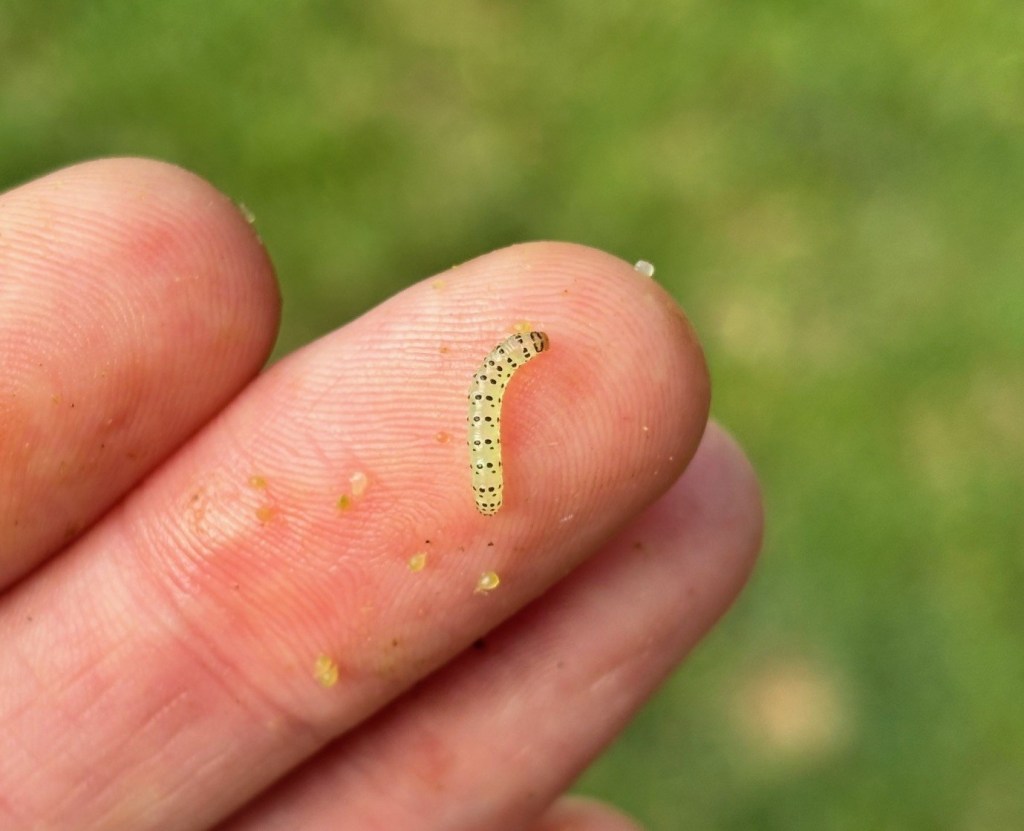
For more info on managing pickleworm, see this post from Entomologist Tom Bilbo.
This week’s question is from Cory Tanner, Clemson Extension Horticulture Team Director.
 The South Carolina Grower