Temperatures have cooled down nicely and rain is plentiful. Planting for fall crops continues around the state. The weather is perfect for disease development including downy mildew, Southern blight, and anthracnose. See details below.
Keep an eye on the Upcoming Events tab periodically so you don’t miss any of our winter/spring meetings. Also, check out the latest episode of the SC Grower Exchange Podcast below.
Don’t forget to look at our Resources tab for links to crop handbooks, helpful websites, and related blogs. Be sure to scroll all the way to the bottom to see this week’s Question of the Week, and check back on Thursday for the answer.
Statewide
Tom Bilbo, Entomologist
If you grow okra or eggplant be on the lookout for a new invasive insect pest that has been popping up in SC – the two-spot cotton leafhopper. It’s been detected in several counties on cotton and okra. It is a tiny insect and you’ll likely see damage before seeing the insect itself. Leafhoppers have piercing-sucking mouthparts, just like stink bugs and leaffooted bugs, so damage will look somewhat similar, albeit primarily on the foliage. As their name suggests, they are usually found on the underside of leaves, and also have two distinct spots at the end of their wings. Some other host plants include cotton, peanut, roselle, sunflower, soybean, potato, and cowpea.

Photo by Daphne Zapsas, USDA-APHIS-PPQ, Biological Science Laboratory Technician
Midlands
Sarah Scott
- It has been hot and humid and newly planted vegetable crops have been struggling to get established. This week temperatures and cool down will hopefully give some relief to tender young plants.
- Peaches are still coming in at high volumes. Sap beetles are an issue in many fields, but there are very limited treatment options with harvest times being so close.
Upstate
Andy Rollins
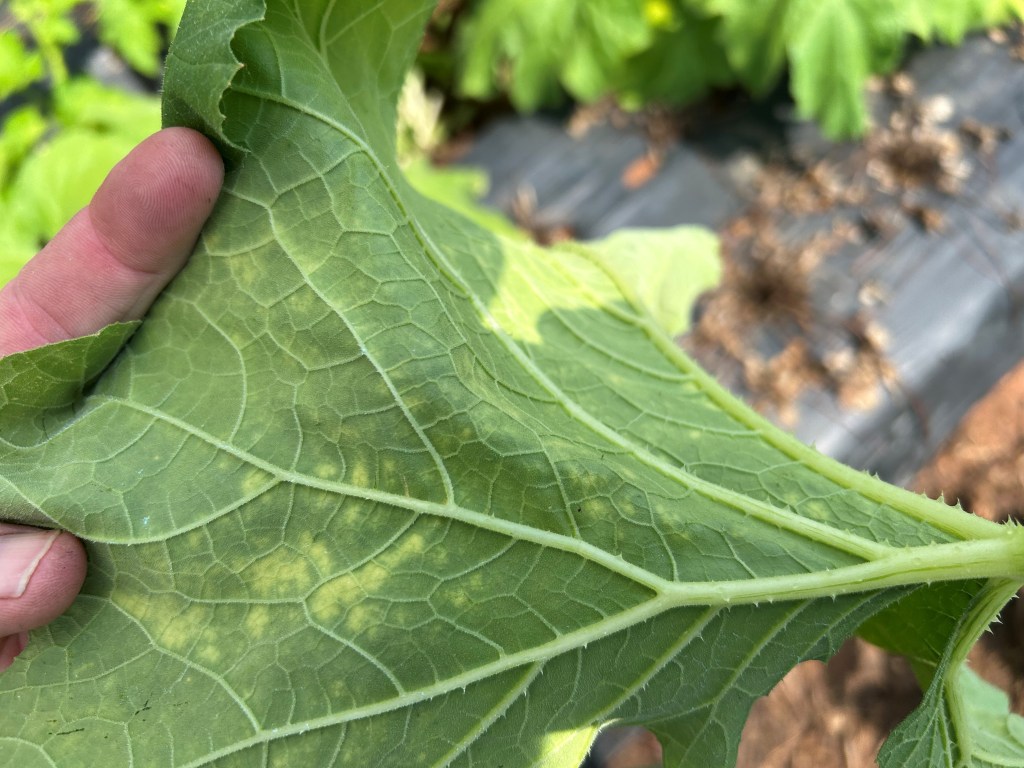
- Be on the look out for downy mildew in all curcurbit plants in the Upstate. A few of these would be cucumber, squash, zucchini, pumpkin, cantaloupe, and watermelon. When inspecting plants, you will see yellow blotches on the tops of the leaves but no sporulation (normally dry dust looking material). On some species, like cucumber, these areas will be angular and easier to identify. In cantaloupe, lesions can extend over the veins and have a more circular appearance. The real tell can be found when looking at the bottom of the leaves where the veins come together (hence “downy”). You can find a grayish dusty look that is the spores. Under cool, wet conditions, normally occurring in the Upstate the first week of August, is when I regularly start finding it. A 10x jewelers loupe would be needed to see this more easily. The pumpkin crop in the photos below was clean last week, but may not be by the end of this week. A list of the best fungicides for this disease can be found on the MyIpm Vegetable app. I would recommend the use of a protectant containing mancozeb and a systemic like Ranman. Just make sure to rotate the FRAC code when using systemic products to prevent resistance.
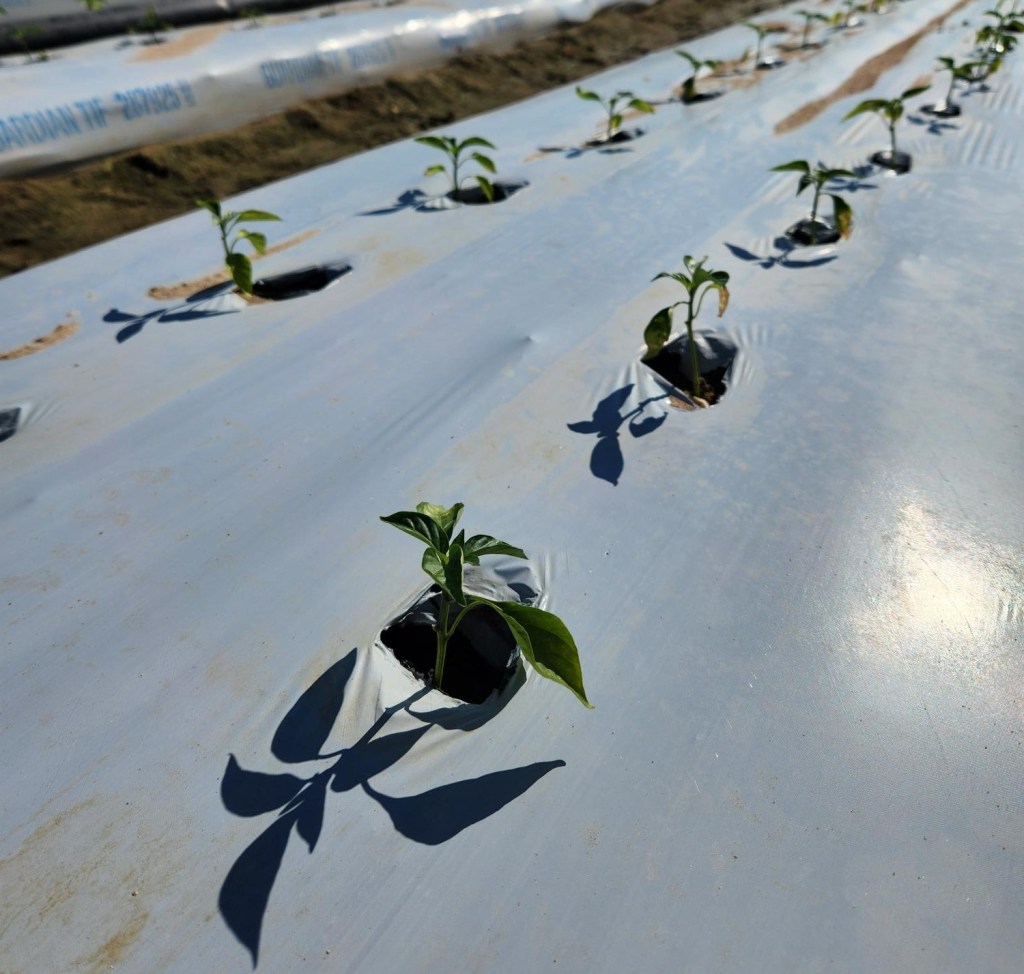
- We’re finding Southern stem blight in tomato and pepper.
- Growers are harvesting Ohenry peaches in the Upstate. Fruit may have some bacterial spot lesions on them, but taste is excellent.

Question of the Week
What type of bird made its nest in this blackberry bush?
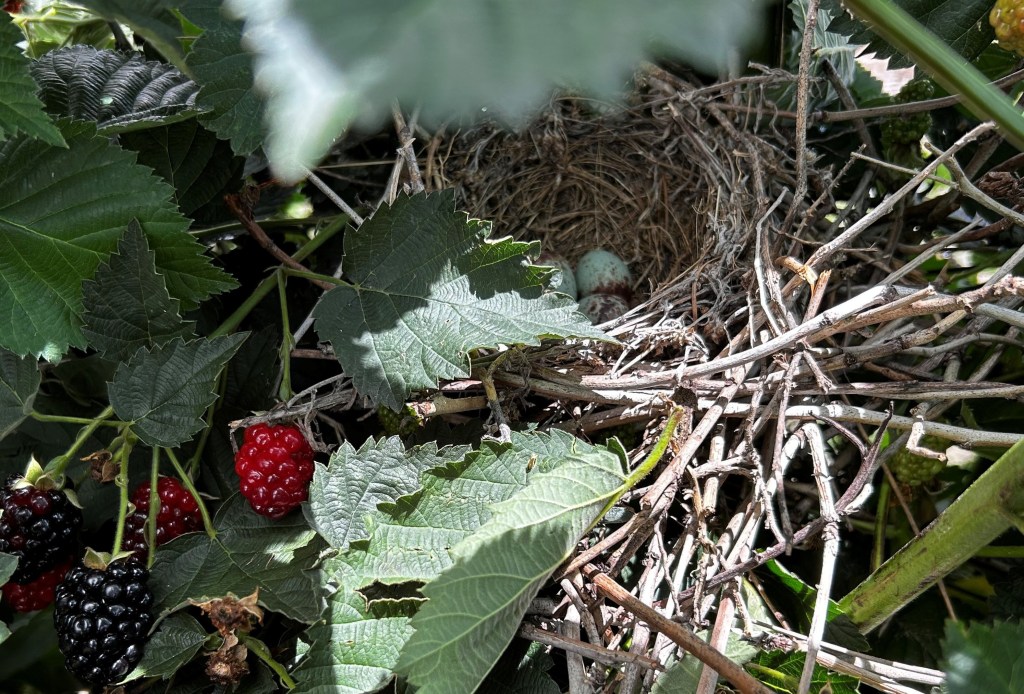
Answer in the comments below and check back on Thursday to see the answer.
 The South Carolina Grower