We received more rain over most of the state last week which is holding up some field operations. Two-spotted cotton leafhoppers have been found in most okra and eggplant fields on the coast. Disease remains high also. See details below.
Keep an eye on the Upcoming Events tab periodically so you don’t miss any of our winter/spring meetings. Also, check out the latest episode of the SC Grower Exchange Podcast below.
Don’t forget to look at our Resources tab for links to crop handbooks, helpful websites, and related blogs. Be sure to scroll all the way to the bottom to see this week’s Question of the Week, and check back on Thursday for the answer.
Coastal Region
Anna Sara Hill
- Butterbeans, peas, and okra are all being harvested in heavy volumes.
- Pattypan and other fall squash are ripening and are beginning to come in.
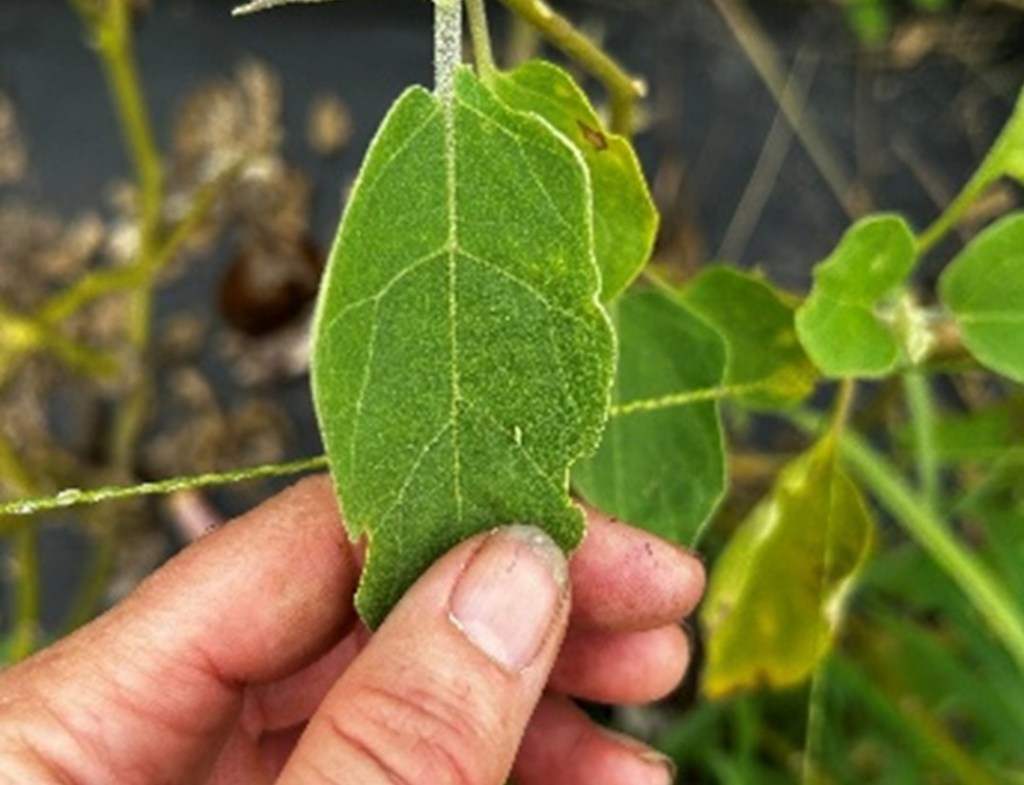
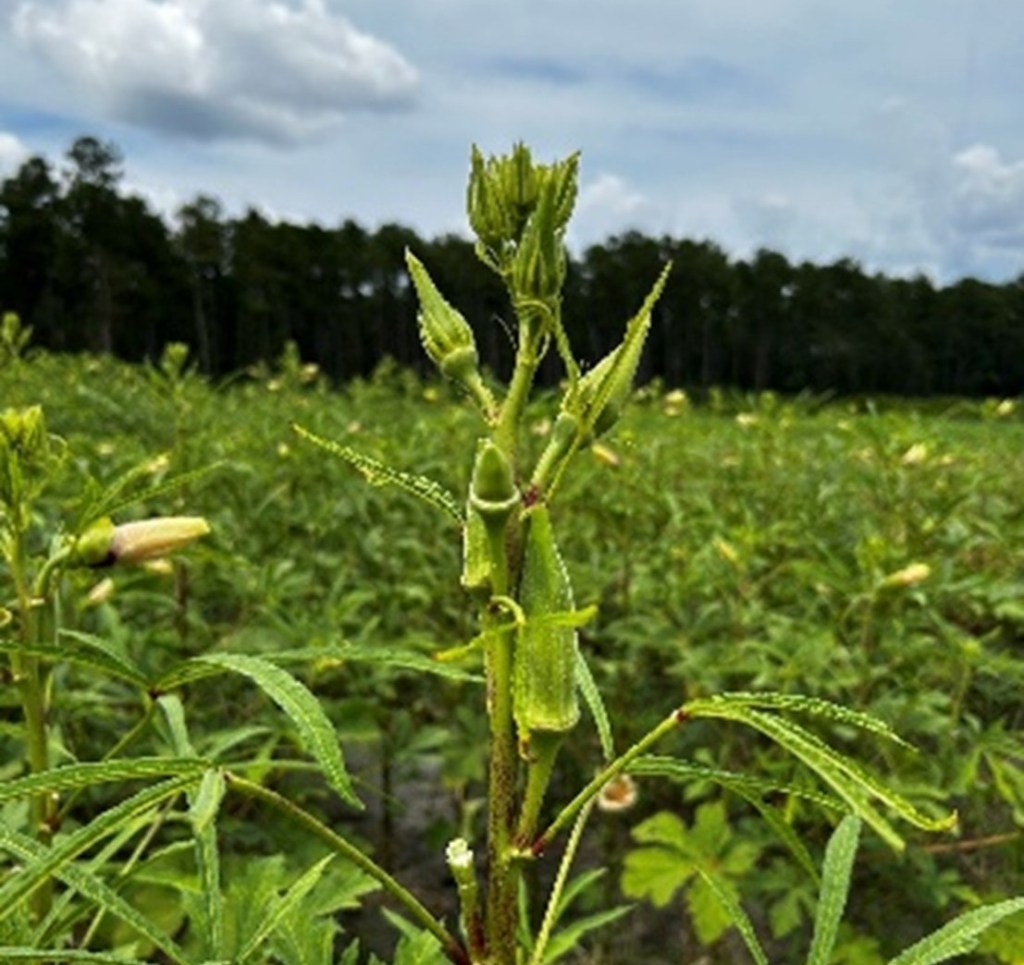
- I found a heavy infestation of two-spot cotton leafhoppers on a farm in Hampton County. Adults and nymphs were feeding on okra and eggplants. The two crops were in the same field but on opposite sides, with peas in between. Both crops’ lower leaves were yellow from feeding, but insects were found on both healthy and yellow leaves. The insects were most prevalent on the bottoms of the leaves, but adults were also found on the tops of leaves. A good population of beneficials in the okra had built up on an earlier infestation of aphids. Despite these issues, the plants were producing good quantities of pods. Some adult two-spot cotton leafhoppers were found on squash planted next to the eggplants. They were much more active and did not appear to be feeding on it. The eggplants were at the end of production, so it was recommended that the eggplant be disked up and that the okra be treated with Beleaf (ai: Flonicamid).
Zack Snipes
- We are saturated. We received over 8 inches of rain at our weather station on Johns Island and around 6 inches at the station in Beaufort. Want to see the rainfall totals in your county? Visit our weather website and use our rainfall calculator.
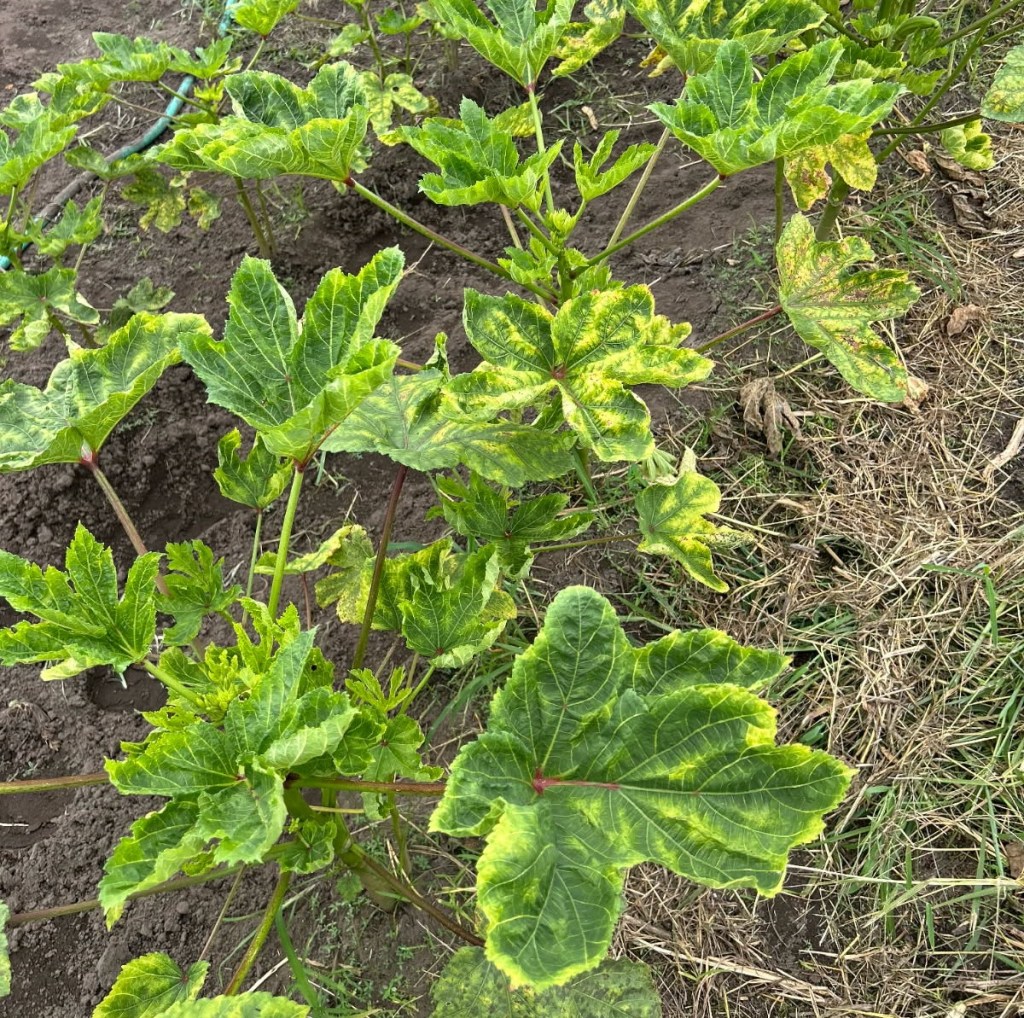
- I got out before the rains and found lots and lots of two-spot cotton leafhoppers. I have found them on every farm I have visited in the past two weeks with the exception of one. I am finding them primarily on okra but have also found them on eggplant, sunflower, and hibiscus. If you have these crops, you need to scout and treat plants to knock back populations. For conventional growers, Beleaf is being used with good efficacy. For organic folks, there isn’t a really good option that I know of. Some folks are trying stylet oils or neem. Coverage is key with these products so you will want a really good pressure on your sprayer or even an air assisted type sprayer. Be extremely careful with oils this time of year as they will burn the plant (aka phytotoxicity) with the current temperatures. It is best to spray late in the evening to avoid phytotoxicity.
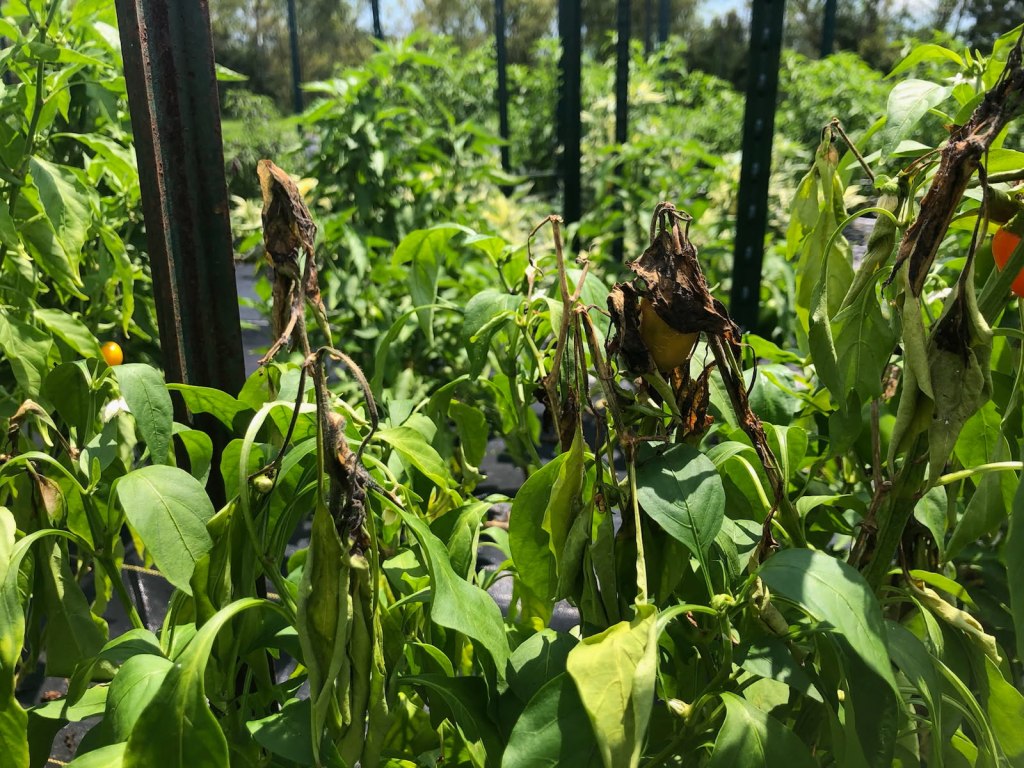
- We are finding some issues with pepper where the top of the plant is browning, wilting, and dying. Please let me know if this is happening to your peppers. We need to send samples to the lab for a disease ID. We have heard this happening on several farms in SC and would love to know what it is and where it is.
Midlands
Rob Last
- After a warm start to last week, the weather has now cooled down with increased chances of rainfall. The additional rainfall is making field operations more challenging, whether it’s timely applications or plantings. Hopefully the forecast is accurate with rainfall chances reducing through the week.
- As fall plantings continue, keep monitoring those crops for pests and diseases.
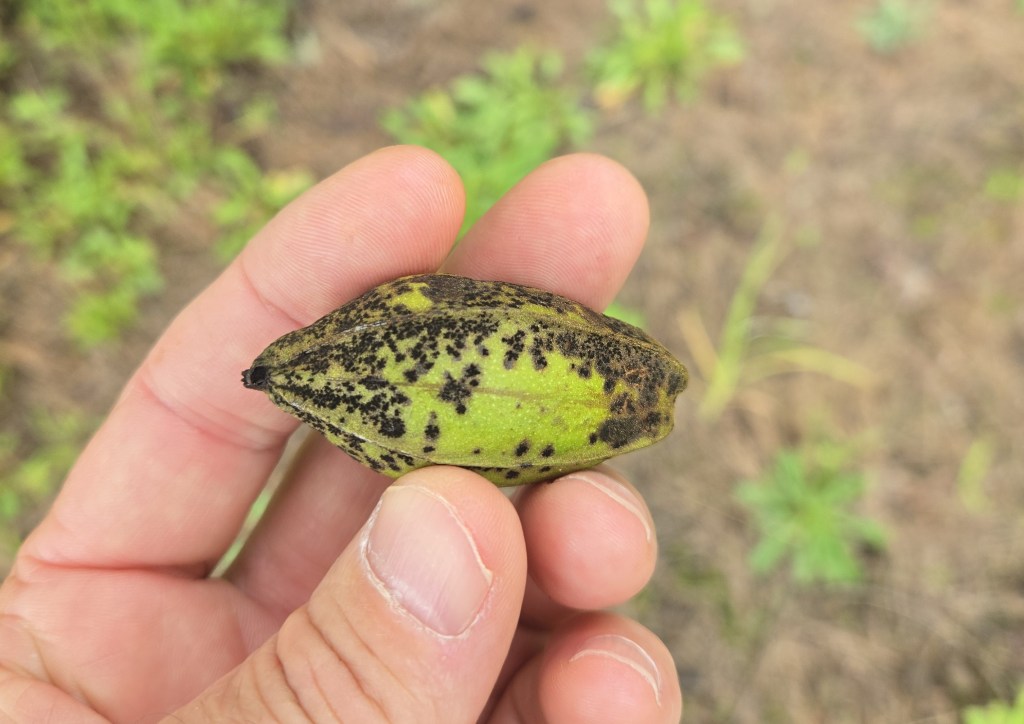
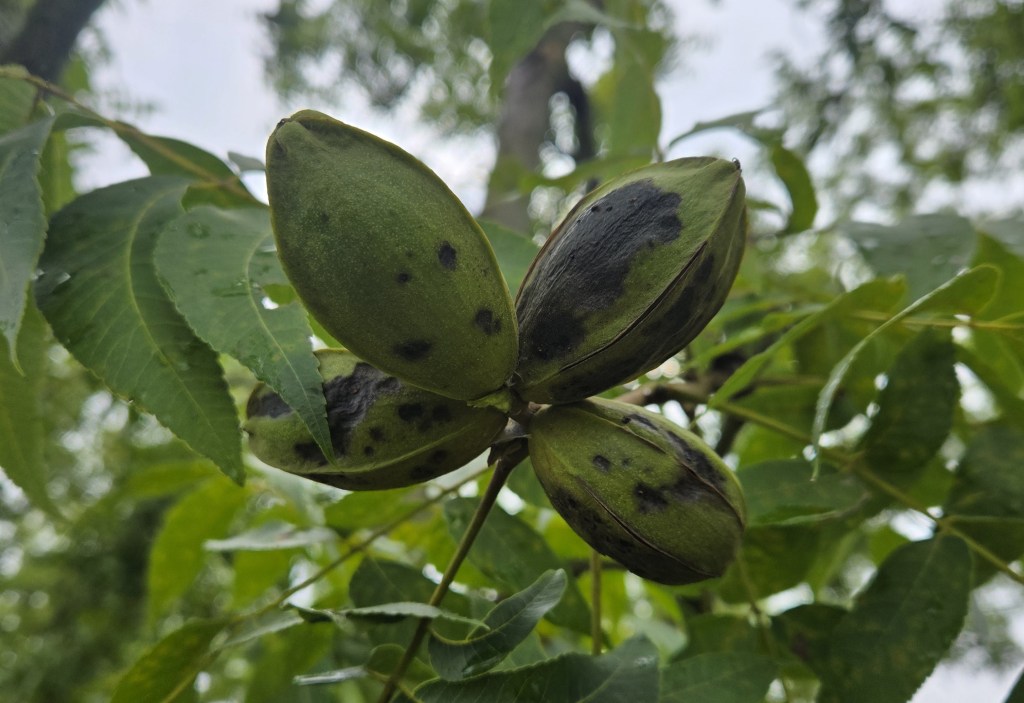
- After visiting a pecan orchard last week, I thought it was timely to discuss pecan scab and pecan anthracnose. Both diseases thrive in wet conditions or with high humidity.
- Pecan Scab
- The pathogen overwinters on fallen nuts and leaves, with spores released in April, infecting foliage.
- The nut symptoms are black, fuzzy and can be either rounded or elongated with a raised feeling to the lesion.
- Infection between the nut shuck and the shell hardening is the most damaging. Infections after shell hardening are more of a cosmetic factor.
- Management options include sanitation, cultivar selection, and a robust fungicide program, with good rotation of Frac codes.
- Pecan Anthracnose
- The pathogen overwinters on peduncles (the stalk from the flower or nut clusters) of the previous crop.
- Infection can happen on the foliage and nuts from the spores released in April. Anthracnose infection can occur very early in the cycle, with symptoms becoming visible when weather conditions are conducive to development.
- The nut symptoms are dark and sunken and may cover the entire nut, starting at the sutures or proximal ends (think wound sites). The symptoms can be more pronounced on stressed trees, or those with heavy nut loads.
- DMI and QoI fungicides can be very effective tools, and many of the fungicides used in a scab prevention program can suppress anthracnose.
- For more information and pictures, the MyIPM app for either Android or iPhone is a great resource.
- Pecan Scab
Sarah Scott
- The last peaches of the season are being harvested. It’s been a challenging season with extreme weather events and increased disease pressure. Growers are making decisions on post-harvest sprays to reduce inoculum in the fields for next year.
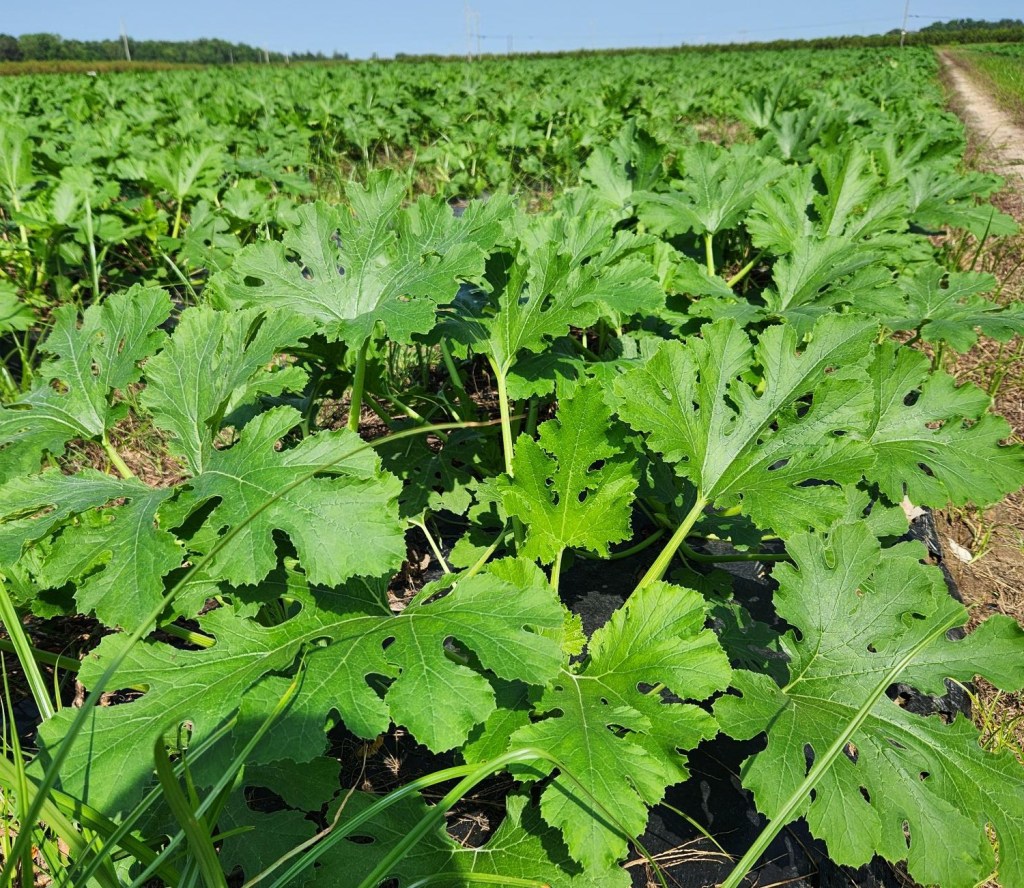
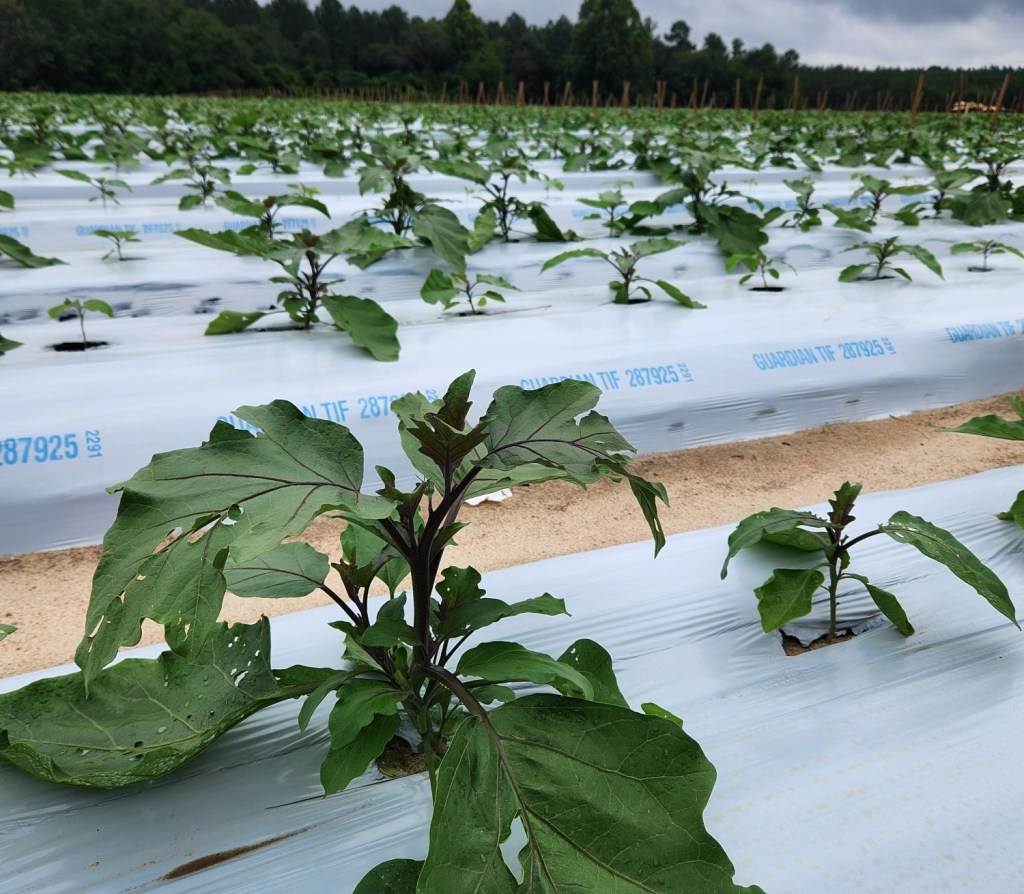
- Vegetables planted for fall harvest are establishing well, including eggplant, bell peppers, and squash. Some cherry tomatoes still being harvested and broccoli planting has started.
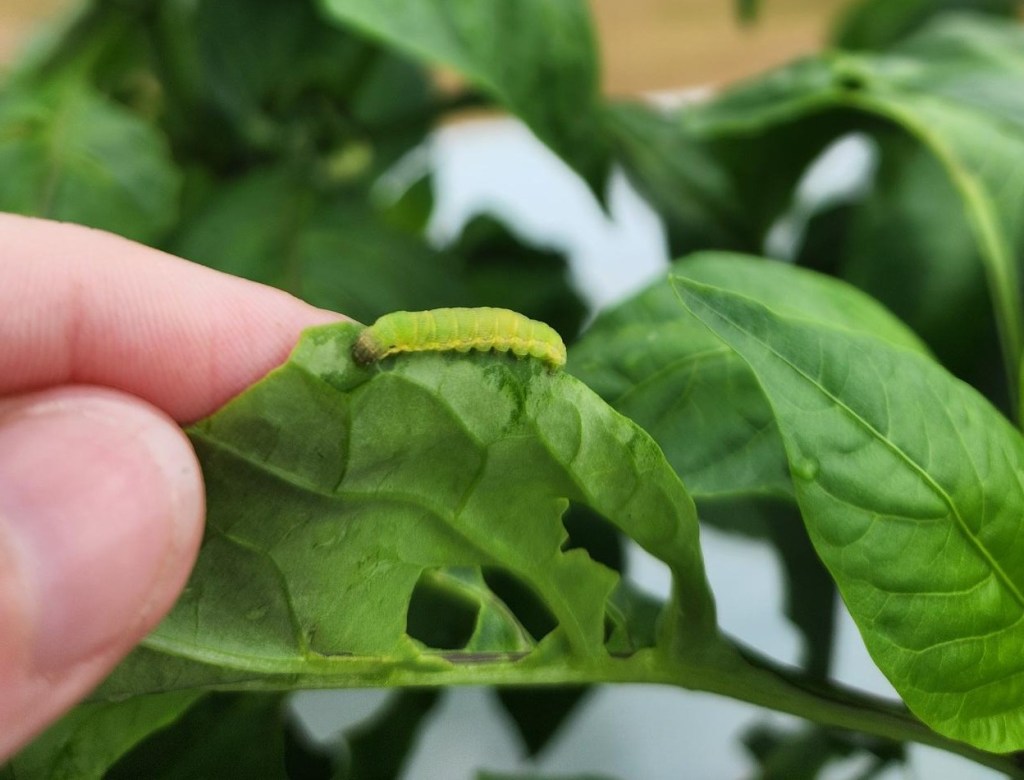
- I’ve seen a lot of worm activity in vegetable fields. Scout often and especially soon after planting and during establishment.
Pee Dee
Brittney King
- Fall crops like brassicas, tomatoes, and peas are progressing well in the Pee Dee. We had nice weather for most of last week which seemed to really benefit crops. Keep an eye out for bacterial diseases as rain continues to be on the forecast.
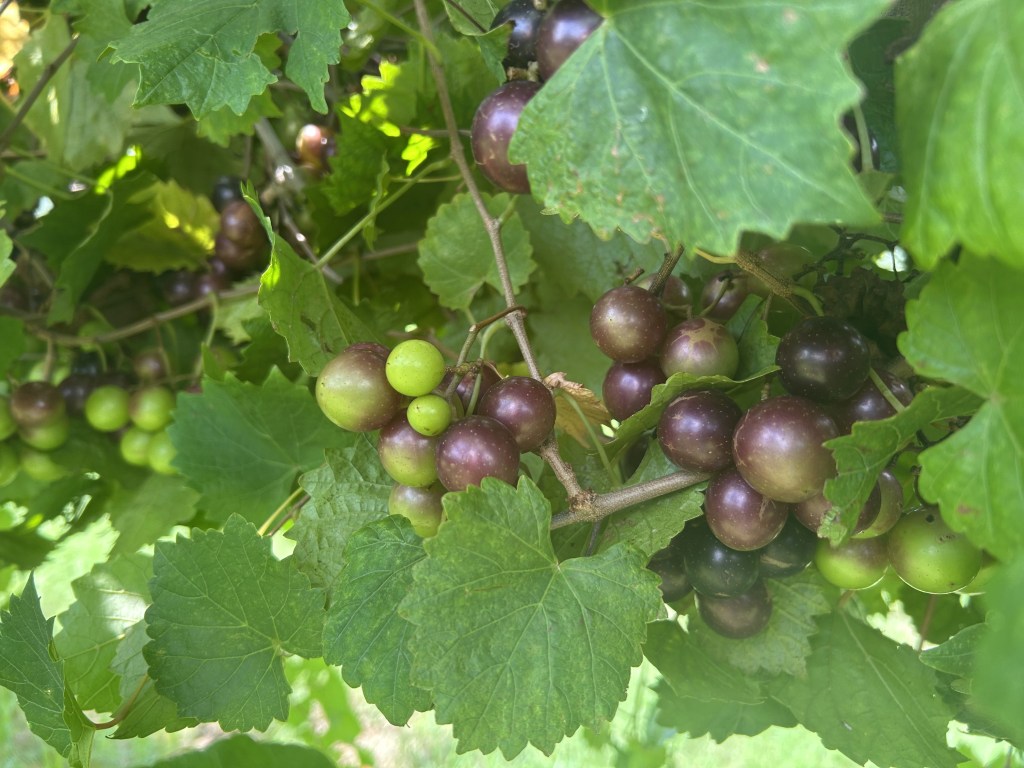
- Muscadine growers have finished skirting and grapes are being harvested for fresh-market. U-pick operations have also opened. We had a lot of fruit splitting from the rain a week or so ago, but fruit quality since has been great. No serious issues here as far as diseases or insect pests go.
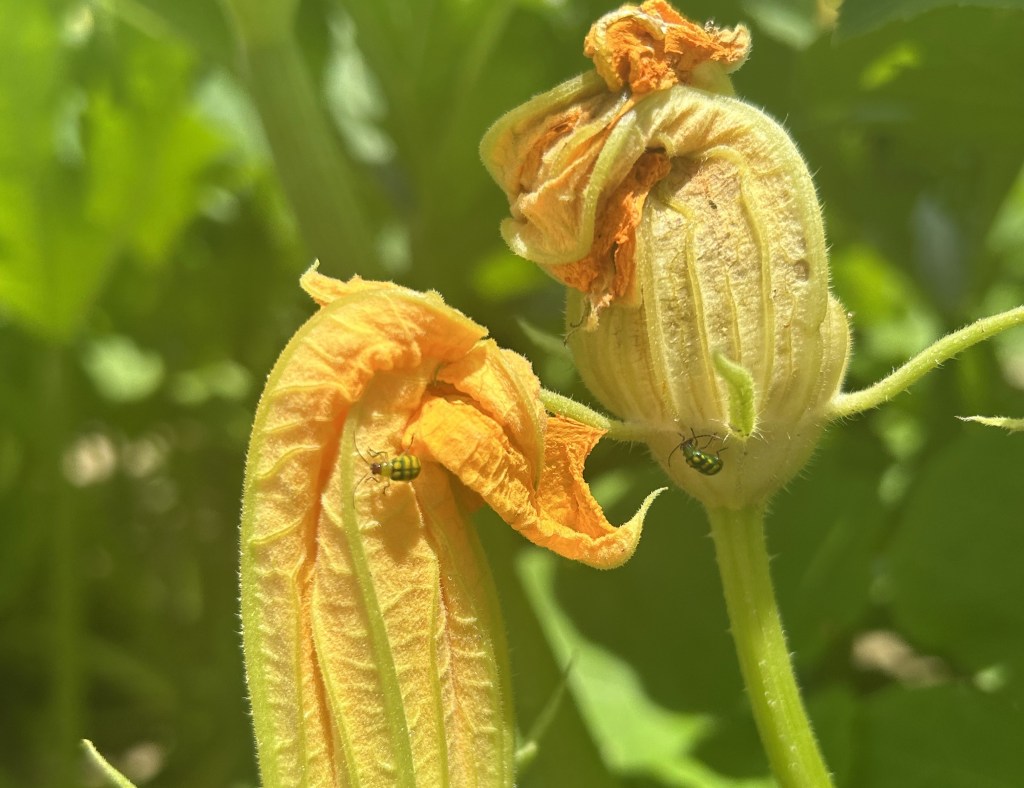
- Cucurbits are progressing well, but it is important to be scouting for signs of disease as weather conditions continue to be conducive for disease development. Remember that diseases, like gummy stem blight, can be hard to see from your truck, so it’s crucial to get out in the field and take an up-close look at your rows! Pumpkins are loading up with fruit. I am seeing lots of banded and striped cucumber beetles feeding in the flowers in pumpkin fields. It’s very important to manage these insects in the fall as they can transmit viruses to your cucurbit crop.
- Strawberry growers will be getting ready for bed prep and fumigation here in the upcoming weeks. Be sure to have your fumigation management plan in place and all the supplies you’ll need ahead of time!
Upstate
Andy Rollins
- We are having some problems in late peaches like Bigred and others. Brown scars are appearing more on trees with fewer leaves. Excessive rains and cooler temperatures have caused bacterial spot to resurface and drop leaves to the ground. This increased sun exposure and resulting burn is being found more on the outside rows and trees with greater leaf drop than others. I am concerned about losing more trees as a result of root rots due to excessive rains in our heavy soils.
- We have started harvesting muscadines in the Upstate. The crop looks good but is starting slowly. We are finding some stink bugs and feeding damage. I recommended using a pyrethroid with a neonicotinoid in combination for killing these late-season pests. Make sure to follow label directions.

Question of the Week
What is Zack cooking this week?
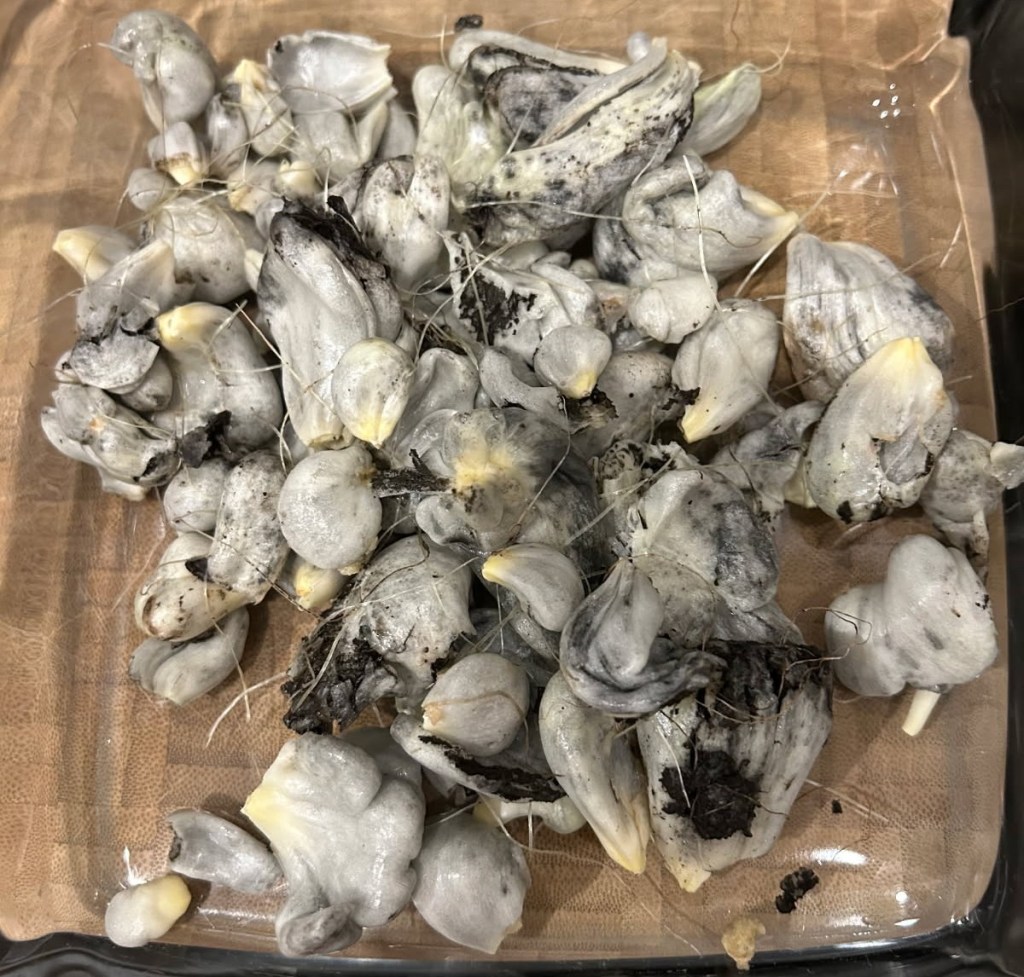
Answer in the comments below and check back on Thursday to see the answer.
 The South Carolina Grower
One response to “Weekly Field Update – 8/25/25”
corn smut…..
LikeLike