Mild weather continues around the state as strawberry growers prep fields for planting next month. Two spotted cotton leafhoppers are being found across the state. Disease has been plentiful on cucurbit crops. See details below.
Keep an eye on the Upcoming Events tab periodically so you don’t miss any of our winter/spring meetings. Also, check out the latest episode of the SC Grower Exchange Podcast below.
Don’t forget to look at our Resources tab for links to crop handbooks, helpful websites, and related blogs. Be sure to scroll all the way to the bottom to see this week’s Question of the Week, and check back on Thursday for the answer.
Coastal Region
Anna Sara Hill
- The weather has been very pleasant. Mornings are cool with temps warming up to the high 80s in the afternoon. Despite it being dry with no rain in the past week, the humidity has been averaging between 50% and 60%.
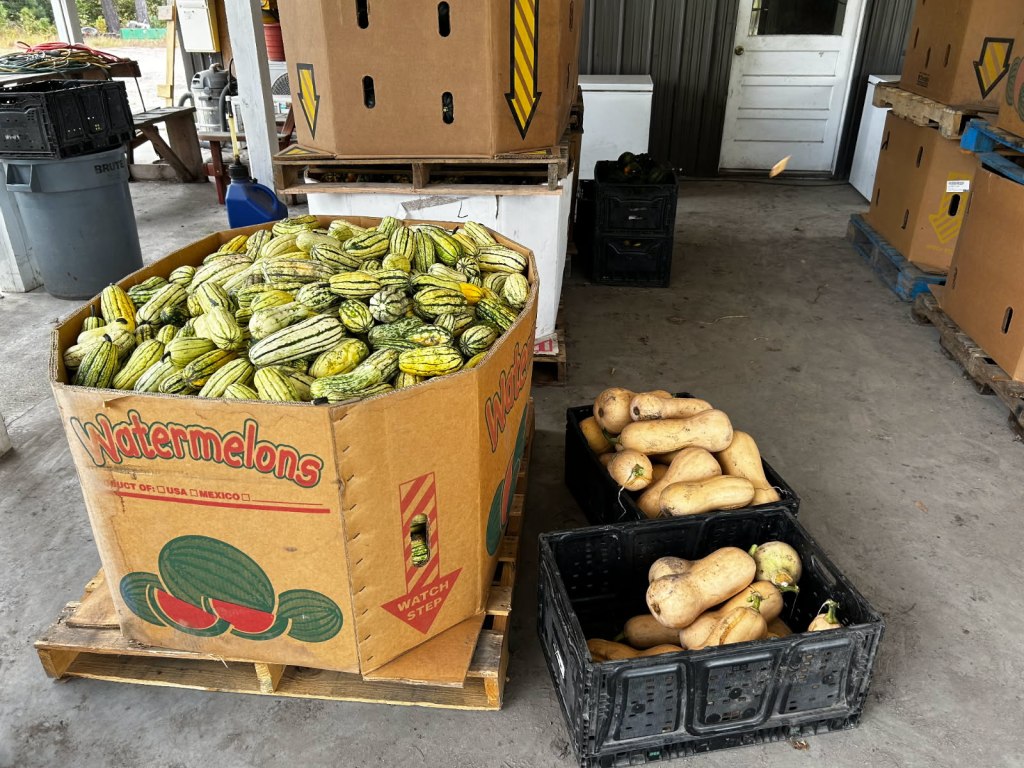
- Heavy volumes of okra and various varieties of fall squash are being harvested.
- Peas are growing well.
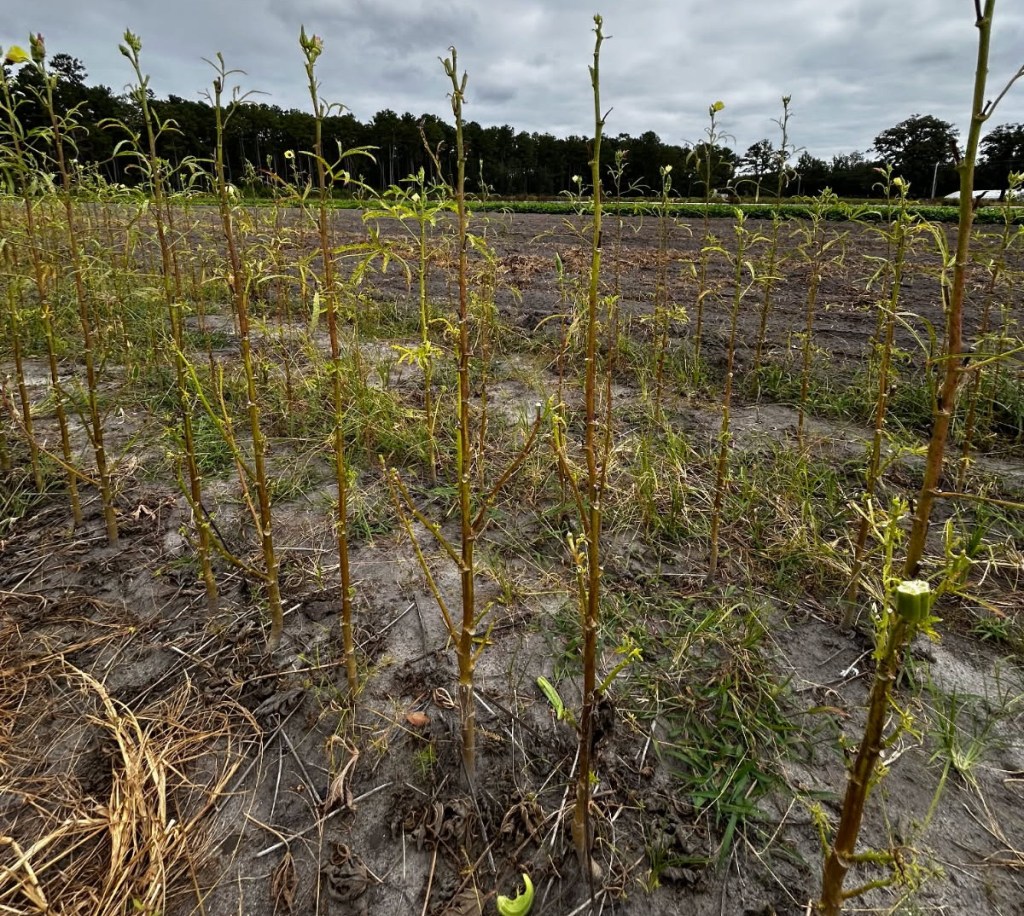
- I looked at a field of okra that was decimated by the two-spotted cotton leafhopper. The plants were almost completely defoliated. Leaves that were hanging on had hopper burn and were covered with all stages of the leafhoppers. It is important to scout and treat before populations get out of control. See Tom Bilbos’ post on 8/11/25 for more information.
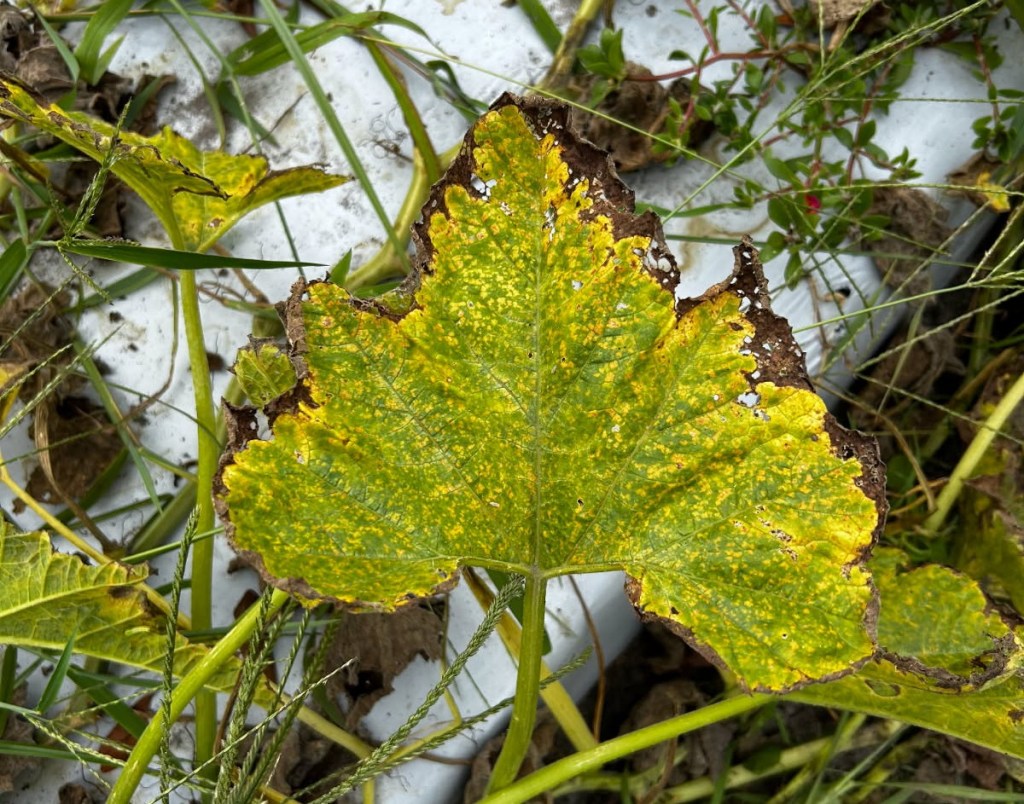
- I also looked at a field of squash that was affected by advanced stages of downy mildew. Downy mildew is treatable in early stages, but in advanced stages or if a large area of the field is affected, it is a loss. Downy mildew reduces the sugar content of winter squash, so be cautious and taste test a few of the fruits prior to attempting harvest. Fruits of unaffected plants are fine to harvest. In advanced cases, it is best to plow up the field as quickly as possible to reduce possible spread to neighboring crops.
Zack Snipes
- We have had some amazing weather the past few weeks compared to July.
- Growers are busy harvesting early fall crops, planting crops, and preparing ground for later fall/winter crops.
- For strawberry growers, now is the time to get your preemergent herbicides down for your strawberries. Most products have a 30-day plant back interval so if you sprayed this week, you would be planting mid-October which is ideal for the Coastal Plains. If you need help choosing a product, feel free to give me a call.
- We are currently helping some growers apply fumigants to their formed strawberry beds. This week we put out Pic-60 on a farm in the Lowcounty. This product will inhibit weed germination and assist with disease and some insect control in the beds. We are learning a lot about this new in-line system of injecting fumigant. We are excited to bring this tool to our SC growers.


Midlands
Rob Last
- As we continue with the dry spell, irrigation and maintaining water supply to developing crops is crucial.
- Crops in the area are developing well with rapid growth and development.
- I am seeing some Southern blight in tomatoes and peppers. Symptoms can easily be mistaken for bacterial wilt so look for white mycelial growth at the soil line or cut the stems to check for bacterial ooze.
- Brassicas look great, I am seeing a few low level incidences of diamondback moth and improved cabbage worm. Remember to rotate insecticide modes of action.

Pee Dee
Christiana Huss
- The weather has been beautiful in the Pee Dee! Some light rain here or there, but mostly sunny, cooler weather.
- Muscadine grape harvest is in full swing. Most varieties are being harvested, though a few still need a little longer to ripen.
- Strawberry fields are prepped and starting fumigation.
- Okra harvest is still high but starting to slow down. I’ve found the two-spotted cotton leafhopper in Georgetown County, meaning they are confirmed in every county East of Columbia.

Brittney King
- We have been having some great weather here in the Pee Dee. Cooler nights and warm, sunny days have really helped fall crops develop.
- Because of the drier weather, I am seeing powdery mildew on cucurbits. Powdery mildew can affect both sides of the leaf so it is critical to apply a fungicide that can target both the upper and lower leaf surfaces. Gatten, Prolivo, Torino, and Vivando have translaminar activity meaning that the fungicide will move through or across the leaf to cover the upper and lower leaf surfaces. For more info on managing powdery mildew, check out this article.
- Fall brassicas are progressing nicely and loving the cooler temps. Not really any disease issues present. Diamondback moth numbers are increasing so make sure that you are rotating modes of action to prevent insecticide resistance.
- Fall butterbeans are progressing well, but I am seeing lima bean anthracnose in some fields. Southernpeas have been yielding great this year with cowpea curculio and stink bugs being an issue in some fields.

Question of the Week
What crop from South Carolina’s past is this growing near the coast?

Answer in the comments below and check back on Thursday to see the answer.
 The South Carolina Grower
One response to “Weekly Field Update – 9/15/25”
Indigo
LikeLike