Finally, some rain. It looks like we will get a little more in the next day or two. Diseases have been hanging around and are likely to kick up with the moisture. Caterpillar activity is causing some issues in cucurbits and brassicas. See details below.
Keep an eye on the Upcoming Events tab periodically so you don’t miss any of our winter/spring meetings. Also, check out the latest episode of the SC Grower Exchange Podcast below.
Don’t forget to look at our Resources tab for links to crop handbooks, helpful websites, and related blogs. Be sure to scroll all the way to the bottom to see this week’s Question of the Week, and check back on Thursday for the answer.
Coastal Region
Anna Sara Hill
- We finally got a break from the dry spell and received some much-needed rain over the weekend, and more in the forecast.
- A late-planted field of fall watermelons has gummy stem blight and a little anthracnose. Spores will be active due to the rain, so it is important to continue spraying and rotating chemistries and MOA right up to the last harvest.
- A lot of watermelon rinds are damaged by the rind worm complex. Most of the damage appeared to be caused by caterpillar feeding as opposed to cucumber beetles.
- Peas are growing well and appear healthy.
Zack Snipes
- We are still dry in the Lowcountry, but hopeful this tropical system will drop some rain on us.
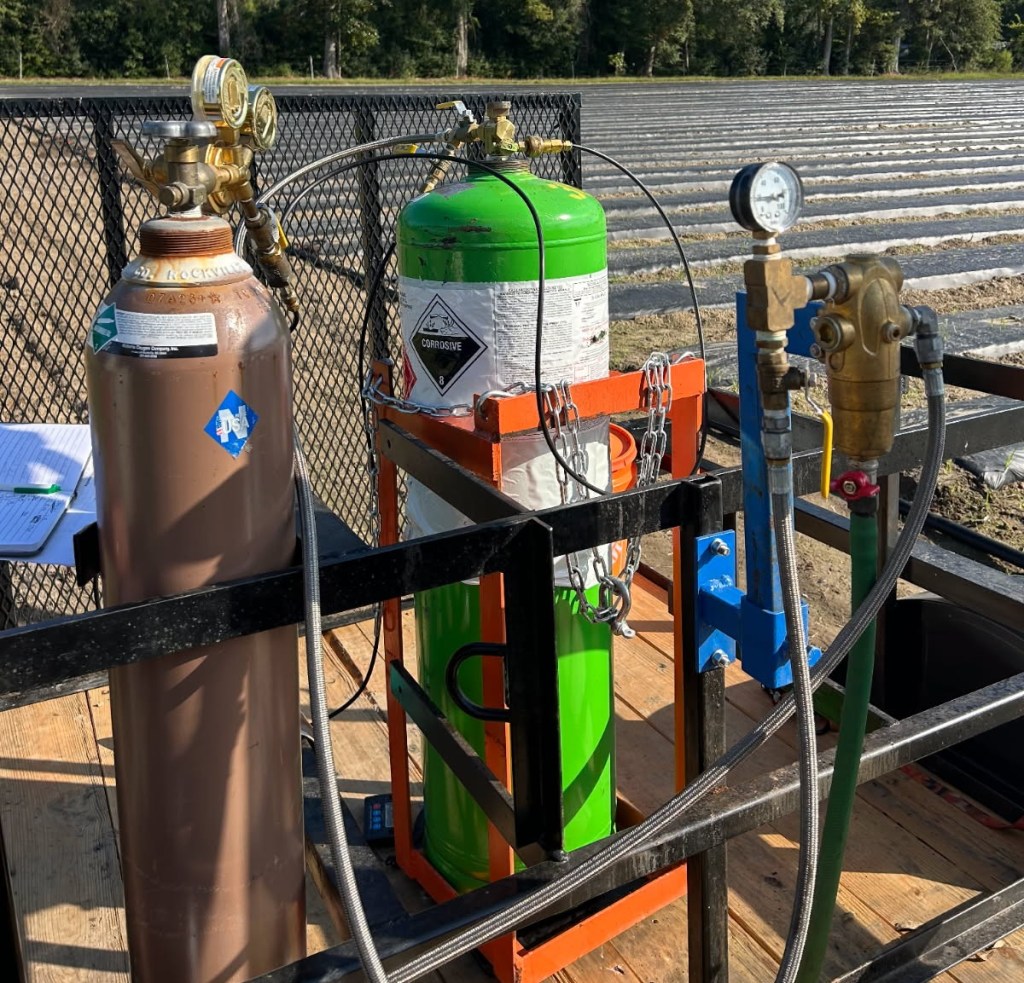
- Strawberry growers are busy putting out fumigant or bedding up rows. Some growers had to overhead irrigate to get enough moisture in the soil to bed up.
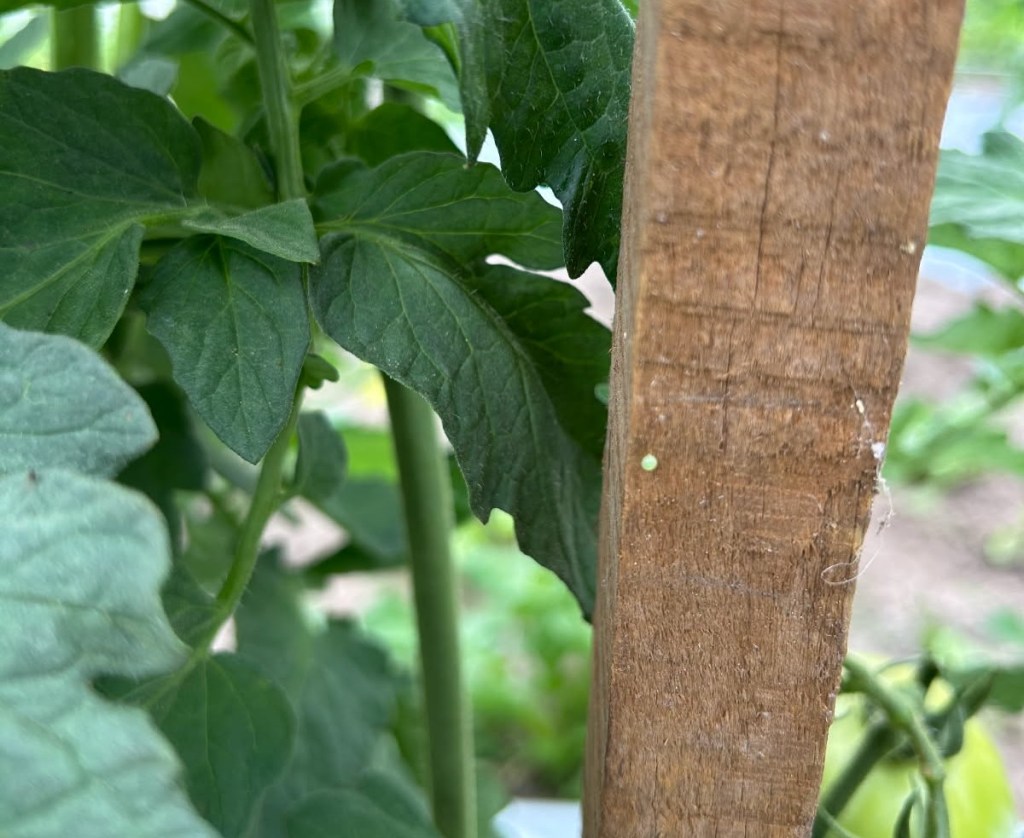
- Squash and zucchini are coming in at heavy volumes, but downy mildew, gummy stem blight, powdery mildew, squash bugs, and leaffooted bugs are all active and impacting the crop. Anyone growing pumpkins should be looking out for both the melonworm and pickleworm right now. We are in the peak of fall watermelon harvest right now.
- Fall greens look pretty rough right now if they are on bare ground with no irrigation. Hoping for some rain to get them going in the right direction. I saw very few lepidopteran pests last week in greens. Just a few diamondback moth larvae. Do not ignore scouting and let your guard down.
Midlands
Rob Last
- After some welcome and variable showers over the weekend, crops are all looking very well. However, scouting will be important. With increasing moisture, there may be an increase in diseases being observed.
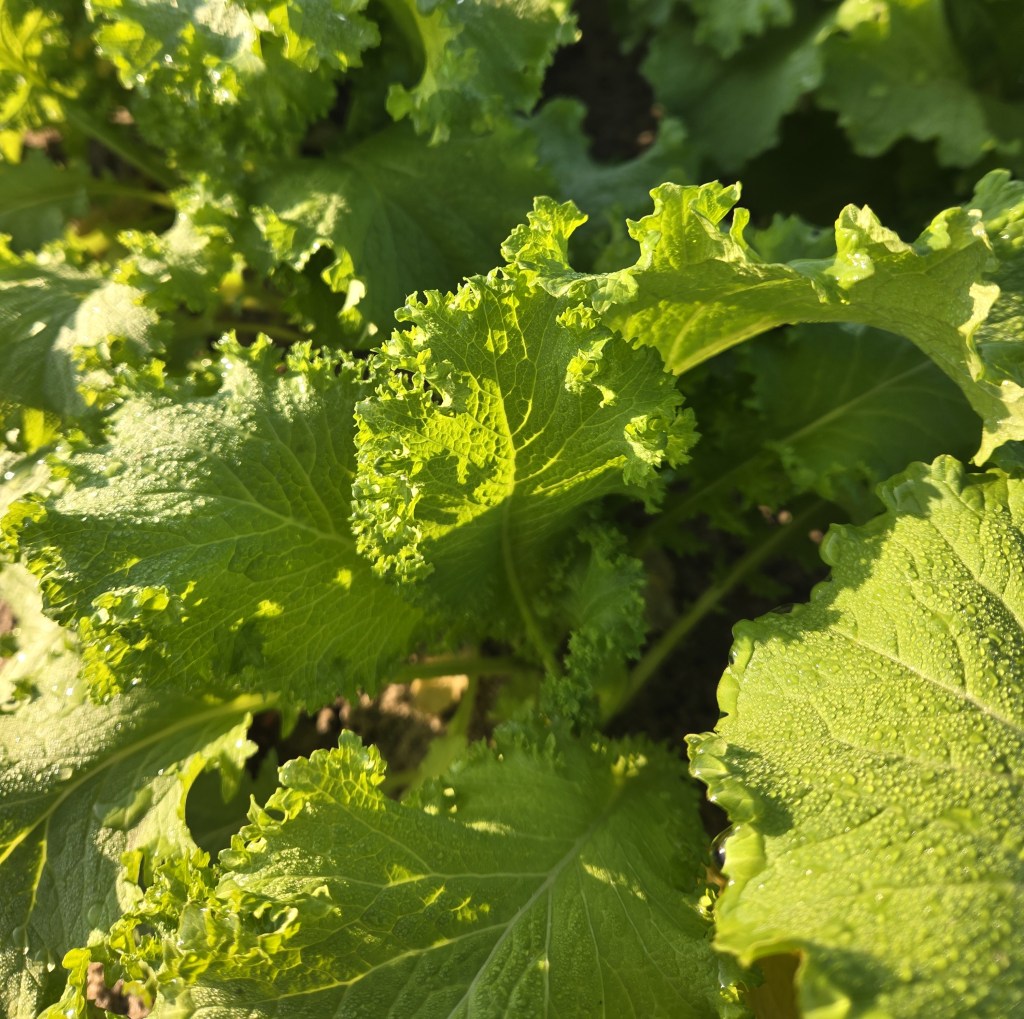
- Brassicas are developing rapidly, with kale and mustard greens coming to harvest.
- Keep scouting for cabbage looper, imported cabbageworm, and diamondback moth. I am receiving reports of imported cabbageworms being active.
- Tomatoes, peppers, and eggplant look great with very few issues. Bacterial diseases may become a more significant issue as we move forward.
- If you are growing strawberries, monitor crops closely for spider mites.
- Any rainfall we receive will help to create firmer beds in preparation for planting.
Upstate
Briana Naumuk
- Here in the Upstate, apple season is continuing along. Most of the apples for this year will be finished with harvesting in the next couple of weeks.
- San Jose Scale is still present in some of the orchards. A dormant oil application and preventative measures should be taken in the off-season.
- Fig harvest has slowed down in recent weeks.
- Muscadines are still going strong. The mid-season varieties are beginning to ripen with other varieties beginning to hit their peak.
- We are in for some cooler weather in the coming week with night temperatures dropping. It’s beginning to look a lot like fall here.
Andy Rollins
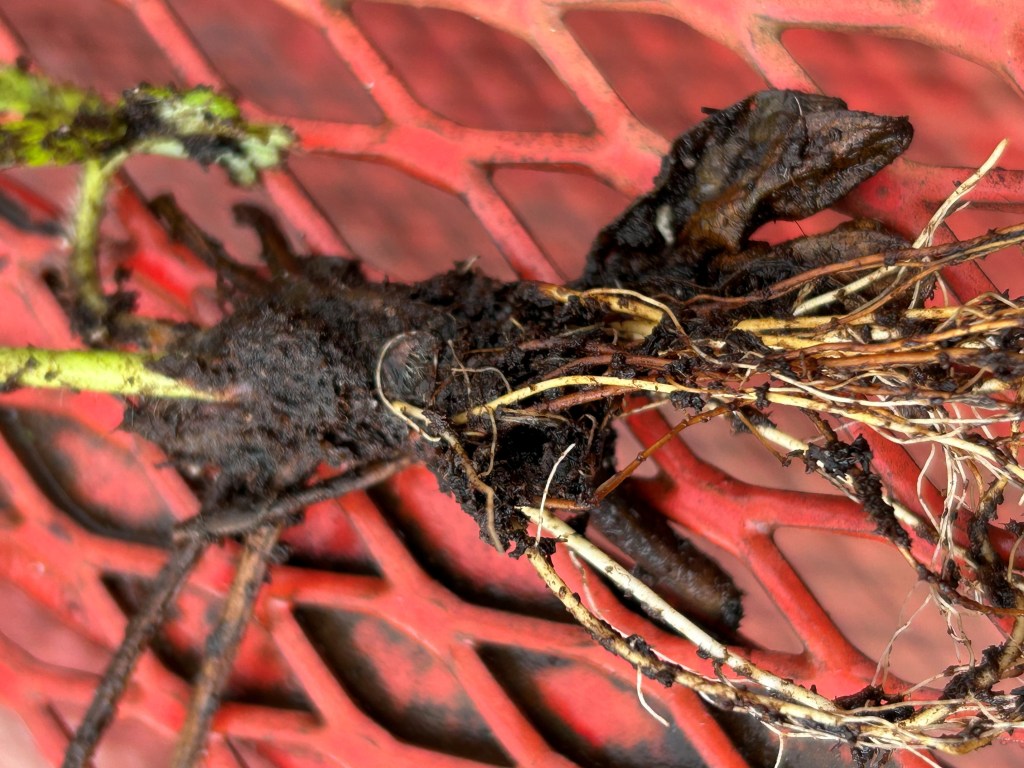
- Strawberry planting in the Upstate is increasing. I have been inspecting plants as they come in and I am finding some root rot issues as well as some leaf spots, but nothing so far that resembles neopest. Agdia test stripes confirmed this is phytophthora (see photo). I recommended the grower plant, wait 10-14 days, and then inject Orondis Gold at the 64 floz per treated acre or 32 fl oz per land acre. I also would encourage growers to inspect plants when they come in for root issues, but also for spider mites and anything that doesn’t look right. The sooner we know what the problems are, the sooner we can try manage them.
- I have also been inspecting fumigations to make sure the fumigants are no longer in the soil. I encourage growers to wait the allotted time before planting to make sure all of the fumigant has left the beds before planting. This varies by fumigant.
Question of the Week
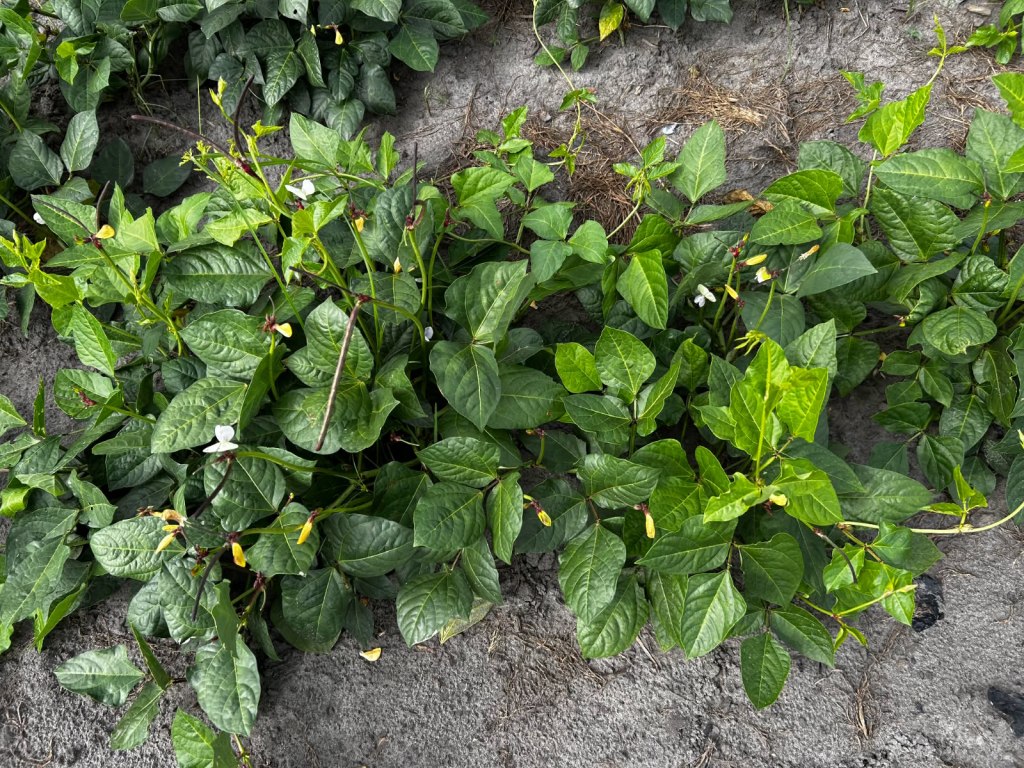
What is this crop growing in Hampton County?
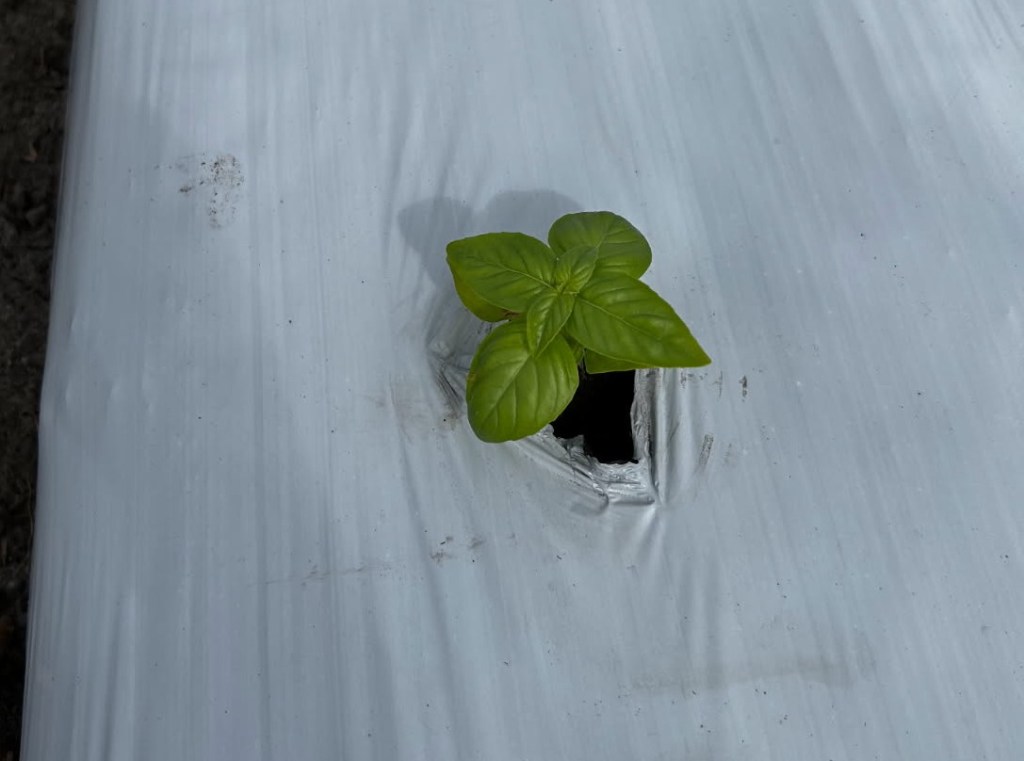
Answer in the comments below and check back on Thursday to see the answer.
 The South Carolina Grower
One response to “Weekly Field Update – 9/29/25”
Basil
LikeLike