Welcome back to the SC Grower! This is our first update of 2026, and we’re looking forward to a great year.
After some warm weather, temperatures will be cooler for the next week. Strawberries are developing well with various insect and disease issues around. Continue to scout regularly even though we’re in the middle of winter. See details below.
Keep an eye on the Upcoming Events tab periodically so you don’t miss any of our winter/spring meetings. Also, check out the latest episode of the SC Grower Exchange Podcast below.
Don’t forget to look at our Resources tab for links to crop handbooks, helpful websites, and related blogs. Be sure to scroll all the way to the bottom to see this week’s Question of the Week, and check back on Thursday for the answer.
Coastal Region
Zack Snipes
- Its been cold lately and the rest of this week looks to be the same.
- Strawberries are all over the place for us. Some look ok with decent size and full stands. Some fields are missing hundreds of plants due to root rots. Lastly, some fields have leaf spots that could be neopest. In my opinion, it has been hard to diagnose disease this year.
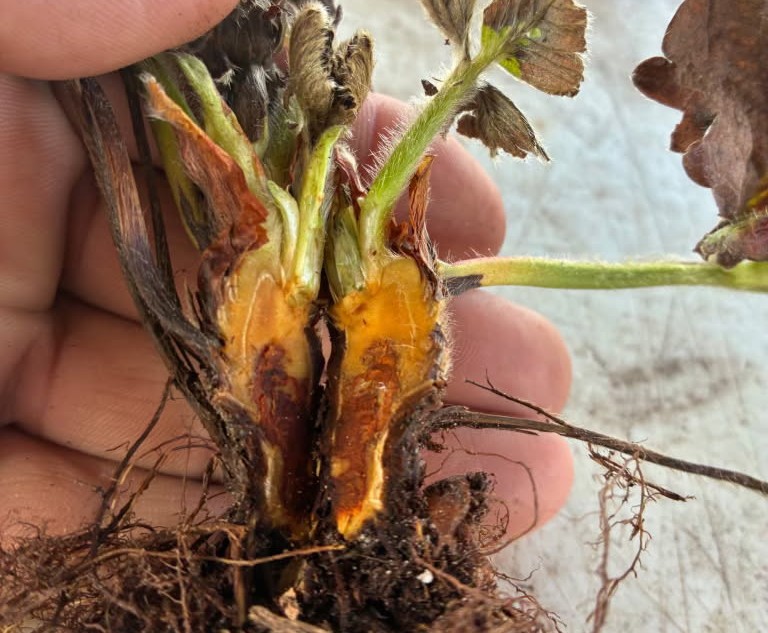
- We have had neopest root rot, phytophthora root rot, and anthracnose root rot. All three root rots have different management strategies, so please send samples into the lab for a positive diagnosis so we can treat with the appropriate pesticide. Lately, I have seen plants going down due to root and crown rots, so get out into your fields and look for symptoms of disease. The first thing I look for is a bronzing or purpling of individual plants or groups of plants. This lets me know that something is going on. Next, I cut the crown open to look for discoloration.
- Clemson Extension is in the process of updating a cut flower manual that was written in 2000. The publication should be finished by late winter or early spring.
Midlands
Rob Last
- Over the last week and into the upcoming week, temperatures are expected to be very cold, with the potential for wintry precipitation.
- Overall, crops look very good with very few pest and disease issues. Brassica crops can be expected to show purpling to the older leaves in response to reduced phosphorous uptake. There is no need to apply phosphorous. The color will return when temperatures recover.
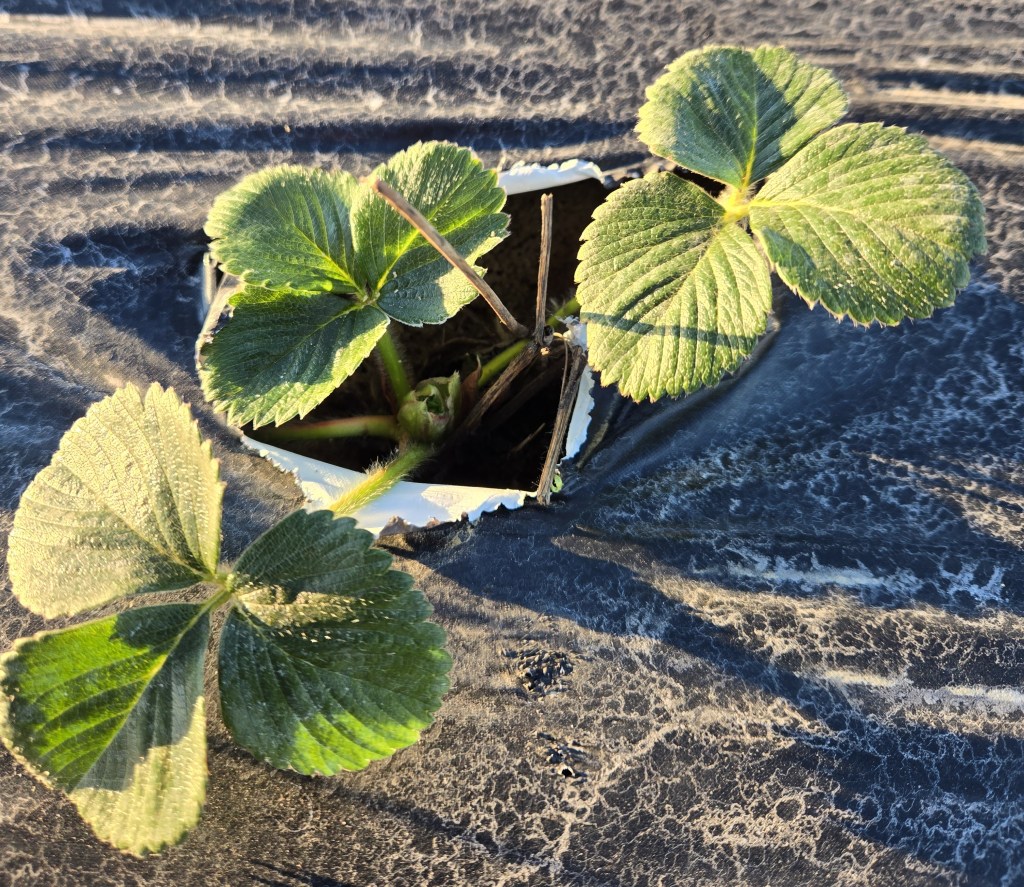
- Strawberries in the Midlands are developing well, all be it a little smaller than we would typically like. Many crops have been covered to prevent freeze injury to the crowns. Covers may need to remain in place throughout this week to minimize potential damage. Once covers do come off, scout closely for mite and disease activity. Making plans now to have fungicide and miticide on hand and ready to go would be a good policy.
- On that note, now is a good time to review 2025, making notes of systems and procedures that worked or didn’t work, enabling changes of plans to be made.
Sarah Scott
- We had a few weeks of fields sitting quiet and the weather giving us whiplash between spring and winter. Now it seems cold weather is setting in for a while and fields are bustling.
- Strawberries are growing and looking good. Some that have been tucked under covers have a good bit of size to them. There are some mites in patches, likely from a mix of covers and warmer temperatures, that we will keep an eye on.
- Pruning has started in the peach trees. Field prep has been done to prepare for planting new sites in the coming weeks. We were slow to gain chill hours for a while, but we are making up for them now. The first oil spray has started to go out and things will soon be busy.
Pee Dee
Brittney King
- We’ve had chilly days in the Pee Dee with most nights getting down to the lows 20s. There is great potential for a winter storm this weekend with chances of freezing rain and sleet.
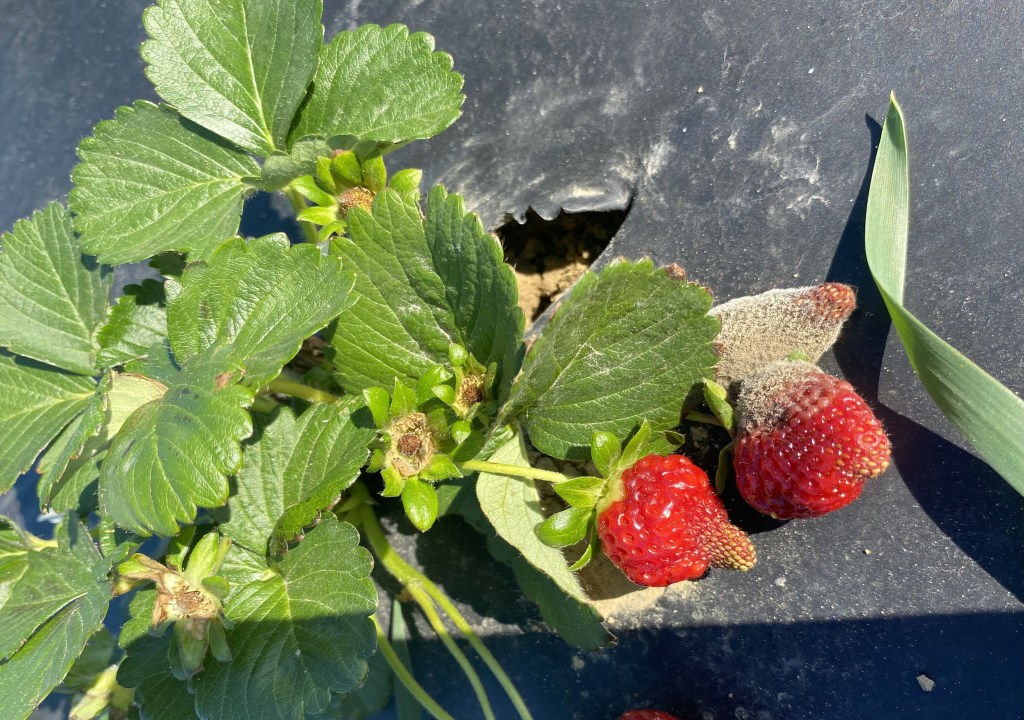
- Strawberry growers covered plants to protect crowns and increase size. Growth has been good so far this year with most plants having 3-5 crowns, but some that did not use row covers have plants with 2-3 crowns. Botrytis has started to develop on winter-killed flowers and even fruit in some fields. This is a great time to get a Botrytis fungicide resistance test done so you are not wasting fungicides!
- Leafy greens are doing well and have been coming to harvest with good quality. Cabbage and collard plants have had great size on them at harvest this season. There has been some purple tinting from phosphorus immobility from cold soil conditions, but other than that, no big issues.
- This is a great time to work on equipment, stock up on chemicals, and make plans for the next planting season based on success/failures from last year.
Question of the Week
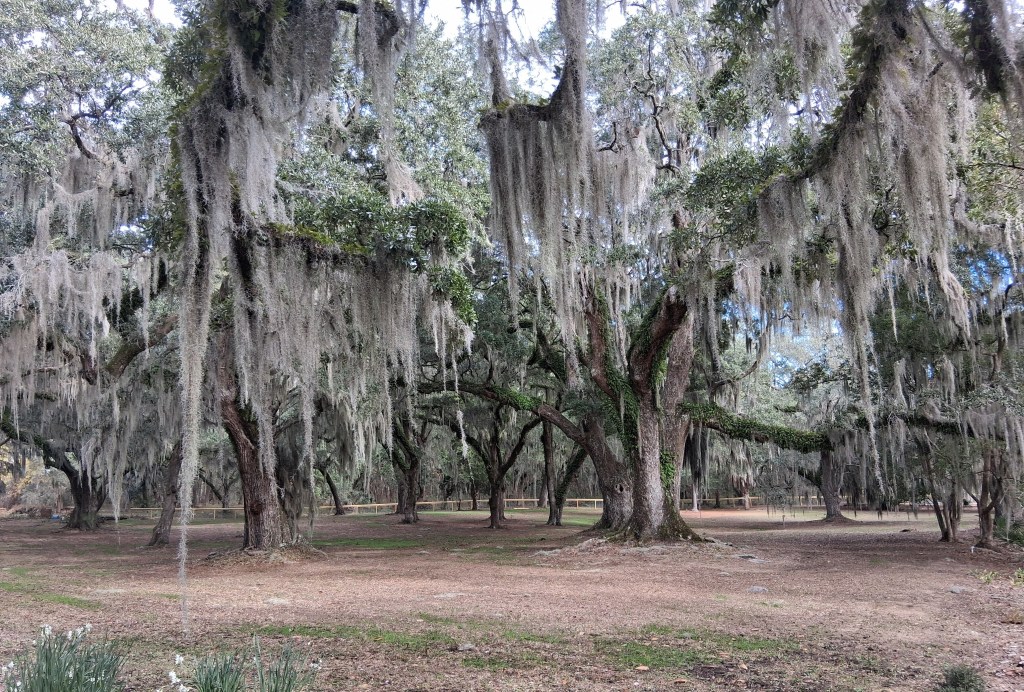
What year did the Spanish introduce Spanish moss to North America? (Hint: This is a trick question.)
Answer in the comments below and check back on Thursday to see the answer.
 The South Carolina Grower
One response to “Weekly Field Update – 1/20/26”
No Spanish did not introduce. It is a bromeliad, native to SE United States. Native Americans called it fair tree, because it looked like beards of the Spanish.
LikeLike