The weather is finally warming up a bit. Strawberry growers are pulling off row covers, sanitizing fields, and beginning to think about injecting fertilizer. Peach growers are bedding fields and planting new trees. See details below.
Keep an eye on the Upcoming Events tab periodically so you don’t miss any of our winter/spring meetings. Also, check out the latest episode of the SC Grower Exchange Podcast below.
Don’t forget to look at our Resources tab for links to crop handbooks, helpful websites, and related blogs. Be sure to scroll all the way to the bottom to see this week’s Question of the Week, and check back on Thursday for the answer.
Midlands
Rob Last
- With the weather warming up, plants will want to grow rapidly; therefore, for strawberry crops, nutrition becomes timely.
- The first application to be made is Boron. Applications of 1/8 pound or 2 oz per acre of elemental Boron will help to prevent cat-faced fruit. If we take Solubor, a product containing 20.5% boron, in 1 pound of the product, we have 3.28 oz of Boron.
- To deliver 2 oz per acre, the application rate needs to be:
- 2 (desired oz. per acre) / .205 (numerical form of 20.5%) =
- 9.75 oz. per acre of Solubor required.
- We also need to consider fertigation. A couple of key points to remember:
- Once we start to push fertilizer to the crops, harvest is 45 days away. (Usually start applications after Valentine’s Day)
- Once pushing fertilizers, we are going to need to think about freeze protection for blooms.
- Tissue test after the first application to fine-tune nitrogen.
- For the first application, we are looking to deliver 5.25 pounds of Nitrogen per acre per week. This would equate to 0.75 pounds of Nitrogen per day and is best balanced with potassium at the same rate. For help calculating the amount of product to apply, a fertigation calculator is available. There is a link in the Resources tab of the SC Grower website, or access the Fertigation Calculator here.
- Continue scouting and monitoring crops for foliar diseases and insect pests.
Sarah Scott
- Now that we’ve thawed out a bit, things are moving along in the field again.
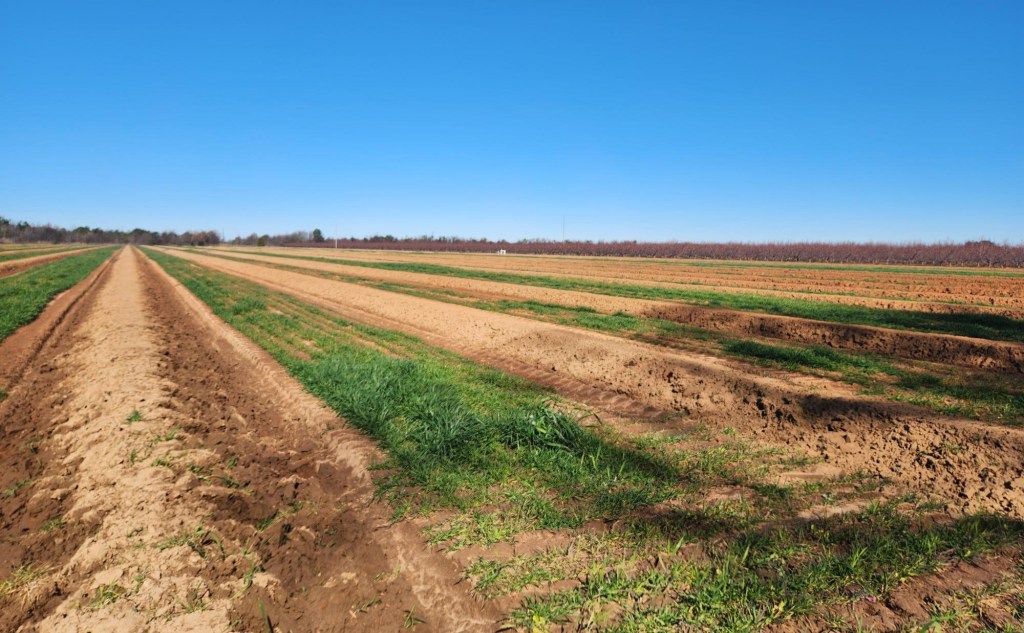
- Peach fields have been prepped and bedded, and planting of new trees has begun. With all the cold temperatures we have really accumulated the chill hours required for proper budding and fruit set. As of today, we are close to 800 chill hours in the Ridge, which is the most we have had at this date in several years. At this point, even our high chill-requiring varieties should have accumulated plenty. As we talked about on the podcast last week, there are many different models and calculations to look at when figuring chill hours. Usually, we go off of a “Modified Chill” model which calculates hours when temperatures are between 32-45 degrees from October 1st through February 15th.
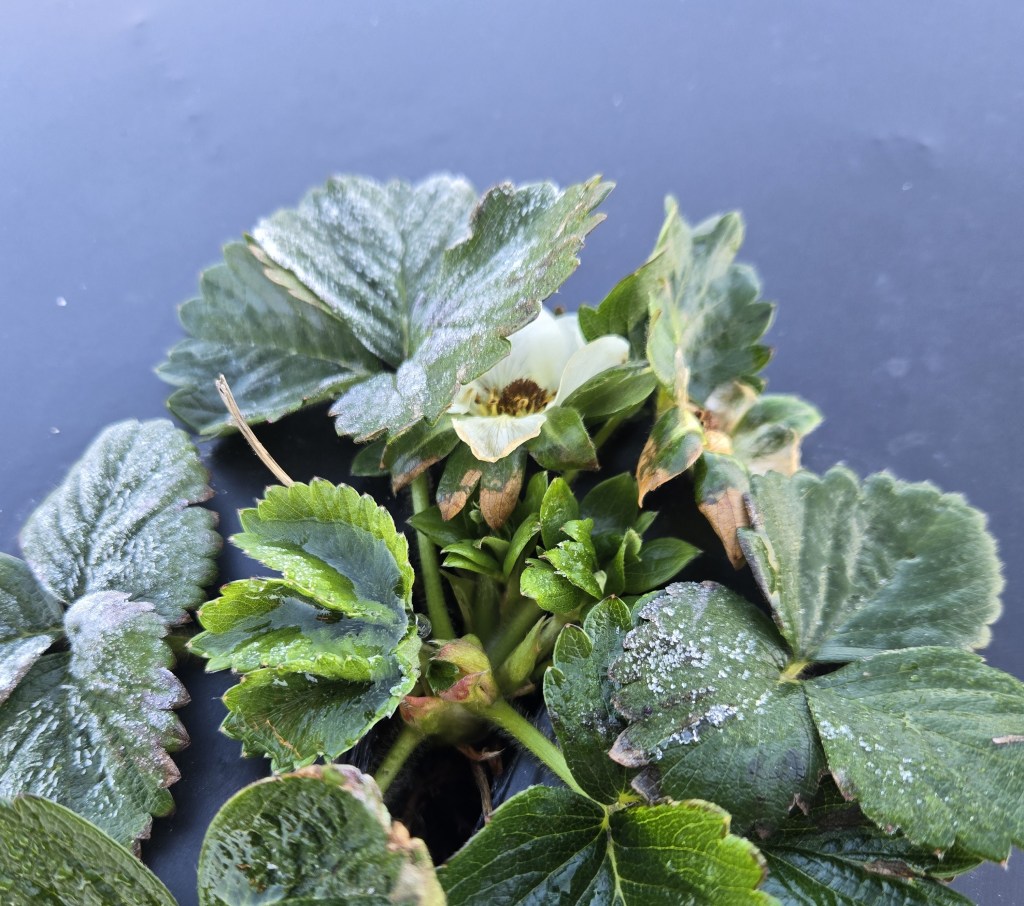
- We’re still evaluating strawberries for crown damage from extreme cold, but so far things seem to be okay. Covers are off and plants are getting some fresh air and sunshine.
Pee Dee
Brittney King
- The Pee Dee had a few days in the 50s last week and one day where we received almost 1.5 inches of rain. We are finally supposed to be getting warmer weather this week, with tomorrow supposedly in the 70s.
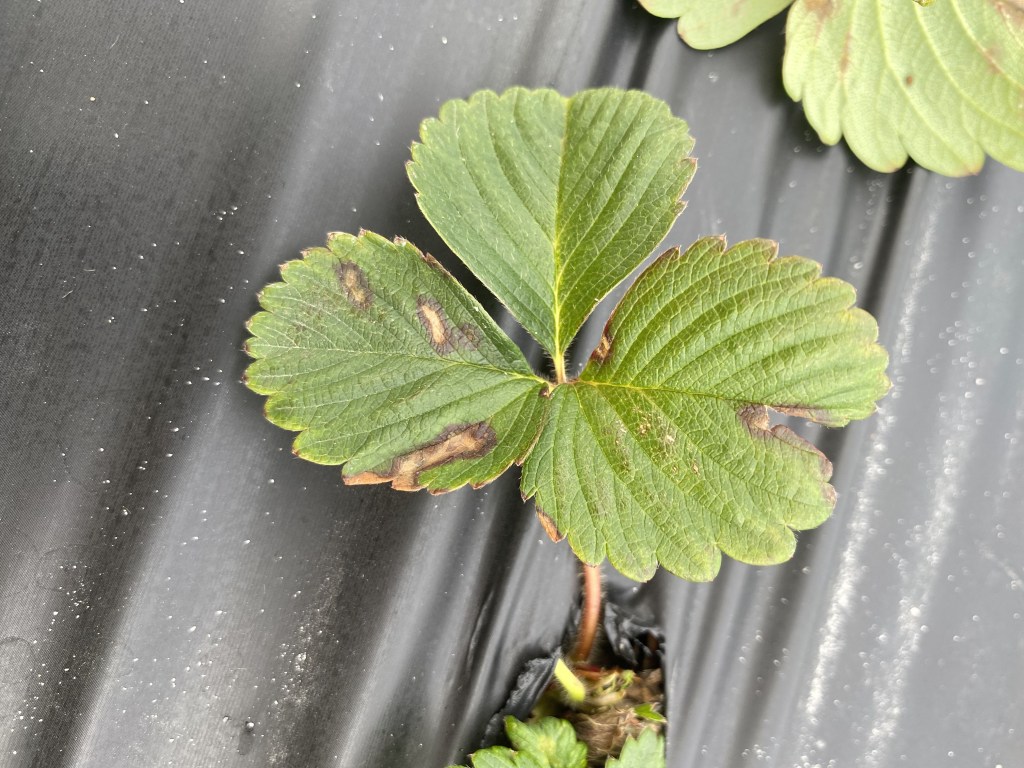
- I am seeing some burning to the leaf margins of strawberries which is to be expected after row covers have been on. Botrytis is starting to show up after the rain we got last week. Suspicious looking lesions have also started to appear, so I sent samples to the lab for ID. With the warmer weather coming this week, it will be important to scout for spider mites and diseases.
- I have been inspecting strawberry crowns for any signs of freeze damage. I have seen a couple instances of freeze damage in berries that were not covered. Other than the obvious freeze damage to the crown, there is a huge risk for this damaged tissue to become infected with a pathogen.
- Muscadine and blueberry growers are busy with dormant pruning. I saw some old muscadine vines that suffered some freeze damage to the cordons, but otherwise everything made it through.
Upstate
Andy Rollins
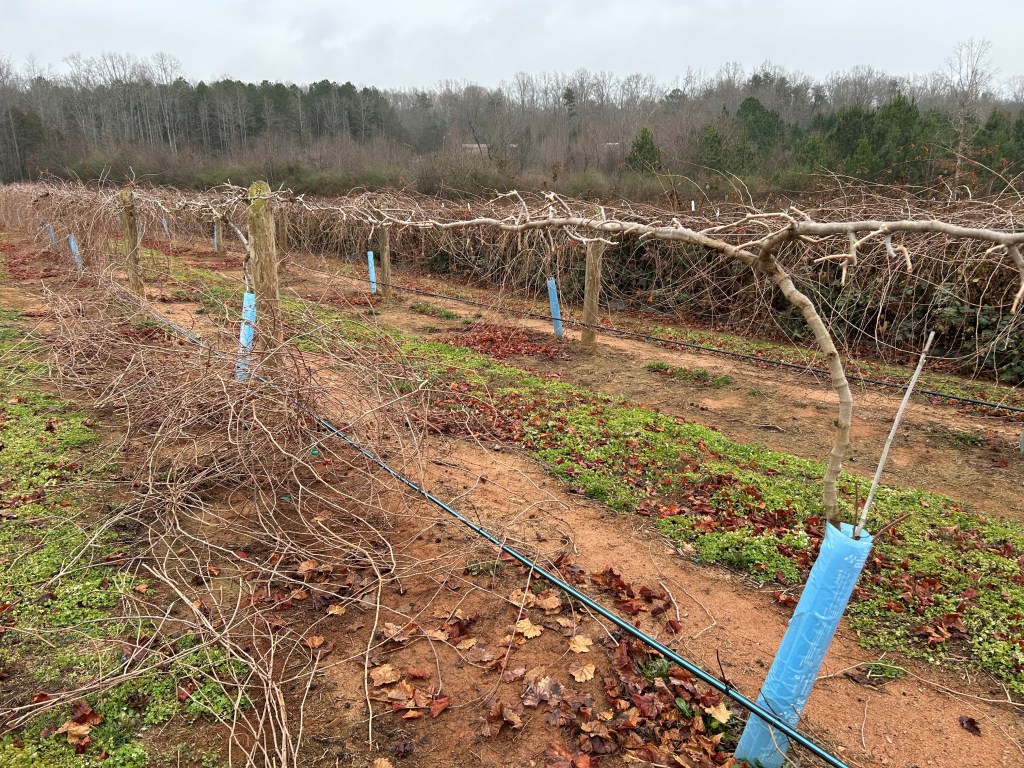
- Grape, peach and blueberry growers are all trying to finish pruning.
- We have gotten all of our chill hours for peaches in the Upstate. After pruning, growers need to make their dormant applications. This application is typically 15 gallons of oil, 5 quarts of chlorpyrifos (for San Jose Scale) and 20 lbs of COCS, or comparable product (for bacterial problems), per 500 gallon tank per 5 acres. If you are making this application to unpruned trees, the total water applied needs to be doubled, according to entomologist Brett Blaauw.
- Strawberry-wise, in the Upstate, growers are uncovering plants for coming higher temperatures in the forecast. I am recommending using Thiram + Rovral at their labeled rates. Growers also need to be inspecting closely for spider mites. Some areas of upstate hit 6 degrees F. We are not yet sure if crown damage was sustained, but this will be evaluated closely.
Question of the Week – Grower Spotlight
Where is Zack visiting this week?
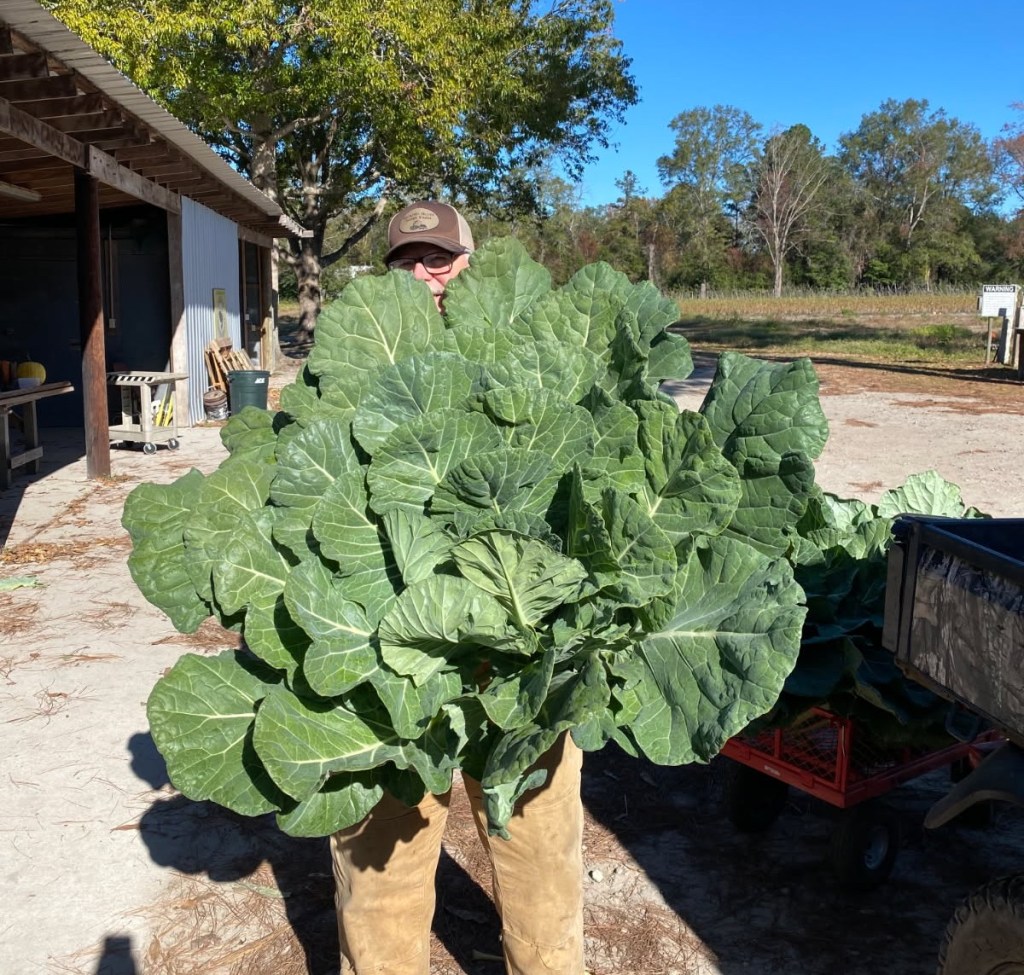
Answer in the comments below and check back on Thursday to see the answer.
 The South Carolina Grower