After a taste of spring weather, the week is off to a cold start. Many growers have begun spring fertilization in strawberries and will begin protecting flowers and fruit from the cold. We are seeing an increase in insect and disease pressure around the state. See details below.
Keep an eye on the Upcoming Events tab periodically so you don’t miss any of our winter/spring meetings. Also, check out the latest episode of the SC Grower Exchange Podcast below.
Don’t forget to look at our Resources tab for links to crop handbooks, helpful websites, and related blogs. Be sure to scroll all the way to the bottom to see this week’s Question of the Week, and check back on Thursday for the answer.
Coastal Region
Anna Sara Hill
- Last week, the weather was warm, and it felt like spring. Fruit trees budded out, and the daffodils started blooming.
- We got some much-needed rain on Saturday, and then the March winds roared in a week early, dropping the temperature. Fortunately, the wind kept things from freezing last night.
- Wind damage can be a problem for fruit trees and other crops. High winds can shred leaves, knock off limbs, cause lodging, weaken stems, desiccate plants, and cause other damage.
- To help plants withstand high winds and cold temperatures, keep them well watered and use wind breaks where possible.
- If wind damage is a recurring problem in fields, consider planting trees as windbreaks or using a structural windbreak, such as a fence or an earth berm. Strategically placed hay bales can be utilized as a temporary windbreak.
Zack Snipes
- We received a brief infusion of spring last week. Things will cool down a bit this week, but warmer temps will return at the end of the week.
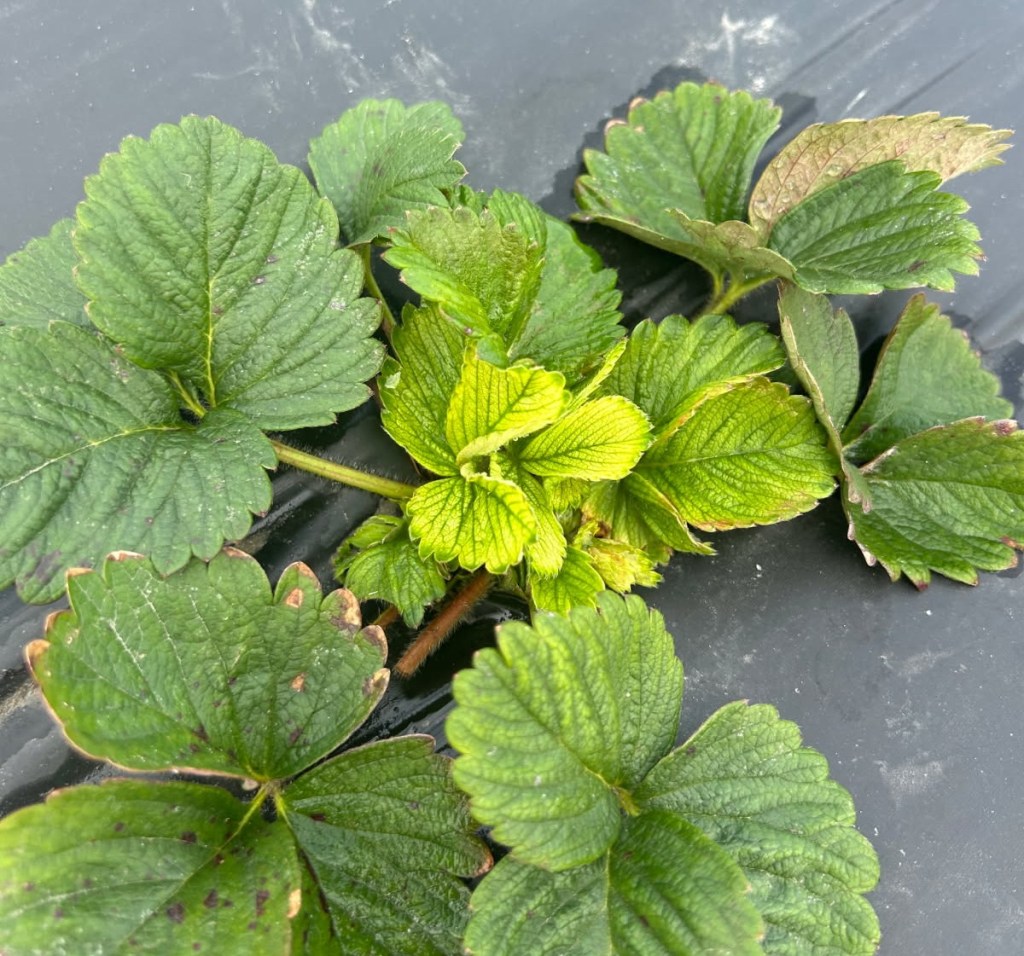
- Strawberry growers have begun pushing plants down my way. We have applied our boron for flower and fruit development and are giving them a little dose of liquid fertilizer. We are at the 3-5 crown stage right now with big, fat crowns. I have my fingers crossed that this means big yields come April.
- I did not see much disease or spider mite activity last week, but that doesn’t mean they aren’t there and active. Keep on the lookout. I did see aphids and have gotten several questions about them this past week. If you see aphids and brown, crunchy-looking aphids, then you have parasitism going on. Do not spray. There are lots of beneficial wasps doing pest control for you.
Midlands
Rob Last
- Given a warm week with a little rainfall, crops are developing well. However, the cool-down and lower overnight temperatures can be seen as a caution for fruit growers.
- Strawberry crops continue to develop well, with some spider mites and leaf spots evident. If you haven’t applied boron yet, go ahead once we are clear of freezing temperatures and apply 1/8 pound of Boron per acre. Zack gave a great update on this last week.
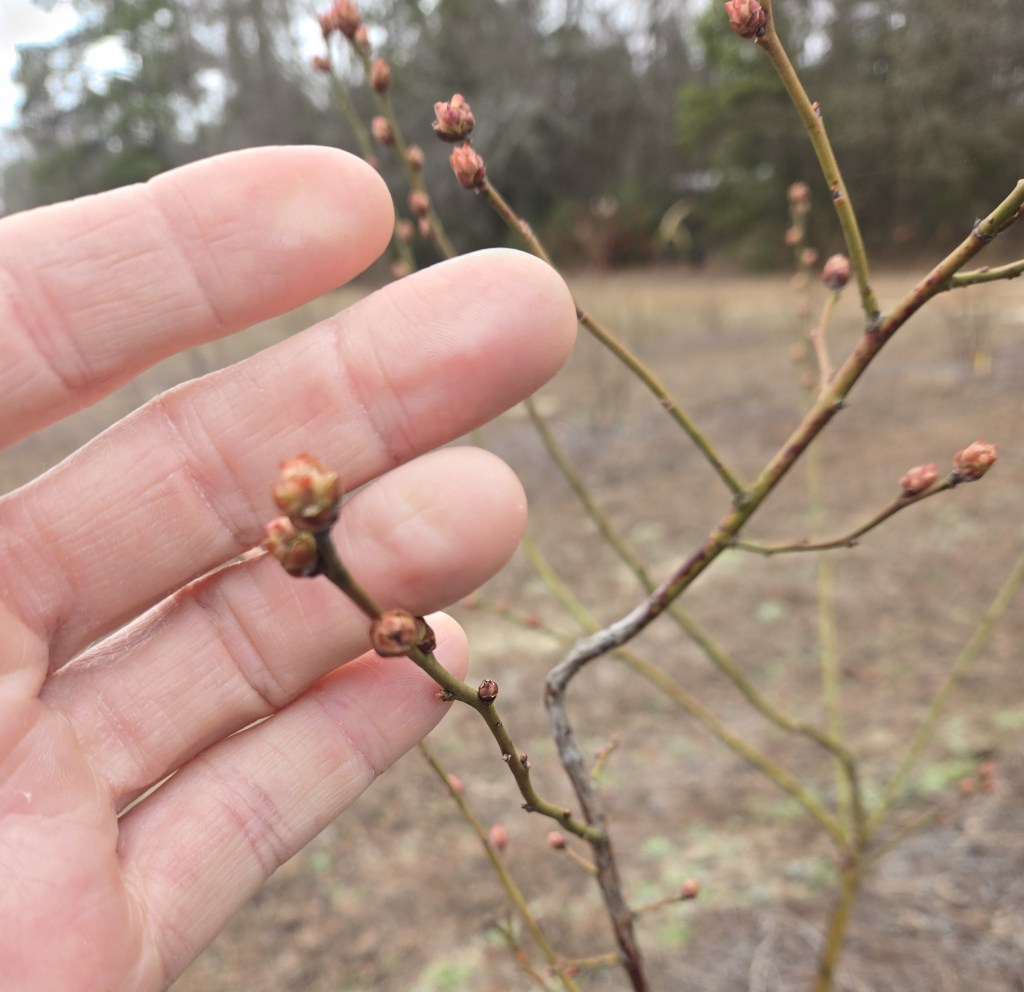
- Blueberry buds are swelling and breaking quickly, with some early cultivars beginning to flower. For blueberry and strawberry growers, protecting flowers will become increasingly crucial to preserve the yield potential of the crops.
Sarah Scott
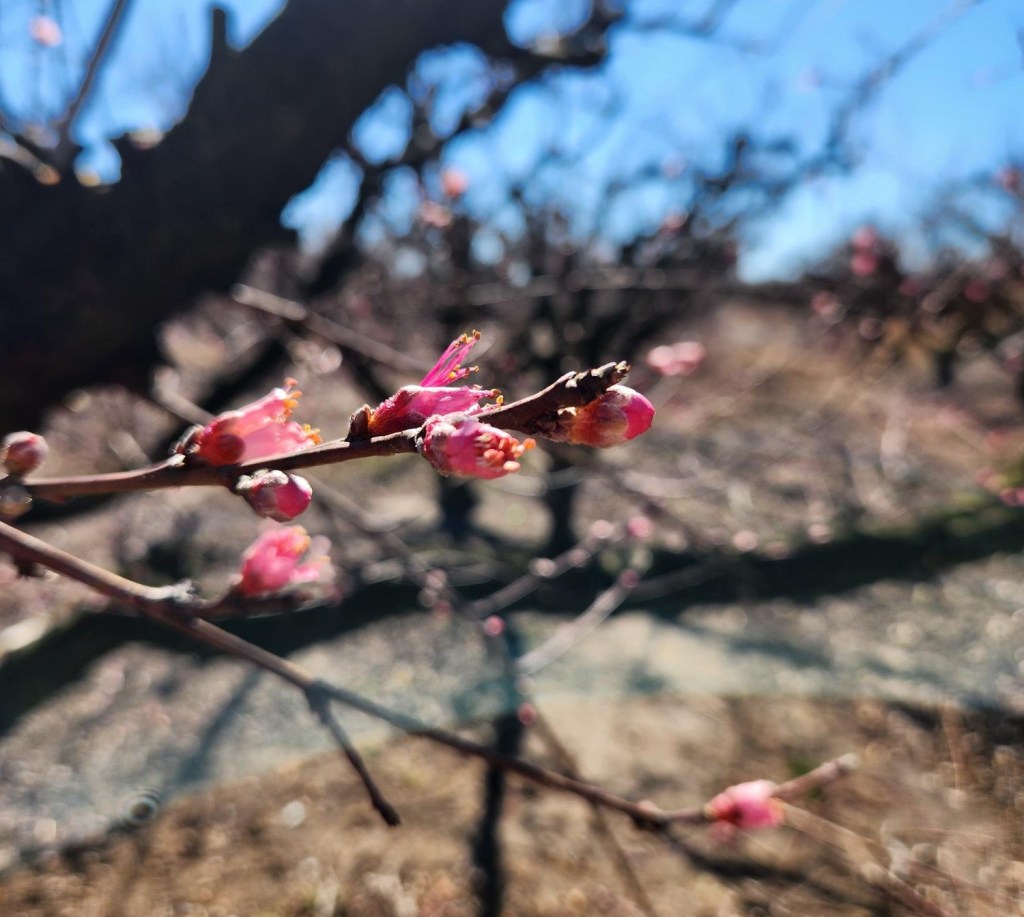
- A few days of warm weather really got crops moving. Some early peach varieties have started blooming, and strawberry plants are growing.
- Peach pruning is in full force, as well as tree planting and second oil sprays. As temperatures dip this week, we will see some damage on those earliest buds and blooms, but at this poin,t it will be natural thinning.
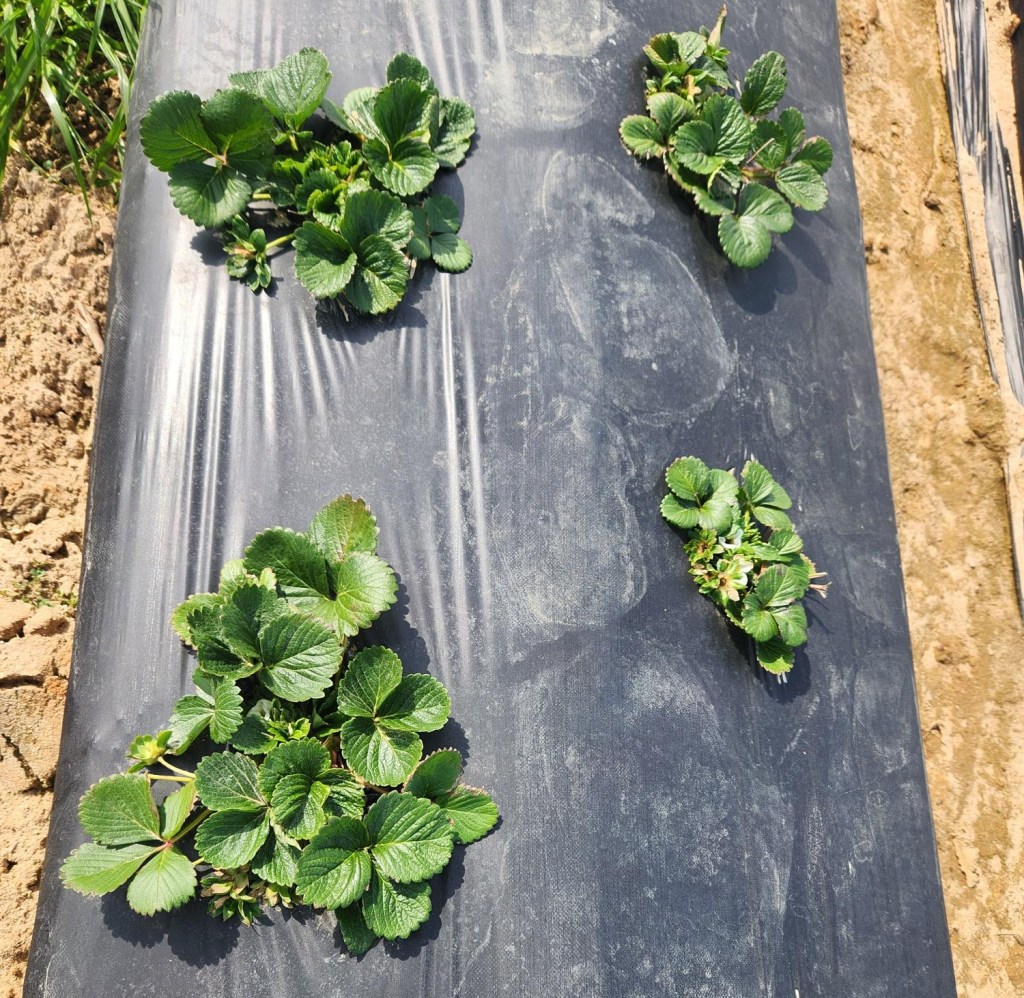
- Strawberries are growing slowly; plants are sizing up. For growers who use covers, they have been off but went back on before the cold.
Pee Dee
Brittney King
- We had some beautiful weather last week in the Pee Dee with temps in the high 70s, but the next two nights will be back in the low 30s.
- Strawberry growers are going to start pushing fertilizer near the end of this week as the weather warms back up. Wind gusts have been strong over the past couple of days, which could damage some plants.
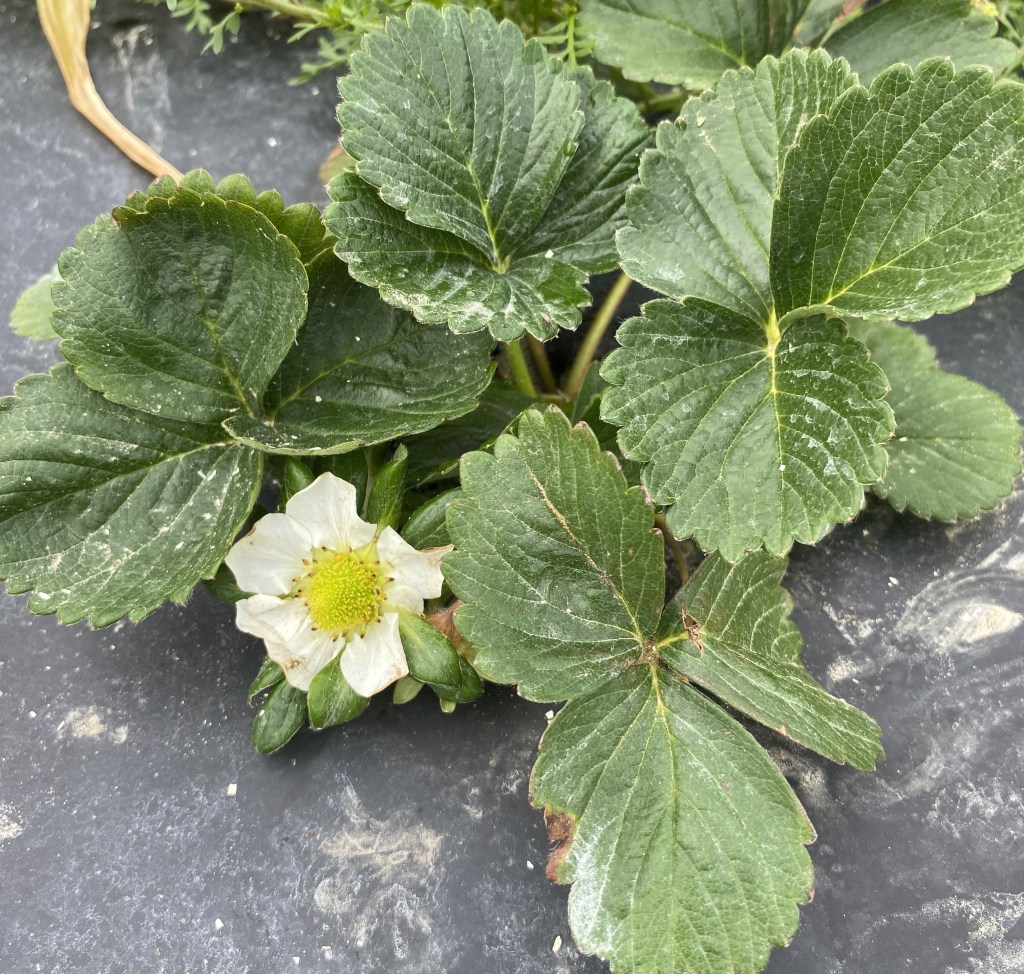
- Even though we are getting a good bit of warm weather lately, it is important for strawberry growers to protect blooms that have already opened. Once the flower is in or has passed the ‘popcorn’ stage, it is very susceptible to damage from cold temperatures.
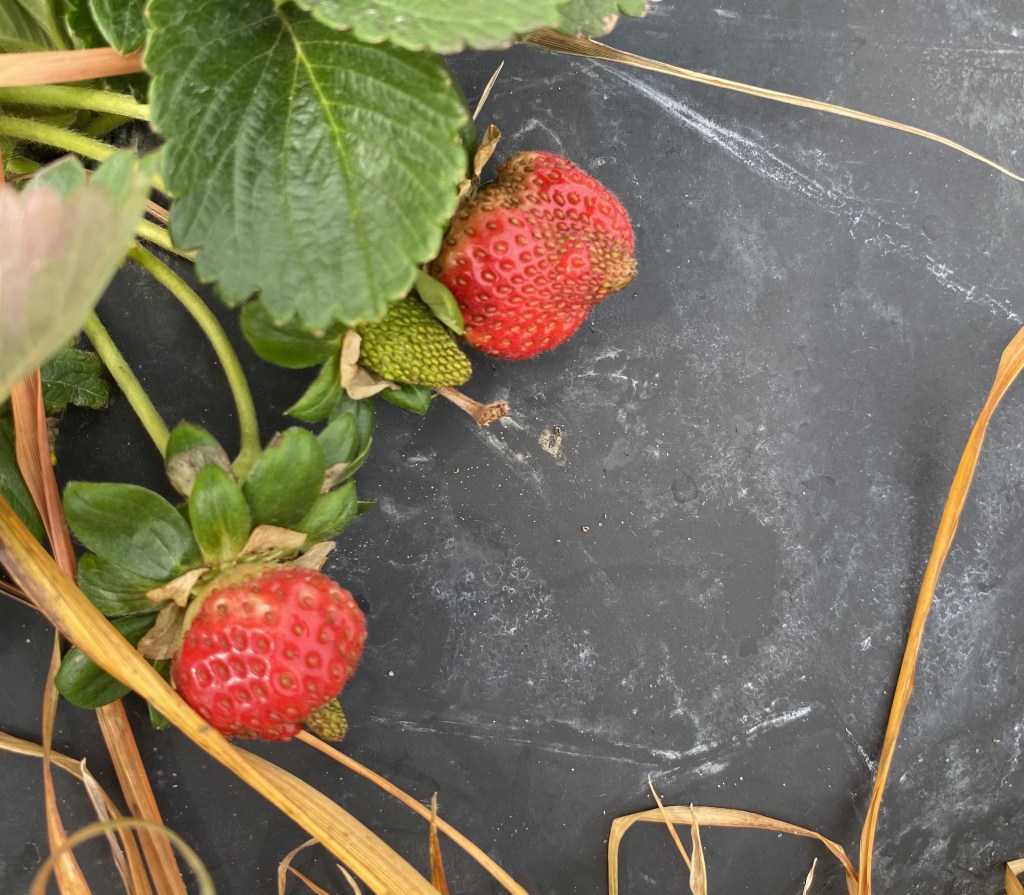
- Make sure to get those boron applications out (1/8 lb of actual boron), so you don’t have ‘bull-nosed’ fruit during peak harvest! I am already seeing some bull-nosed berries on plants that had flowers survive the last cold spell.
- I am still seeing botrytis and now gnomonia leaf spot in fields, which is to be expected after prolonged use of row covers. Growers sprayed protectant fungicides after removing the row covers.
- Spider mites are very present in some fields after the warm weather we had last week, and the prolonged use of row covers. Make sure to stay away from broad-spectrum insecticides when treating for spider mites and/or aphids, as these products will only make the populations increase. Aphids are present in low numbers, and many are being parasitized, so no treatment is warranted.
Upstate
Andy Rollins
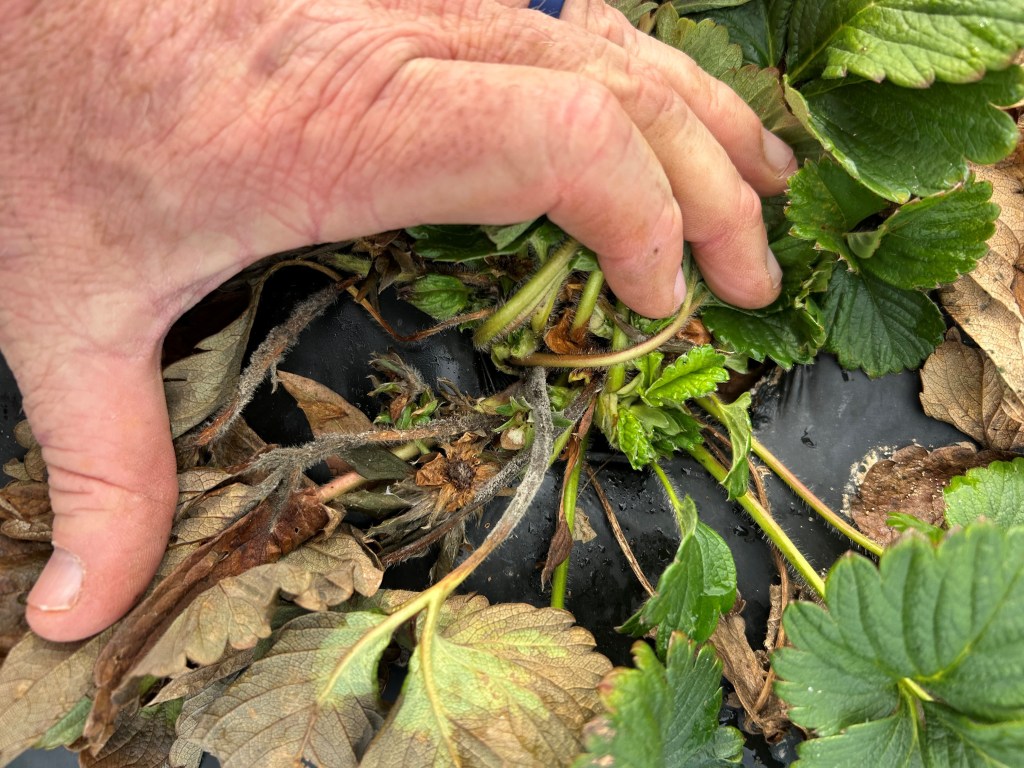
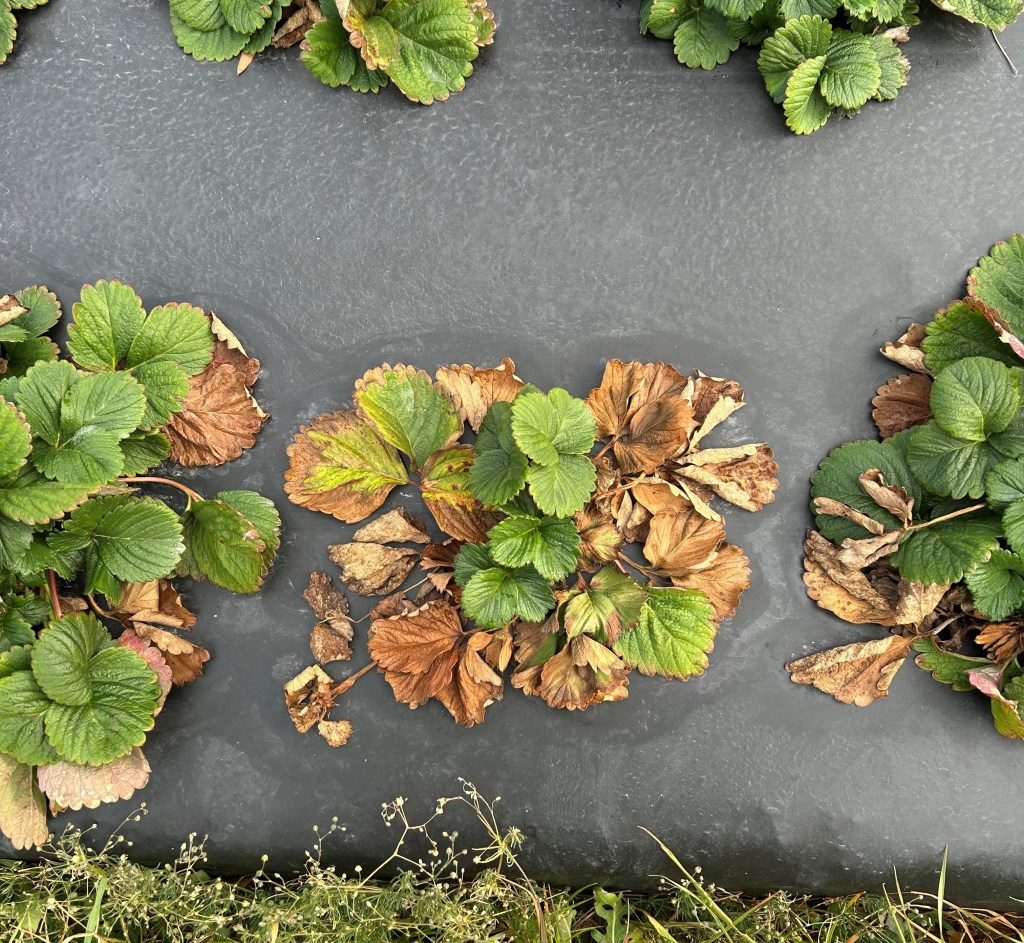
- Botrytis crown rot is currently a major issue, developing from blooms forced out by warm weather ahead of the ice and snow that covered the Upstate for 2 weeks. The fungus was present in the dead blooms and progressed from the outermost leaves toward the middle of the plants. Larger plants have been more greatly affected than smaller plants. Many growers assumed this was just cold damage. I recommend growers spray Rovral at 1 quart per acre, along with a good protectant fungicide like Thiram or Captan. This is to slow down resistance to the Rovral and to slow secondary infections from the spores. After spraying, growers should carefully remove all dead tissue from around the affected plants. Repeating a protectant application the following week will also help.
Question of the Week
What is all over the underside of these strawberry leaflets?
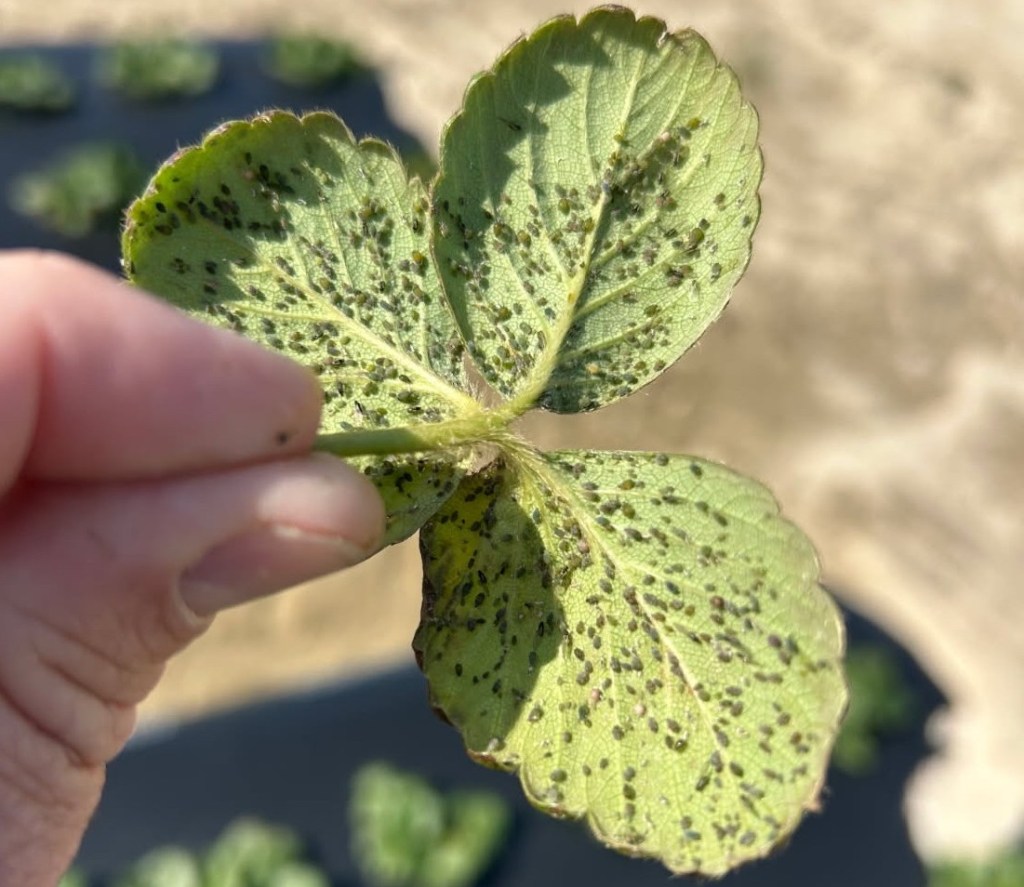
Answer in the comments below and check back on Thursday to see the answer.
 The South Carolina Grower
2 responses to “Weekly Field Update – 2/23/26”
Angular Leaf Spot- caused by Xanthomonas fragariae
LikeLike
APHIDS!! UNDER ROW COVERS!
LikeLike