Despite the forecast for a stormy Easter, most of the state remains dry after receiving very little rain. Strawberry picking is wide open in the Lowcountry and Midlands and is beginning in the Upstate. Disease remains low, though some dry-weather-related insect and mite problems are emerging.
Key Takeaways for Growers This Week
- Conditions remain dry – manage irrigation carefully
- Strawberry picking is underway – the Upstate is beginning harvest
- Keep scouting for spider mites – populations can explode in dry weather
- Spring vegetables are establishing well – including tomatoes, peppers, cucurbits and greens
The latest episode of the SC Grower Exchange Podcast is available now.
Statewide
Tom Bilbo, Extension Entomologist
- As of today (4/6), I am not aware of any field detections of the two-spotted cotton leafhopper (TSCL) in SC. At the Coastal REC in Charleston, I have deployed a number of sentinel okra and cotton plants in areas of the farm where TSCL were present in the fall, but have not yet detected any TSCL. Since TSCL is so new, we know very little about its seasonality and overwintering in the southeastern US. But given the extremely high and widespread numbers we saw last summer and fall, we expect continued problems with this pest in SC in 2026. When those problems will begin, we do not know. If/when you suspect you are seeing TSCL, please report that to your local Hort Extension agents for confirmation and guidance.
- Identification and initial information on TSCL can be found at the newly launched https://stop2scl.org/. This website will be updated in time with specific guidance for each affected commodity.
- Growers of okra, eggplant, cotton, sunflower, hibiscus and some other plants should be prepared to scout and manage TSCL in 2026. As the okra season gets closer, I will share an overview of management strategies for TSCL.
Lowcountry Report
Anna Sara Hill
- Easter weekend conditions were balmy and clear across much of the area, despite earlier forecasts calling for rain. While some showers occurred on Good Friday, rainfall amounts were light and insufficient to alleviate ongoing drought conditions.
- Given the continued dry weather and uncertain rainfall outlook, planting decisions varied among watermelon growers. Some producers who intended to begin planting last week chose to delay operations in hopes that forecasted rain would improve soil moisture conditions. Others moved forward with planting.
- Adequate water availability will be critical for stand establishment. Growers are encouraged to review drip irrigation schedules and add an additional irrigation cycle as needed, taking soil type and field conditions into account.
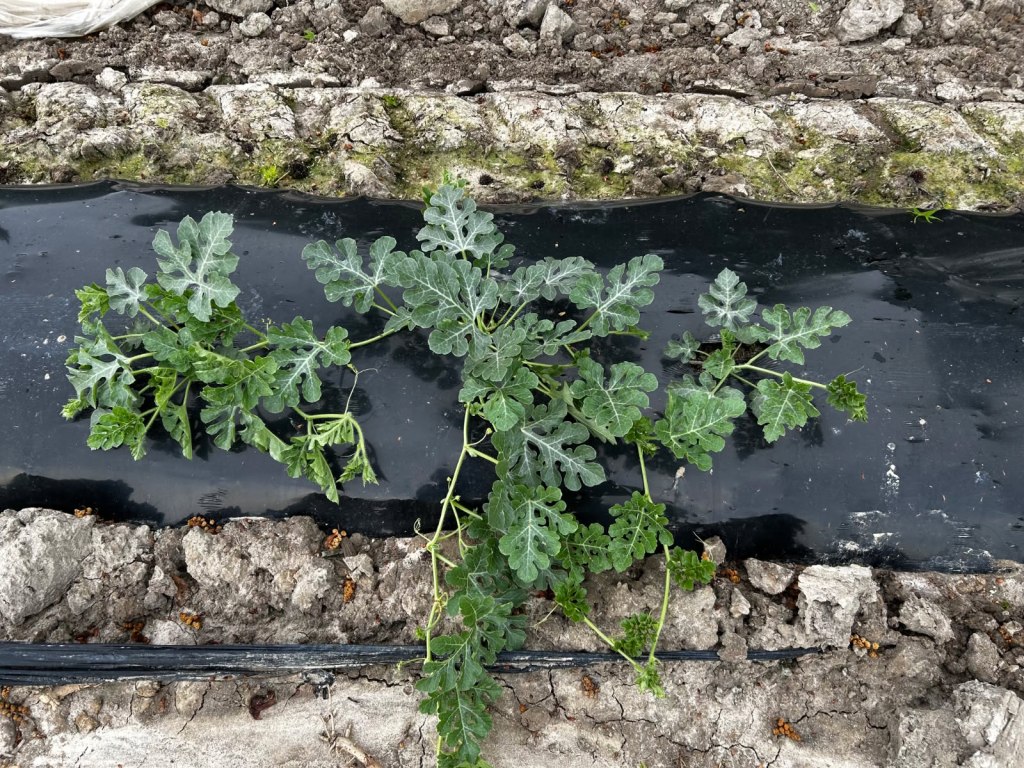
- Plastic was removed last week from watermelons planted under cover several weeks earlier. Vine growth in these fields is vigorous, and no insect pest activity has been observed to date.
- Several vegetable plantings established within the past couple of weeks appear to be growing well under current conditions.
- Dry weather combined with cool mornings is favorable for the development of powdery mildew. Growers should remain vigilant and ensure fungicide programs are in place. Having sulfur on hand is recommended to initiate preventive fungicide applications as soon as the vines begin to move.
Zack Snipes
- We are dry in the Lowcountry. It has been great at keeping disease away.
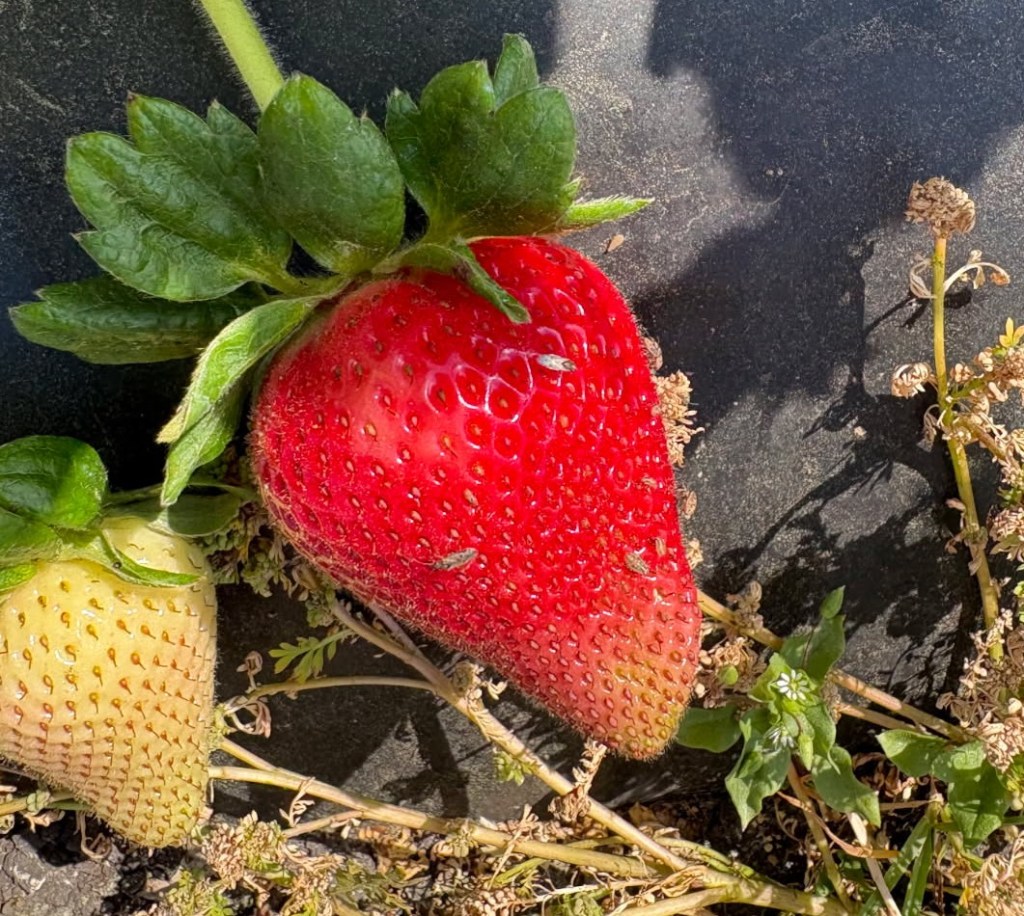
- Strawberries look amazing with extremely heavy production right now. I think the week leading up to Easter was the perfect weather and production for most farms. Spidermite populations are picking up and should be managed this week if thresholds are met.
- I saw false chinch bugs on a few strawberry farms this week. This pest is rare and won’t cause much damage unless populations skyrocket. I typically see them when it’s very dry. They feed on the tiny seeds on the outside of the berries. Keep an eye out for them and let me know if you think intervention is needed.
- Other crops look great right now with very little disease or issues. We just need some rain.
Midlands Report
Rob Last
- It was another warm, dry week in the Midlands, with some welcome showers over the weekend. Soils remain very dry with drought conditions across much of the state. The light rainfall did little to address soil moisture deficits.
- Disease activity remains relatively low. Monitor strawberries and other small fruit crops closely for gray mold and spider mites, as rainfall may trigger more infections.
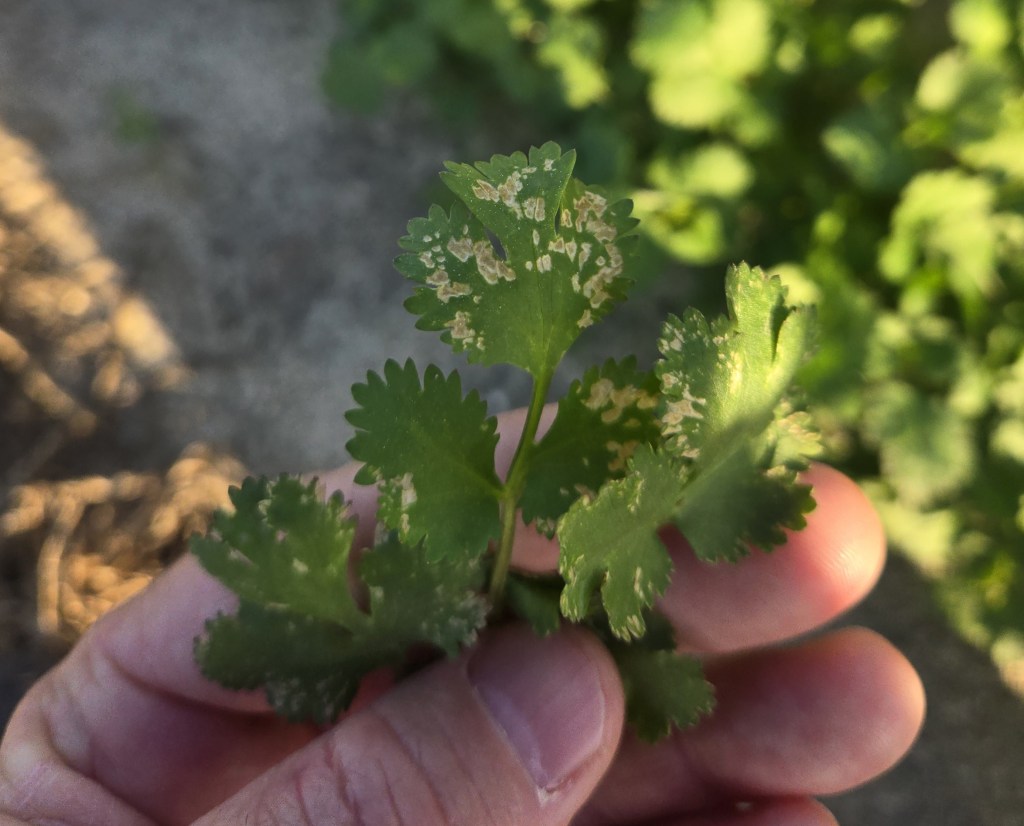
- Monitor herbs for signs of bacterial leaf blight. The picture is of cilantro exhibiting abiotic damage from cold temperatures, not bacterial blight. Bacterial blight typically has an oily, water-soaked appearance of the lesion and will not be isolated within the plant or uniform across the field.
- Colorado potato beetles have been found in Irish potato crops.
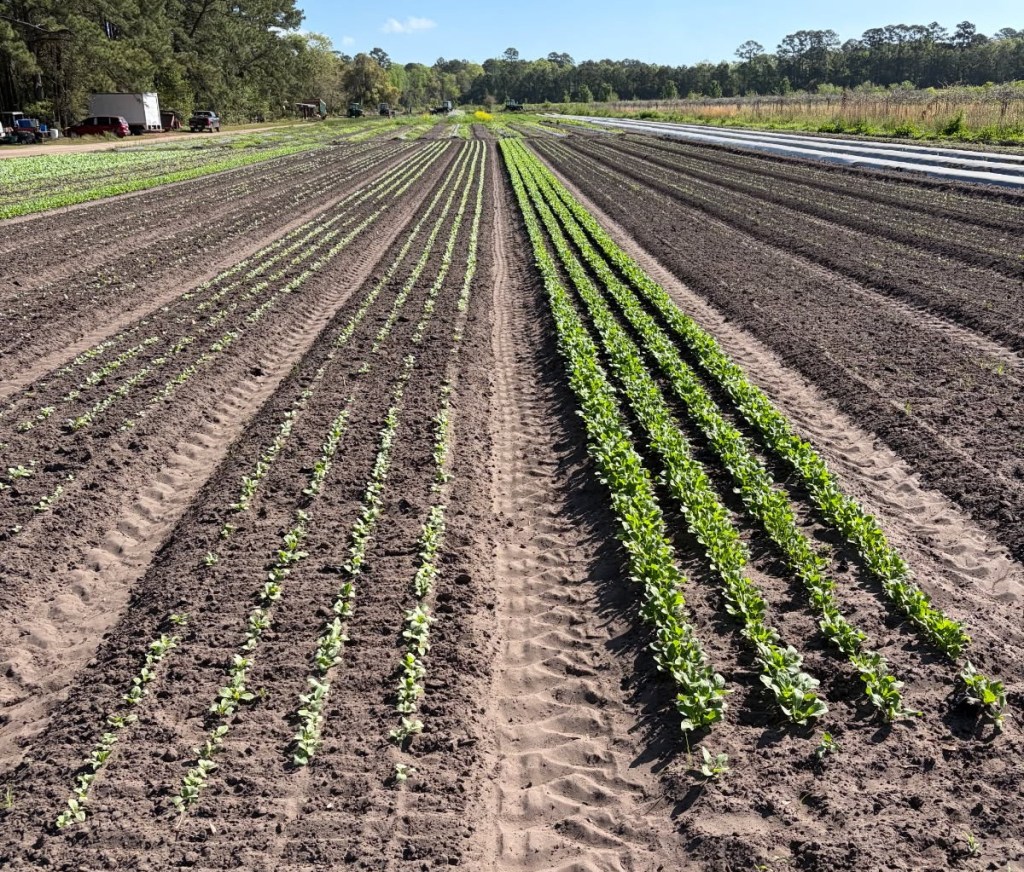
- Cucurbits and solanaceous crops are establishing well.
Upstate
Samantha Brown
- RAIN!! A much-needed rainfall over the weekend helped improve soil moisture across the area. However, as we know, rain increases humidity, which creates favorable conditions for fungi. Continue scouting your fields and applying fungicides accordingly.
- Strawberry harvest is ramping up quickly, with plants showing a strong fruit set. Many of our growers are starting to pick enough for in-store sales, and hopefully, U-Pick will soon follow. Maintain fertility and keep a close eye on botrytis and spider mites.
- Vegetable growers are encouraged to remain cautious with planting warm-season crops, as forecasts still indicate a potential late frost risk. Consider delaying planting or using protective measures.
- Blueberries and peaches are progressing well, even after the frost in some areas last weekend. Now is a great time to start fertilizing your blueberry crop according to your soil analysis. For peaches, an application of nitrogen should be made between bloom and petal fall at a base rate of 30-35lbs per acre.
Andy Rollins
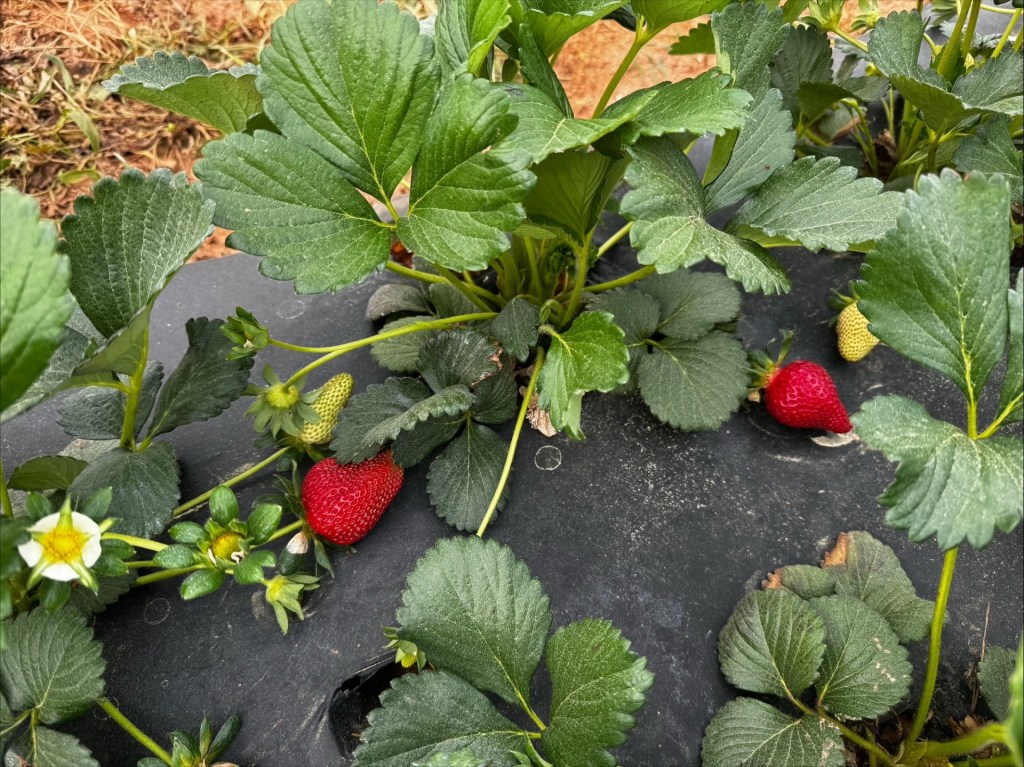
- Strawberry picking in the upstate is starting on some farms. We’re finding dead cap leaves across the area. This can be caused by angular leaf spot, a bacterial disease that can damage the calyx. In the absence of leaf symptoms, it is more commonly caused by the fungal disease grey mold. Make sure to get this properly identified as treatment for one does not correct the other.
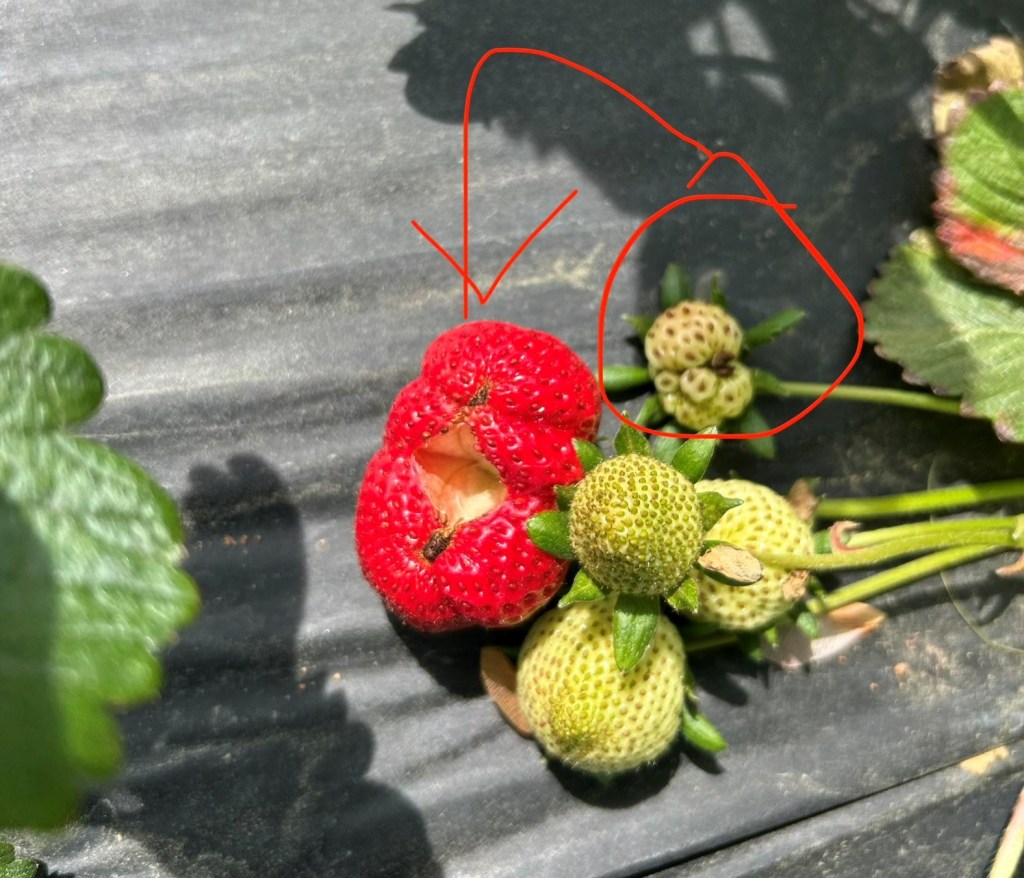
- Many strawberry growers are also seeing damage to their fruit, often referred to as crab claw. In this case, the tips of the green fruit were damaged weeks earlier by cold or lack of pollination. As the fruit matures, a cavity forms, separating the berry. Boron deficiency can cause similar symptoms, but it was ruled out on this farm. This is common on the variety Camarosa, but in this case was in Fronteras and Surfline.
- Do your tissue samples and get petiole nitrogen to 3000-5000 ppm. Scout for spidermites.
- We’ve seen no additional cold damage to the Upstate peach crop. We’re hoping we can hold onto what we have.
Question of the Week
What happened to these strawberry leaflets?
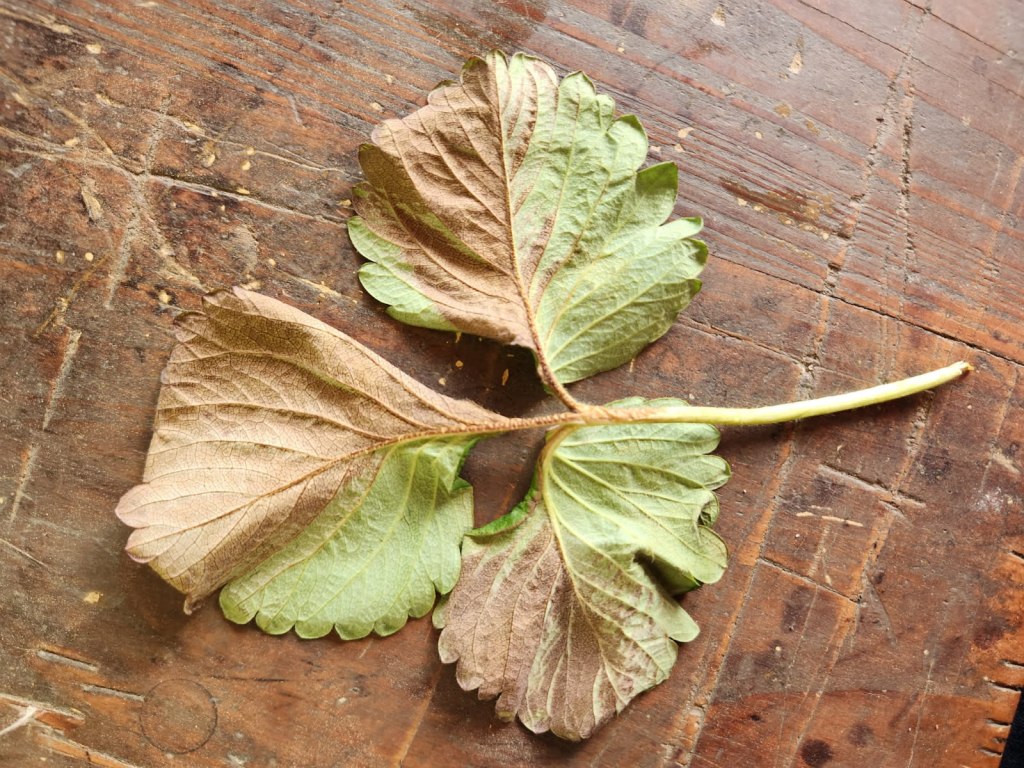
Answer in the comments below and check back on Thursday to see the answer.
Don’t forget to look at the Resources tab for links to crop handbooks, helpful websites, and related blogs. Have a great week!
 The South Carolina Grower