From Clemson Plant Pathologists Tony Keinath and Alam Rahman
Take-home message: Before you run up a large spray bill, be sure that the problem you’re spraying for really is anthracnose.
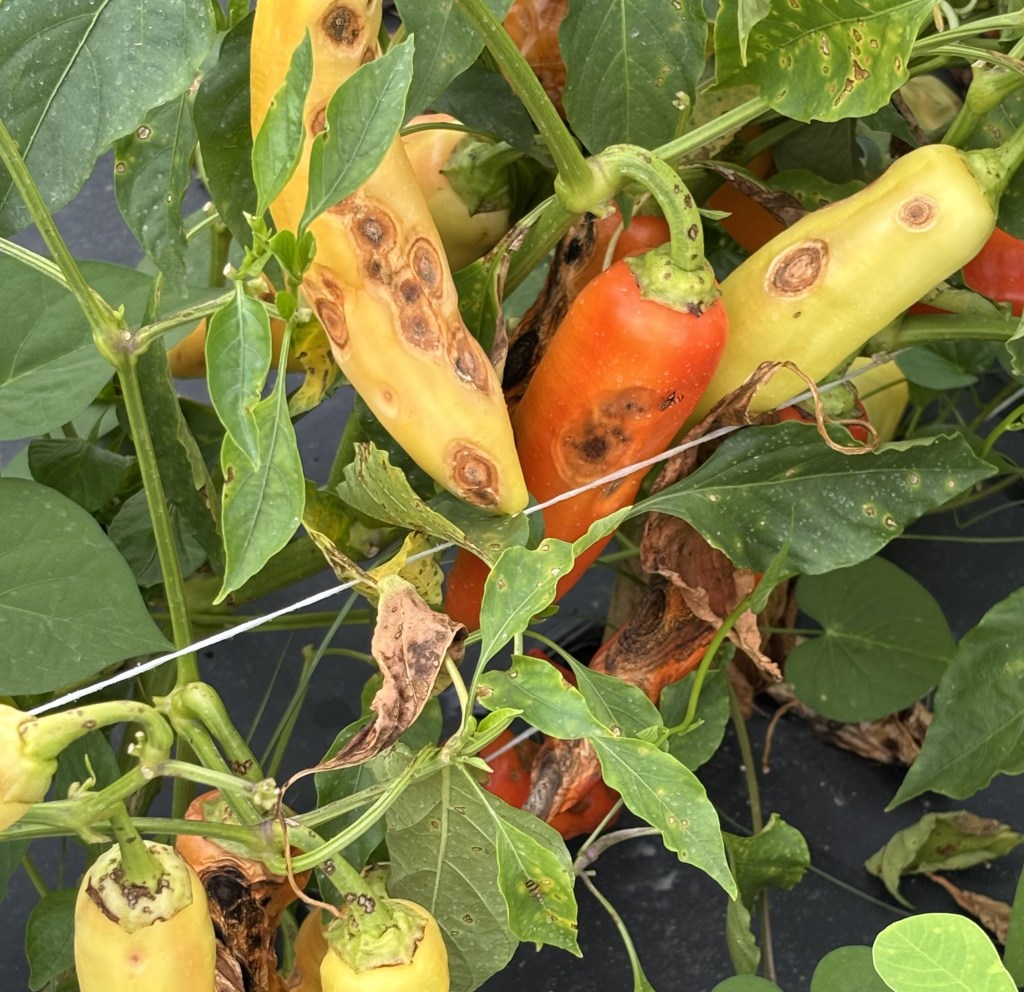
Three outbreaks of green fruit anthracnose on peppers have been confirmed in South Carolina in 2026 (so far). Outbreaks are on commercial conventional bell pepper and banana pepper, and home garden organic peppers (bell, banana, and poblano).
Other pepper fruit rots observed in commercial conventional fields on bell, banana, or poblano peppers were diagnosed as blossom end rot, sun scald, or suspected soft rot, even though the growers thought they had anthracnose. These fruit rots cannot be managed with fungicides.
Diagnosing Pepper Fruit Rots
Use the following characteristics to diagnose green fruit anthracnose:
Most likely to occur on Capsicum annuum peppers, especially bell and banana, but also hot types, like Anaheim or New Mexico chili. All fruit types in this pepper species are susceptible.
Fruit spots are:
- Round (until they grow together), not irregular. Tan to grayish. Orange with fungal spores, at least in the center.
- Slightly sunken.
Sun scald and blossom end rot can appear similar to each other. Both create large, irregular, beige, slightly sunken areas on the sides or blossom ends of fruit. Sun scald more commonly occurs on the sides of fruit, and blossom end rot on, well, the blossom end (opposite the stem end).
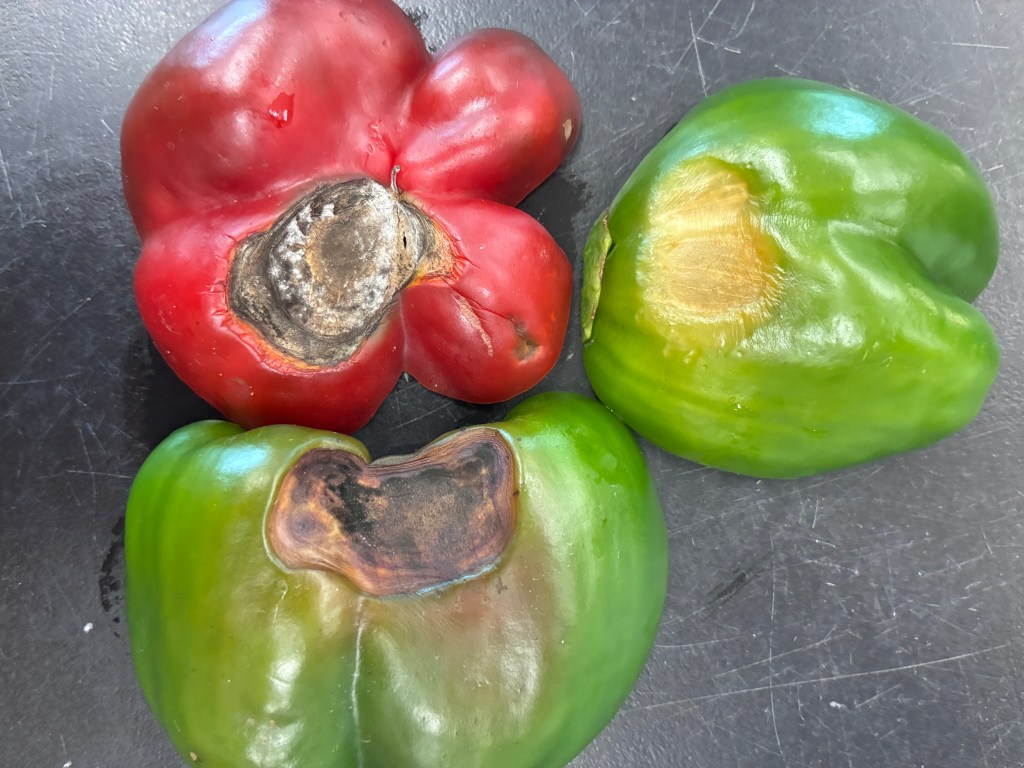
Spots of blossom-end rot are often covered with black mold, most commonly Alternaria alternata. This fungus cannot infect healthy pepper fruit, but can grow on spots injured by sunburn or blossom-end rot. Hence, it is a secondary invader, not the cause of fruit rotting.
If symptoms are found only on the fruit on the outside of the row or on the top of the bush, then sun scald is the most likely problem. If symptoms are found on fruit in the canopy, blossom-end rot is the more likely cause. Green fruit anthracnose will affect any fruit, regardless of position or location.
Management
Green fruit anthracnose can be managed with conventional fungicide applications. Best control is achieved when sprays start at flowering. A fungicide rotation of an FRAC 11 product (e.g., Cabrio or Quadris) with another fungicide with a different FRAC Code (e.g., Mirvis Prime or Switch) provides reasonable control. Fungicide applications started after fruit rot appears are less effective and may not be able to stop the disease.
Due to the confusion in diagnosis of fruit rot, growers should send a representative photo to their county Extension agent for confirmation before initiating fungicide applications (once fruit have set) or if repeated applications are not having any effect.
Fields in which green fruit anthracnose occurs should not be planted in pepper for the following 2 years. During this rotation period, avoid planting tomatoes, lima beans, soybeans, or strawberries.
Blossom end rot is caused by a lack of calcium in fruit. On pepper, a very common secondary cause of this nutritional deficiency is “excessive shoot growth resulting from overfertilization of N and K during early bloom and fruiting stages” (quoted from University of Georgia Cooperative Extension Circular C938). Dr. Keinath has seen or heard of many cases of over-fertilized peppers with blossom end rot in his career. Please double-check the recommendations for pepper fertilization, granular (p. 8) and drip (p. 97), in the 2026 Southeastern U.S. Vegetable Crop Handbook. More nitrogen than is recommended is NOT better!
On-going Research
In Spring 2026, we started a new USDA-funded research project on green fruit anthracnose on pepper at the Coastal REC in Charleston and Pee Dee REC in Florence. This study is being conducted in collaboration with research and Extension personnel at Cornell University in Geneva, NY. This work builds on research initiated by Dr. Keinath in 2019, when green fruit anthracnose was found in South Carolina.
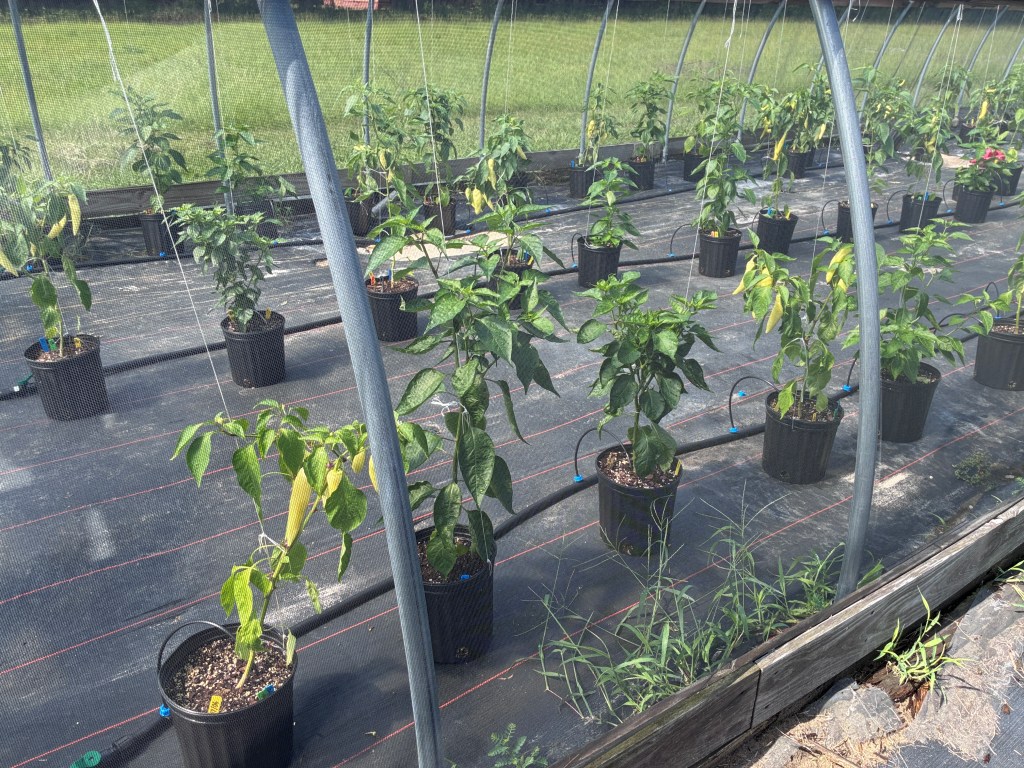
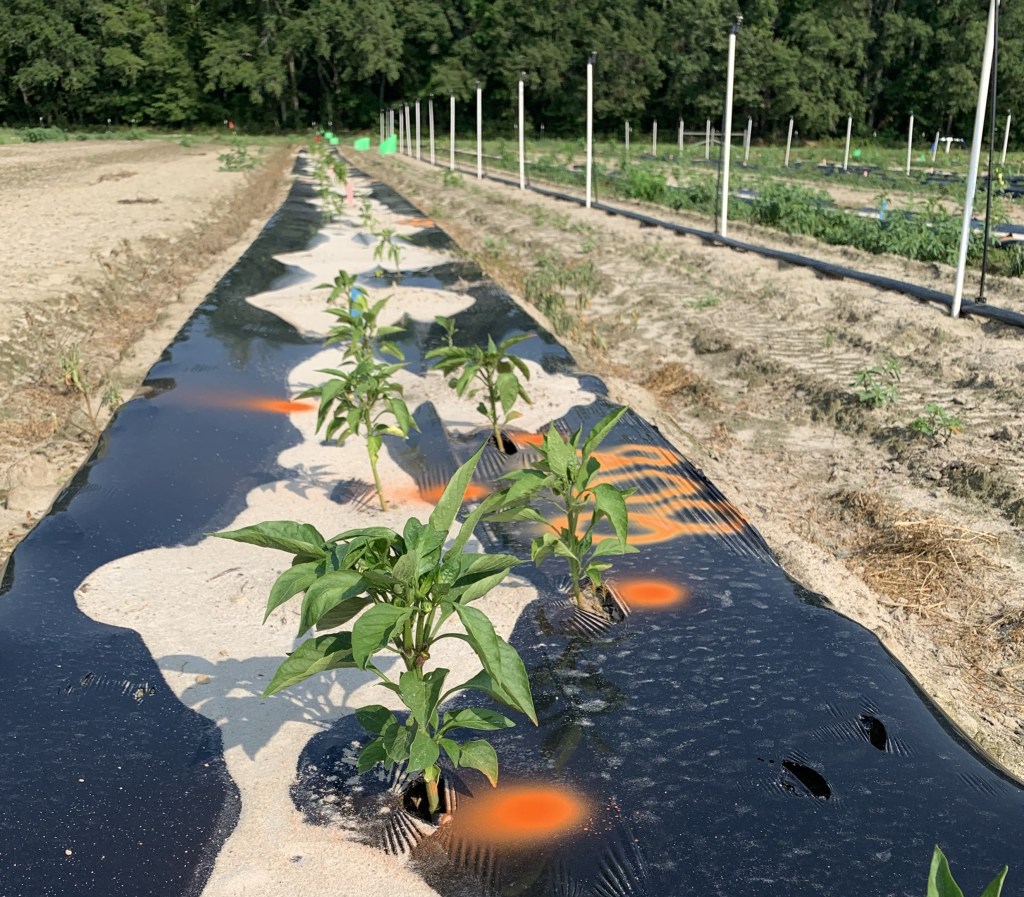
At Coastal REC, Dr. Keinath is evaluating crosses of tabasco and bell peppers made by Dr. Will Rutter, formerly with the USDA in Charleston. Tabasco peppers are highly resistant to green fruit anthracnose. This study will identify any highly resistant offspring that will be carried forward into a breeding project.
At Pee Dee REC, Dr. Rahman is testing 10 fungicides (8 conventional and 2 organic-approved) on bell and banana peppers. Some of these fungicides, such as Quadris and Bravo, have worked well in previous tests in other states.


One response to “Not Every Fruit Rot on Pepper is Anthracnose”
[…] © The South Carolina Grower […]
LikeLike