Category: Question of the Week
-
Question of the Week – Whitefly Damage
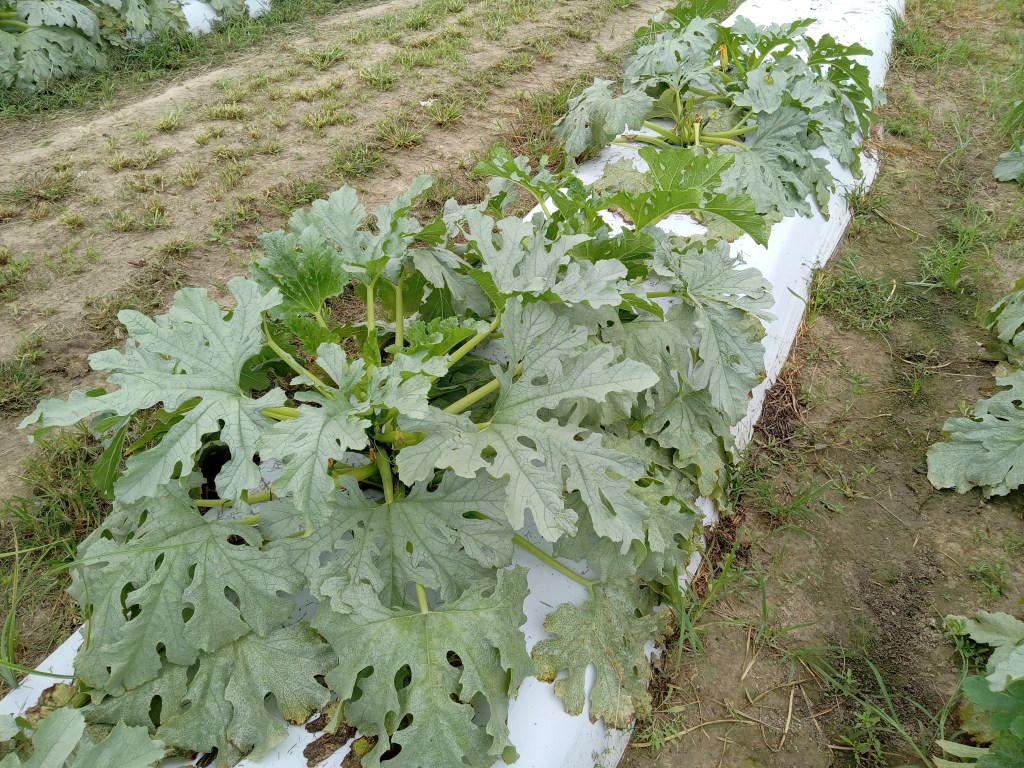
This week, the question was: What is causing the light colored discoloration on these zucchini plants? This discoloration is known as Squash Silverleaf Disorder (SSL) and is the result of immature whiteflies feeding on the squash leaves. SSL reduces the plant’s ability to photosynthesize, leading to stunting and reduced yields. Whiteflies can become significant pests…
-
Question of the Week – Luffa
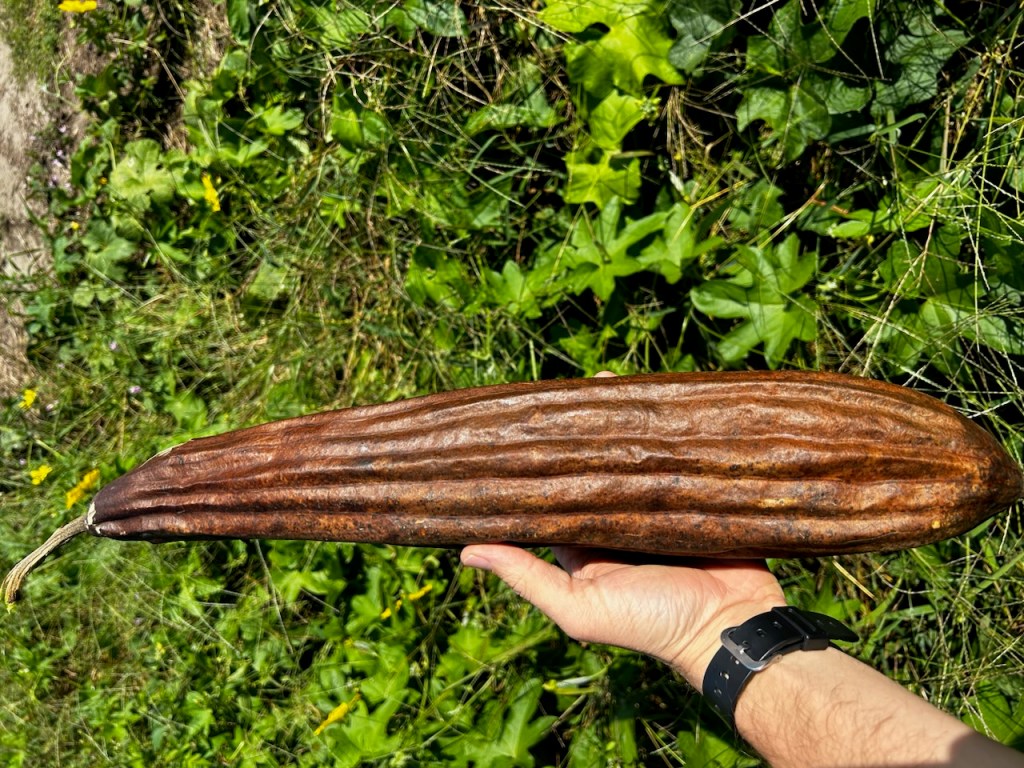
This week, the question was: What is this odd brown thing? This is a luffa gourd. Contrary to popular belief, luffa is a plant in the cucurbit family and not a sea sponge. This plant is very vigorous and prolific and does extremely well in SC. When picked young, the tender fruit can be eaten…
-
Question of the Week – Virus

This week, the question was: What is wrong with this squash? This squash is showing symptoms of a virus. There are numerous viruses that affect cucurbit crops, which may be transmitted in a variety of ways, such as, by insect (aphids, whiteflies, cucumber beetles), through seed, or mechanical damage. Symptoms may include mottled or mosaic…
-
Question of the Week – Snake Bean
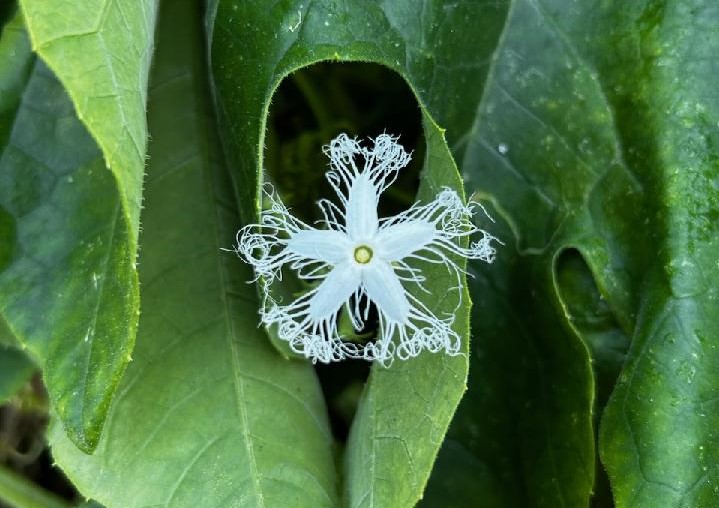
This week, the question was: What will develop from this this hairy-looking flower? I recently visited a community garden and was stumped when the groundskeeper asked me if I knew what plant this crazy looking flower belonged to. After I blanked for some time, I was informed that this flower belongs to the Python Snake Bean…
-
Question of the Week – Passionflower

This week, the question was: What is this crazy looking flower? This is a passion flower (Passiflora incarnata). Passion flower is fast-growing vine that is native to the Southeast. It shows up on the edges of fields and wooded areas, and many grow it in their yards as an ornamental. The flowers are attractive to…
-
Question of the Week – Root-knot Nematodes

This week, the question was: What is wrong with these okra roots? The galling on these roots was caused by root-knot nematodes (RKN). We see nematodes build up in the soil when susceptible crops are planted in the same fields or beds year after year. Crop rotation is an important management strategy, but there is…
-
Question of the Week – Squash Beetles
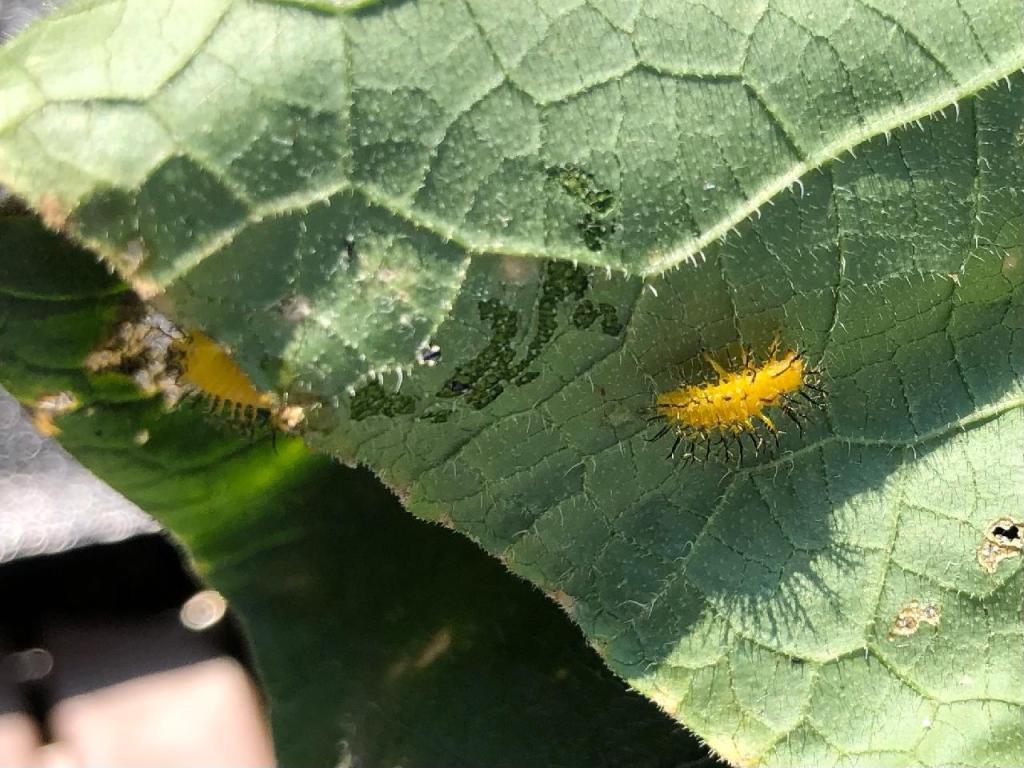
This week, the question was: What is this critter that was found on the underside of a cucumber leaf? This spiky looking thing is a squash beetle larva. This is one of two species in the lady beetle family that feed on vegetable crops. The other is the Mexican bean beetle. Squash beetle adults look…
-
Question of the Week – Pickleworm
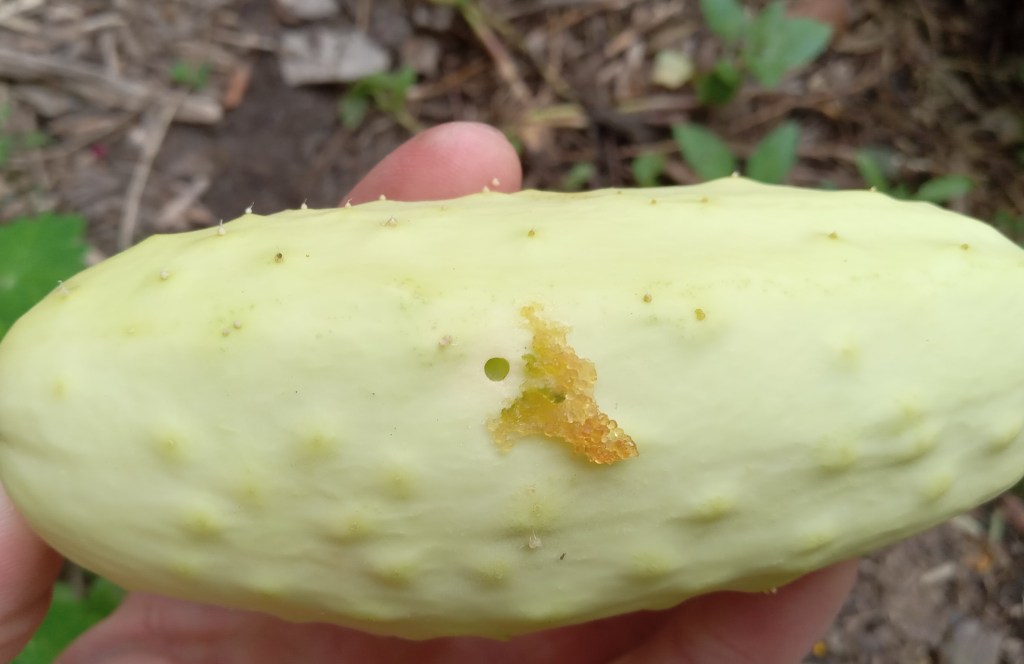
This week, the question was: What caused the hole in the side of this cucumber? (Nothing is wrong with the color. This cultivar is called Silver Slicer.) This week’s question is a review from a post Tom Bilbo wrote recently about pickleworms. Pickleworms feed on the blooms and tunnel into the developing fruit of cucurbit…
-
Question of the Week – Assassin Bug

This week, the question was: What is going on here, and which one of these is the good guy? Here we see an assassin bug that has caught and is feeding on a lady beetle. Normally, both of these insects are good guys, though when assassin bugs get hungry, they will eat just about anything…
-
Question of the Week – Pigweed
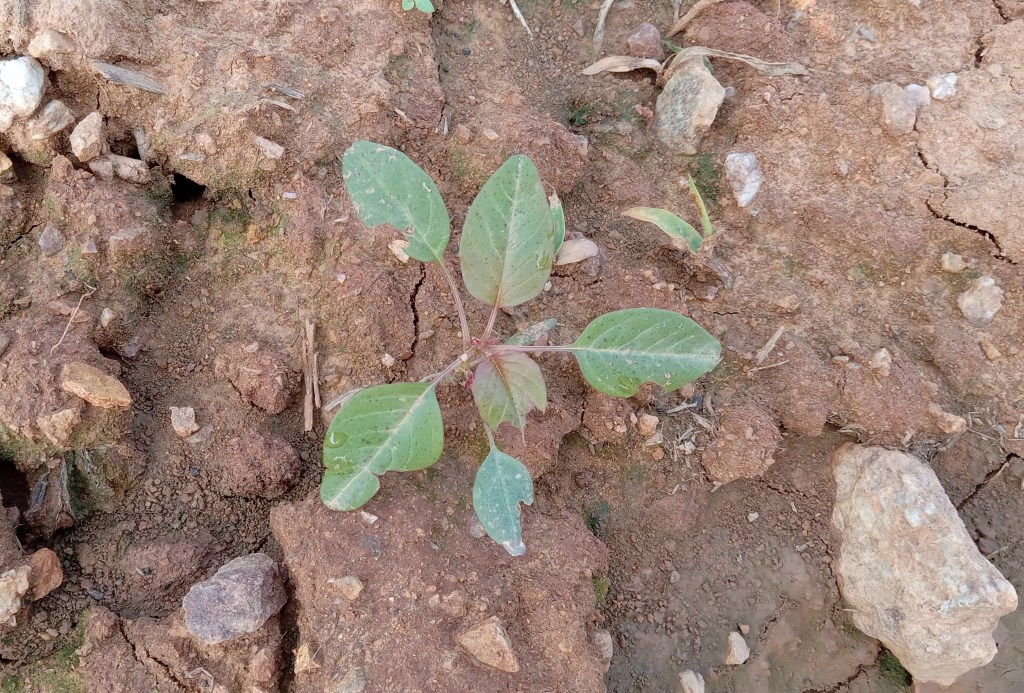
This week, the question was: What is this weed coming up in a field that was disked recently? This is a pigweed seedling, specifically Palmer amaranth (Amaranthus palmeri). Pigweeds are some of the most aggressive weeds that farmers battle. They are able to germinate and grow quickly in poor field conditions, outcompeting crops for water,…
 The South Carolina Grower