Category: Question of the Week
-
Question of the Week – Paraquat Drift
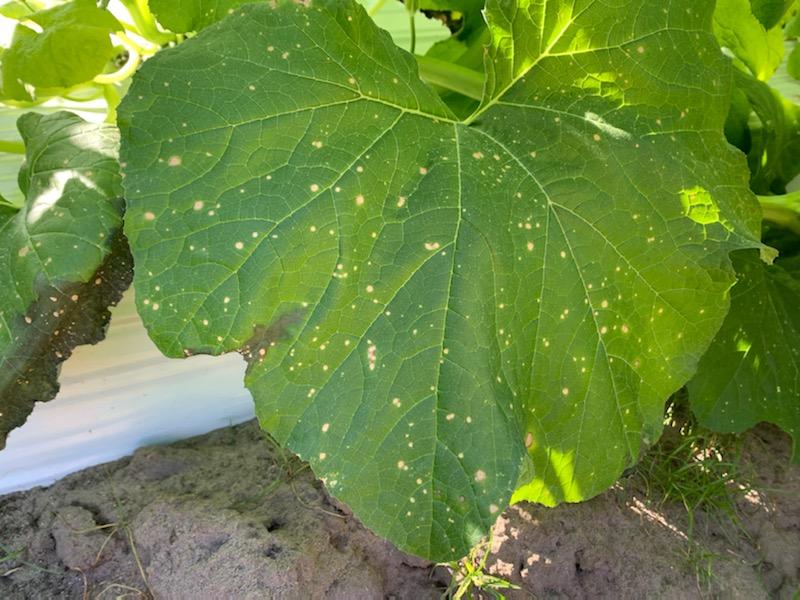
This week, the question was: What are the spots on this squash leaf? These spots are from a small amount of paraquat drift that occurred while the adjacent field was being sprayed in preparation for planting. Paraquat is a contact-only herbicide, so this damage will not spread to new growth. This small amount of damage…
-
Question of the Week – Unmanaged Apple Issues

This week, the question was: Can you name one problem with this apple? A quick glance at this ‘Gala’ apple shows signs of bitter rot, sooty blotch, and fly speck to name a few. The point of this question of the week is not really to name specific pests or pathogens but to talk about…
-
Question of the Week – Hickory Horned Devil
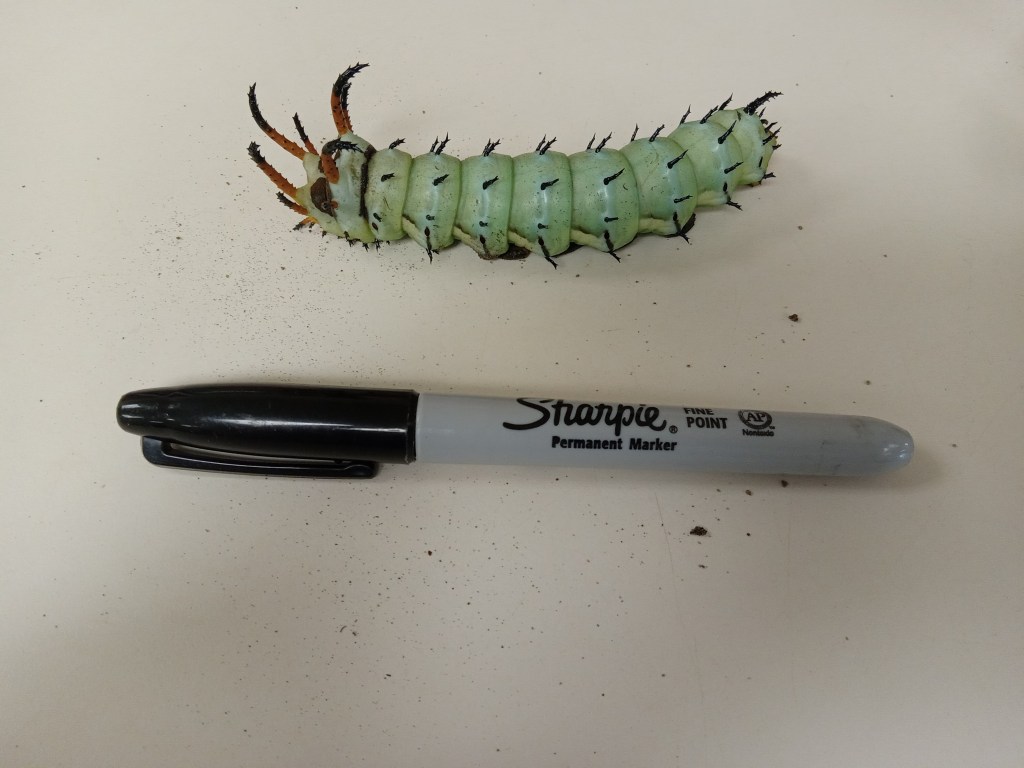
This week, the question was: What is this wild-looking critter? This is a caterpillar known as the hickory horned devil. The adult is a beautiful moth known as the regal moth (Citheronia regalis), but it is rarely seen due to its nocturnal habit. The hickory horned devil commonly feeds on the leaves of walnut, hickory,…
-
Question of the Week – Glyphosate

This week, the question was: What happened to this young tomato plant? This young tomato plant is suffering from glyphosate damage that occurred when row middles were being sprayed. Glyphosate is a systemic herbicide, so damage shows up at the growing point. At this stage of growth, it is unlikely the plant will grow out…
-
Question of the Week – Giant Swallowtail Caterpillar
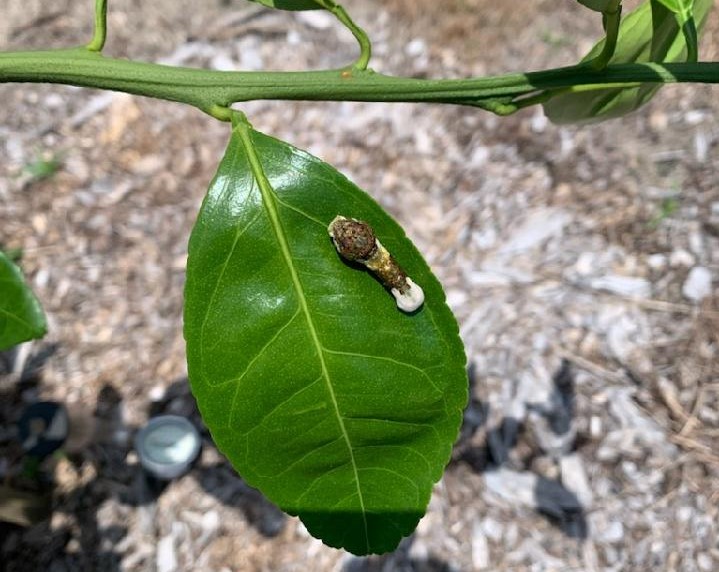
This week, the question was: What is on this citrus leaf? This looks a lot like bird poop, however, it’s just a camouflage tactic of the giant swallowtail caterpillar. This species is often called the “orangedog” as they feed on members of the citrus family throughout their larval stage. They can be a pest to…
-
Question of the Week – Mantidfly
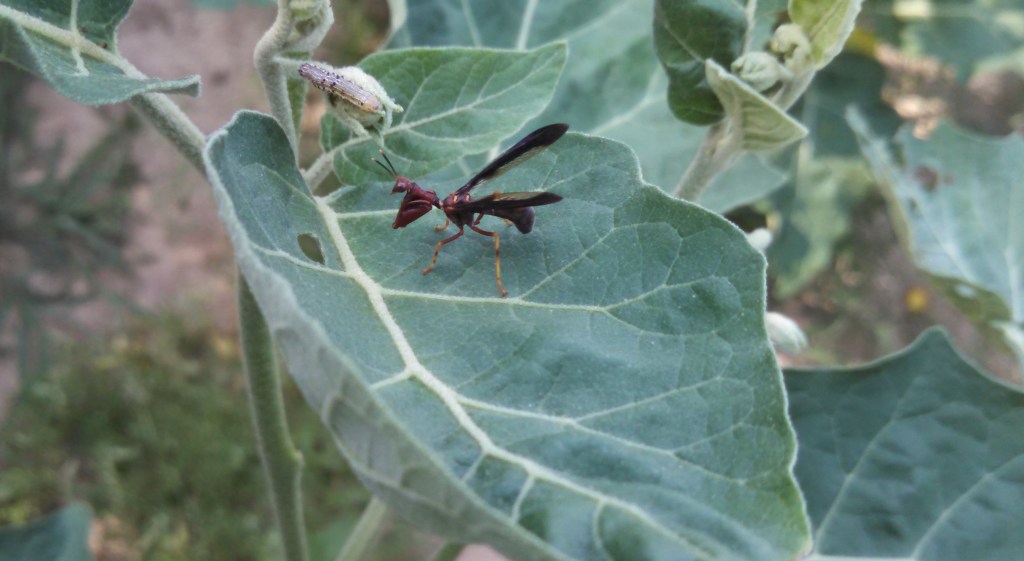
This week, the question was: What is the critter sitting on this eggplant leaf? This may look a lot like a paper wasp, but it is actually a mantidfly. If you look carefully, you’ll notice the front pair of legs is different from the two back pairs. The front legs look like those of a…
-
Question of the Week – Black Swallowtail

This week, the question was: What will this caterpillar munching on dill grow up to be? This is the caterpillar of the Eastern black swallowtail butterfly (Papilio polyxenes). These caterpillars feed and develop on members of the carrot family, including dill, parsley, fennel, and celery. The black swallowtail is one of the more showy butterflies…
-
Question of the Week – Blossom End Rot
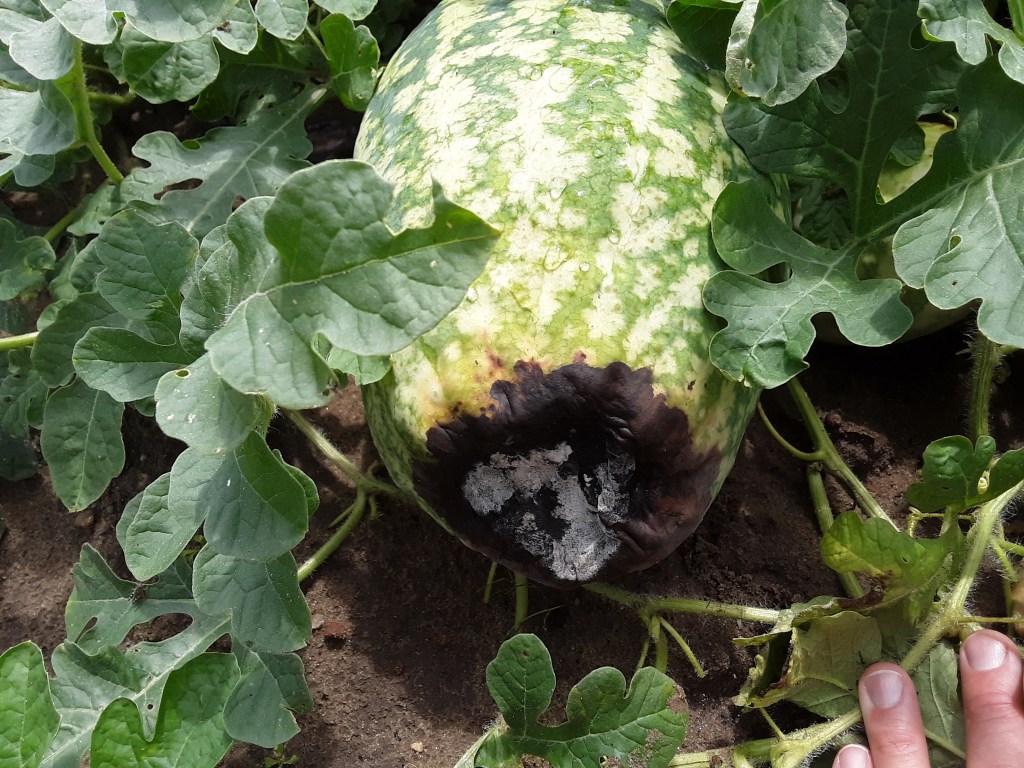
This week, the question was: What’s going on with this watermelon? This watermelon is suffering from blossom end rot. This physiological disorder is also common in tomatoes and peppers. Blossom end rot results from a localized calcium deficiency in the fruit; however, this may not necessarily indicate a calcium deficiency in the soil. Blossom end…
-
Question of the Week – Sulphur Butterfly Chrysalis
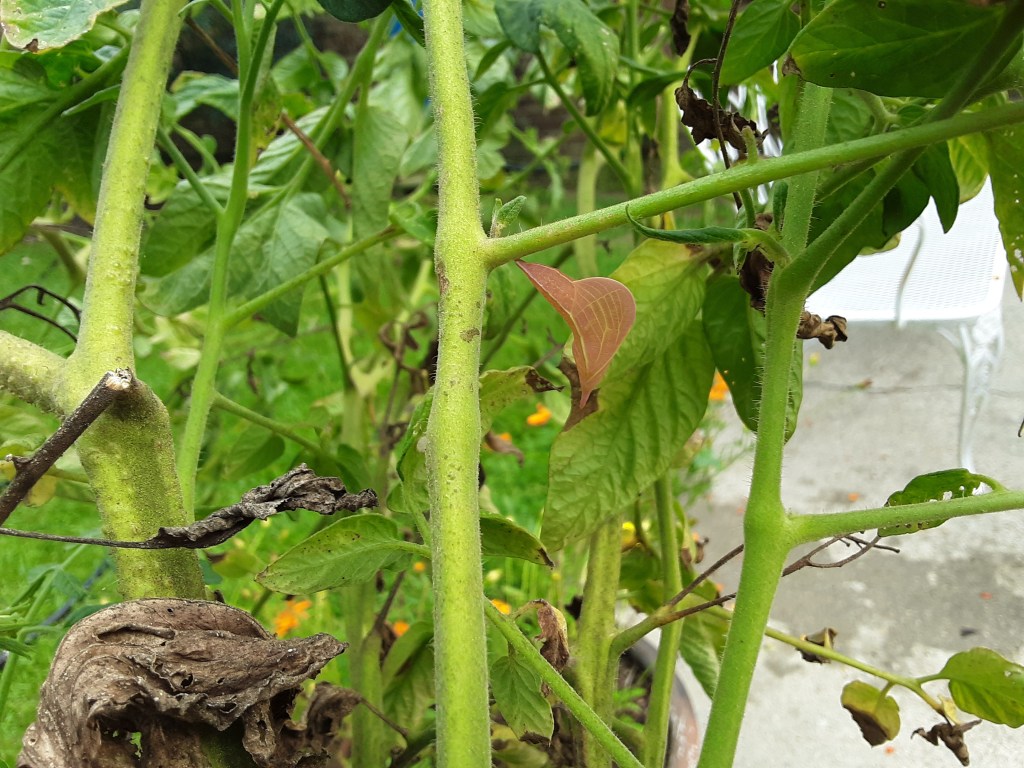
This week, the question was: What is the pinkish-colored thing attached to this tomato stem? This is the chrysalis of a sulphur butterfly, most likely the cloudless sulphur (Pheobis sennae). The cloudless sulphur is a common butterfly in South Carolina seen frequently foraging wildflowers. The caterpillars feed on legume plants, specifically within the Chamaecrista and Senna genera.…
-
Question of the Week – Paper Wasp
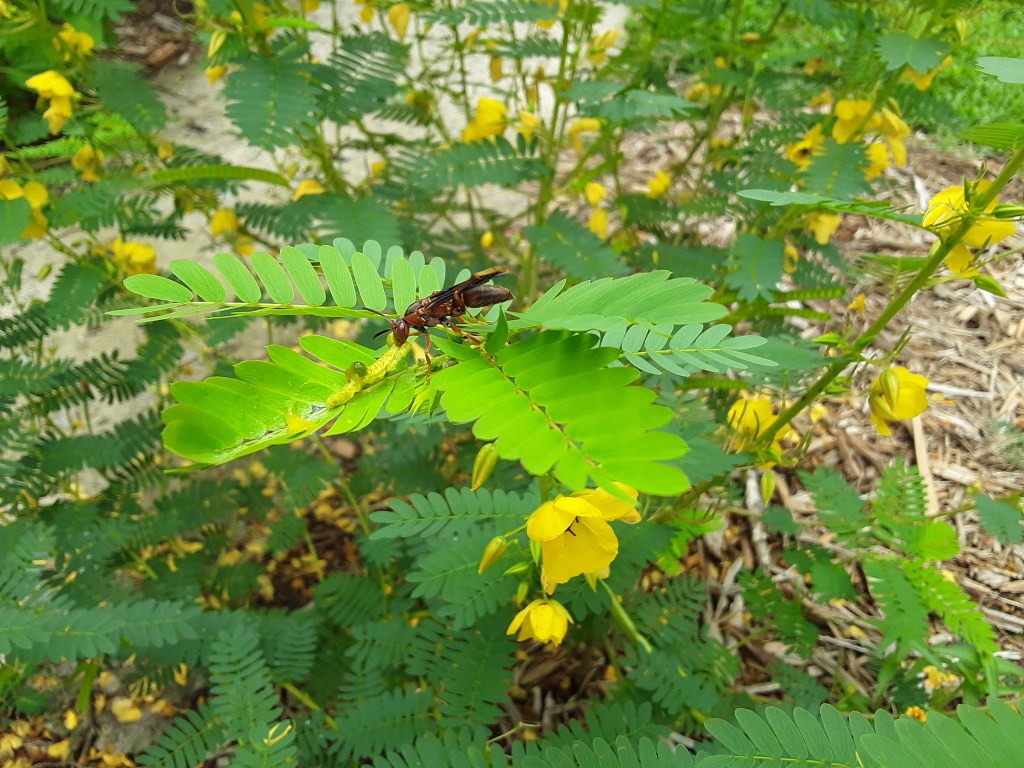
This week, the question was: What is going on here? A friendly game of tag? This sulphur butterfly caterpillar probably wishes this was just a game of tag, but this predaceous paper wasp is going to use it to feed its larvae. Paper wasps are common insects in the garden and around structures, where they…
 The South Carolina Grower