Category: Question of the Week
-
Question of the Week – Stink Bugs
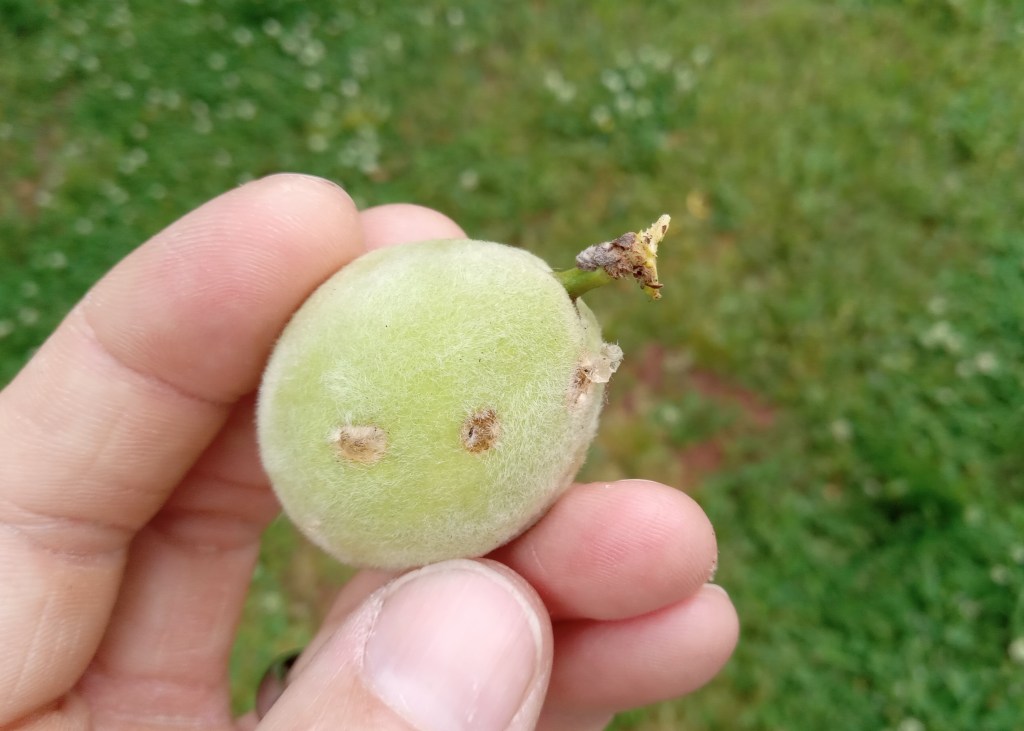
What has caused this gelatinous substance to ooze from a developing peach? This gelatinous substance is often called “gummosis” and can be caused by a number of things, such as disease, mechanical damage, cold damage, or insect damage. In this case, the most likely cause is stink bug feeding damage. When stink bugs feed on…
-
Question of the Week – Killdeer

Which common bird made it’s nest underneath this cucumber plant? These eggs were laid by a killdeer (Charadrius vociferus)who gets its name from their characteristic “kill-dee kill-dee” call heard as they fly over grassy fields. They should be a welcomed guest on farms since they eat mostly insects including beetles, caterpillars, and grasshoppers. Since their…
-
Question of the Week – Periodical Cicada

What is this red-eyed creature found crawling up a pine tree? This is a periodical cicada nymph that has just crawled out of the soil after 13 years of feeding and developing underground, and is now looking for a place to molt. Parts of South Carolina, including the Upstate and parts of the Midlands, are…
-
Question of the Week – Brown Lacewing
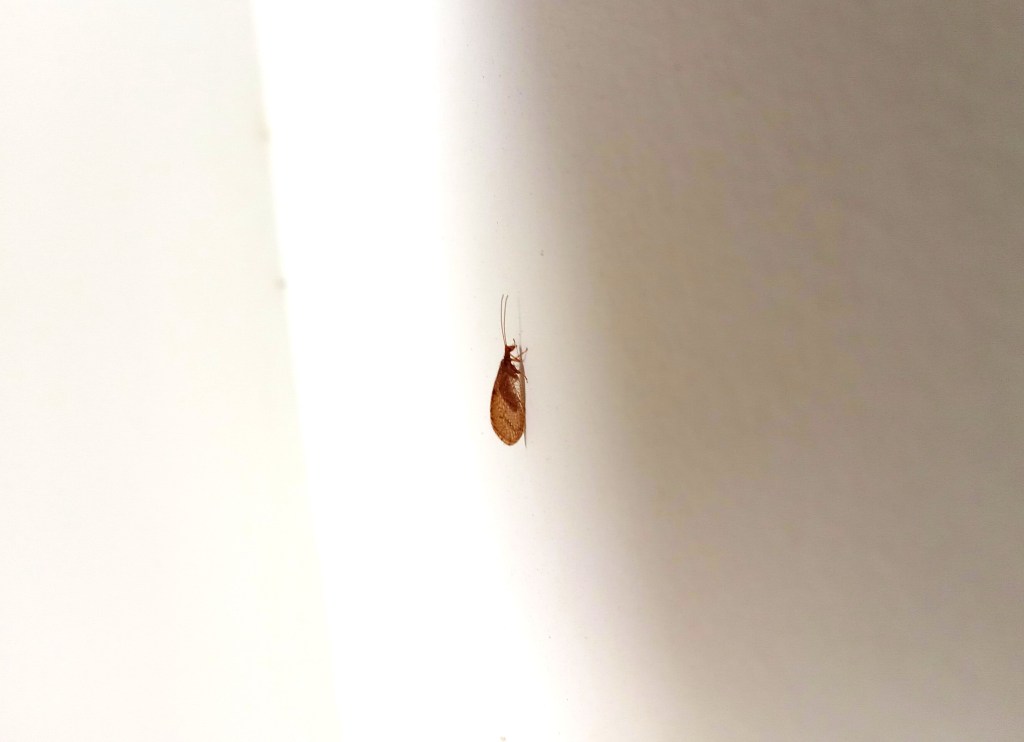
What is this critter that was found resting on the wall inside of a garage? This is another beneficial insect: a brown lacewing. Brown lacewings are smaller than the more common green lacewings, though both are voracious predators of soft-bodied insects, particularly aphids, mealybugs, small caterpillars, and mites. Whereas green lacewings lay their eggs at…
-
Question of the Week – Hover Fly Larva
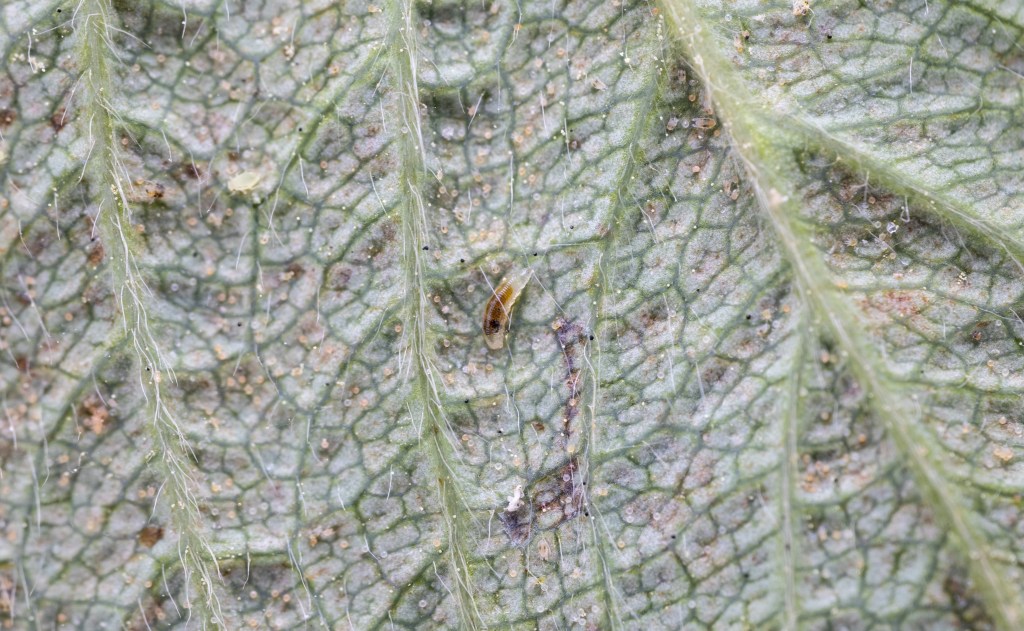
What is this maggot-looking insect on the bottom of this strawberry leaf? This is a hover fly larva. Hover flies (Syrphidae), also called syrphid flies, are common bee-mimicking flies that are often seen hovering around flowers and landing on your sweaty skin on a hot day (they’re attracted to the salt in your sweat). Not…
-
Question of the Week – Ambrosia Beetle
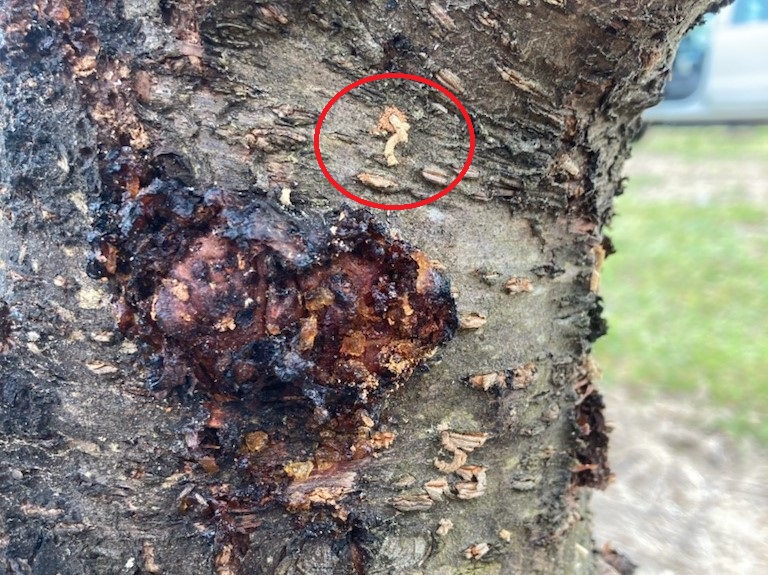
What caused this small, toothpick-like mass of sawdust to protrude from from the trunk of this stressed peach tree? The small toothpick-like mass of sawdust protruding from the tree is often called a “frass toothpick” or “frass noodle”. The structure was created by an adult Ambrosia beetle (Xylosandrus spp.) female tunneling into the tree. …
-
Question of the Week – Parasitized Aphid
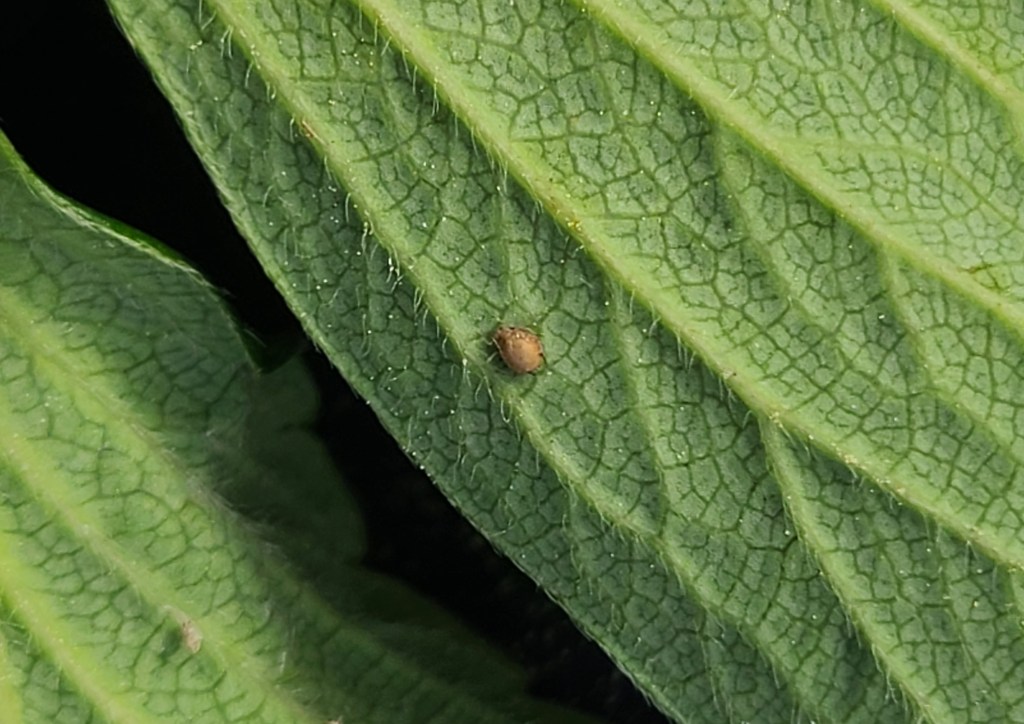
What is the bloated tan thing found on the underside of this strawberry leaf? This is an aphid “mummy,” the lifeless body of an aphid that has been parasitized by a parasitoid wasp. Typically, the adult wasps are tiny, at only 0.08-0.12 inches long. The female wasp lays its eggs inside of the aphid. The…
-
Question of the Week – Giant Leopard Moth
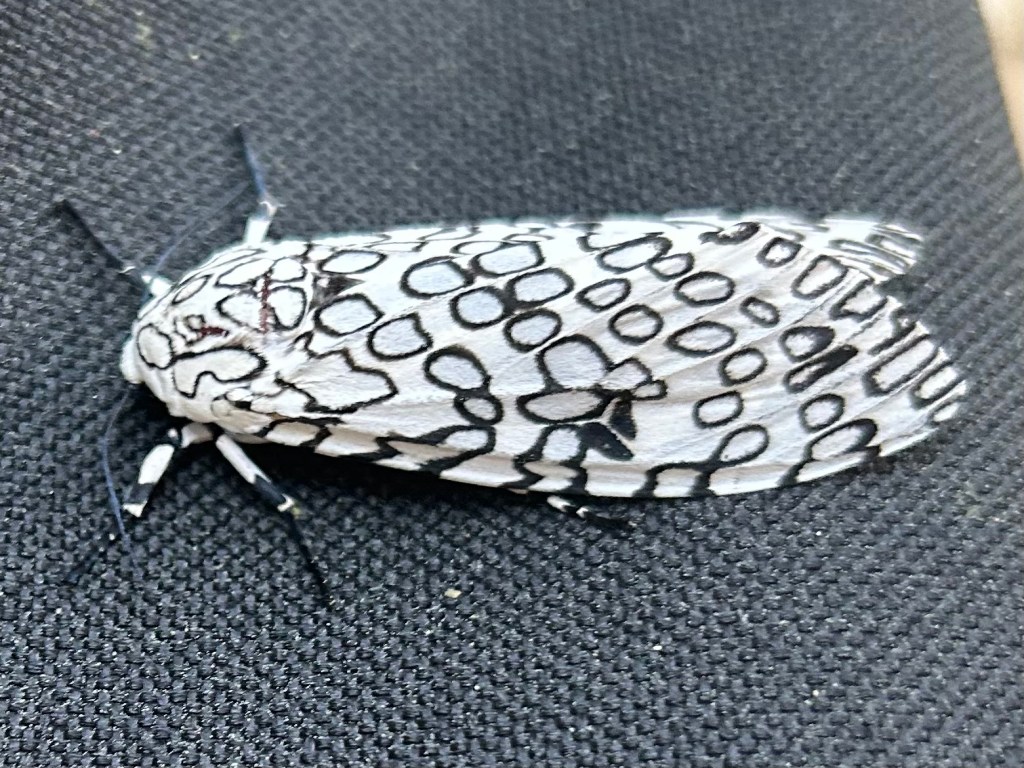
What is this critter that was found resting on a grill cover near the coast? This Giant Leopard Moth (Hypercompe scribonia) was found on my grill cover as I went to cook some dinner one-night last week. This is by far my favorite moth due to its striking appearance. These moths are common across South Carolina and…
-
Question of the Week – Shothole borer
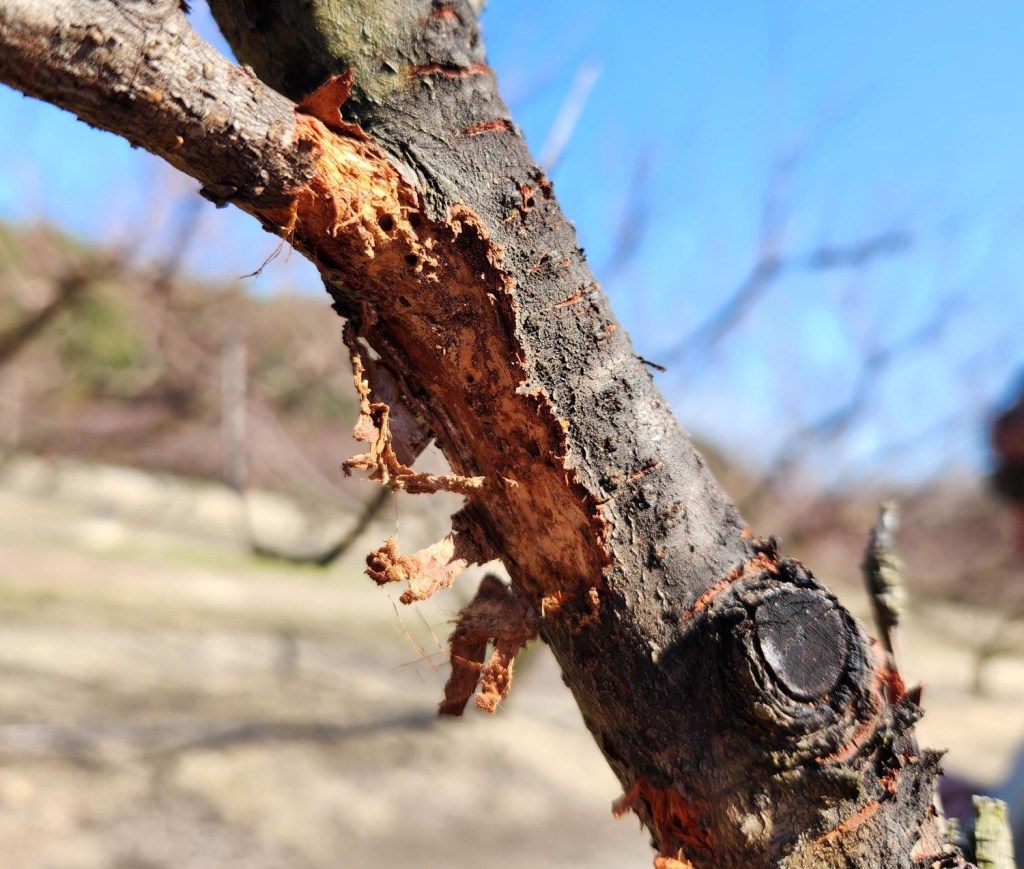
What caused the damage found on a dead branch of this peach tree? This damage was caused by a shothole borer. Shothole borers typically find a way into the wood through damage initially caused by sunburn or bark injury. Adult females bore into the bark and lay their eggs in the cambium layer of the…
-
Question of the Week – War of 1812 Artifact

What is this that was found while subsoiling a field on John’s Island in Charleston recently? Sidi Limehouse was bottom plowing a field at the end of Johns Island a few weeks ago when he hit something, made another pass, and hit it again. They had been farming the field for years; another local farmer…
 The South Carolina Grower