Tag: natural enemy
-
Question of the Week – Beauveria
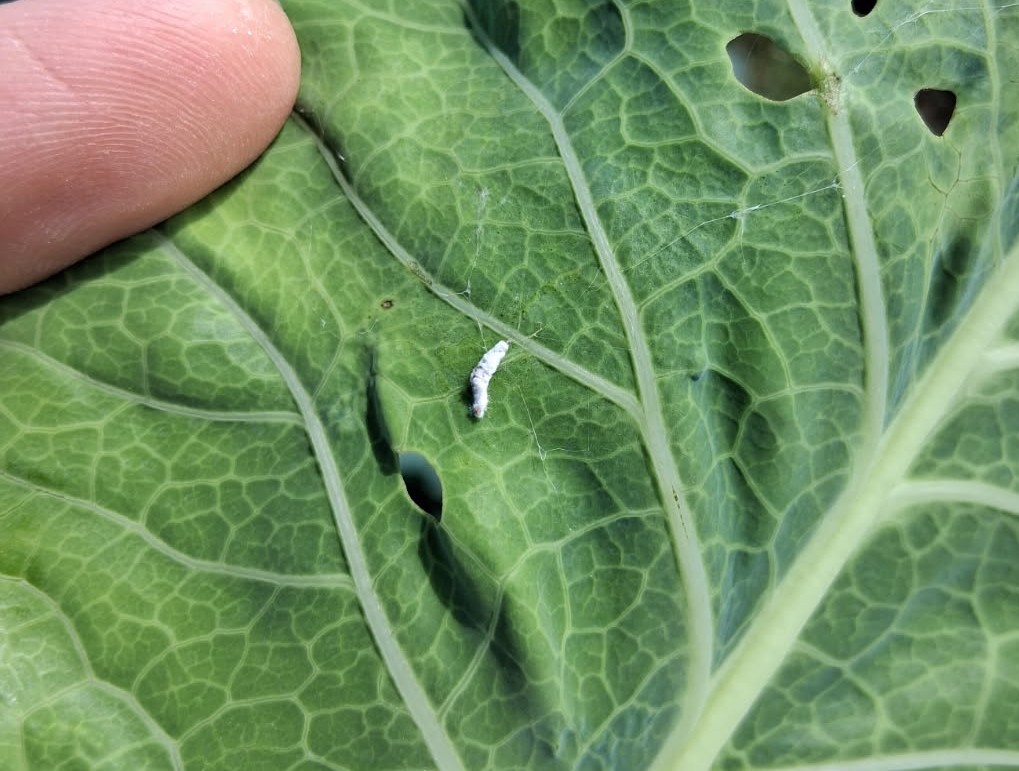
What has made this diamondback moth appear white and fuzzy? This diamondback moth is covered in a fungus called Beauveria bassiana. Beauveria is an entomopathogenic (meaning it develops on insects), soil dwelling fungi. This beneficial fungus is native to the US and affects at least 700 species of insects. Aerial spores of the fungus land…
-
Question of the Week – Tachinid Fly Eggs
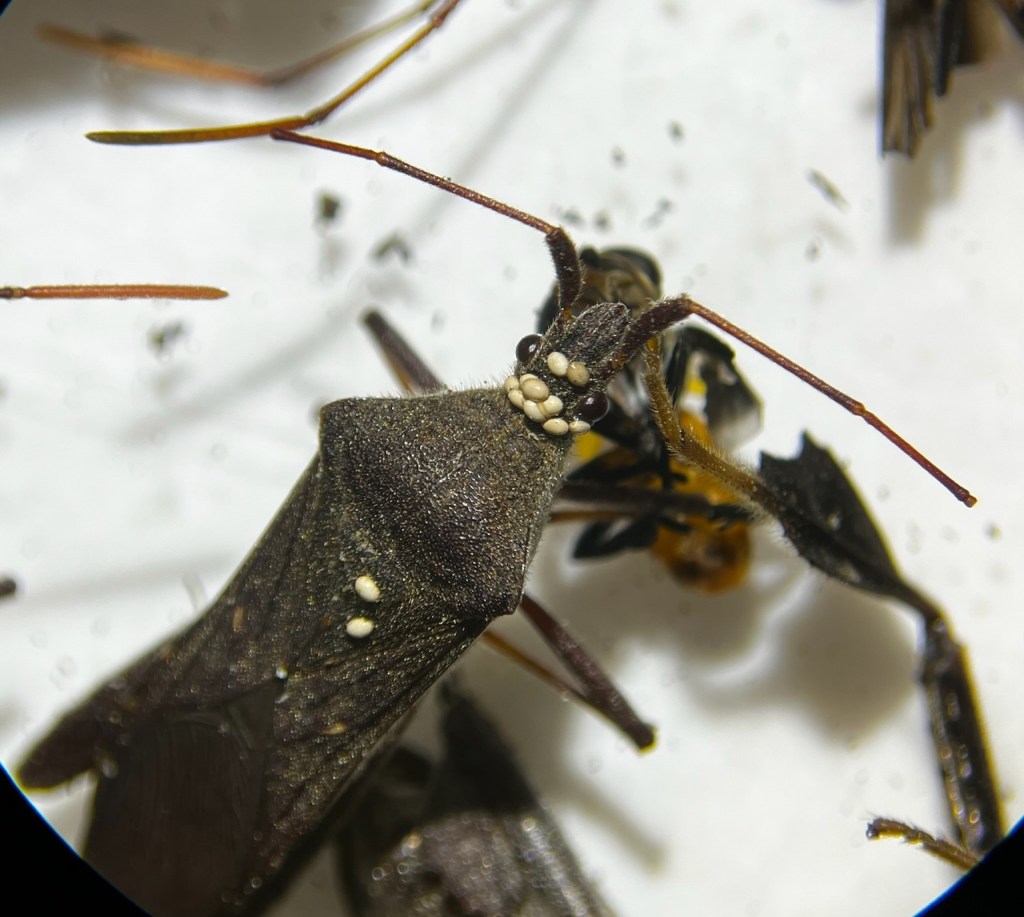
What is on the head and back of this leaffooted bug? The oblong, white objects on this leaffooted bug (Leptoglossus oppositus) are eggs of a parasitoid fly (Trichopoda pennipes), which will hatch and consume the leaffooted bug. Usually when we discuss parasitoids in pest management we are referring to small wasps, but flies in the…
-
Question of the Week – Spined Soldier Bugs
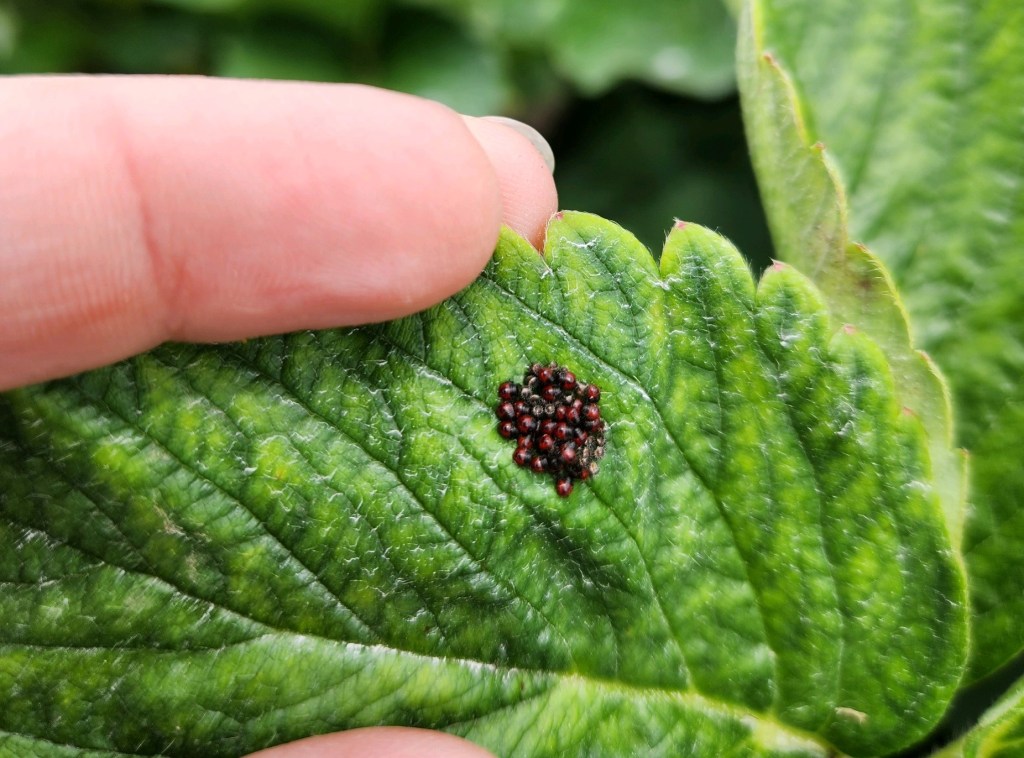
This week, the question was: What is happening on this strawberry leaf? These are the eggs and nymphs of a predatory stink bug called the spined soldier bug (Podisus maculiventris). These beneficial insects feed on over 100 pest species of insects and can be found in many crops. These were located in a strawberry field…
-
Question of the Week – Parasitic Wasp Pupae
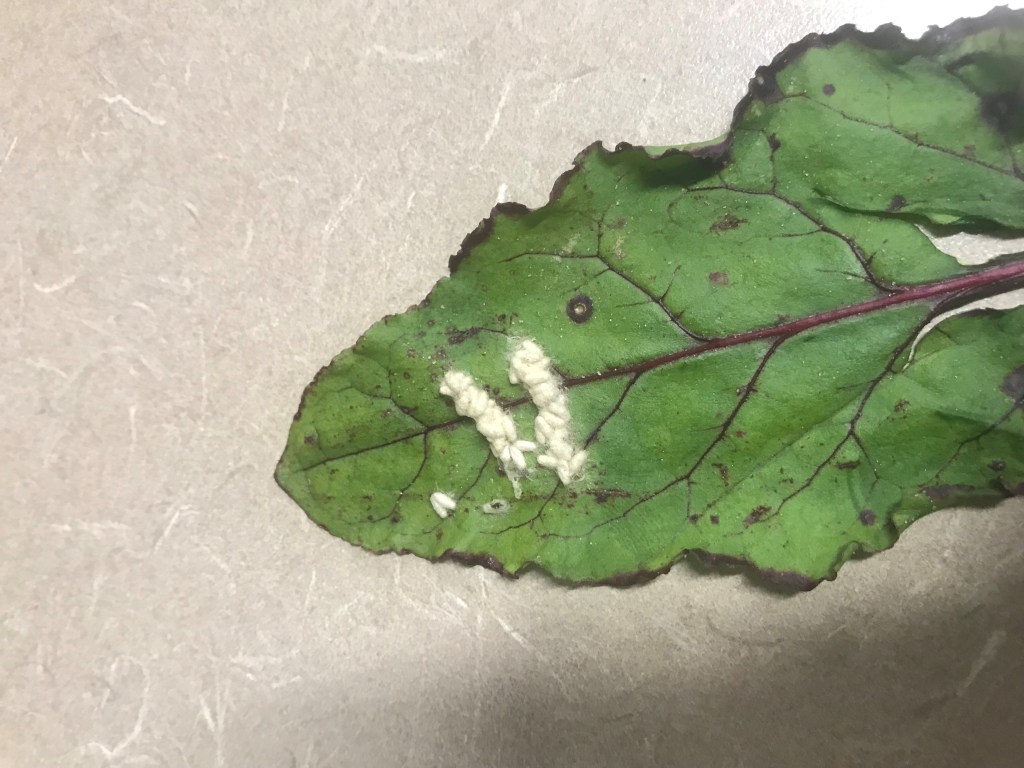
This week, the question was: What is the white-colored stuff on this beet leaf? This is a cluster of parasitic wasp pupae. The adult wasp would have laid eggs into a caterpillar to provide food for the developing larvae. The larvae develop inside the caterpillar and then exit it to pupate, usually killing it in…
 The South Carolina Grower