The heat continues throughout the state. Small fruits and peaches are being harvested in great quantities as disease and insect issues continue to develop in certain vegetable crops. See details below.
Keep an eye on the Upcoming Events tab periodically so you don’t miss anything. Also, check out the latest episode of the SC Grower Exchange Podcast below.
Don’t forget to look at our Resources tab for links to crop handbooks, helpful websites, and related blogs. Be sure to scroll all the way to the bottom to see this week’s Question of the Week, and check back on Thursday for the answer.
Coastal Region
Anna Sara Hill
- Summer has arrived! Watermelon, cantaloupe, blackberry, peach, and blueberry harvest is in high gear, and being taken to market by the truckloads. The good news for growers is that it is proving to be a very high production year. The downside is that there are still a lot of disease and insect pests floating around, so continue to be vigilant with scouting and cover spray applications with 0 or 1 day PHI products for a few more weeks. Pest problems left unchecked at this stage can drastically decrease yields of produce still in the field. Also, disease lesions that may be in the field can develop into post-harvest infections which may not manifest symptoms until the end user sees it.
- The current primary problems to be on the lookout for in watermelon fields are gummy stem blight, downy mildew, powdery mildew, and fruit disease.
- Sunscald is another big problem this time of year which can be protected against by use of products such as Surround which is kaolin clay.
- Don’t forget to scout for those pesky insects that cause “Rindworm Complex”, the main culprit being cucumber beetle larvae.
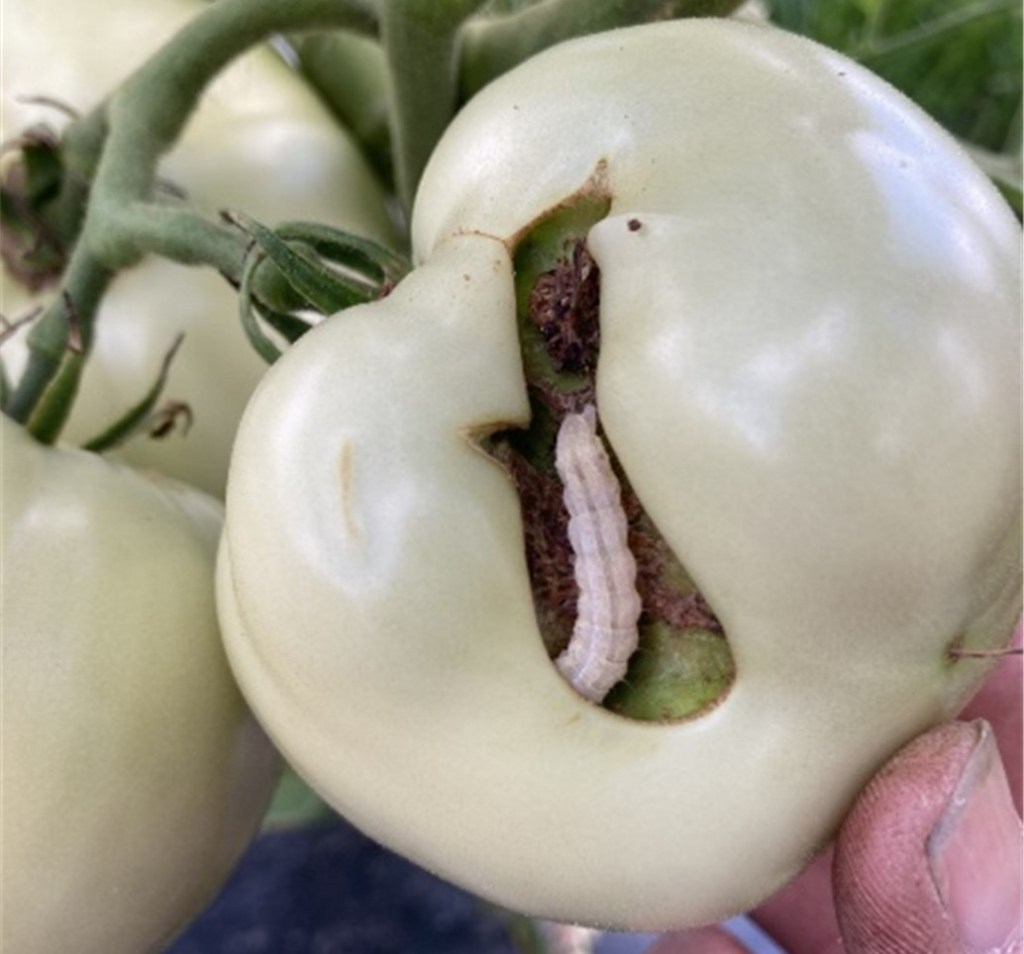
- The weather and time of year are prime for lepidoptera larvae of all sorts (including armyworms, loopers, bollworms, and horn worms). Many of these insects cross over from corn, cotton, and soybeans to vegetable crops and will occasionally snack on fruit.

Zack Snipes
- It is very hot and windy which is causing lots of heat stress on our crops.
- The harvest of our crops is stacking up on top of each other which will make this a short harvest season.
- Tomatoes and melons are coming to market in heavy volumes. We had an average, at very best, tomato crop this year with small plants and a smaller fruit set. With the current heat and fruit load stress, we are seeing lots of Southern blight bringing plants down. Again, it is vital to distinguish the difference between Southern blight and bacterial wilt. You have to know your enemy to battle them.
- We are also seeing lots of issues with cucurbits right now such as gummy stem blight, powdery mildew, downy mildew, squash bugs, and cucumber beetles.
- I have pulled some nematode samples lately and found high numbers of root knot nematode in fields.
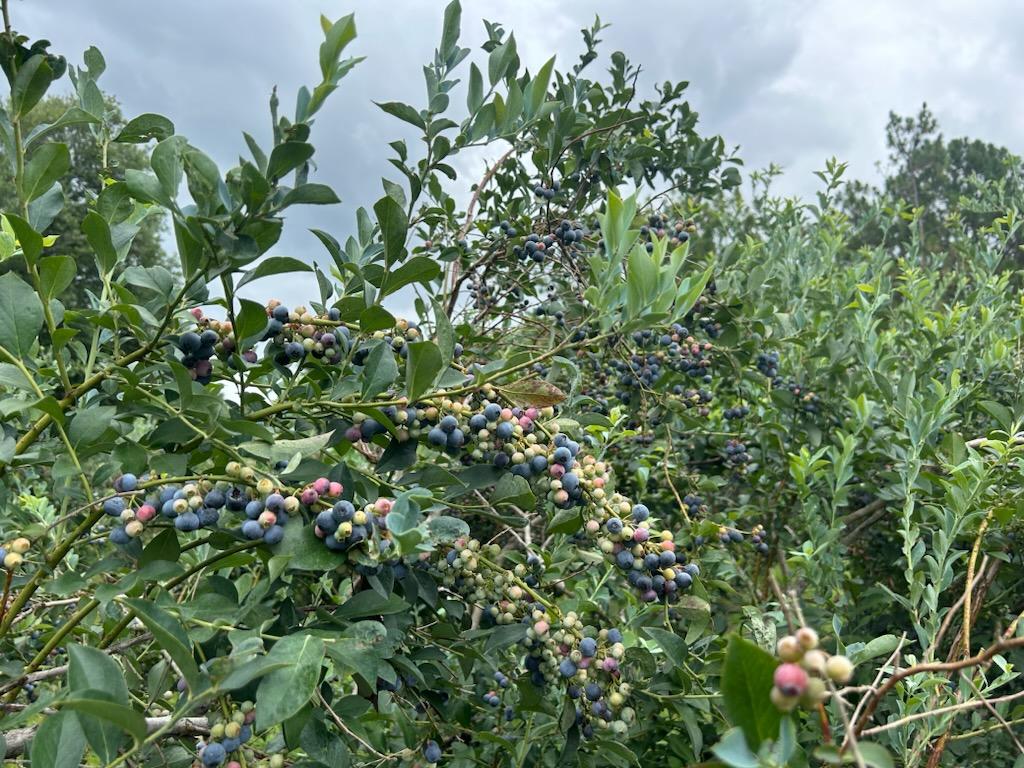
- Rabbiteye blueberry and blackberry crops are in full swing and crop yields are incredible.

Midlands
Rob Last
- Crops in the Midlands are doing well with a wide range of produce coming to market.
- Insect and disease levels will need careful monitoring.
- With the heat forecast for this week, it may be beneficial to utilize kaolin clay products to protect fruit on plants with reduced canopies from sunscald.
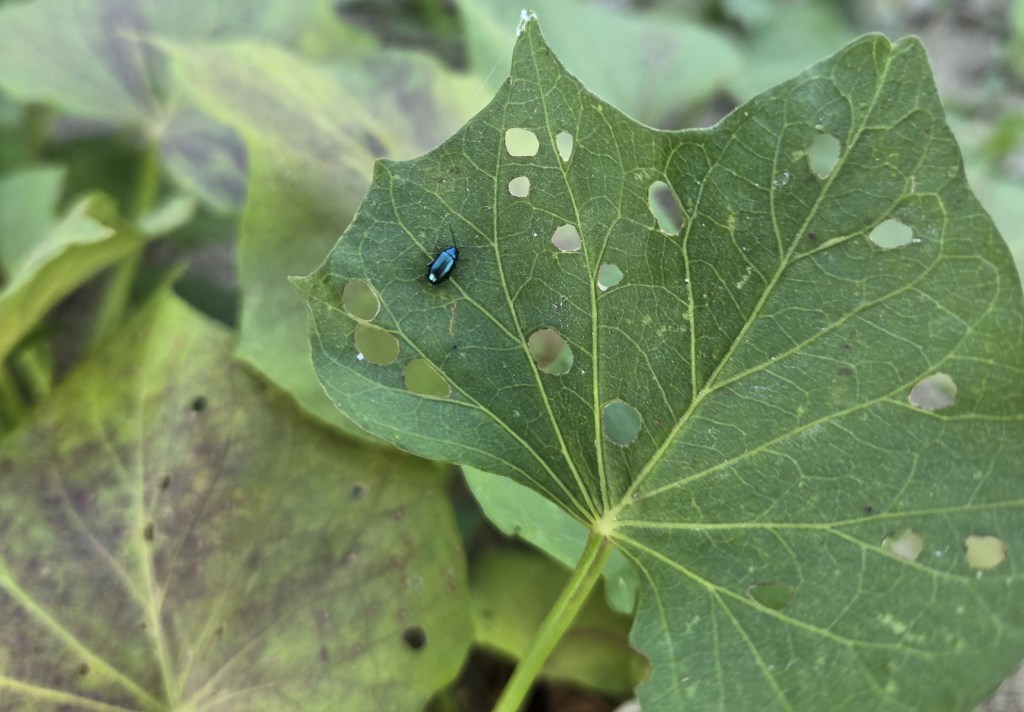
- Sweetpotatoes are beginning to bulk. Keep monitoring for shot hole symptoms from flea beetle feeding. The adults damage the foliage but larvae will feed on the tubers, reducing marketable yield.
Sarah Scott
- Just like everywhere else, it is very hot and dry around the Midlands. Breezy conditions the past week seem to make things extra dry and watering efforts constantly trying to compensate.
- Peaches are coming off heavy and we are harvesting freestone varieties now. Quality continues to improve but size has fluctuated with many varieties. Disease pressure is relatively low so far with some bacterial spot is areas and brown rot but nothing wide spread.
- Vegetable crops are feeling the heat and squash and other cucurbits are still producing well. Bell peppers are coming off heavy as well as tomatoes. In these dry conditions, growers should focus on maintaining even moisture in crops susceptible to blossom end rot.
- The blueberry crop is heavy this year and fruit is looking good if irrigation is being utilized. Some leaf rust and a mysterious bronzing/dieback on several farms has occurred. We will wait on lab results for a proper diagnosis.

Upstate
Briana Naumuk
- Here in the Upstate it has been a very dry and hot couple of weeks. This week looks to be headed the same way. Check up on crops and irrigate accordingly.
- Some of the peaches here are ripening before they come to size. Which has resulted in smaller peaches being harvested. The early-season varieties are finishing up harvest and the mid-season varieties are beginning to be ready for harvest.
- Apples have good fruit set this year with only a low percentage having been lost to late freeze. Fruit rots are beginning to become a threat. Scouting and spray plan should keep these at bay. Some early varieties will be ready to harvest late July to early August.
- Blueberries are continuing to be harvested. There has been good production this year. Scouting for diseases should still be done to prevent any damage to harvest.
- Muscadines have started to set fruit. The fruit is still extremely small but can now be seen.
Andy Rollins
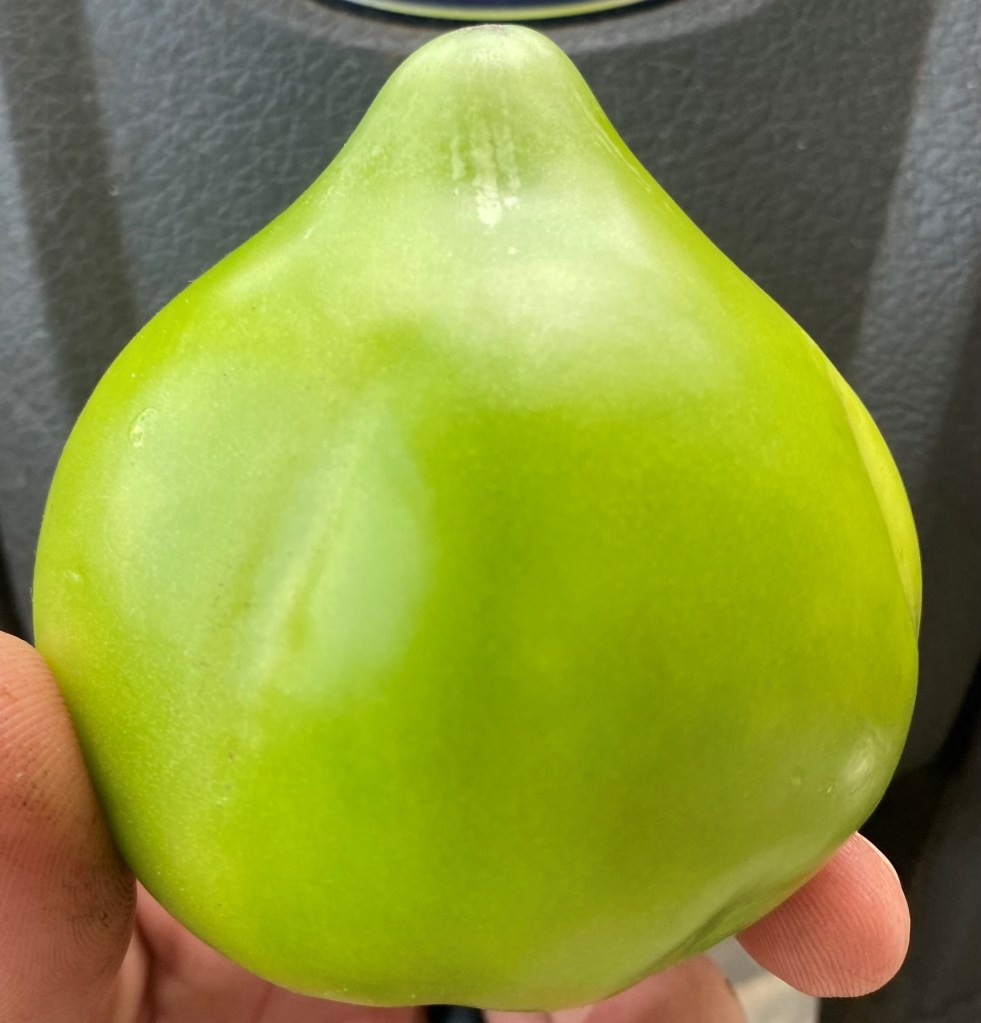
- We’re having some tomato problems that have yet to be explained. Symptoms look like herbicide injury to leaves with distorted veining and misshaped, slightly lighter-colored leaves. The fruit have odd pointed blossom ends, but are otherwise unaffected. The field has been out of pastures for 6 years and no persistent herbicides used, according to the grower. There appeared to be no drift, as weeds around these plants lacked any symptoms. Multiple varieties are showing symptoms, but only portions of rows. On each plant, damage is confined to the upper 1/4 of the plant. I believe itcould be broad mites or possibly a virus infection. We’re waiting on a lab diagnosis to recommend treatment in this case. There is no treatment for virus problems. A miticide application could be a complete waste of money and time if no mites are present.
- Some freestone/semi-freestone peaches are being harvested. Juneprince and Caroking are two good ones coming off now. We are having some spider mite problems with the hot, dry weather. Several growers applied Acramite as directed to control them. I believe some stippling of yellow on nectarines and less obvious on peach are from mites, not thrips, as normally thought.

Question of the Week
What is this flower that was found growing on a rock in the middle of a river?

Answer in the comments below and check back on Thursday to see the answer.
 The South Carolina Grower
One response to “Weekly Field Update – 6/24/24”
Rocky Shoal Spider Lillies
LikeLike