We finally got some rain this past week. Fall crops are coming along nicely with scattered insect and disease issues. Neopest is showing up in strawberries as plants contiue to establish. See details below.
Keep an eye on the Upcoming Events tab periodically so you don’t miss anything. Also, check out the latest episode of the SC Grower Exchange Podcast below.
Don’t forget to look at our Resources tab for links to crop handbooks, helpful websites, and related blogs. Be sure to scroll all the way to the bottom to see this week’s Question of the Week, and check back on Thursday for the answer.
Climate-Smart
Lacy Barnett and Jhessye Moore-Thomas
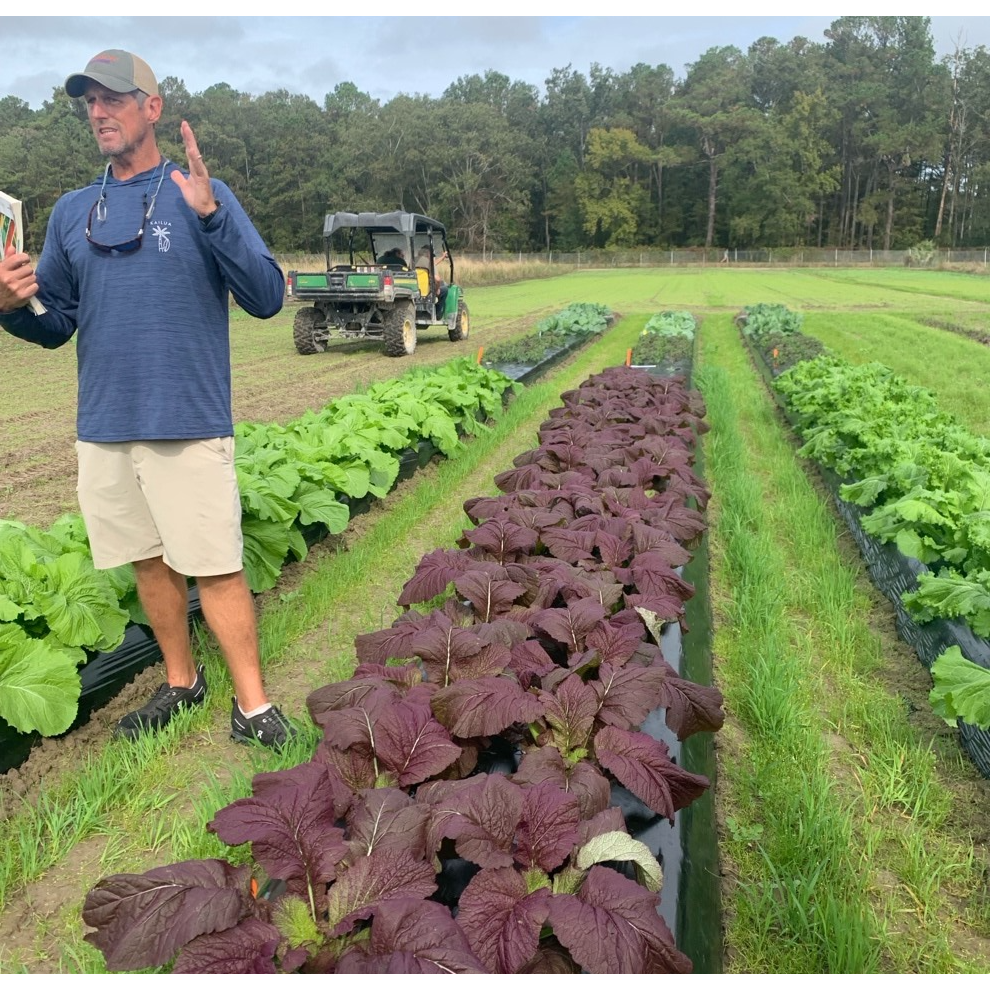
- The Climate-Smart Grown in SC Leafy Team had a field day on November 6 at Coastal Research and Education Center (CREC). Attendees saw termination of warm season cover crops, various commercial brassica varieties, cool season cover crop trials, brassica research, and ASD trials.
- Drs. Brian Ward and Matt Cutulle led in-depth discussions and demonstrations of how farmers could implement their climate-smart practices.
- Dr. Sandra Branham presented her research on bacterial wilt with her broadleaf mustards.
- We are seeing greens coming along nicely across the state, but cover crops planted this fall have been struggling to germinate with the dry conditions.
Coastal Region
Zack Snipes
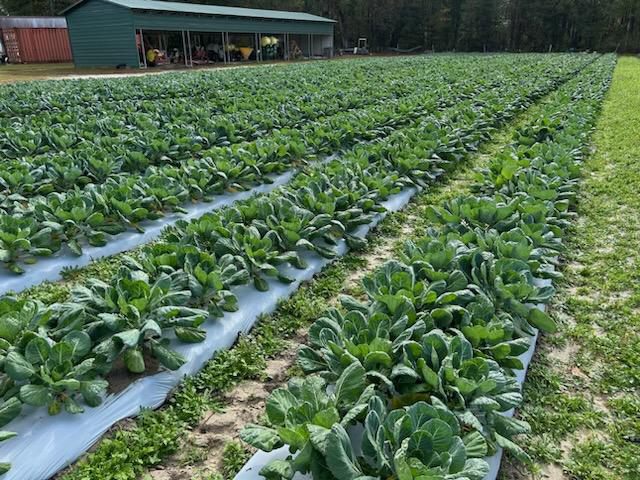
- We finally received some slow and steady rain that we desperately needed. As I am writing this, we are getting a slow, steady rain to add to what we received last week. I could see crops jump a few inches overnight it seemed after the rains. With rain, we have to be more aware of disease issues.
- Strawberries are looking great on some farms and suspect on others. I think the drought, wind, and low humidity really hurt some of our bare root plants.
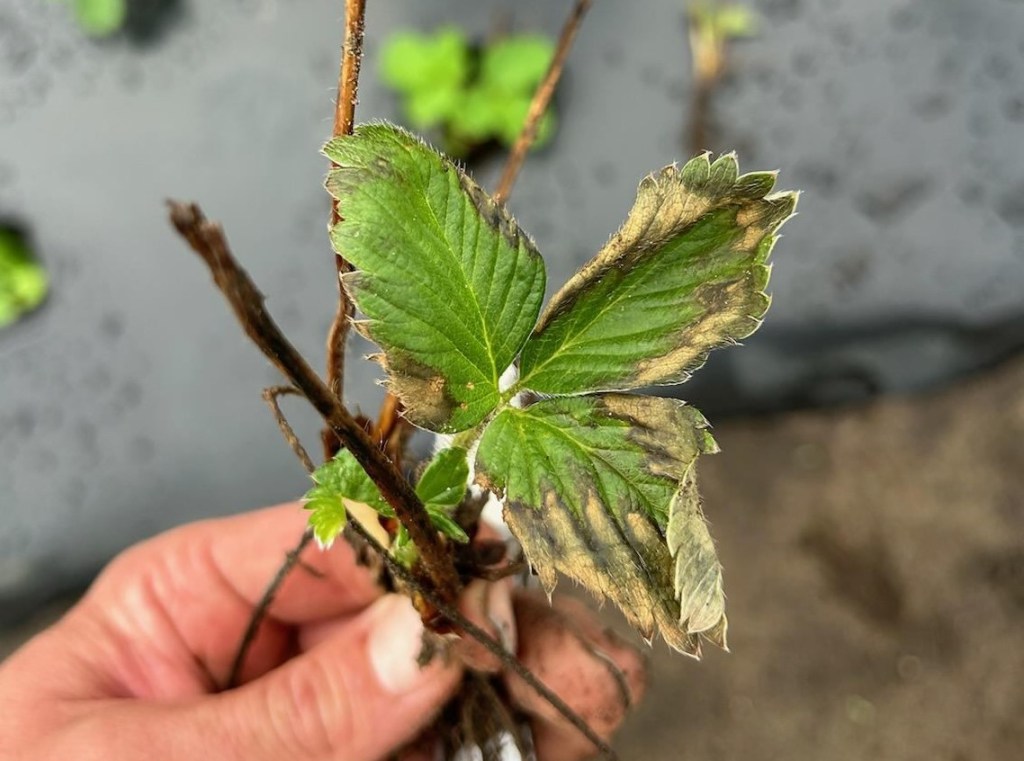
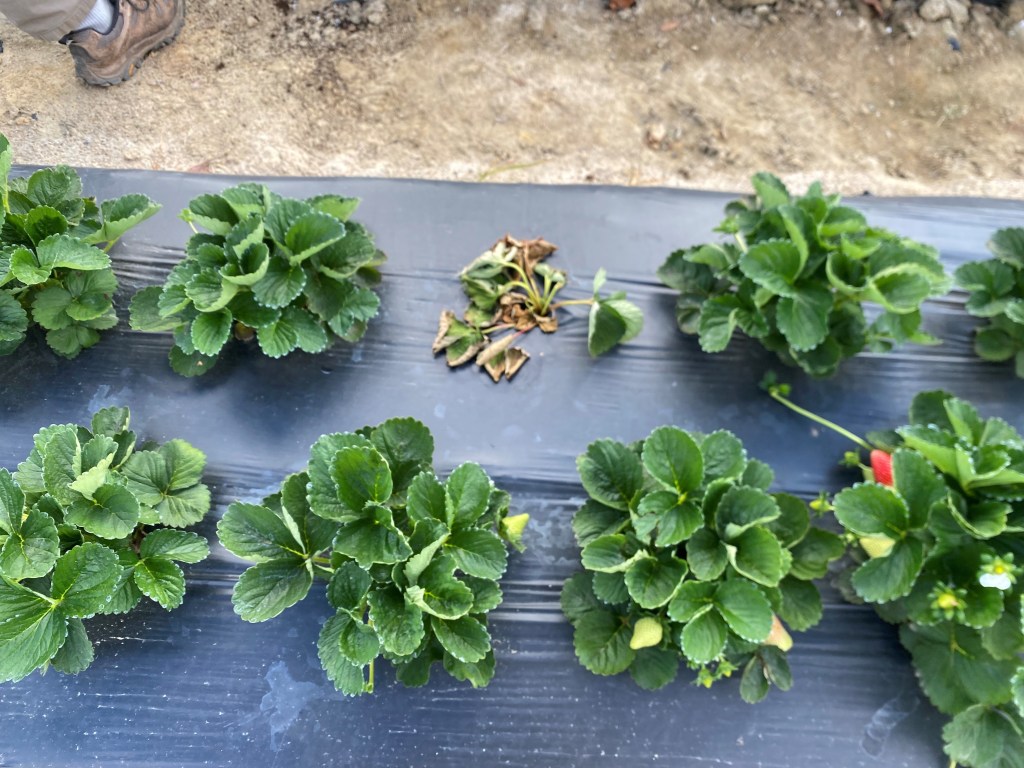
- I found some strawberry plants last week with scorched and wilted leaves and crowns. I found this on several farms and sent samples in to the lab today to get a positive diagnosis as it is a very strange symptom. Growers are beginning Thiram treatments as well as some treatments for phytophthora this week. With the amount of rain we received in some areas, I would recommend getting out a treatment for phytophthora. Fall greens look great with very little insect or disease pressure and some broccoli coming in at heavy volumes.
Midlands
Rob Last
- We had some welcome rainfall in the Midlands this past week.
- Crops continue to develop well with few disease issues. Just be mindful disease outbreaks may occur following the rainfall.
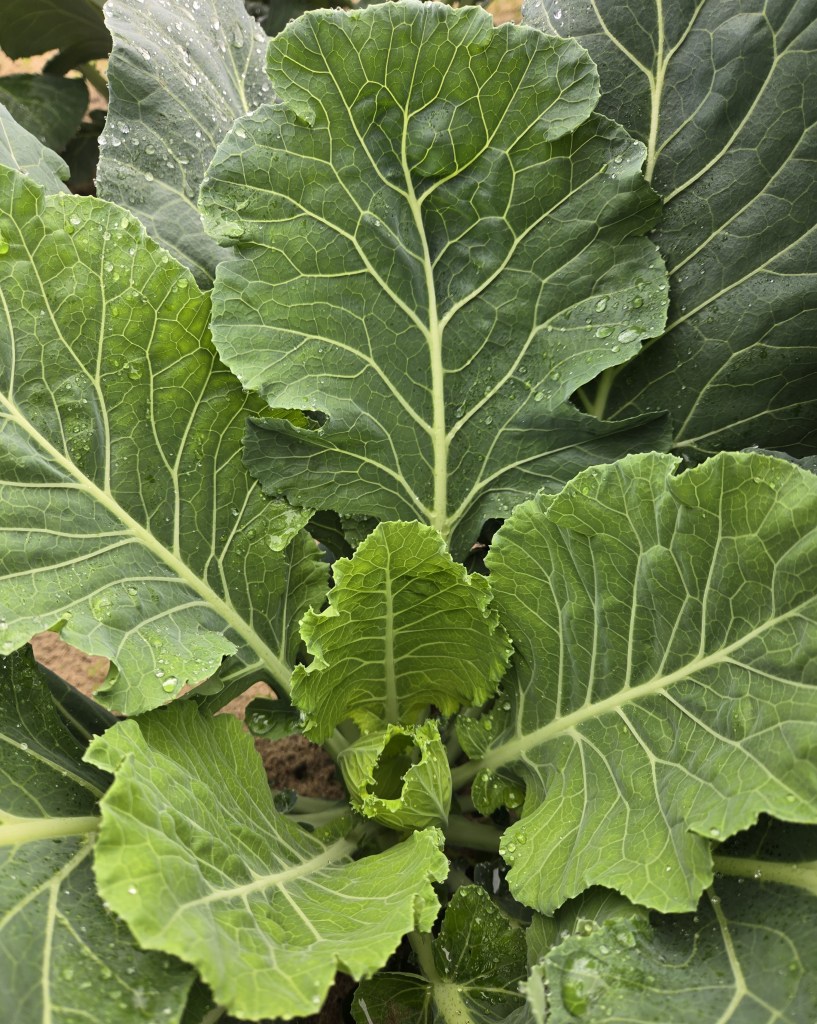
- Insect activity is also relatively low with diamondback moth and aphids being seen in leafy greens.
- Strawberry bare roots are establishing well with a few isolated incidences of J-rooting.
Pee Dee
Christiana Huss
- We finally got rain this week for the first time since Hurricane Helene.
- Strawberries are in the ground. I’ve seen lab-confirmed cases of phytophthora come in from nursery transplants. Orondis Gold can be applied through drip irrigation to help combat phytophthora disease.
- I’ve seen significant numbers of spider mites in several strawberry fields so far. They tend to thrive in the dry weather we’ve been having.
- Pecans are being harvested and taste delicious.
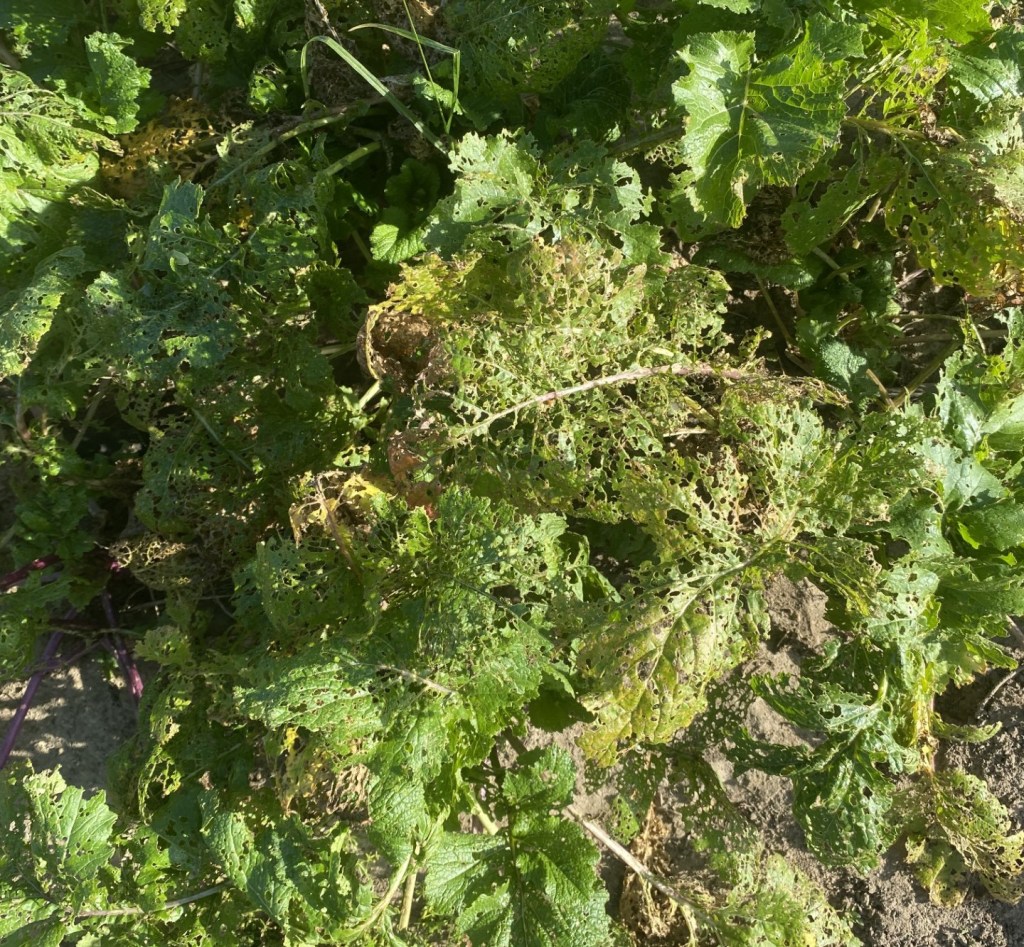
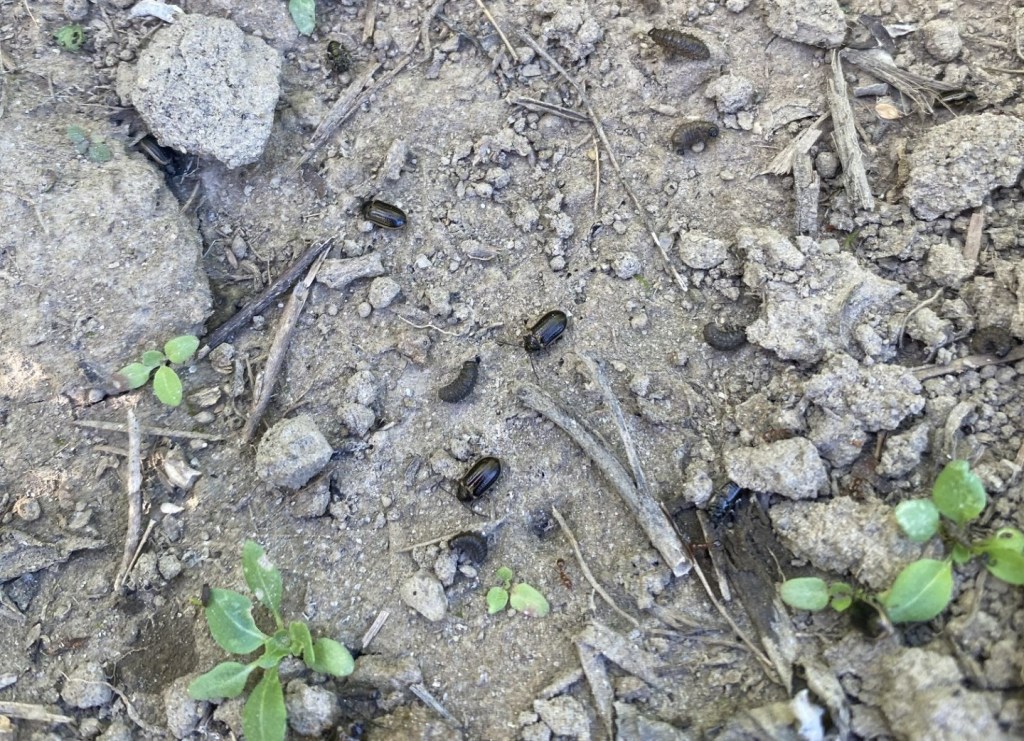
- Brassica greens look beautiful! Broccoli is being harvested. Yellow-margined leaf beetles have been found on mustard greens.
Brittney King
- The Pee Dee is still pretty dry. We received around half an inch of rain last week but are still hoping for more this week.
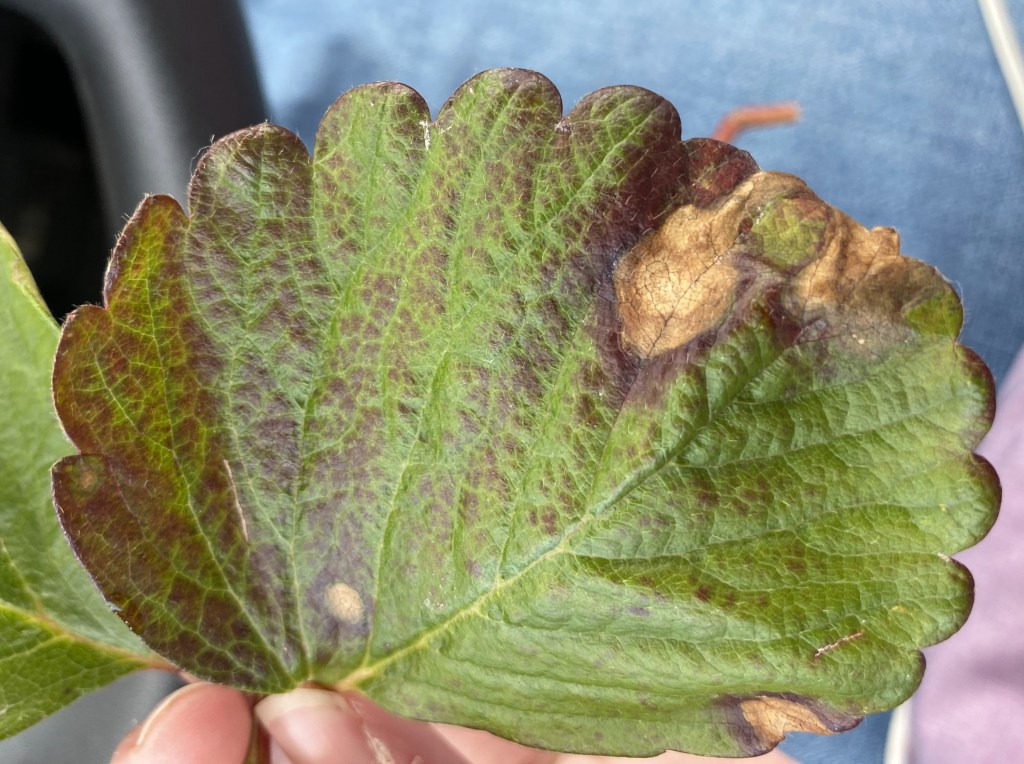
- Strawberry plantings are starting to take root, so most growers were able to apply the first Orondis Gold or Ridomil application last week. I have one farm that tested positive for Neo, which most likely came in on the plants. I’ve seen some instances of leaf burn and herbicide damage on plants that were confused with foliar disease, so be sure to send samples off to the lab if you are unsure. Please refer to this blog post on Managing Neopest for recommendations. Thiram is the backbone of our spray program this year and has good control on Neo and Botrytis. Be aware of tank-mixing with DMI fungicides, as these can act as plant growth regulators on younger plants, except for Rhyme (flutriafol).
- Leafy greens are doing well. Cabbage, mustard, collards, and broccoli are being harvested with great quality. I’m not seeing many disease symptoms because of the drier weather. Diamondback moth activity continues on leafy greens. Keep scouting and make sure you are rotating insecticides.
Upstate
Andy Rollins
- We have multiple strawberry problems across the Upstate counties. We have found neopest in multiple plug sources. Root issues are very common also, and even in cutoff plants, root rot is being found more commonly than in recent years. I am very concerned about late plantings getting the fall growth they need with cooler temperatures. I have encouraged injection fertilization in many cases just to get a plant established. With identified root rot issues, after treatment with Orondis Gold (32floz/land acre), I have encouraged growers to use 12-46-8 soluble fertilizer to encourage root growth. Strawberry is a luxury phosphorus consumer and will respond to application.
- With recent rains in the upstate growers need to keep a protectant fungicide on the plants. Tilt + Howler and Thiram + Howler are good combinations. If plants are collapsing, growers may have to use Switch. It is better to save the Switch for later, but using it may be necessary if plants are dying.
Question of the Week
What caused the green patterns and discoloration on this pumkin?
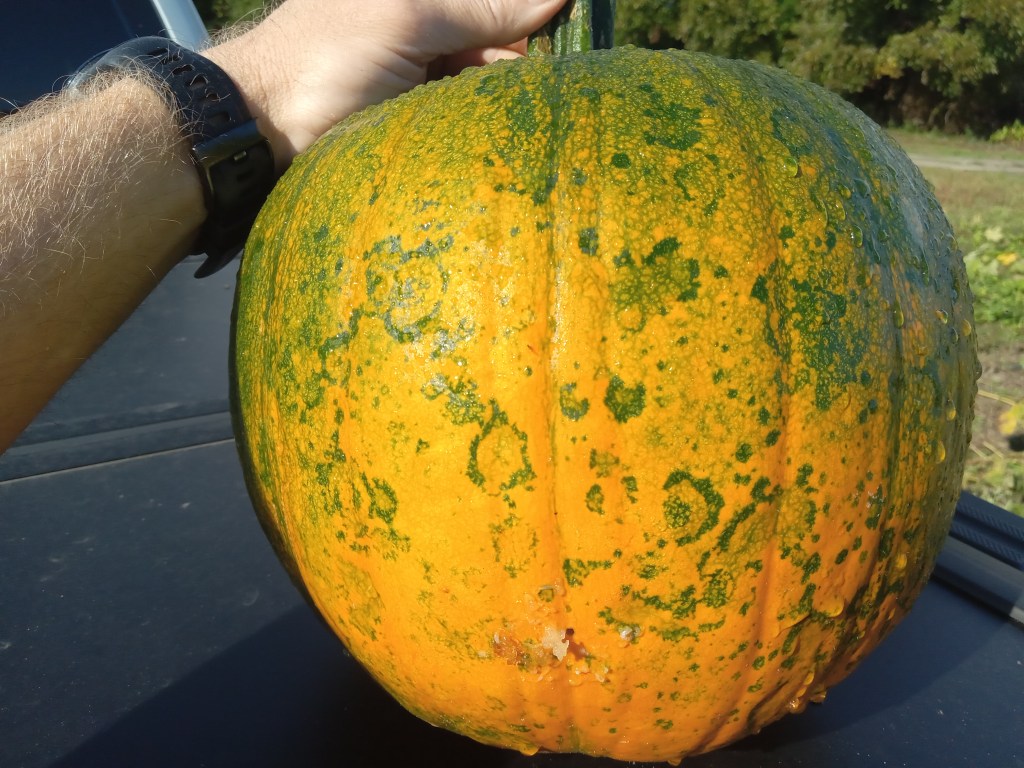
Answer in the comments below and check back on Thursday to see the answer.
 The South Carolina Grower
One response to “Weekly Field Update – 11/11/24”
my guess would be papaya ringspot virus.
LikeLike