It’s starting to feel like summertime, with temperatures in the 90s this week. Insect populations have been rising, including leafhoppers, cucumber beetles, thrips, squash bugs and leaffooted bugs. Strawberries are still holding on as the blueberry harvest continues and the peach harvest expands.
Key Takeaways for Growers This Week
- The weather forecast heats up this week – and so does the chance for rain
- Insect pressure is on the rise – Scout all crops carefully
- Peach harvest has expanded – Upstate now picking early varieties
- Updated watermelon spray guide published – check it out here
The latest episode of the SC Grower Exchange Podcast is available now.
Lowcountry Report
Anna Sara Hill
- Rain is forecast for the end of the week, and temperatures are soaring into the 90’s. That is good news for the growth and development of watermelons.
- Early watermelon plantings are growing well and are at different stages of growth. Most are blooming, some have set fruit.
- A few fields that were planted and grown under covers have fruit already sizing up.
- The only downside is that insect pressure will rise with warmer temperatures, and as humidity increases, so will disease incidence. Stay vigilant with the scouting and be ready to implement a spray schedule.
- The Land Grant Press has finally published the 2026 Watermelon Fungicide Guide. Several changes have been made to it this year, so please replace all your old schedules with this one.
- Currently, the most prevalent insect pest of watermelons is the striped cucumber beetle. Also, I’m beginning to see a few squash bugs and leaf-footed bugs here and there. So, keep a sharp eye out for them. Populations can increase rapidly.
- Blueberry and peach harvest has started, and blackberries are beginning to ripen.
Zack Snipes
- Another dry week in the Lowcountry. I feel like every week I say, “next week is our week for rain,” but it hasn’t happened in quite a while.
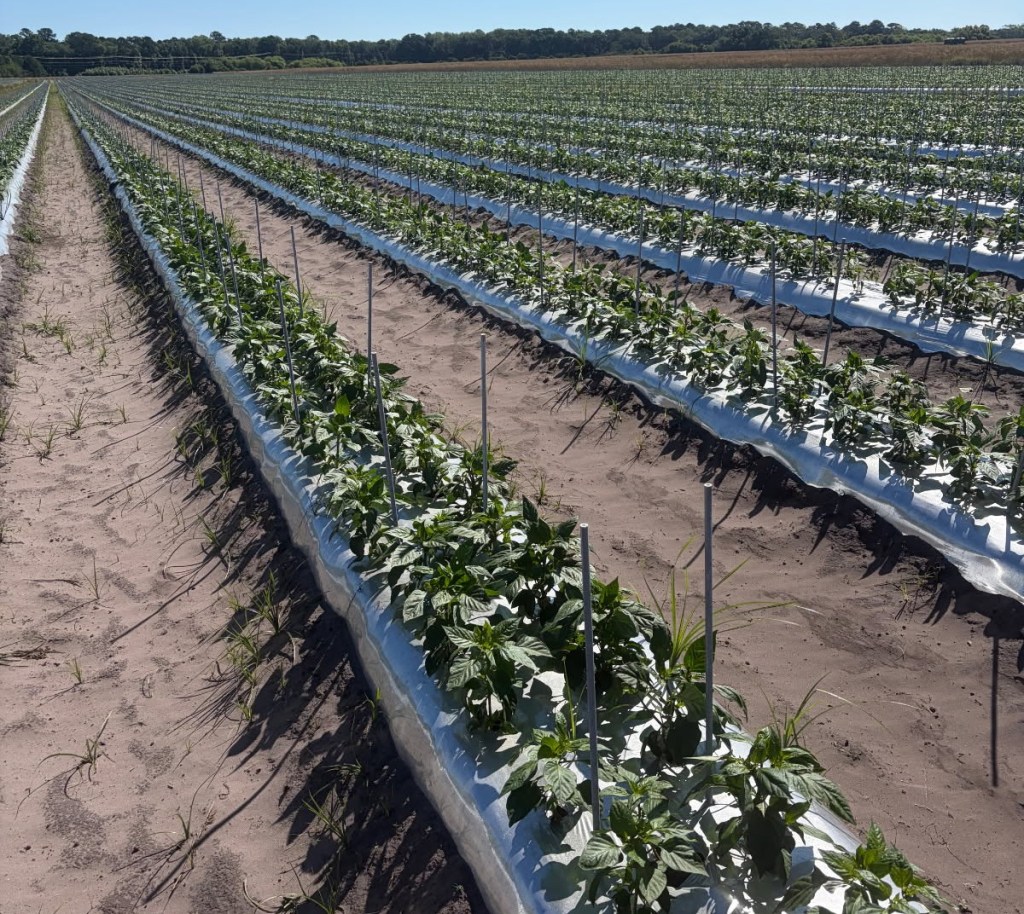
- Tomatoes are receiving their third tying this week and have golf-ball-sized fruit. Peppers look really good with a good fruit set. Watermelons are setting fruit and have very little, if any, disease issues right now.
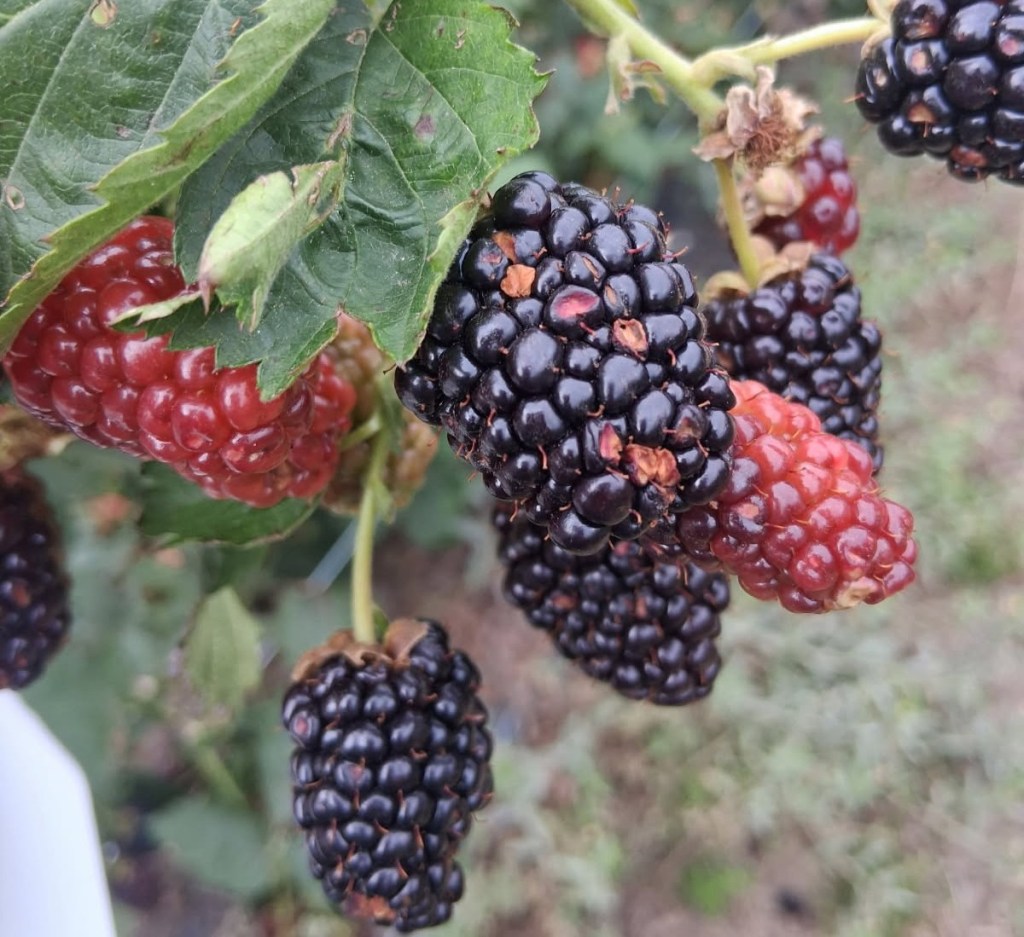
- I have seen some issues in blackberry fruit this week. The drupelets of blackberries can turn different colors depending on what is going on. Some drupelets will turn white, which typically is a result of temperature or humidity swings. If drupelets are sunken and tan colored, then the most likely culprit is anthracnose fruit rot. If blackberries are harvested, black and then turn red when placed in a cooler, this is known as red drupelet reversion. All three issues will render the fruit unmarketable. It is imperative that growers determine the cause so the issue can be addressed. Here is a great factsheet from the University of Arkansas.
Midlands Report
Rob Last
- After a cooler and drier week, crops in the area continue to look great.
- Strawberry volumes have slowed a little over the last week, and as we approach June, they are likely to further decline. Gray mold and anthracnose are present in many crops along with spider mites. Keeping plants protected until the end of the season can be beneficial. Prompt destruction of any finished crops is critical to remove hosts for pests and pathogens.
- Blueberries continue to look great with harvest rapidly approaching. Keep scouting for diseases.
- Cucurbits in the area are developing well with few issues to note.
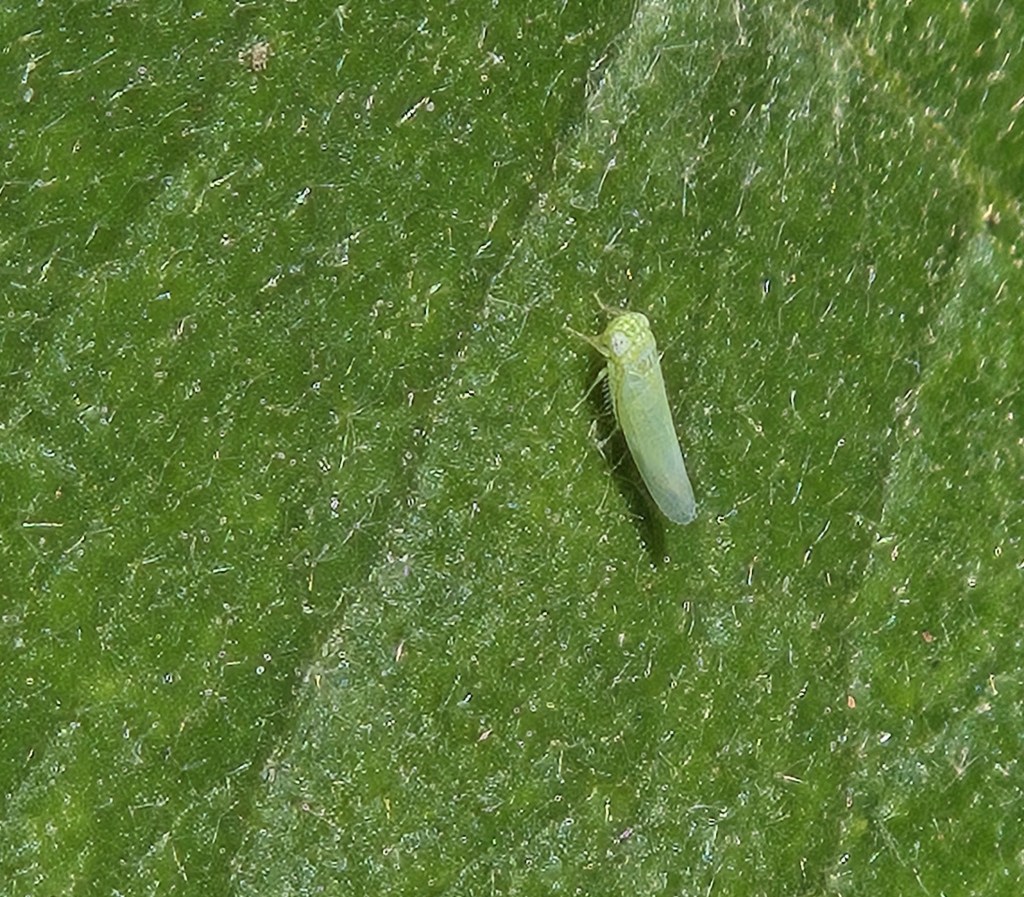
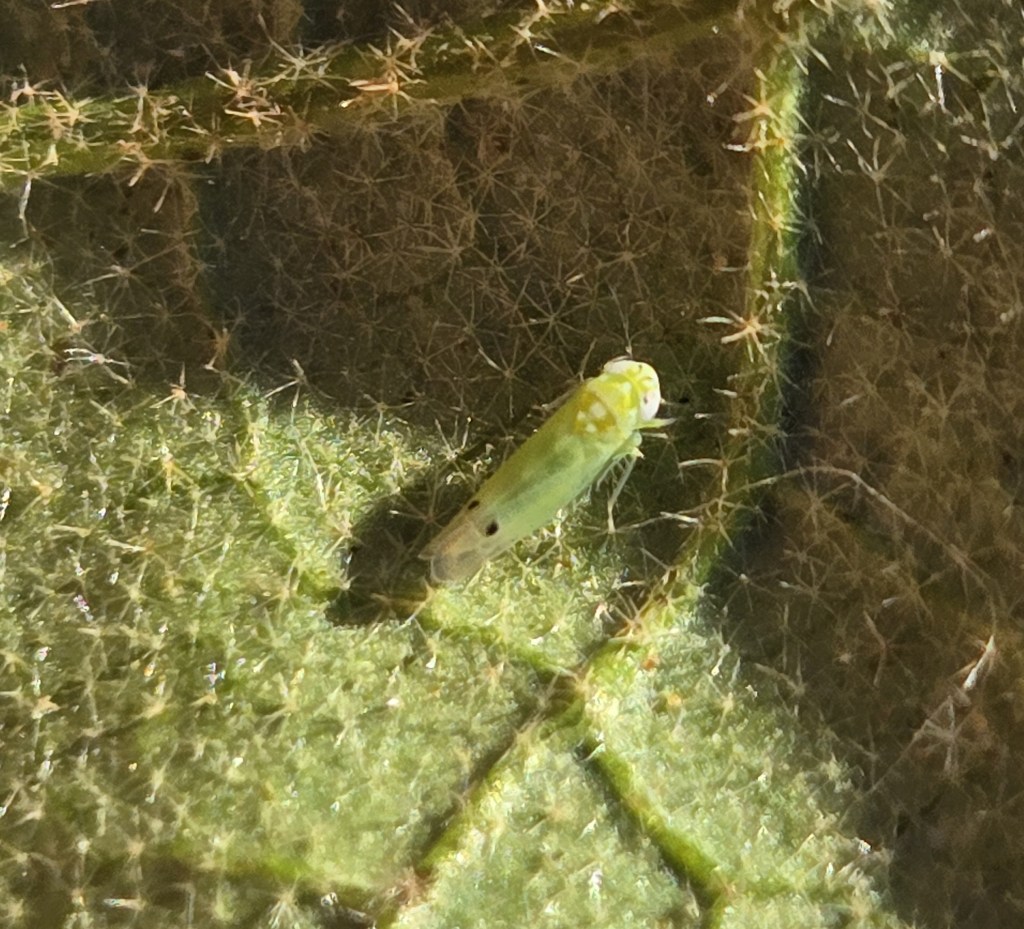
- Leafhoppers are being seen on okra and eggplant. At present, these are NOT two-spot cotton leafhoppers. The way to tell is to look for the two spots on the wings. Leaf hoppers move really quickly and can be difficult to identify. If in doubt, call your local Extension Agent, and we will be happy to help.
Upstate Report
Andy Rollins
- The 2026 peach crop has begun in the Upstate, albeit lightly. Richmay/Flavorich is typically our first variety of the year and has been picked on a few farms. Cold damage took out most of them, but not all. A higher elevation farm and a few other smaller plantings in protected microclimate locations escaped the damage from March 17-18,
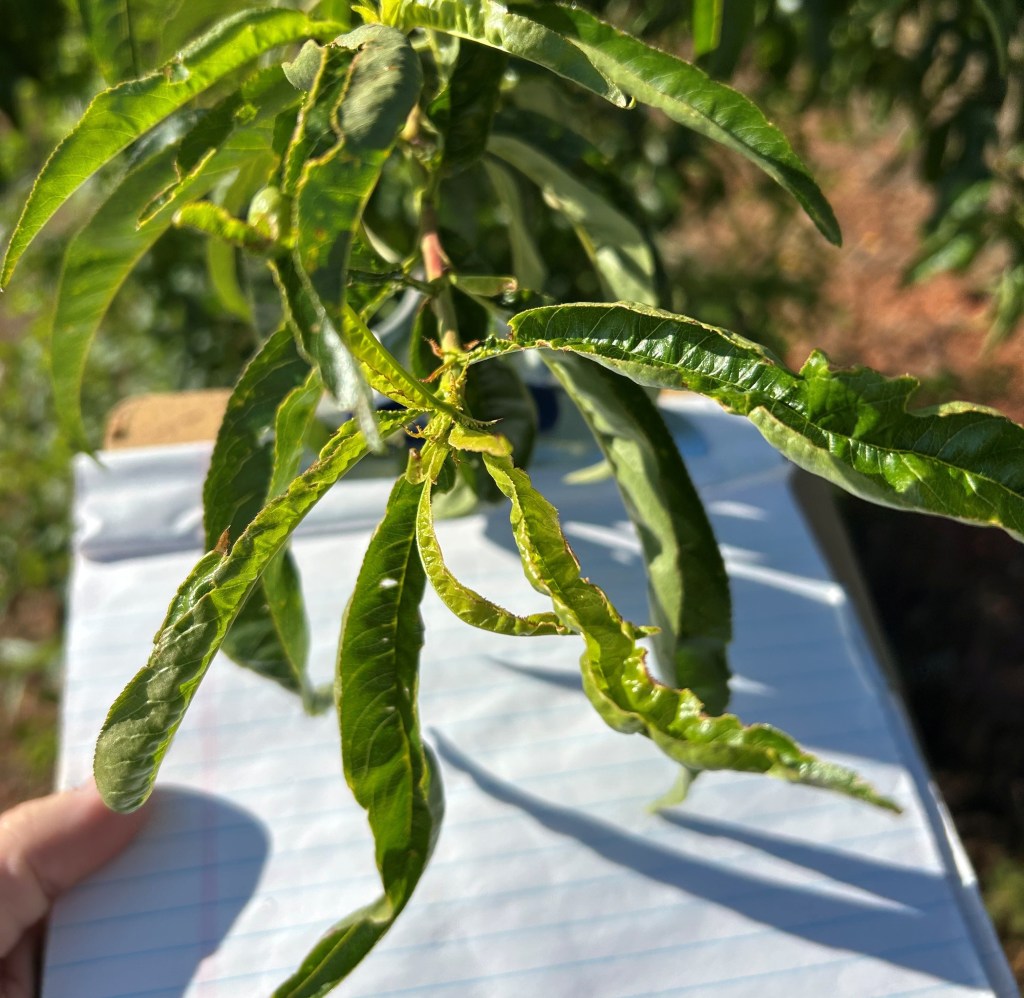
- I had a call last week from a farm suspecting herbicide injury from an adjacent field and landowner. Upon inspection, there was no evidence of any carryover from one field to the other. When looking at these situations, look for broadleaf weeds along the unsprayed edge of the sprayed field and follow the symptoms toward the suspected damaged crop. With spray drift, damage should be worst on the crop closest to the sprayed field. As we approach the hotter part of the summer, farmers need to be careful using herbicides near high-value fruit crops. 2,4D, triclopyr and others can go from a liquid to a gas when sprayed at higher temperatures. My first calls for these types of problems typically come in early June. Clemson Regulatory handles these legal complaint problems and needs to be called in quickly for more accurate identification. In this case, the problem was actually high thrips populations. A white pad of paper or a light-colored clipboard can be used to identify this problem. Tap the branch over the paper, and if thrips are present, they will fall onto the paper. We quickly found massive thrips populations. The problem was across the entire field, not worse near the adjacent field that was sprayed. Zilvalgo is a new product labeled for peaches to control thrips and spider mites. There was also damage to nectarine and peach fruit as well. Normally, we don’t see leaf symptoms like this. Excessive early drought has made this problem much worse than normal. Crinkled-up leaves are the outward symptom, especially on the newest emerging leaves.
Question of the Week
Why is this strawberry white?
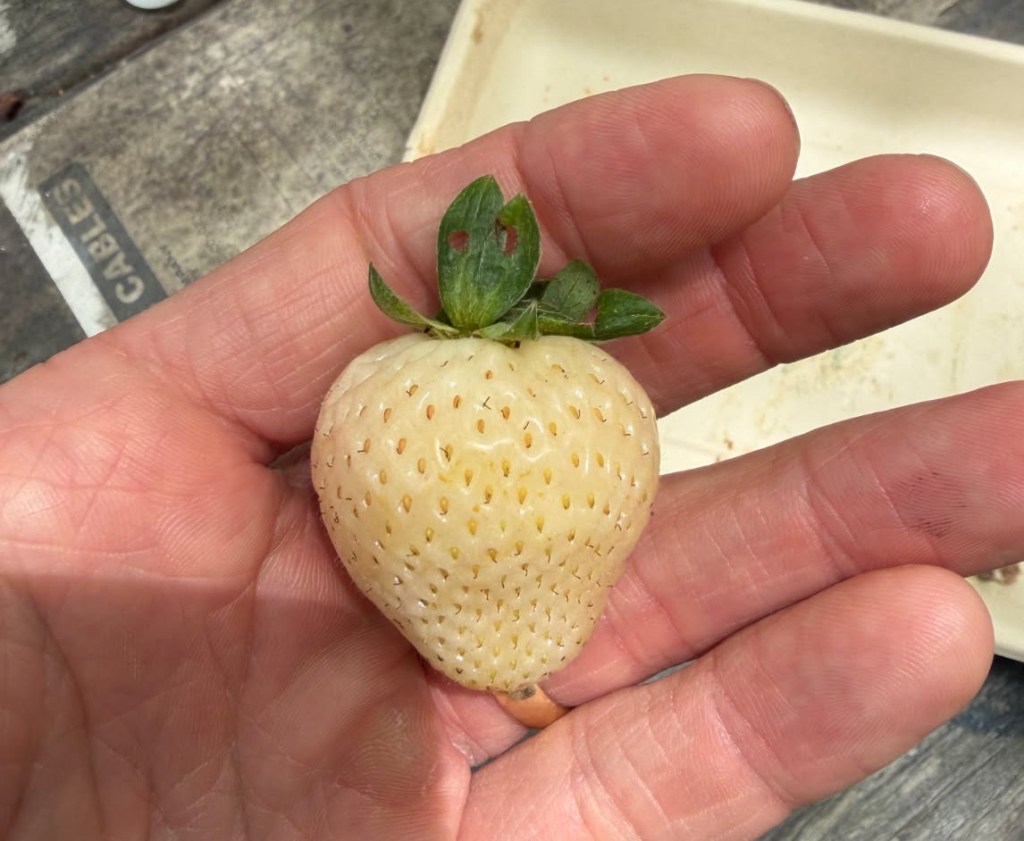
Answer in the comments below and check back on Thursday to see the answer.
Don’t forget to look at the Resources tab for links to crop handbooks, helpful websites, and related blogs. Have a great week!

