After several days of heat and humidity, the weather will be slightly cooler this week. Insect pressure has increased recently, including caterpillars, false chinch bugs, and stink bugs. Disease pressure has also greatly increased.
South Carolina farmers can receive a $100.00 stipend for completing a short survey on the 2026 Farmers Market Price Reports. Clemson Extension is coordinating a project to collect farmers’ market price data across the state. From April – September of this year, these reports are released biweekly. The newly released reports (as well as last year’s reports) can be found at the Extension webpage here: Farmers Market Price Reports. The survey link can be found here: Farmers Market Reports – Producer Survey
Key Takeaways for Growers This Week
- “Freestone” peach varieties are being harvested now
- Disease pressure has increased – especially gummy stem blight and anthracnose
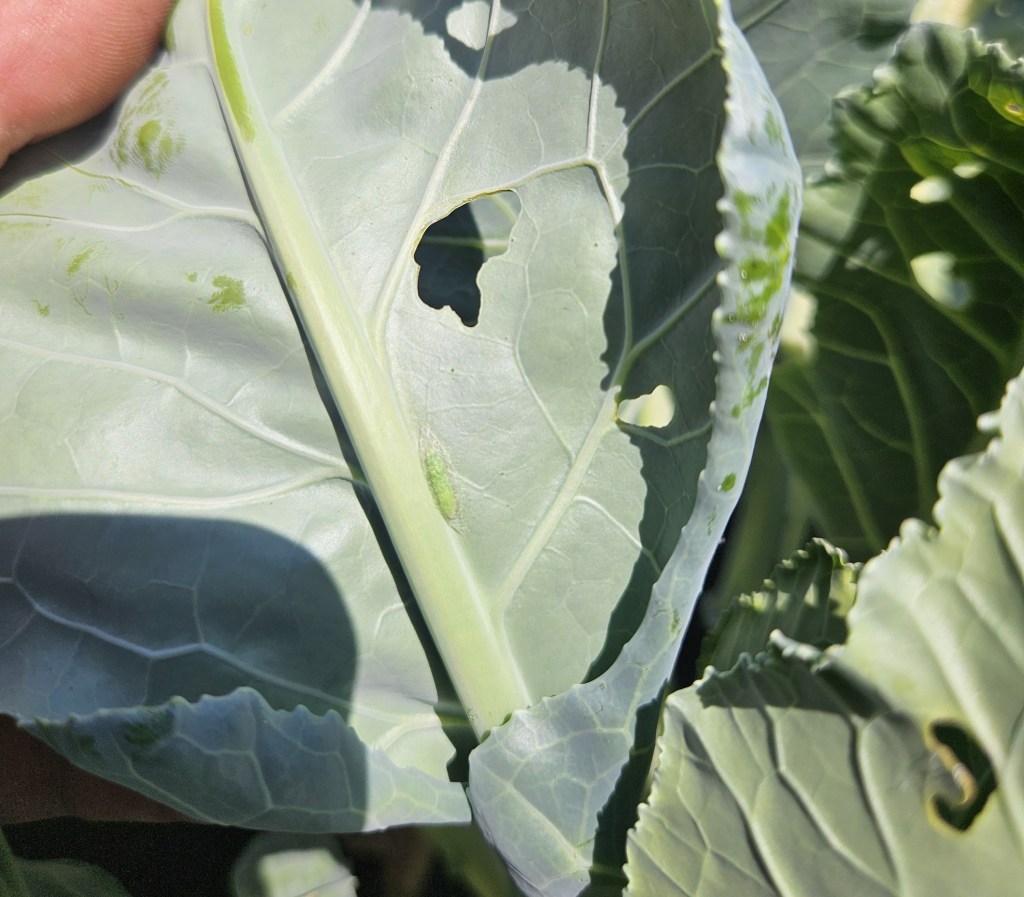
- Caterpillar numbers are high in greens – be sure to rotate insecticides
- Crops coming to harvest – peaches, blueberries, watermelons, squash, cucumbers, tomatoes, beans, blackberries, leafy greens, eggplant, peppers
The latest episode of the SC Grower Exchange Podcast is available now.
Lowcountry Report
Anna Sara Hill
- This week is expected to be a hot one, which is good for watermelons and cantaloupes that are sizing up and beginning to ripen.
- Most area growers are slated to start picking next week.
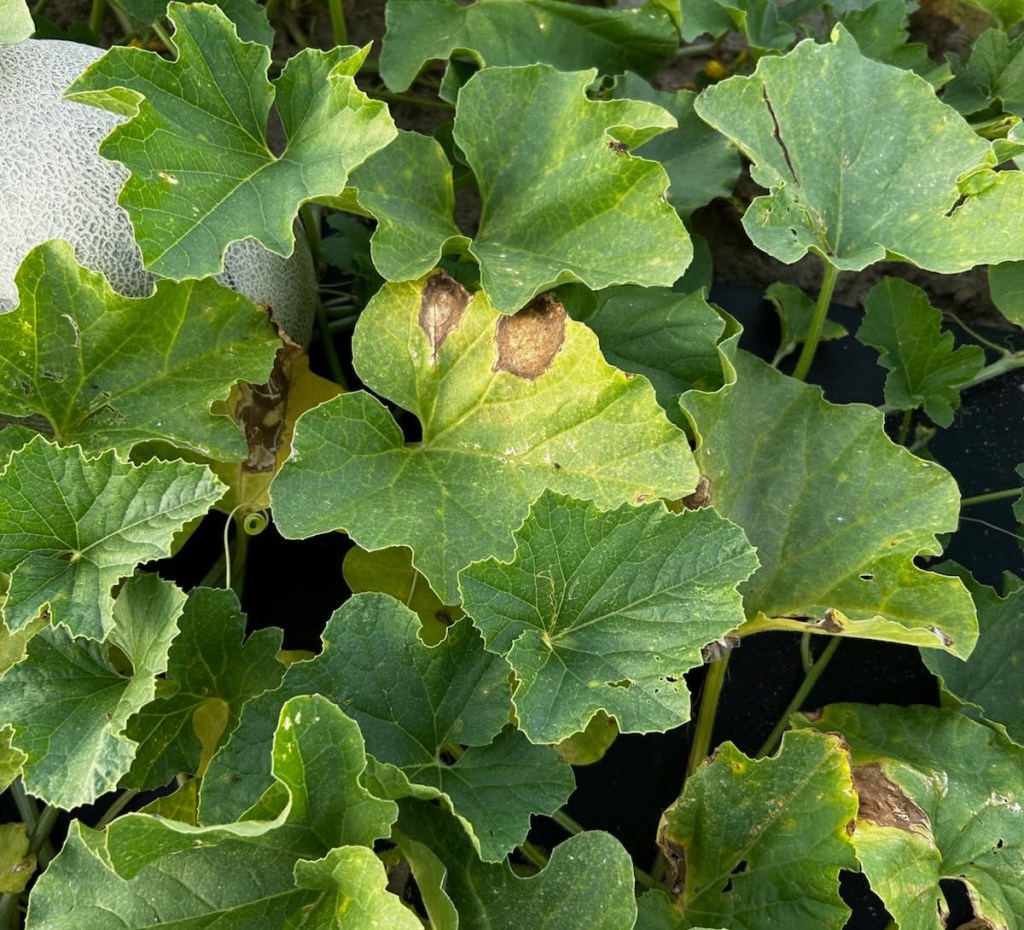
- Fields that received excessive rainfall at the end of May and the beginning of June dried out enough that growers were able to get into saturated fields this past week and assess the damage. As expected, the high humidity has caused many disease flare-ups.
- The most notable diseases observed were anthracnose and gummy stem blight.
- To control gummy stem blight, rotate Miravis Prime and Inspire Super according to label rates.
Midlands Report
Rob Last
- Temperatures in the Midlands have been high this past week, with increasing relative humidity and a chance of rainfall.
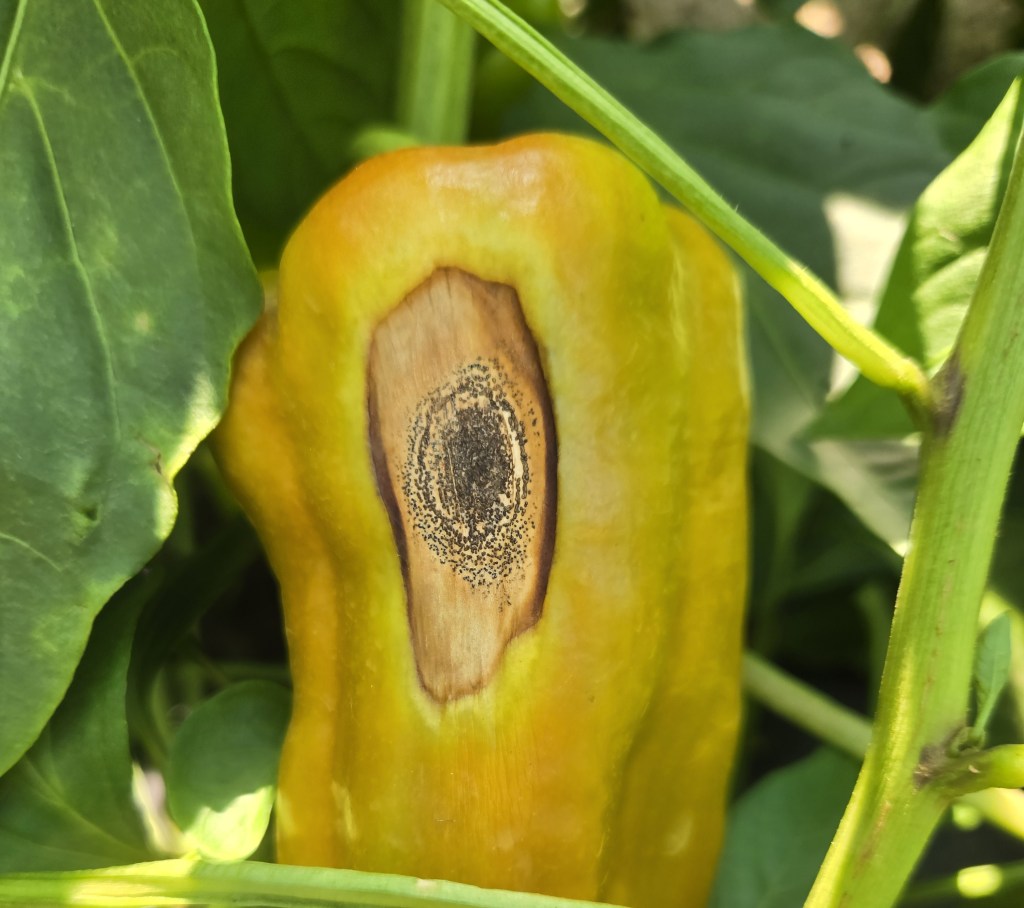
- Given the current weather patterns, pathogens are becoming more evident, with conditions particularly favorable for anthracnose.
- Colletotrichum scovillei, a subspecies of Colletotrichum acutatum, the pathogen responsible for pepper anthracnose, is particularly virulent on bell and banana peppers. If the weather remains dry and low-humidity, the pathogen may be held in check, allowing for additional harvests. However, any increase in humidity or leaf wetness makes the pathogen very difficult to control. With favorable conditions, the most effective management strategy is to harvest the field and destroy the plants. Any fungicide applications must be rotated and applied before visible symptoms are found. Cevya (mefentrifluconazole) may be a useful rotational option.
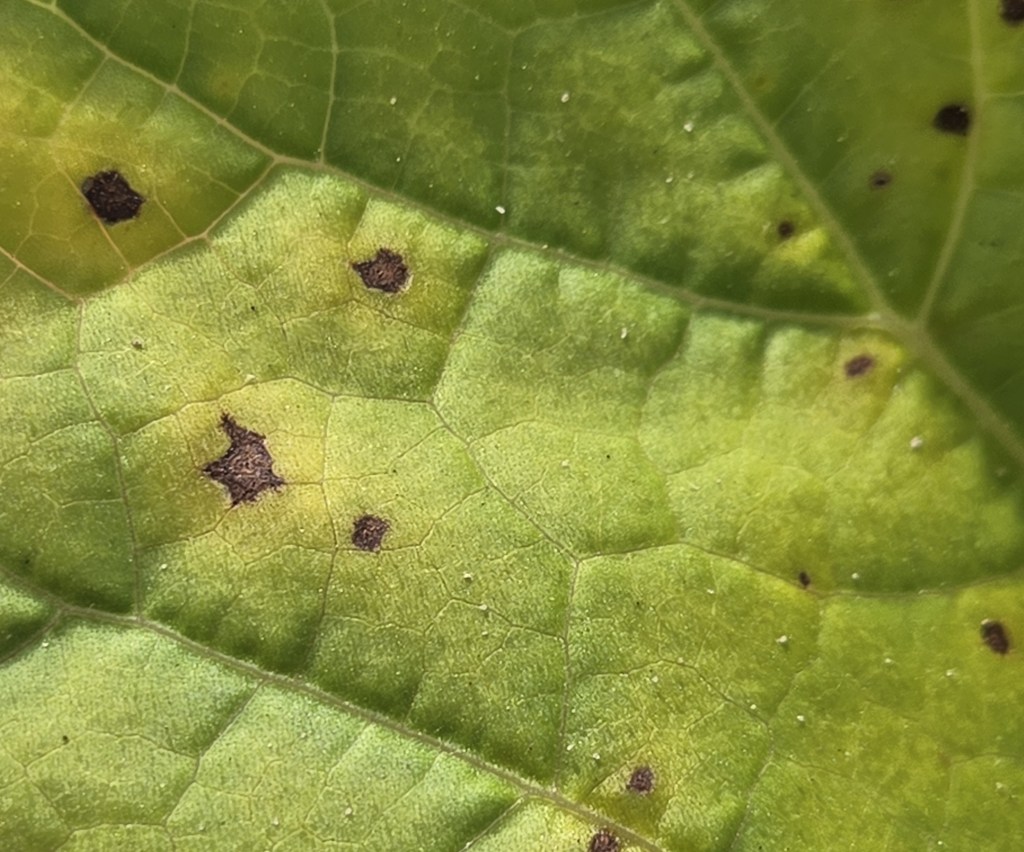
- In cucurbit anthracnose, leaf infections can increase spore load and, in turn, increase the potential for fruit infection. Young fruit is very susceptible to anthracnose infection, so fungicide applications are essential to protect developing fruit. Bravo (chlorothalonil), Quadris or Cabrio (azoxystrobin or pyraclostrobin), Proline (prothioconazole), Miravis Prime (Pydiflumetofen and fludioxonil), and Topsin M (Thiophanate-methyl) can be good conventional options. Always remember to rotate the modes of action and follow the label restrictions. The proline label limits applications to 1 drip application and 1 foliar application per year.
- Cucurbit downy mildew has been reported and confirmed on watermelons in North Florida and Cucumbers in Georgia; no reports yet in South Carolina. CDM is on the way, and now is the time to be prepared. Clade 1, which affects cantaloupe and cucumbers, is resistant to Revus (mandipropamid). Use Orondis Opti in cucumbers, NOT Orondis Ultra. Ranman (cyazofamid) Omega (fluazinam), Zampro (Ametoctradin and dimethomorph), Orondis Opti (Oxathiapiprolin and chlorothalonil) Bravo (chlorothalonil), Manzate (Mancozeb) and Previcur Flex (Fluopicolide) can be good options in cucumber and cantaloupes. Clade 2, the Squash and watermelon clade, is sensitive to Revus (mandipropamid). Orondis Ultra is a good option for Watermelon and Squash. Ranman (cyazofamid) Omega (fluazinam), Zampro (Ametoctradin and dimethomorph), Orondis Ultra (Oxathiapiprolin and mandipropamid) Bravo (chlorothalonil), and Manzate (Mancozeb) can all be good options.
Daniel Lyon
- Last week was very hot and humid, as expected.
- Bacterial pathogens and diseases are emerging across many fields. Continue to follow fungicide programs.
- Tomatoes are being harvested and are looking good. Remember to try to maintain even moisture in the beds to prevent blossom end rot. This may require multiple irrigation events per day.
- Okra is looking good. Scout for foliar-feeding beetles, such as Japanese beetles, and treat if needed.
- Diamondback moth and imported cabbage worm have wreaked havoc on summer greens like collards. A BT product like Xentari or Agree should help to control them.
- I have noticed an abnormal number of false chinch bugs in fields this year. They seem to be on everything I look at. They are almost never problematic, but in extremely high numbers, they can cause damage. Talk to your extension agent if you are unsure whether or not to treat.
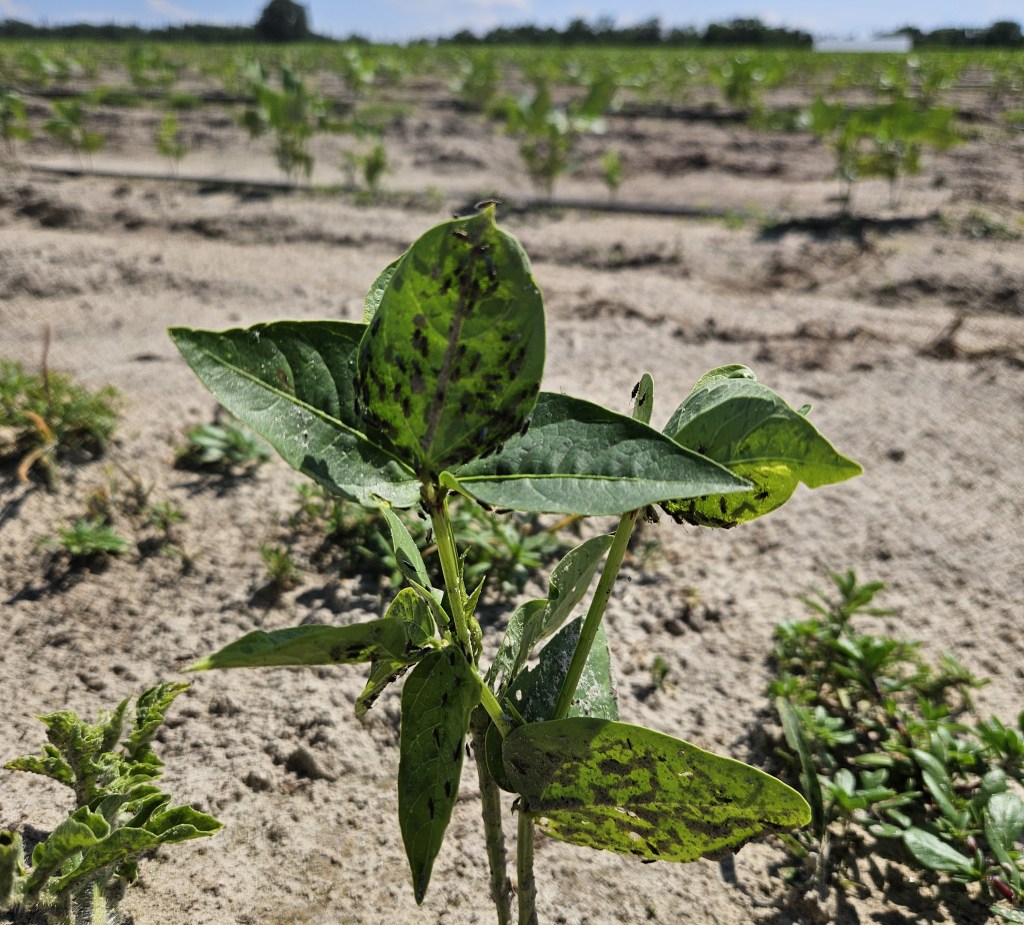
Sarah Scott
- We have reached “freestone” season. Peach varieties are running a little ahead of schedule along the Ridge. We’re seeing some brown rot in fields, but overall disease pressure has been relatively low to date.
- Thrips were heavy this year, but some growers are reporting that Zivalgo has been working very effectively on them.
- Blackberries are still being harvested. A good season so far, but we are beginning to see heavy stink bug damage in areas.
Question of the Week
Which of these two photos shows a caterpillar?
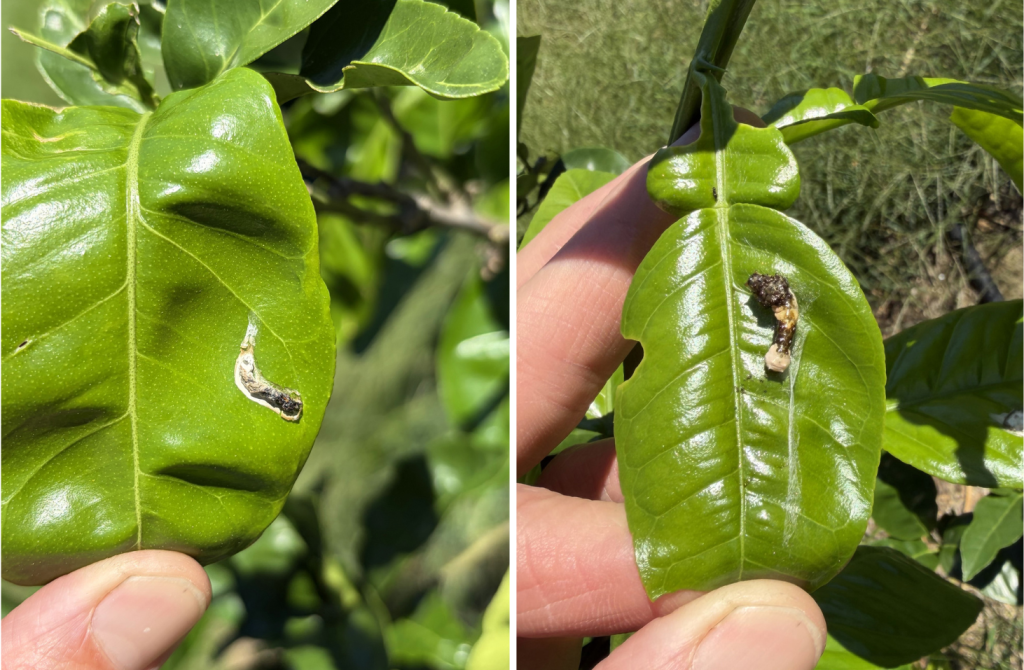
Answer in the comments below and check back on Thursday to see the answer.
Don’t forget to look at the Resources tab for links to crop handbooks, helpful websites, and related blogs. Have a great week!

