From Clemson Plant Pathologist Tony Keinath
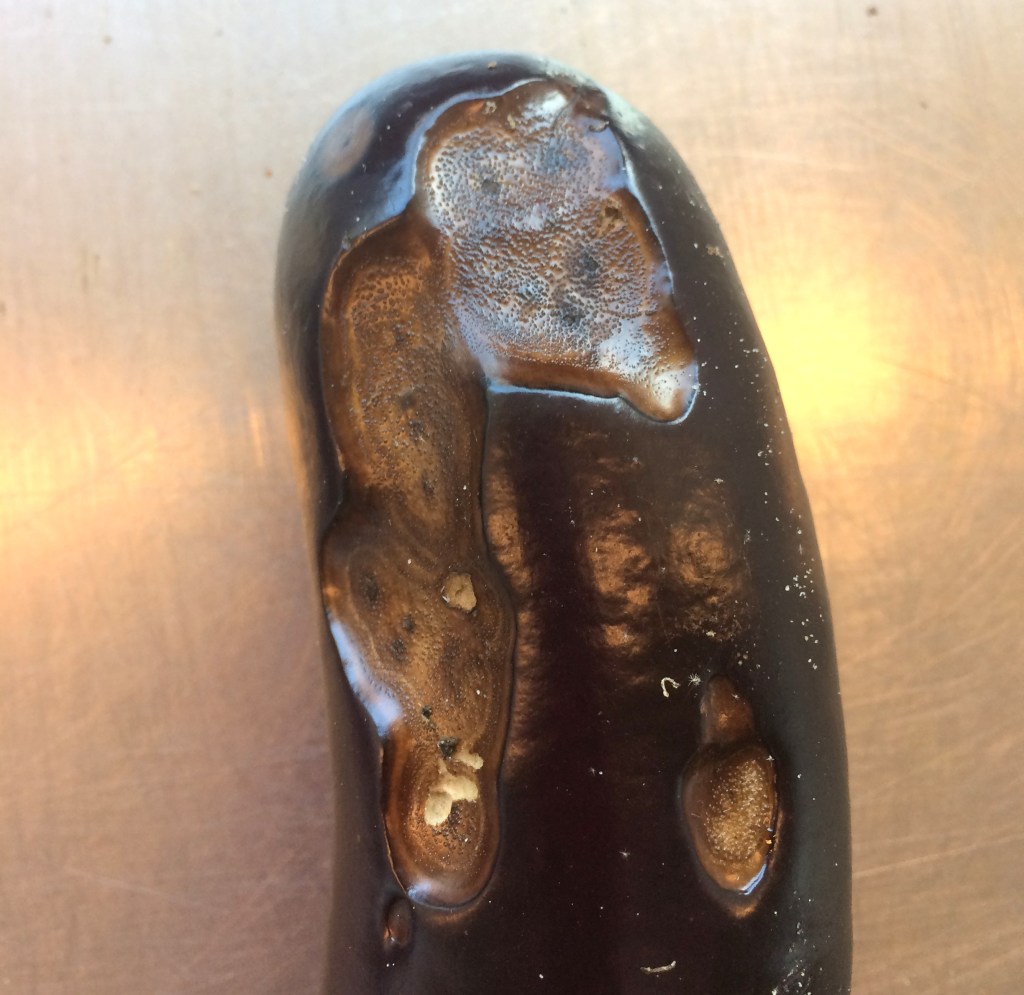
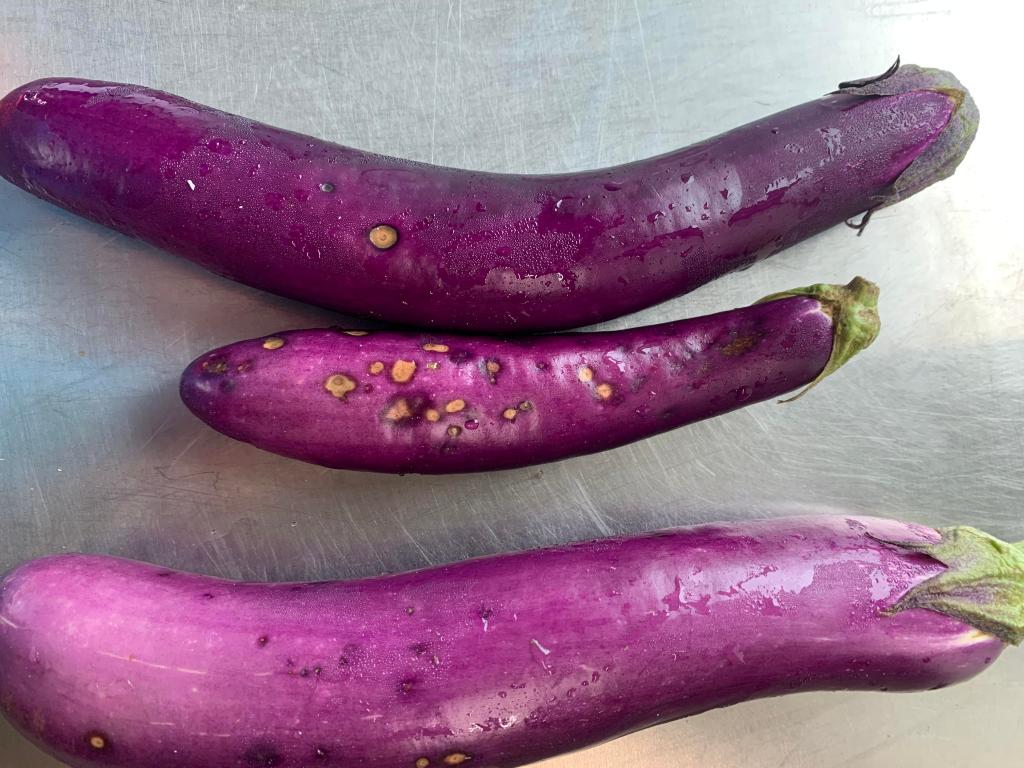
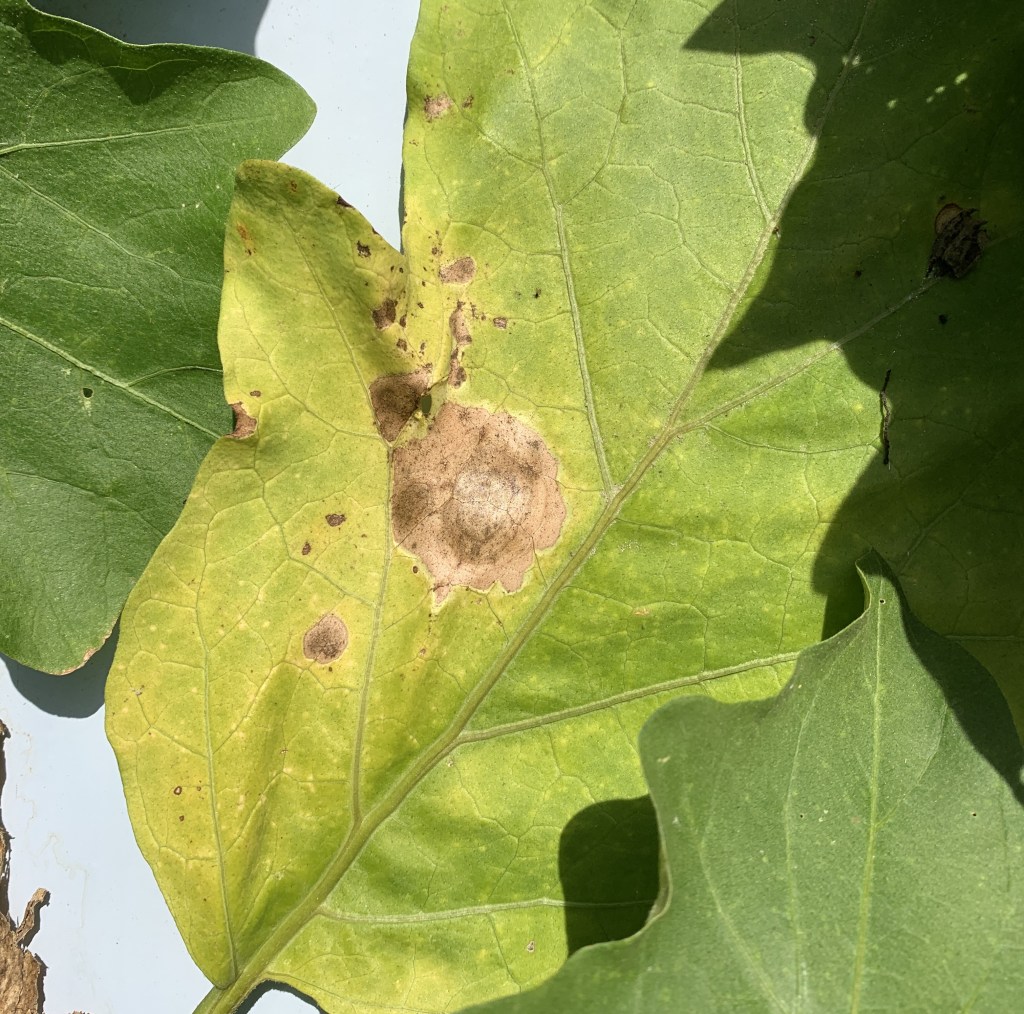
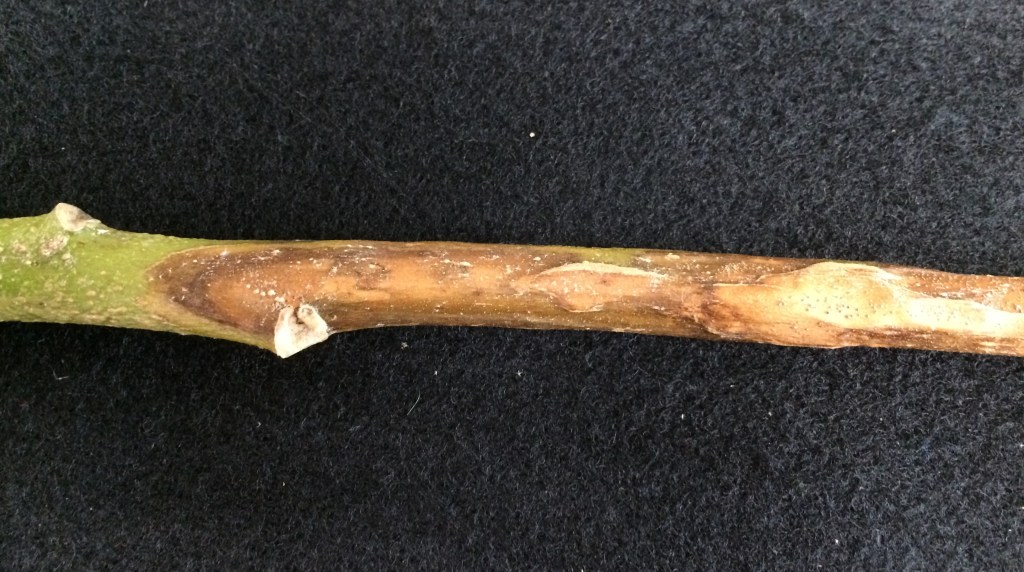
Phomopsis blight can be a serious disease on fall eggplant crops. Symptoms include leaf spots, branch cankers, and fruit rot. The fungus is most active at high temperatures and in wet weather. Raindrops splash spores from diseased plant parts to neighboring healthy plants.
- Leaf spots lead to chlorosis and defoliation.
- Stem cankers can kill branches.
- Infected fruits are the main source of spores produced in black fruiting bodies in the center of lesions.
- Fruit rot can develop postharvest on fruit that appears healthy but was exposed to spores.
Three conventional fungicides with FRAC Code 3 were most effective against Phomopsis leaf blight in trials at CREC in 2023, 2024, and 2025. Aprovia Top and Inspire Super worked very well (99% confidence interval), and Cevya worked well (95% confidence interval) (Figure 1). All tested fungicides were rotated with chlorothalonil at a low rate.
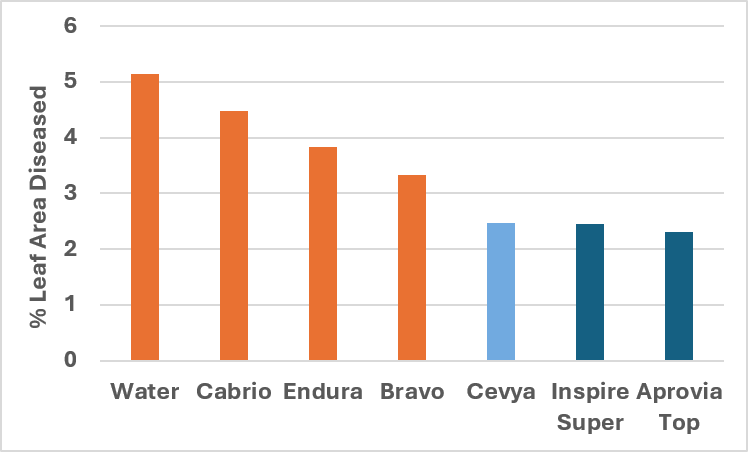
Cabrio, Endura, and Bravo did not differ from the non-sprayed control, but these fungicides will be needed in rotation if more than 2 applications of Aprovia Top and Inspire Super are made. Although rotations are not required with Cevya, it’s always a good idea to rotate 2 fungicides that have different FRAC Codes. Sample rotation programs are:
| Week 1 | Week 2 | Week 3 |
| Aprovia Top (3 + 7) | Aprovia Top | Bravo (M05) or Cabrio (11)* |
| Inspire Super (3 + 9) | Inspire Super | Bravo (M05), Cabrio (11), or Endura (7) |
| Cevya (3) | Cevya | Bravo (M05), Cabrio (11), or Endura (7) |
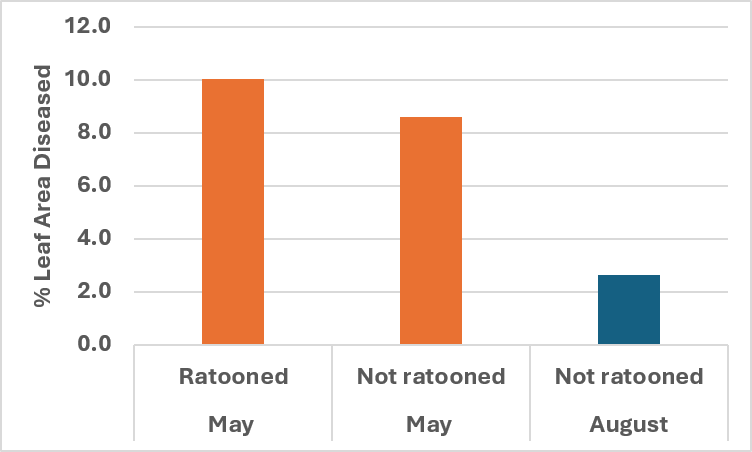
Phomopsis fruit rot did not develop in these trials with late summer-planted transplants, despite my best efforts to induce it, unlike the severe fruit rot that developed on ratooned plants in 2018 and 2019. Leaf spots were also more common on older plants, both ratooned and not ratooned, than on new transplants in 2025 (95% confidence interval) (Figure 2). Based on my observations, Phomopsis leaf blight is more common on fall ratoooned eggplants than on eggplants transplanted for a fall crop. This risk of disease should be considered when growers decide whether to ratoon spring crops or start fresh for the fall.
Other fungicides tested did not work well enough to be tested all three years. These include Zing!, Cymbol Advance, Priaxor, and Badge X2 copper, the only organic-approved fungicide labeled for Phomopsis blight.
This chart provides useful information to help you choose the right fungicides for your operation.
| Fungicide | Active Ingredient | PHI | FRAC Code | Sequential applications allowed | Max. Applications (High rate to low rate) | Cost/Application (high rate) |
| Aprovia Top | difenoconazole and benzovindiflupyr | 0 days | 3, 7 | 2 | 4 to 5 | $35 |
| Bravo | chlorothalonil | 3 days | M5 | any | 8 | $15 |
| Cabrio | pyraclostrobin | 0 days | 11 | 1 | 8 to 12 | $41 |
| Cevya | mefentrifluconazole | 0 days | 3 | any | 3 to 5 | $35 |
| Endura | boscalid | 0 days | 7 | 2 | 6 to 8 | $21 |
| Inspire Super | difenoconazole and cyprodinil | 0 days | 3, 9 | 2 | 4 to 5 | $47 |
To apply Aprovia Top or Inspire Super on eggplant, growers must download the 2(ee) label supplement from these websites. Under “Label Details,” click on the Special Labels tab, then choose your state. A 2(ee) label for Cevya is under consideration.

