We received a tiny bit of rain over the weekend, with more forecast for Thanksgiving. Disease is picking up some while insect pressure remains low. Growers will be picking plenty of greens this week in preparation for Thanksgiving sales.
Key Takeaways for Growers This Week
- A little rain fell over the weekend – Not enough to alleviate the drought
- Disease has begun to pick up – Especially black rot in brassicas
- Manage water carefully – Root rot develops quickly in saturated soil
- Have a Happy Thanksgiving!
Lowcountry Report
Anna Sara Hill
- Cooler temperatures and much-needed rain brought some relief to the area. The rainfall was enough to settle the dust, but not enough to alleviate drought conditions.
- Strawberries planted approximately three weeks ago are growing well. Some leaf spotting is present on older leaves; however, new growth appears healthy.
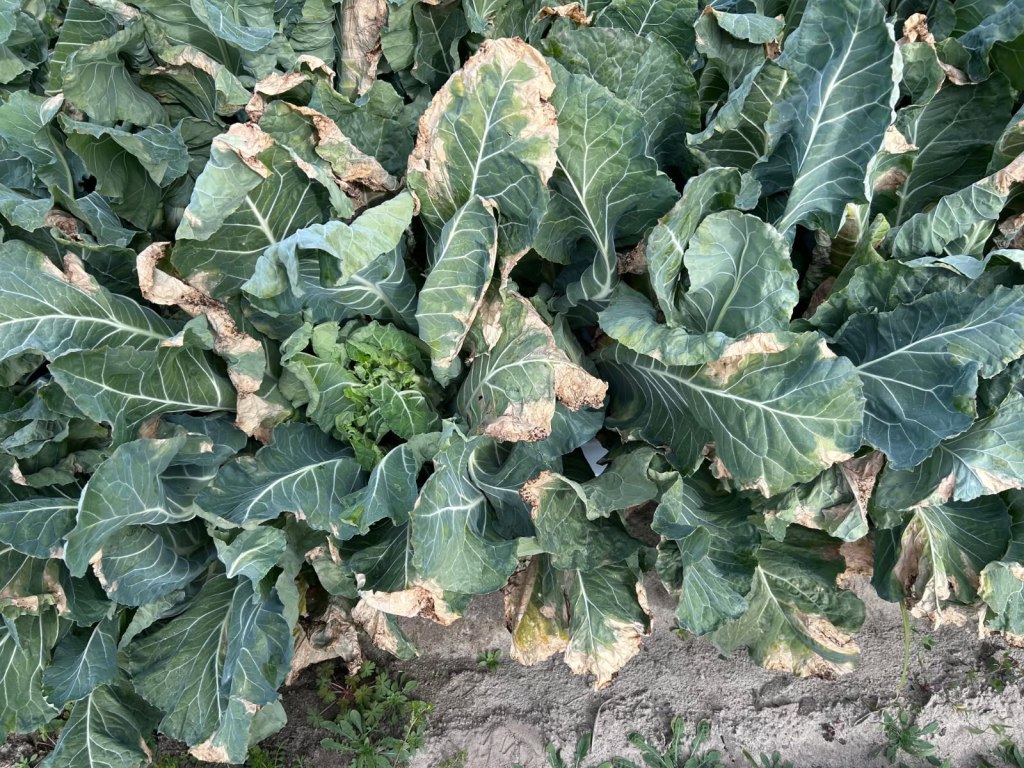
- In a field of late-developing cauliflower, plants showed V-shaped yellow lesions along the leaf margins, with tan necrosis and blackened veins in the affected areas. Symptomatic leaves were submitted to the laboratory and tested positive for black rot, caused by the bacterium Xanthomonas. The fungi Cladosporium and Alternaria were also found colonizing dead tissue in older lesions.
- The black rot pathogen is commonly introduced through infested seed or infected transplants and can survive between seasons in infested crop debris. It enters plants through wounds and natural openings, including stomata and hydathodes. To reduce the risk of introduction, inspect transplants for symptoms, use disease-free transplants and certified disease-free seed, and use new or properly sanitized trays for transplant production.
- Research trials have shown that chemical treatments provide inconsistent control of black rot. Fixed copper products may provide some suppression when applied early in the season, but cultural practices and sanitation are essential for disease management.
- In fields where black rot is established:
- Avoid clipping affected plants, as the bacterium can spread mechanically on tools and hands. It can also spread through splashing rain, dew, insects, and wind-blown plant debris.
- Avoid working in fields or handling plants when foliage is wet.
- Destroy crop residue by deep plowing soon after harvest.
- Rotate to crops that are not susceptible to black rot, and wait three to four years before planting brassicas in an infested field.
- Manage brassica-related weeds that may harbor the pathogen.
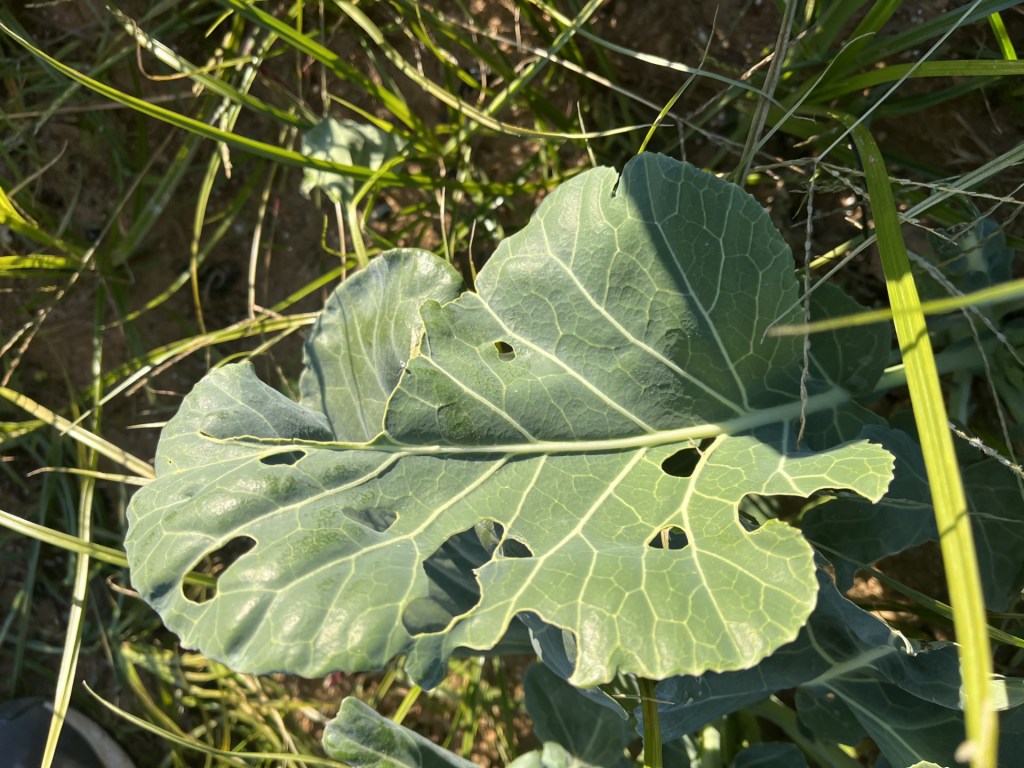
- Manage chewing insects, such as caterpillars, because feeding injuries can provide entry points for the bacterium.
Midlands Report
Daniel Lyon
- I received about ¼” of rain at my house over the weekend. Not a lot, but it was a slow soak, so most of it should have made it into the ground where we desperately need it.
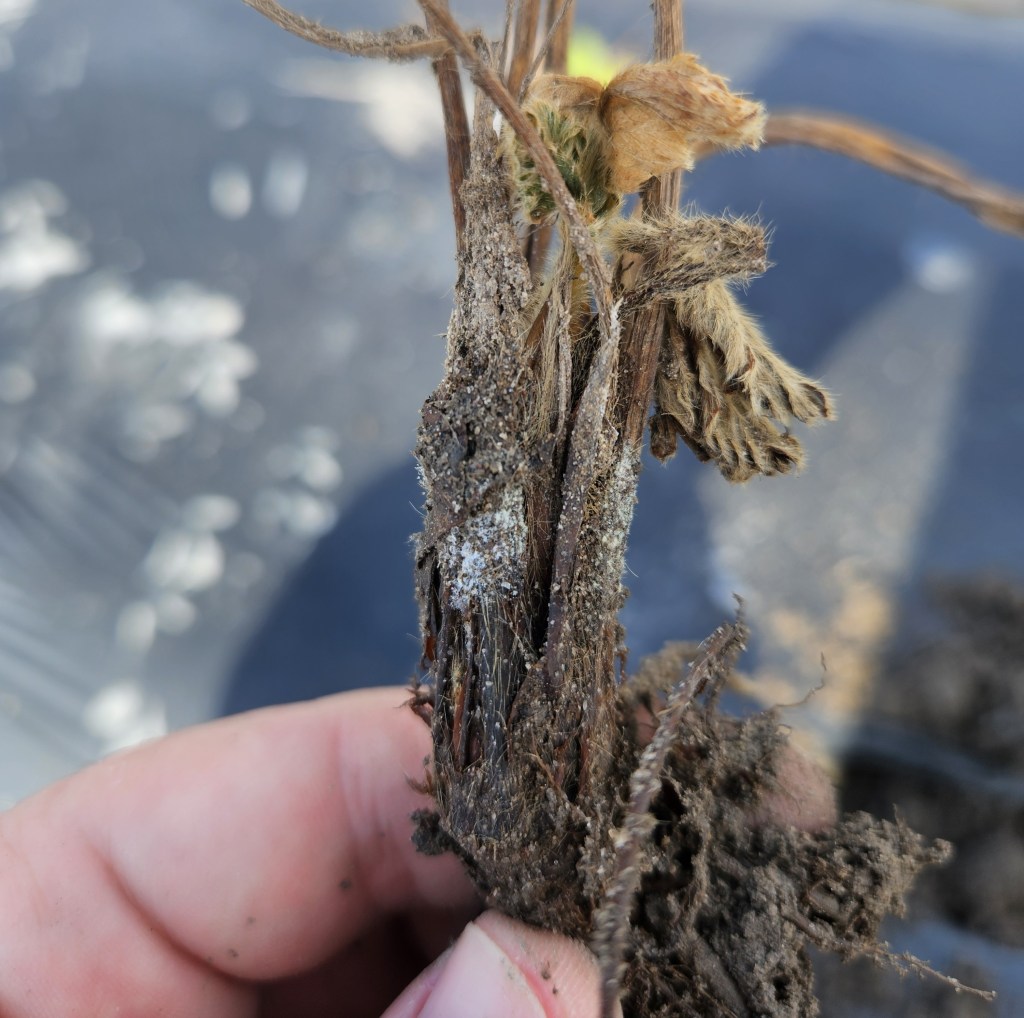
- It is important to observe soil conditions before every irrigation event. Overwatering can be just as damaging as underwatering. As temperatures drop and day length shortens, it will be more difficult to dry out saturated soils, especially in beds covered by plastic mulch. Oversaturated soils can create anaerobic conditions that stress transplants and invite pathogens to thrive on stressed plants.
Upstate Report
Samantha Brown
- A little rain was welcomed this weekend. While some areas received more than others, we will be thankful for the moisture. The forecast calls for a cool, rainy Thanksgiving, so be careful if you are traveling on the roads.
- Cooler weather has significantly slowed down pests, but it does not eliminate them. Keep an eye out for cabbage worms, aphids, and other insects hiding on the underside of leaves.
- Pay attention to overnight temperatures. Have row covers/frost cloths readily available for some of our more sensitive crops. While it doesn’t look like there will be any extremely low temperatures, it is always subject to change.
- Keep harvesting those leafy greens, and have a Happy Thanksgiving with friends and family.
Briana Naumuk
- Here in the Upstate, apple season has come to a close. Some growers may still be getting rid of their last remaining fruit for the year. Most have begun to look forward to winter chores. Now is a good time to begin planning for what needs to be done in the orchard. Things like pruning, invasive removal, and general orchard cleanup need to happen over the winter. Having a plan for when it needs to happen can make spring less stressful.
- Now is a good time for all growers to take soil samples in fields and orchards. This way, adjustments can be made over the winter to get things ready for the next round of planting. This is also a good time to fix things around the farm that haven’t been a priority during the busy growing season. It’s also a great time to give equipment that isn’t being used a good clean and servicing.
- We have already had our first spell of 30-degree temperatures in the Upstate. Cool-season veggies have taken center stage here. We have also gotten some good rain events this month. The top halves of both Pickens and Oconee counties are no longer in drought, although the bottom halves of both counties remain abnormally dry. These conditions are bound to change, so continue to check the weather and drought monitor.
Question of the Week
What caused the odd burn on the stem of this kale plant?
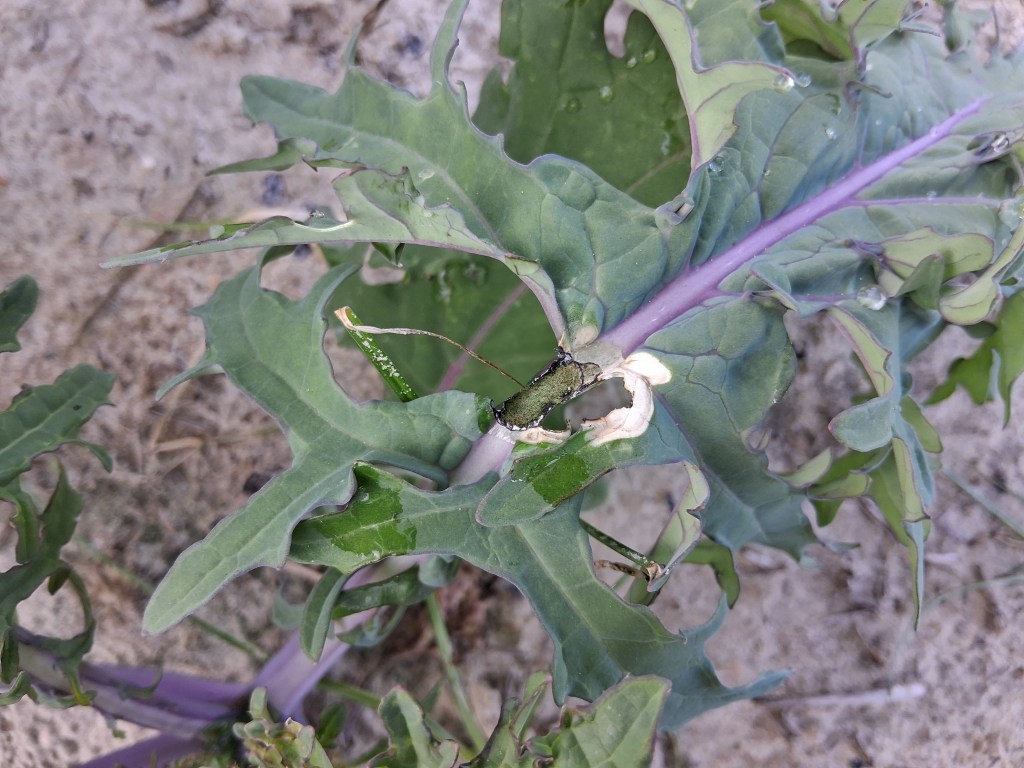
Answer in the comments below and check back on Thursday to see the answer.
Don’t forget to look at the Resources tab for links to crop handbooks, helpful websites, and related blogs. Have a great week!

