Category: Cucurbits
-
Seeking Stakeholder Input for New Fusarium Wilt Grant
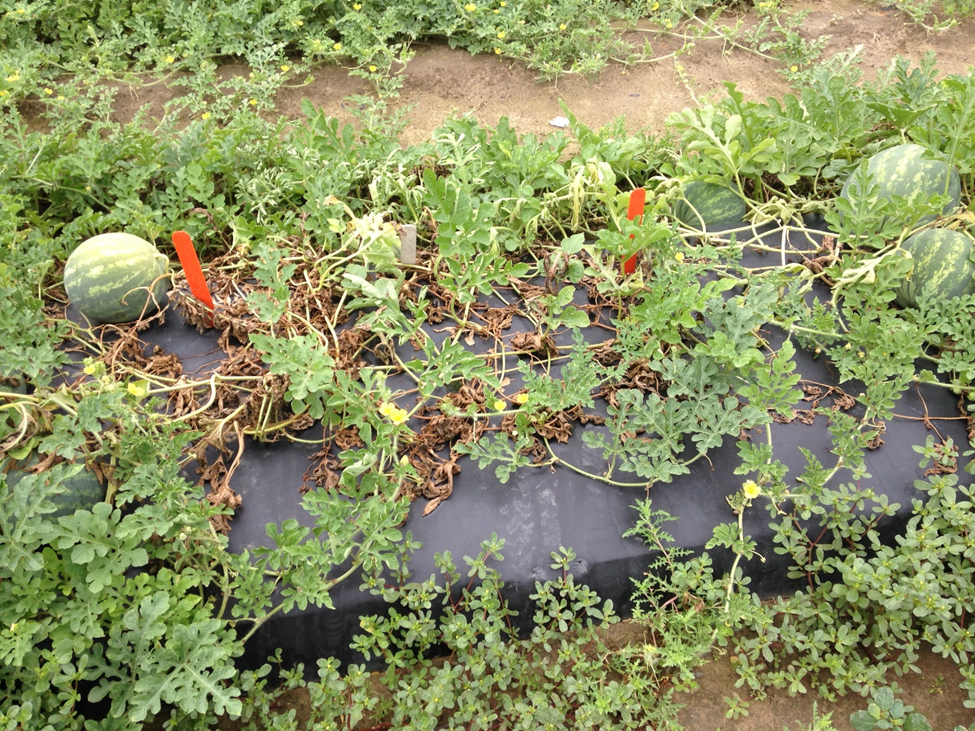
From Clemson Plant Pathologist Tony Keinath The USDA Specialty Crop Research Initiative (SCRI) funded as part of the Farm Bill provides multi-million-dollar grants to solve problems identified as priorities by specialty crop producers. Last year the USDA awarded a planning grant to the University of Florida to plan a grant proposal on Fusarium wilt of…
-
2023 Fusarium Wilt on Seedless Watermelon Experiment – Week 7 Observations
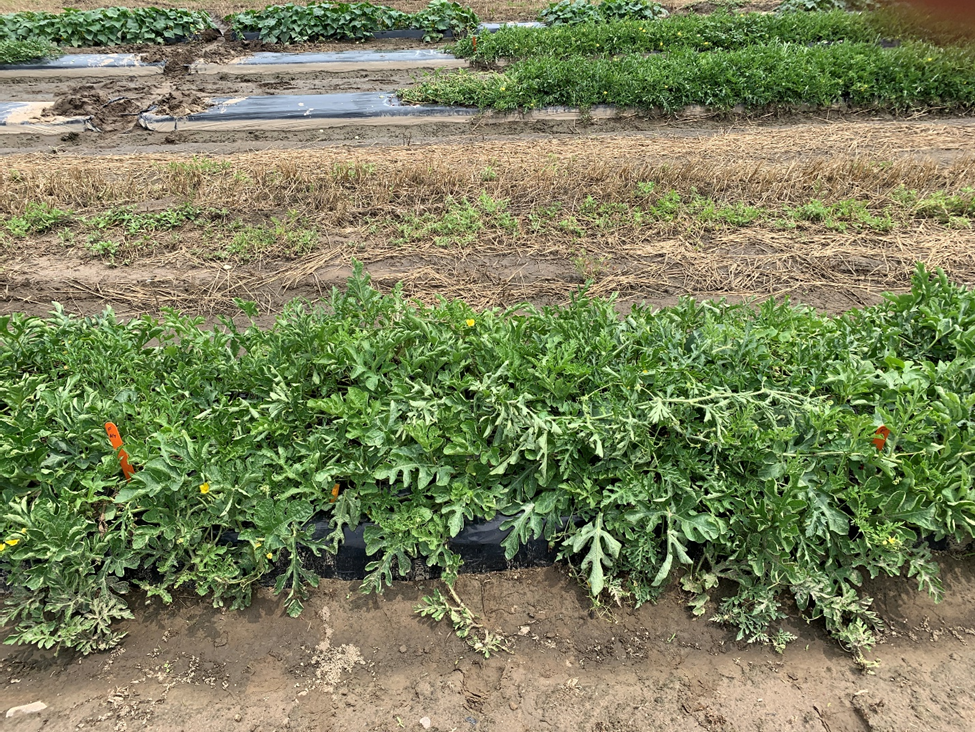
From Clemson Plant Pathologist Tony Keinath This year’s Fusarium wilt experiment includes 3 seedless cultivars, 3 fungicide treatments applied via drip irrigation, and grafting. This experiment is supported in part by a USDA SCRI grant. Transplants were set April 5 in a field infested with Fusarium races 1 and 2. These preliminary results are based…
-
Fungicide Sensitivity of Cucurbit Powdery Mildew in Charleston, SC

From Clemson Plant Pathologist Tony Keinath A fungicide sensitivity bioassay was done between June 1 and June 10, 2023, to find out which fungicides can be used against the current outbreak of powdery mildew on squash, watermelon, and other cucurbits. Methods: Yellow summer squash plants ‘Early Prolific’ with three true leaves were treated with one…
-
Cucumber Downy Mildew Found in Charleston, SC
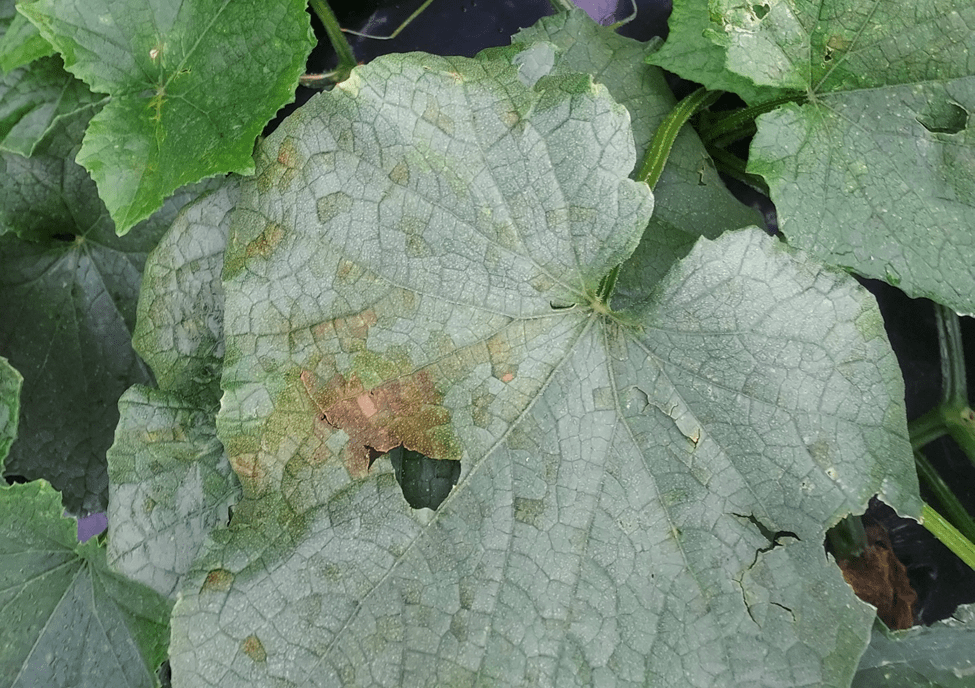
From Clemson Plant Pathologist Tony Keinath One of the rainstorms the latter part of last week (the week of June 5) brought cucumber downy mildew spores with it to Coastal REC. On June 12, the most susceptible cucumber cultivar, Straight 8, already had 50% diseased leaf area. This amount of disease suggests that the infection…
-
Urgent: Powdery Mildew Found on Watermelon in Charleston, SC

From Clemson Plant Pathologist Tony Keinath. Powdery mildew was found on three cultivars of seedless watermelon at the Clemson Coastal REC on May 23, 2023. All watermelon crops in South Carolina should be 1) scouted for powdewry mildew and 2) if found, sprayed to prevent powdery mildew from reducing yields by up to 40%. When…
-
2023 Fusarium Wilt on Seedless Watermelon Experiment – Week 5 Observations
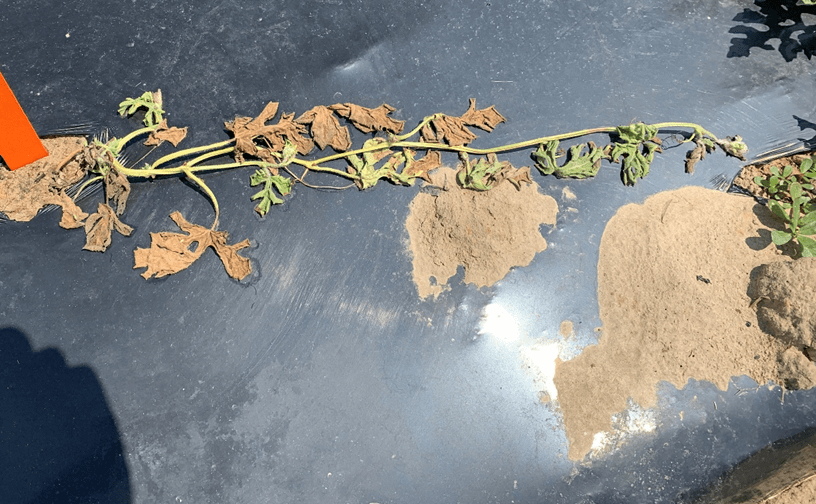
From Clemson Plant Pathologist Tony Keinath This year’s Fusarium wilt experiment includes 3 seedless cultivars, 3 fungicide treatments applied via drip irrigation, and grafting. (This experiment is supported in part by a USDA SCRI grant.) Transplants were set April 5 in a field infested with Fusarium races 1 and 2. Right on schedule, symptoms of…
-
Cucurbit Downy Mildew Found in SC
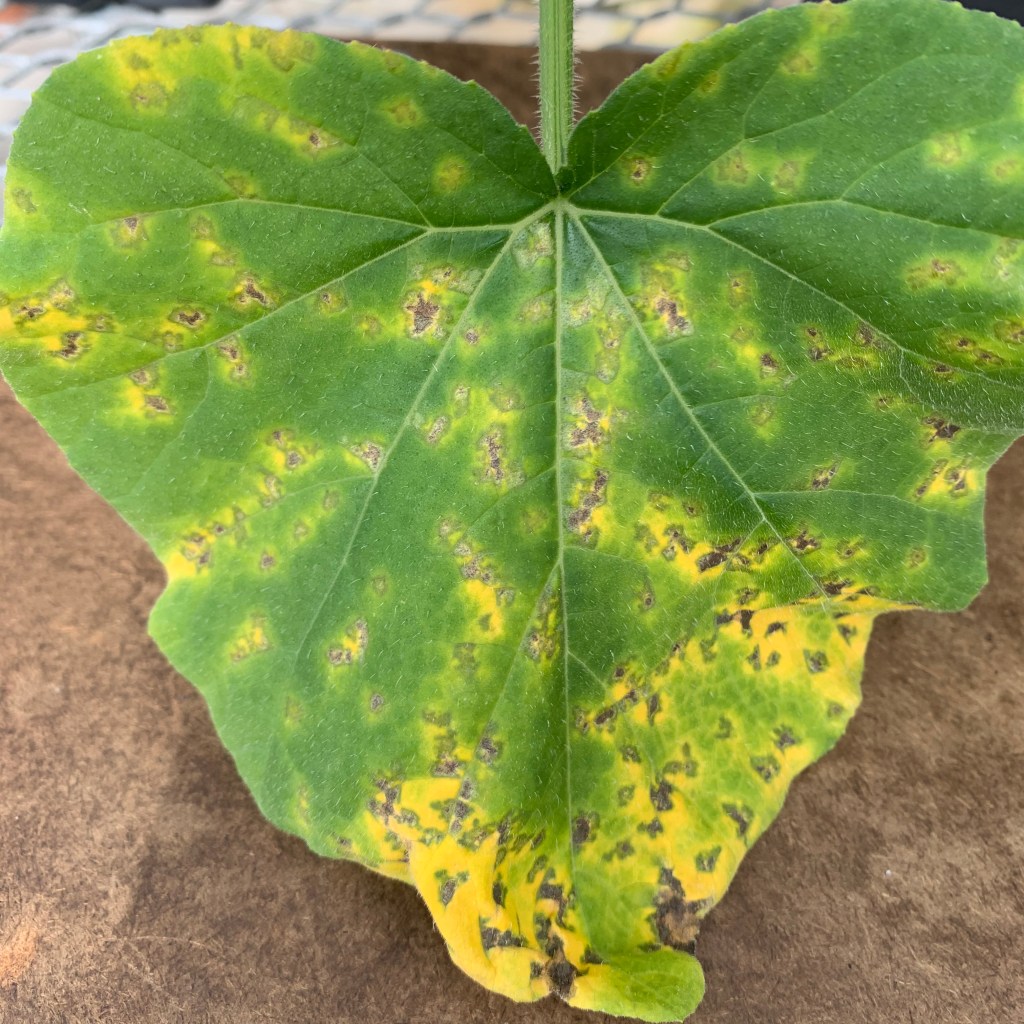
Prepared by Rob Last, Justin Ballew, and Tony Keinath. Cucurbit downy mildew was identified in South Carolina on 5/12/23. The identification came from butternut squash grown in a sentinel plot at the Coastal REC in Charleston. The same strain that affects butternut squash also affects watermelon and summer squash. Now that downy mildew has been…
-
2023 Fusarium Wilt on Seedless Watermelon Experiment – Week 3 Observations
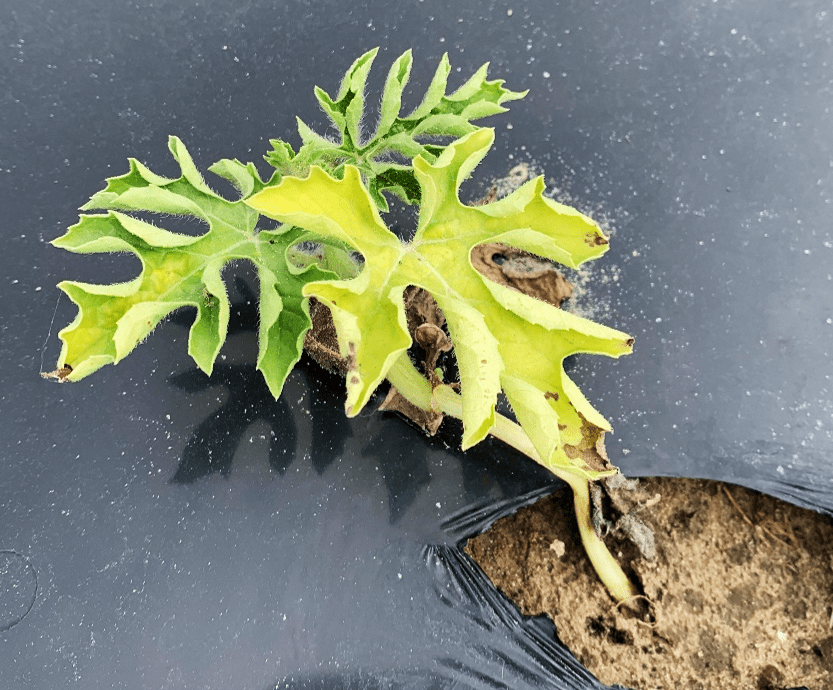
From Clemson Plant Pathologist Tony Keinath This year’s Fusarium wilt experiment includes three seedless cultivars, three fungicide treatments applied via drip irrigation, and grafting. This experiment is supported in part by a USDA SCRI grant. There also is a side experiment with SP-7 pollenizers grafted onto ‘Carolina Strongback’ rootstock and non-grafted SP-7 supported in part…
-
Pythium Damping-Off of Seedless and Pollenizer Watermelons
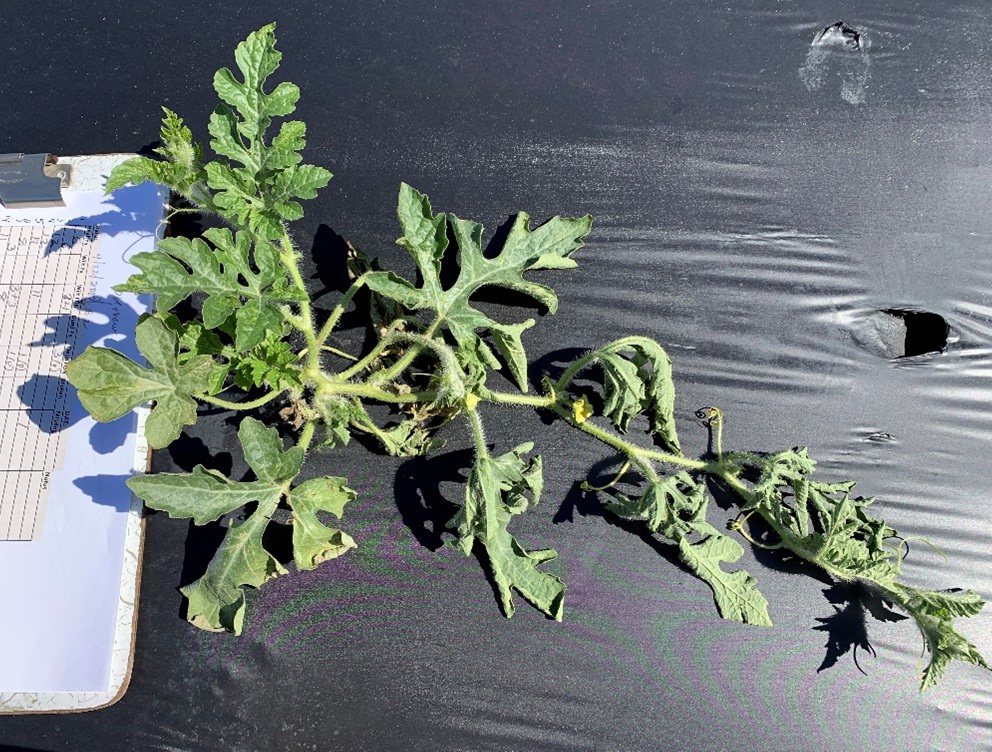
From Clemson Plant Pathologist Tony Keinath. Stand loss in transplanted spring seedless watermelons is usually not a serious issue in South Carolina, due to relatively sandy soils in the major production areas. Two pathogens that can cause post-transplanting damping-off and plant death are the fungus Fusarium and the water mold Pythium. Fusarium can kill seedlings…
-
How Seedless Watermelon Cultivars React to Fusarium Wilt: Average Results of 2021 and 2022 Trials
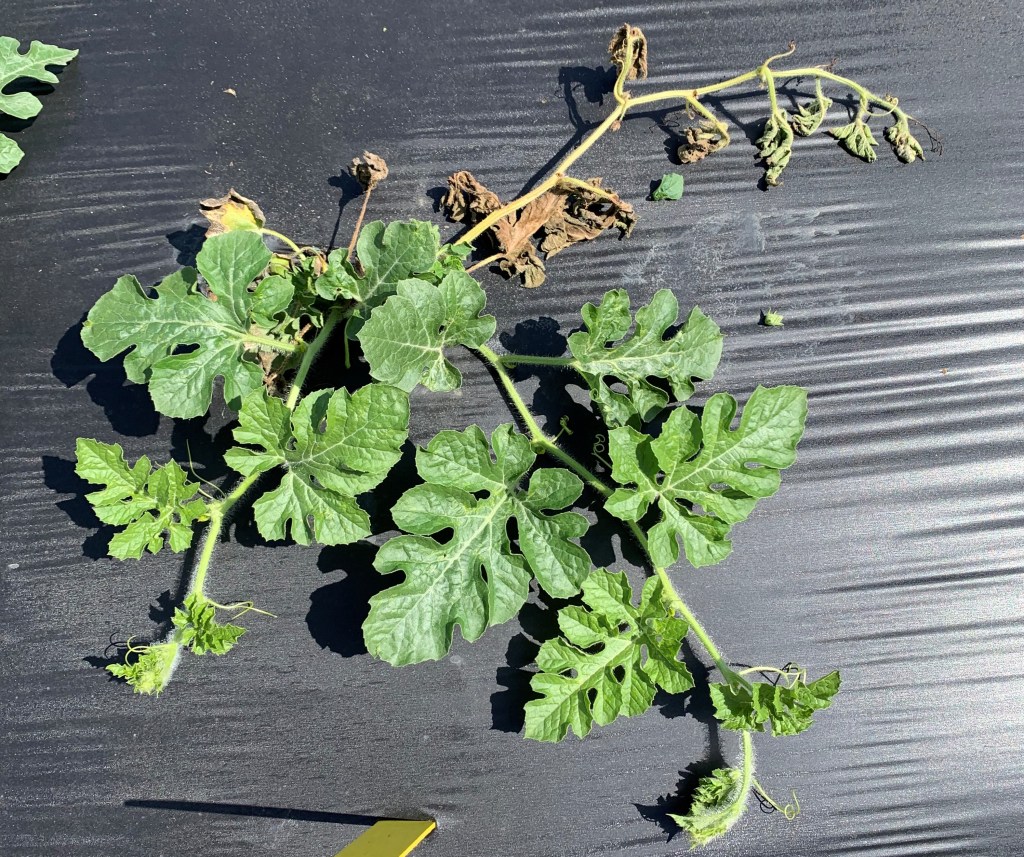
From Tony Keinath, Extension Vegetable Pathologist. As part of a large USDA Specialty Crop Research Initiative grant, I have been working with Dr. Jonathan Schultheis, Horticulturist at NCSU, to evaluate seedless watermelon cultivars grown in plots naturally infested with the Fusarium wilt fungus. The South Carolina trials were done in my Fusarium-infested field at the…
 The South Carolina Grower