Category: Question of the Week
-
Question of the Week – Aphid Mummies
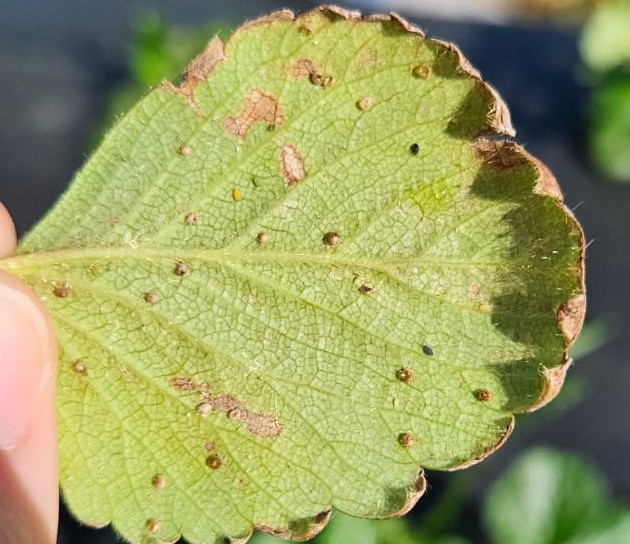
What is on the underside of this strawberry leaf? These round, tan objects are aphid mummies, the remains of aphids that have been parasitized and killed by tiny wasps. Due in part to parasitoid wasps, insecticide treatments are rarely needed for managing aphids in strawberries. These wasps prey upon aphids by inserting an egg into…
-
Question of the Week – Lady Beetle Larva
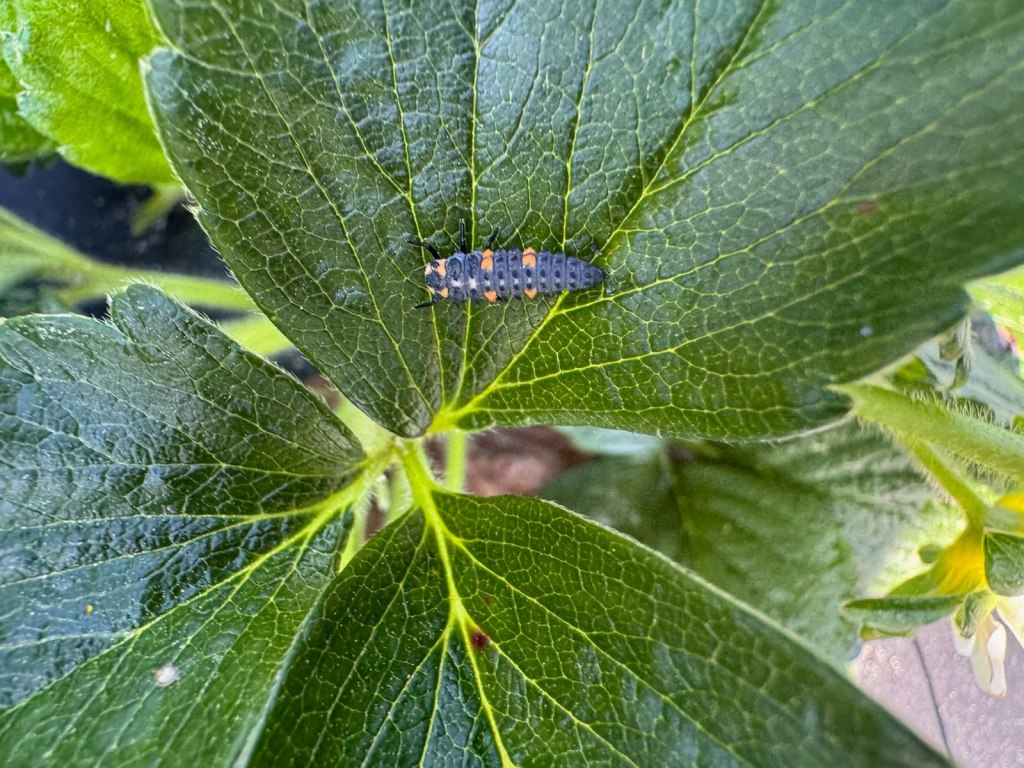
What is this wild-looking critter? This is a lady beetle larva. While it might look strange and undesirable, it’s actually a good thing to find in the field. These larvae, like the adults, have quite an appetite and can help control certain pest populations, especially aphids. Encouraging beneficial insects by avoiding broad-spectrum insecticide applications is…
-
March Grower Spotlight – Strawberry Hill

Where is Andy visiting this week? Andy is visiting Strawberry Hill USA, located in Chesnee, SC. Strawberry Hill is owned and operated by James and Kathi Cooley and their 4 daughters. This large produce farm grows 100 acres of strawberries, approximately 800 acres of peaches, and some commercial blackberries. They also grow a variety of vegetables,…
-
Question of the Week – Cold
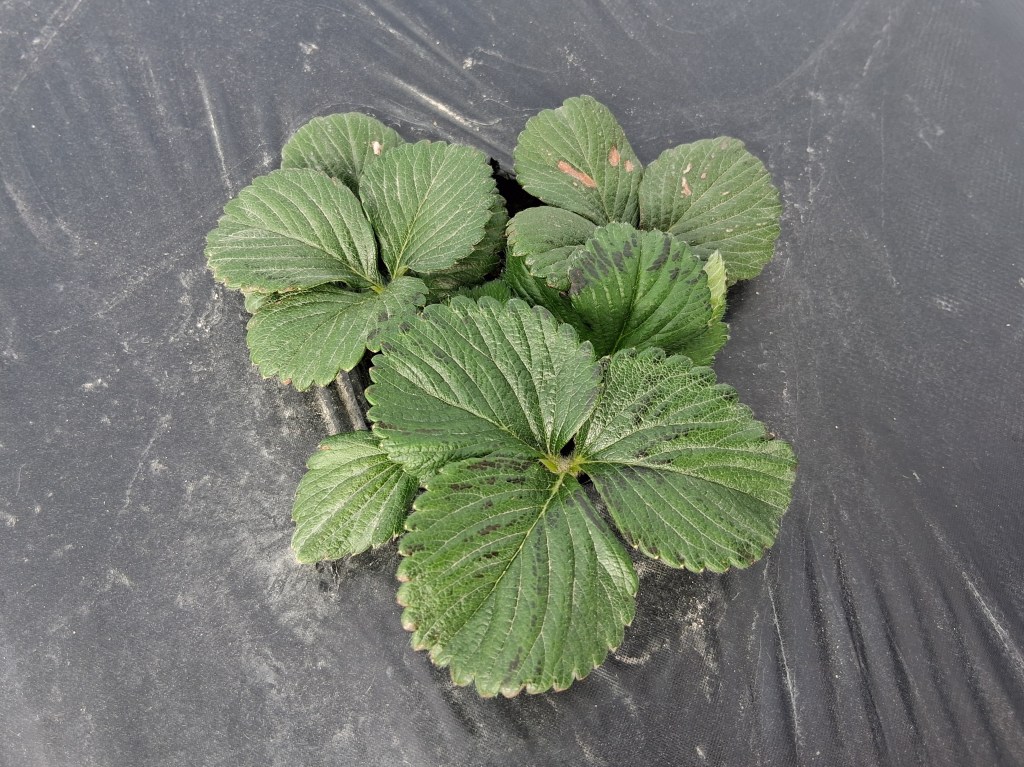
What caused the darkened (black-looking) patches on these strawberry leaves? This darkening occurred where the row covers were contacting the leaves during a cold event. While plants throughout the field sustained minor foliar burns from the cold, the row covers successfully protected the crowns. The new growth looks fine, and the plants will quickly grow…
-
Question of the Week – Aphids
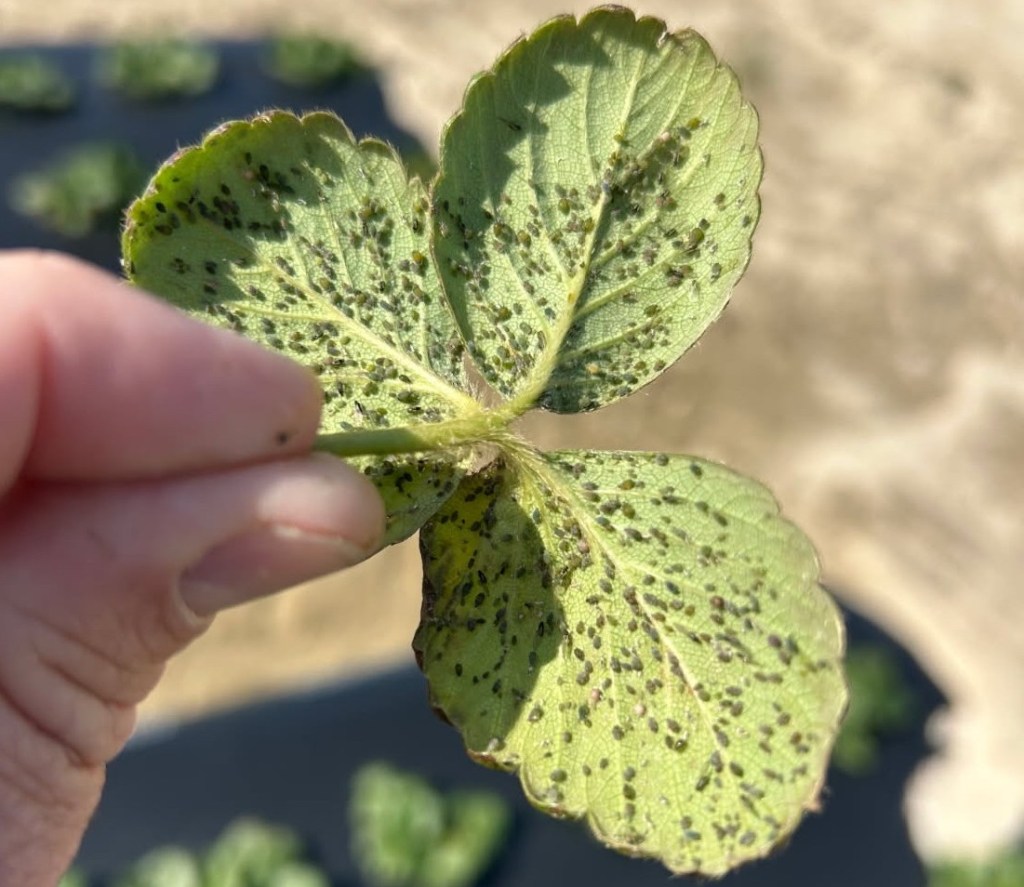
What is all over the underside of these strawberry leaflets? These leaflets are infested with aphids. Finding aphids on strawberry plants is common this time of year, especially on plants that have been covered to protect them from the cold. Aphids rarely warrant an insecticide treatment. Even at the level shown in the picture, beneficial…
-
Question of the Week – Botrytis
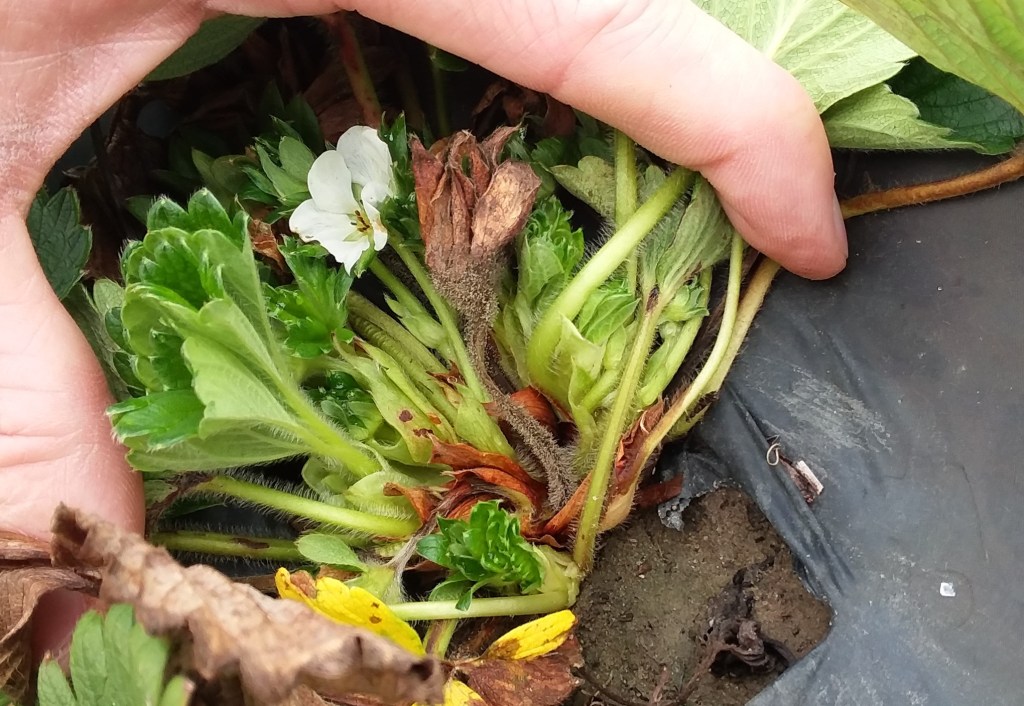
What is the greyish-brown, fuzzy stuff on this dead strawberry blossom? This this fuzzy-looking growth is grey mold caused by Botrytis cinerea. Grey mold is one of our most serious fruit rot diseases of strawberries that we see every single year in every single field. In addition to developing on fruit, grey mold can develop…
-
February Grower Spotlight – Hickory Bluff Berry Farm
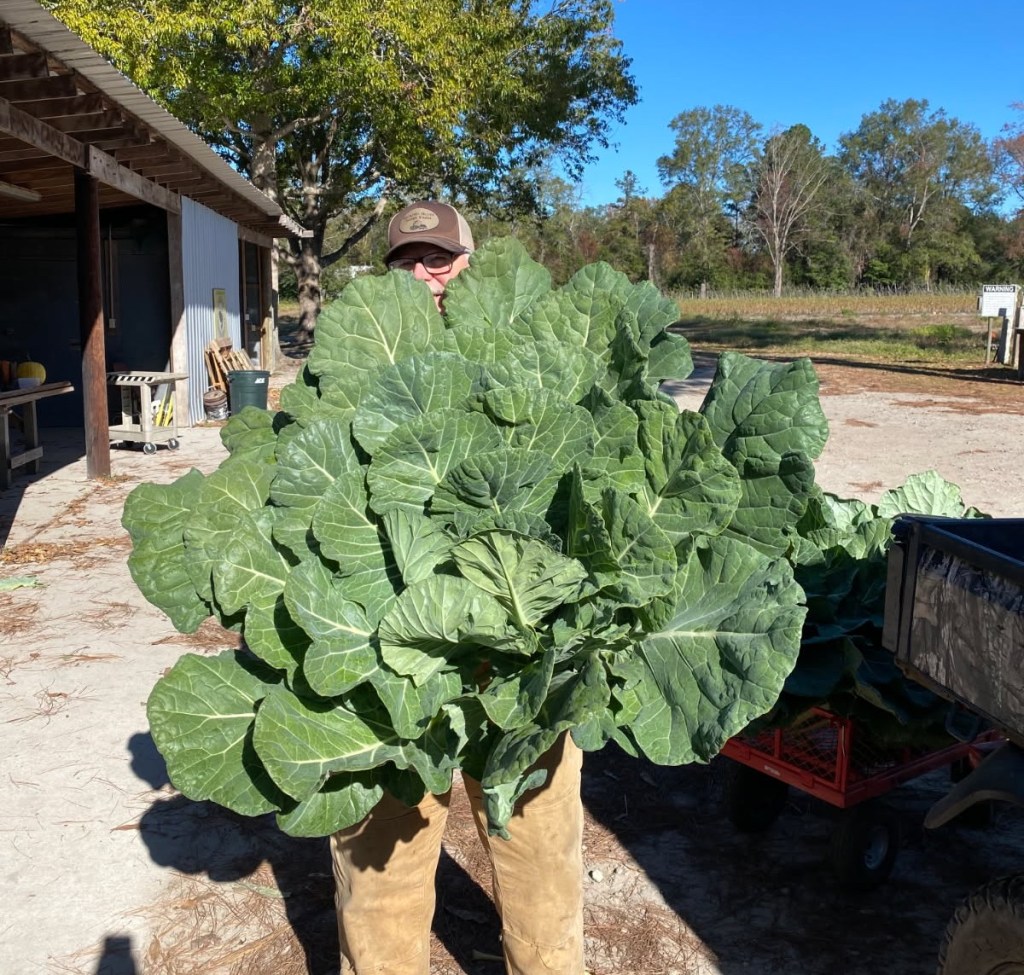
Where is Zack visiting this week? Zack is visiting Hickory Bluff Berry Farm located just outside of Holly Hill, SC, in Berkeley County. Hickory Bluff is owned and operated by Michael and Karen Parker. The farm offers a wide range of produce throughout the growing season, though as you might guess, their specialty is berries. They…
-
Question of the Week – Parasitism
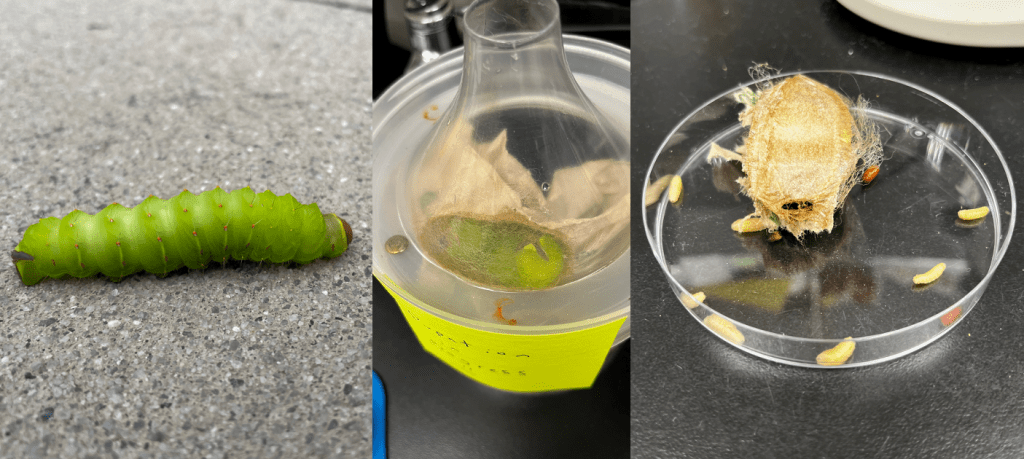
What is happening to this polyphemus moth cocoon? Unfortunately, I’ll not be rewarded with a large, beautiful Polyphemus moth this spring, as this caterpillar was parasitized by a Tachinid fly. Most of the time, when you hear about caterpillars being parasitized it is by small parasitoid wasps. Tachinidae is a diverse family of parasitic flies that…
-
Question of the Week – Goumi Berry
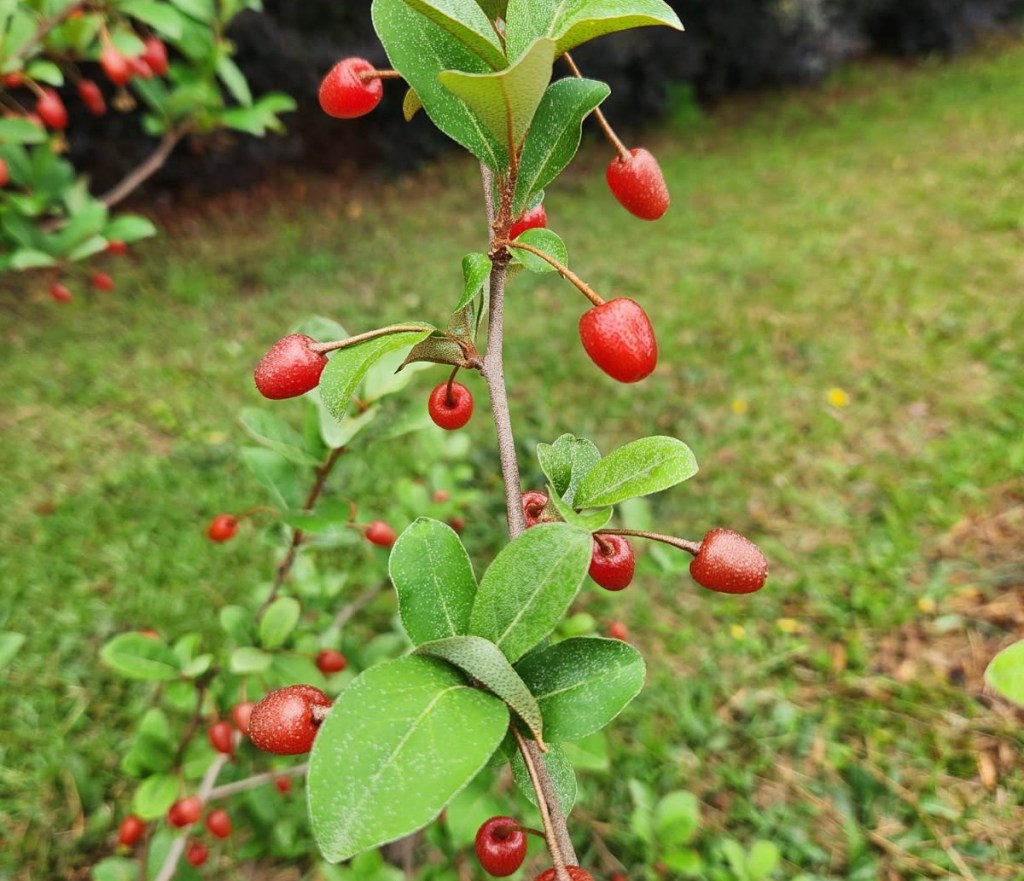
What kind of fruit is this? This unusual fruit is a goumi berry (Elaeagnus multiflora). Goumi berries are native to Asia and have a sweet and somewhat tart flavor that has been compared to rhubarb. The berries are harvested in the summer and are best used fresh, as they are fairly soft and do not…
-
Question of the Week – Spanish Moss
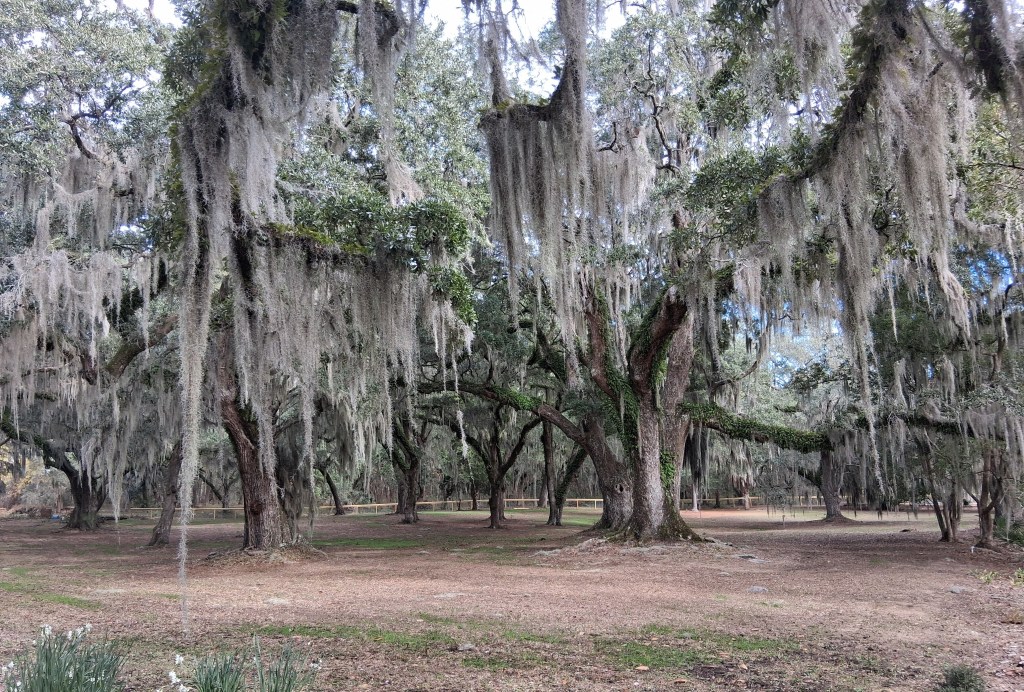
What year did the Spanish introduce Spanish moss to North America? This week’s question was a trick, as Spanish moss is neither Spanish nor a moss. Spanish moss (Tillandsia usneoides) is a flowering epiphyte (a plant that grows on another plant, but is not parasitic) that is native to the Southeastern US and parts of…
 The South Carolina Grower