Category: Question of the Week
-
Question of the Week – Armyworm Egg Mass

This week, the question was: What is this on this tomato leaf? This is an armyworm egg mass, possibly from the beet armyworm (Spodoptera exigua). The beet armyworm is a pest of vegetables across the Southern US. In warm weather, these eggs will hatch in only 2-3 days. Young caterpillars are slow to disperse and…
-
Question of the Week – Corn Earworm
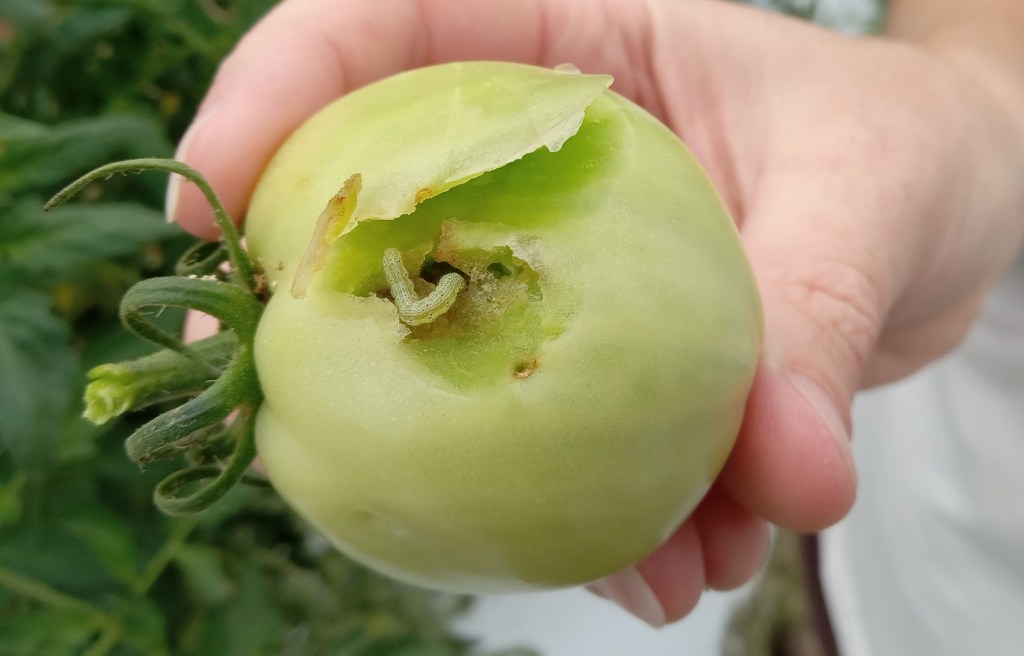
This week, the question was: What caterpillar is this that was found boring into a tomato? This is a corn earworm (Helicoverpa zea). This common caterpillar pest is known by other names, including tomato fruitworm, cotton bollworm, and soybean podworm. Corn earworms are considered to be one of the most economically important insect pests in…
-
Question of the Week – Vetch

This week, the question was: What is this weed that is starting to show now up in vegetable fields? This is common vetch (Vicia sativa). Vetch is a cool-season weed that begins germinating in the fall and begins blooming in the winter, peaking in the spring. Vetch is in the legume family, making it capable…
-
Question of the Week – Pineapple Guava

This week, the question was: What is this that was found growing on a bush in Charleston this past week? This is a pineapple guava. Pineapple guava is an incredibly tasty fruit that comes from an evergreen shrub, native to South America. The shrub grows well along the coast and is a great choice as…
-
Question of the Week – Melonworm
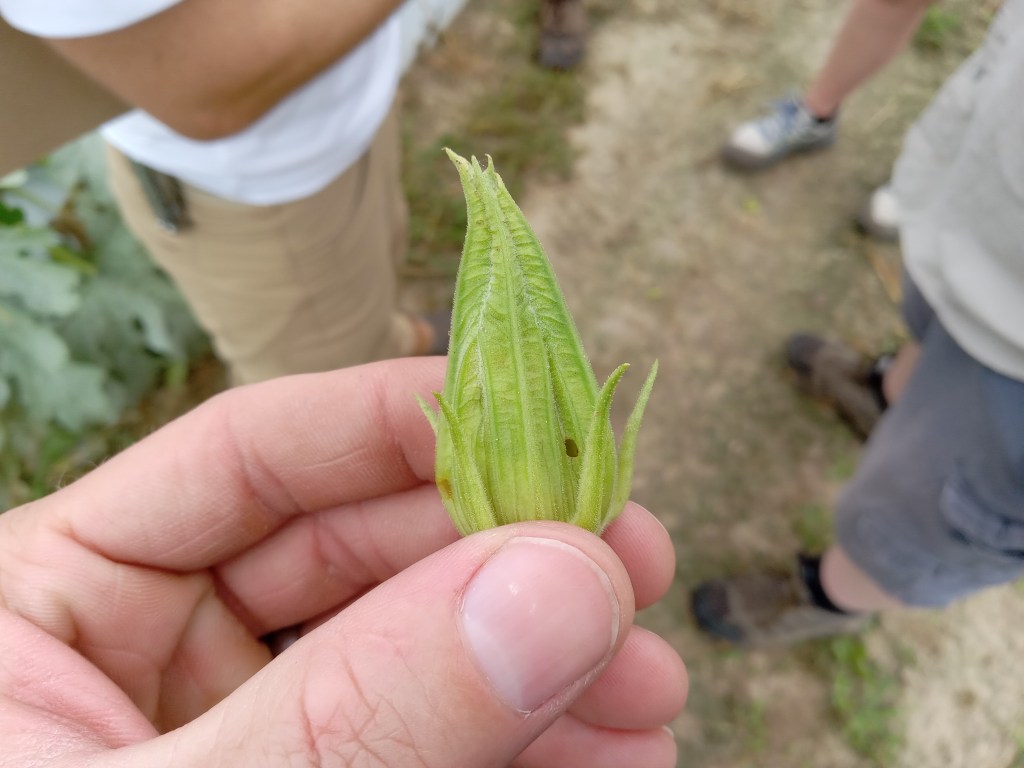
This week, the question was: What made the hole in this squash blossom? This hole was most likely made by a melonworm. A hole this size is actually an exit hole chewed by the worm on its way out to pupate. Before that, the worm was inside the bloom feeding on the reproductive parts of…
-
Question of the Week – Fasciation
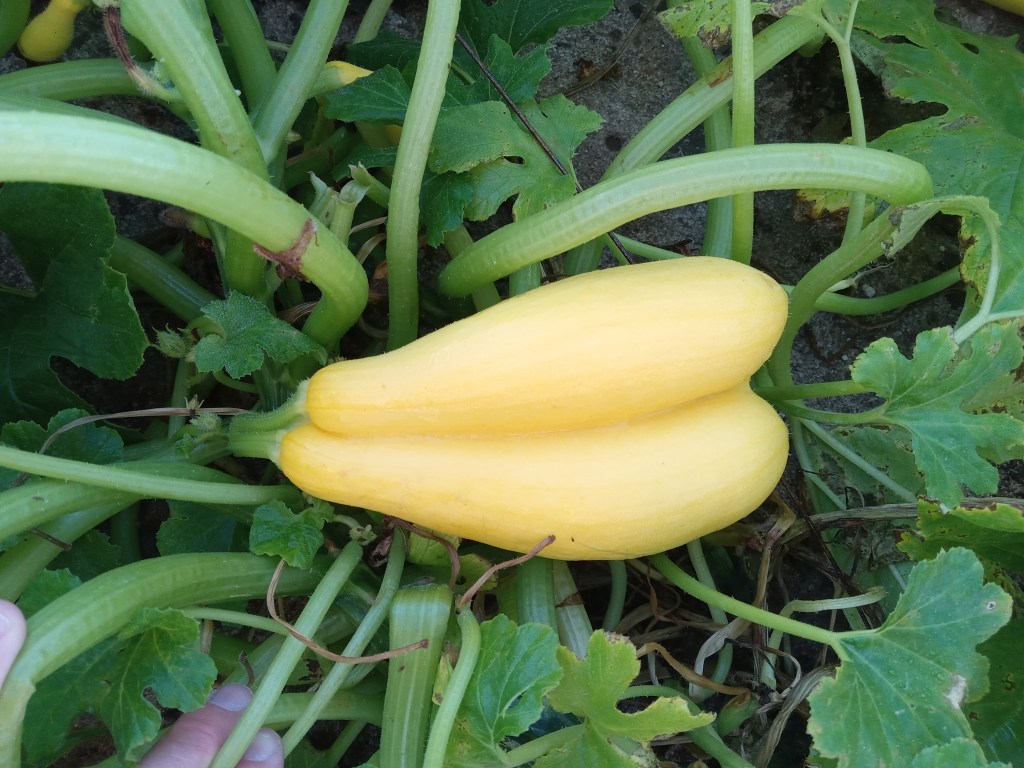
This week, the question was: What is going on with this squash? This squash is showing abnormal growth known as fasciation. Fasciation is the abnormal development of a meristem, or growing point. The cause of this condition is not well understood, but is most commonly thought to be associated with genetic mutation, hormonal imbalances, environmental…
-
Question of the Week – Whitefly Damage
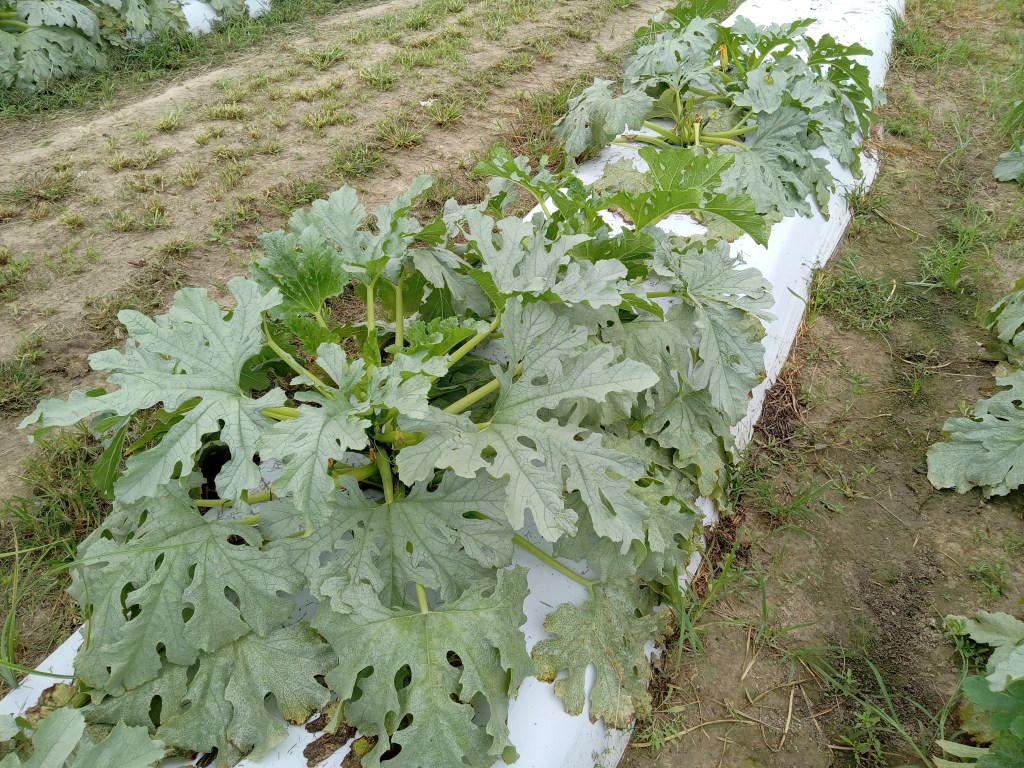
This week, the question was: What is causing the light colored discoloration on these zucchini plants? This discoloration is known as Squash Silverleaf Disorder (SSL) and is the result of immature whiteflies feeding on the squash leaves. SSL reduces the plant’s ability to photosynthesize, leading to stunting and reduced yields. Whiteflies can become significant pests…
-
Question of the Week – Luffa
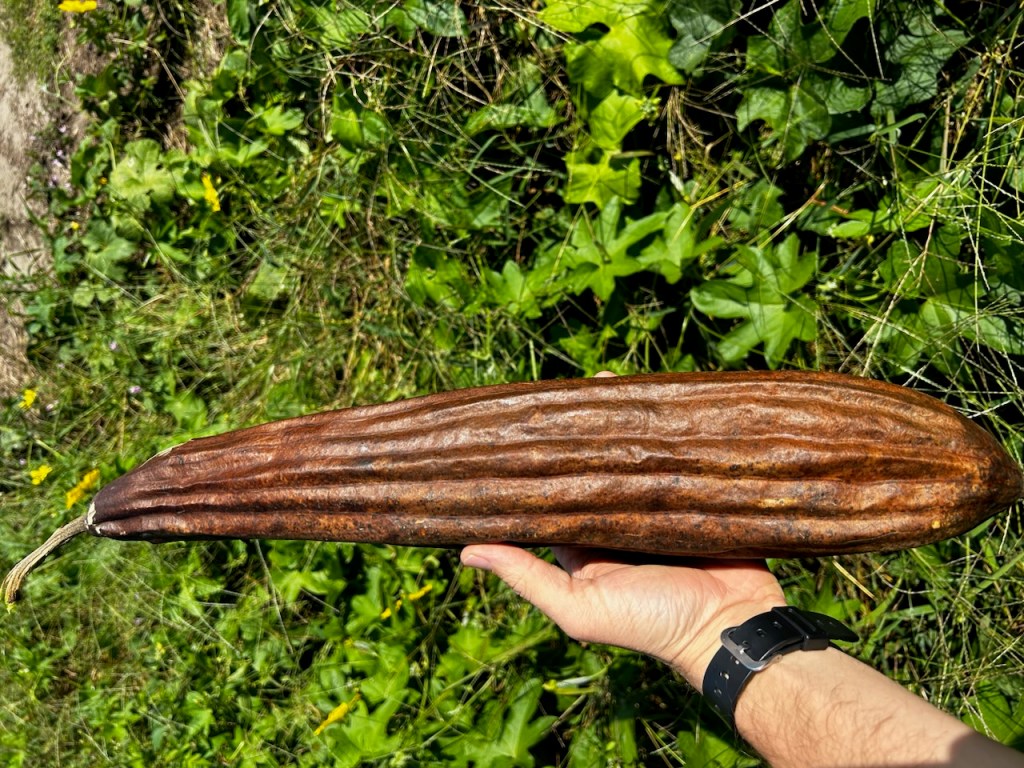
This week, the question was: What is this odd brown thing? This is a luffa gourd. Contrary to popular belief, luffa is a plant in the cucurbit family and not a sea sponge. This plant is very vigorous and prolific and does extremely well in SC. When picked young, the tender fruit can be eaten…
-
Question of the Week – Virus

This week, the question was: What is wrong with this squash? This squash is showing symptoms of a virus. There are numerous viruses that affect cucurbit crops, which may be transmitted in a variety of ways, such as, by insect (aphids, whiteflies, cucumber beetles), through seed, or mechanical damage. Symptoms may include mottled or mosaic…
-
Question of the Week – Snake Bean
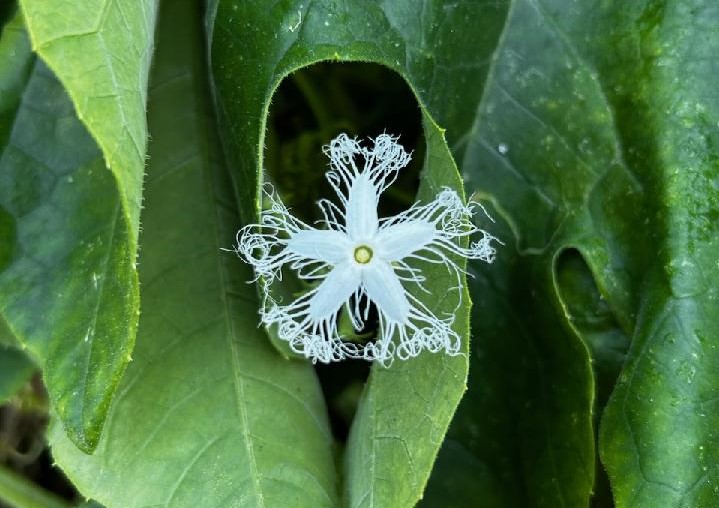
This week, the question was: What will develop from this this hairy-looking flower? I recently visited a community garden and was stumped when the groundskeeper asked me if I knew what plant this crazy looking flower belonged to. After I blanked for some time, I was informed that this flower belongs to the Python Snake Bean…
 The South Carolina Grower