Category: Strawberries
-
New Downloadable Guide for Scouting and Spraying Spider Mites in Strawberries
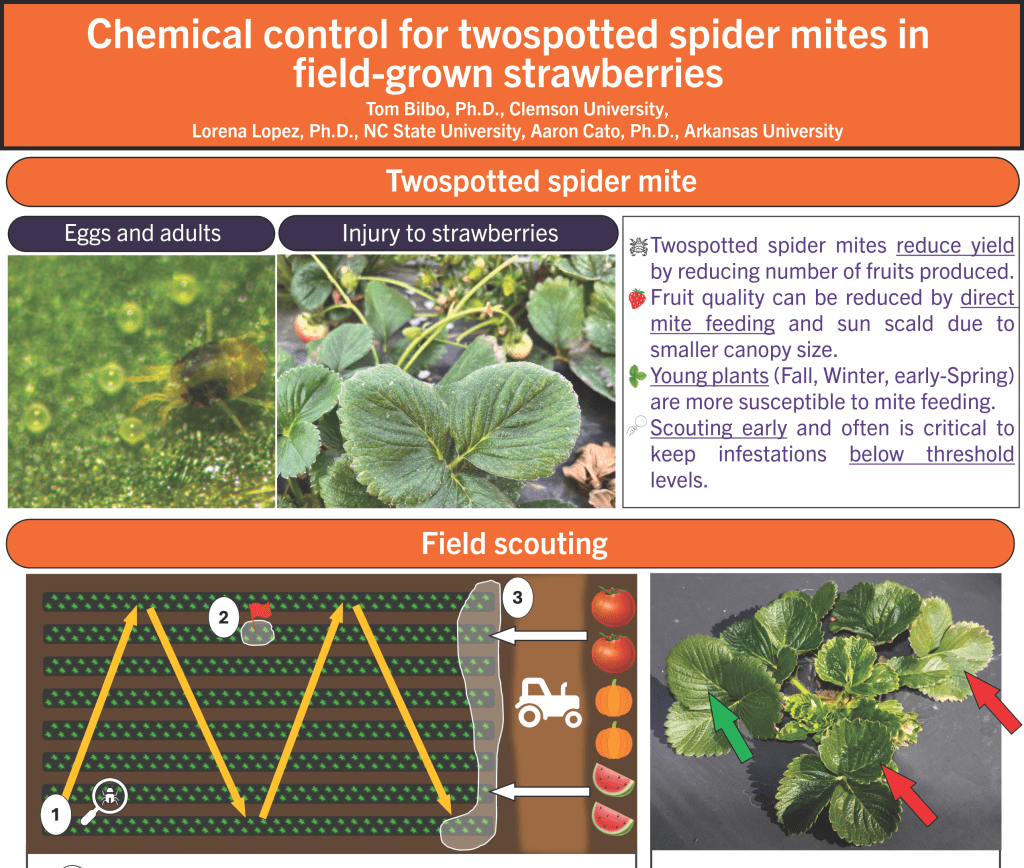
By Tom Bilbo, Extension Entomologist Twospotted spider mites (Tetranychus urticae) are the key economic pest of strawberries in South Carolina. They are common in both conventional and organic production systems and reduce the number of berries produced. Spider mites can come into fields on transplants, or blow into fields from nearby host plants or adjacent…
-
Strawberries Showing Signs of Gray Mold After the Freezing Temperatures
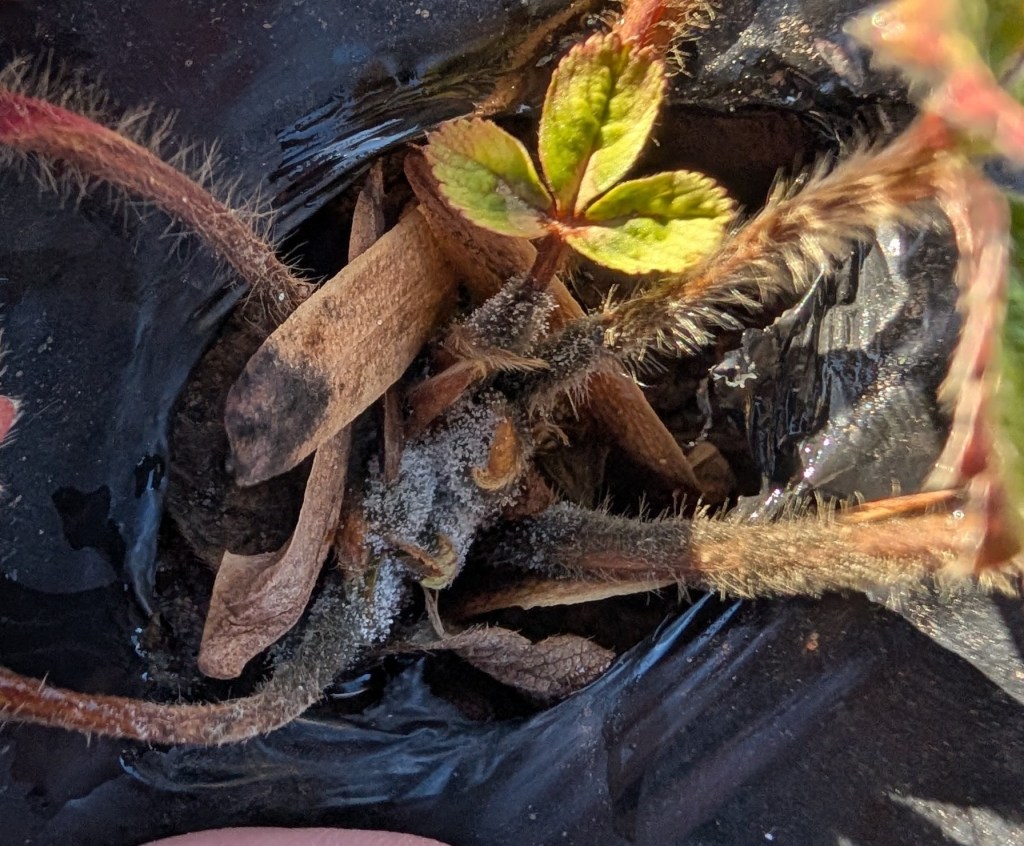
Lindsey Thiessen and Guido Schnabel South Carolina is warming up following several bouts of freezing temperatures. Many used frost-protection covers to keep fruit crowns from freezing. To add some additional stress following the freezing temperatures, growers are reporting significant gray mold presence after frost protection covers have been removed. Gray mold is caused by a…
-
Strawberry Row Covers, Spider Mites, and Predatory Mites
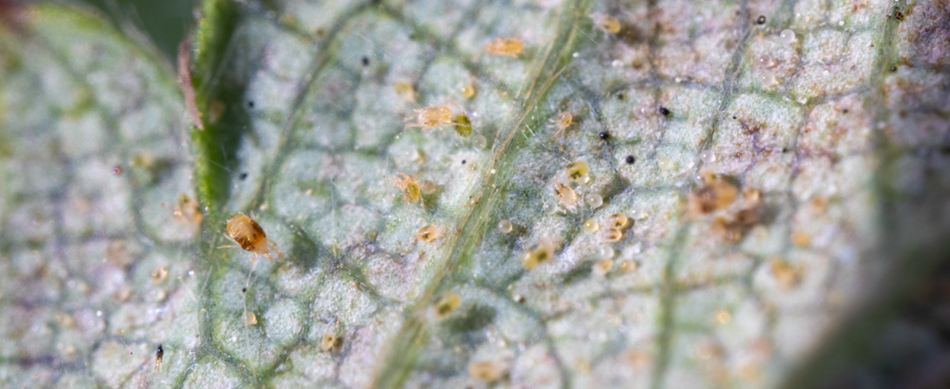
Tom Bilbo, Extension Entomologist “How are row covers affecting my spider mite pest problems?” There is a short and easy answer to this question: we don’t really know. I will be submitting a research grant proposal to tackle this problem and if you are interested in lending your support please read until the end on…
-
Considerations for Upcoming Winter Weather
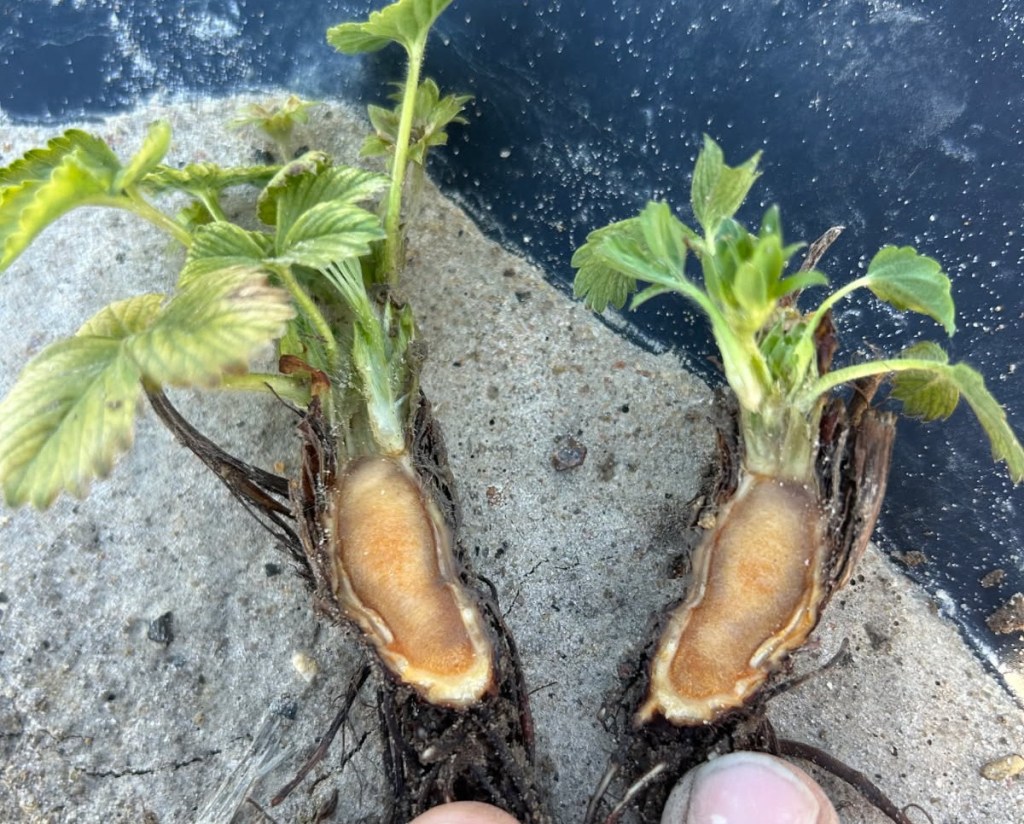
From Justin Ballew, Andy Rollins, and Zack Snipes Recent cold weather reached temperatures low enough to damage strawberry plants in some parts of the state. On 1/16, we saw temperatures as low as 20 degrees (F) in the Midlands and 14 degrees (F) in the Upstate. Dormant strawberry crowns begin to experience cold damage around…
-
Spray Strategies for Strawberry Disease Control in South Carolina
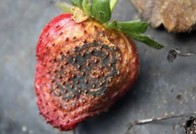
Guido Schnabel, Extension Plant Pathologist Disease management is essential for growing high-quality strawberries in plasticulture. While Botrytis fruit rot (BFR) is a disease you can expect every year, Anthracnose fruit rot (AFR) and the more recently introduced Neopestalotiopsis fruit and crown rot (Neo-P) may or may not appear (Fig. 1). This largely depends on how…
-
2025 Recommendations For Fall Chemical Treatments In Strawberry Crops
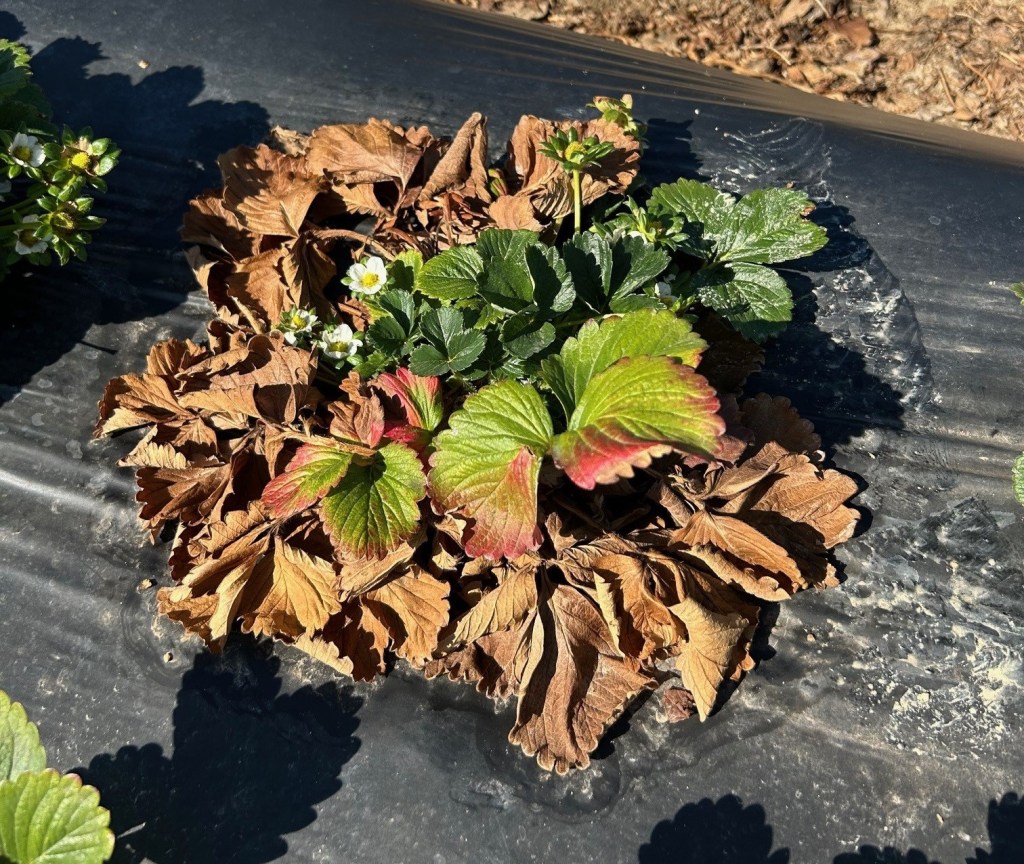
By Guido Schnabel, Clemson University; Phil Brannen, University of Georgia; Bill Cline and Caleb Bollenbacher, North Carolina State University Whether or not Neopestalotiopsis (Neopest) will harm your strawberries this season depends on many factors – including the quality of the transplants, the cultivar, sanitation practices, soil inoculum levels, weather conditions, and the fungicides you use.…
-
Biologicals and Their General Performance Against Strawberry Diseases
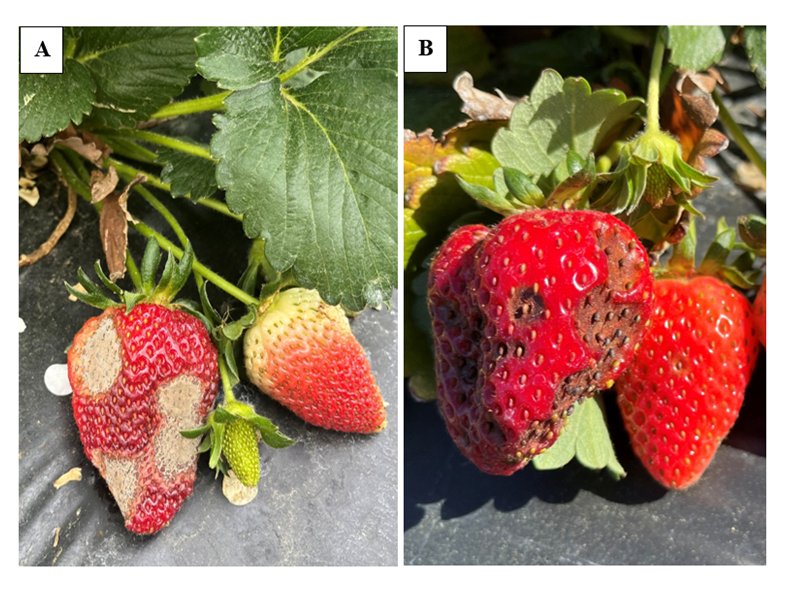
Johanna Wesche and Guido Schnabel, Clemson University “Do biologicals work?” That is a frequently asked question coming not only from strawberry growers, especially in light of increasing resistance issues with many of the conventional fungicides and the fungicide insensitivity of Neopestalotiopis sp. In our recent article, “Biologicals Made Easy: Grouping and Understanding Biological Fungicides,” we…
-
And So It Begins…Neopest is Starting to Show Up.
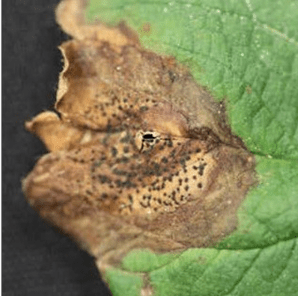
By Guido Schnabel It is early October 2024 and as feared and expected, we are starting to see Neopestalotiopsis symptoms in strawberry fields. The leaf in Fig. 1 (left) displays leaf necrosis and was collected from a South Carolina farm October 4, 2024. Necrosis on leaves can be caused by many things, but if you…
-
Efficacy Trials with Biofungicide Howler EVO against Strawberry Diseases
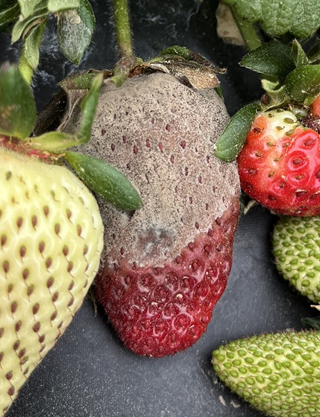
By Guido Schnabel, Jeffrey A. Hopkins, and Johanna Wesche Recently, the article Fungus-Based Biological Control Agents: How Useful Are They for Strawberry Disease Management? was published. The article reported our first experience with yeast-based biological control agents (BCA) against Botrytis fruit rot (BFR) and Anthracnose fruit rot (AFR) of strawberry. The trials were conducted at the…
-
Recommendations for Fall Treatments in Strawberry Crops with Known Presence of Neopest

Guido Schnabel, Clemson University; Phil Brannen, University of Georgia; and Bill Cline, North Carolina State University Whether or not Neopestalotiopsis will substantially harm your strawberries this season depends on many things, including the cultivar, sanitation practices, initial inoculum levels, weather conditions, the fungicides you apply, and application timing. This article focuses on chemical management options…
 The South Carolina Grower