Tag: Question of the Week
-
Question of the Week – Cutleaf Evening-primrose

This week, the question was: What is this cool-season weed coming up in the row middles of a fall kale field? This is cutleaf evening-primrose. This weed germinates and starts appearing in the fall and grows through the winter and spring until the weather gets hot. It starts out in a rosette with smooth leaf…
-
Question of the Week – Cabbage Webworm
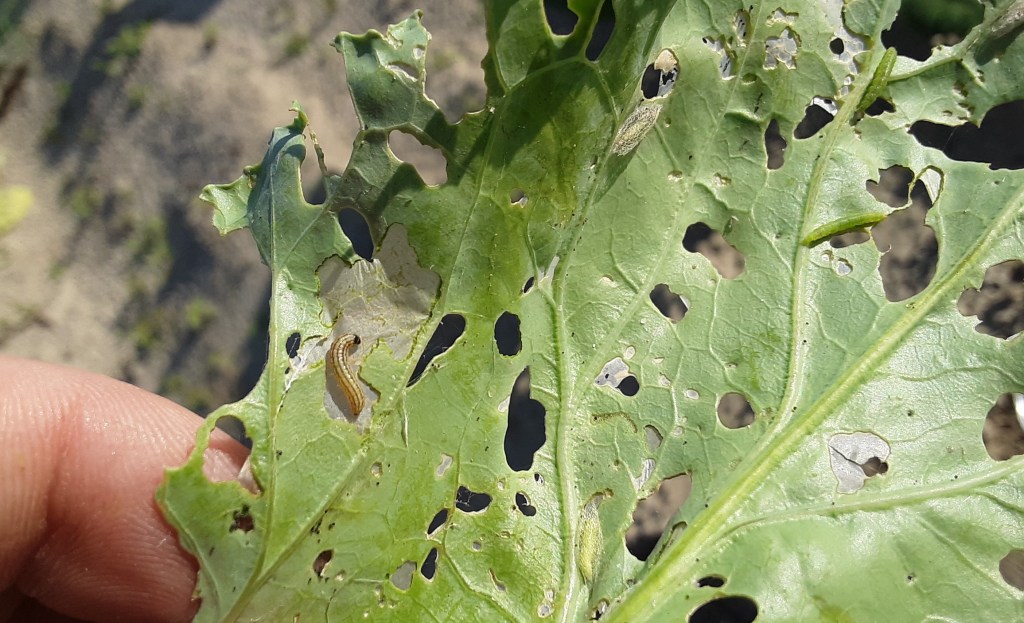
This week, the question was: There are diamondback moth caterpillars on the right. What is the caterpillar on the left? This is a cabbage webworm. Cabbage webworms feed near the growing points of brassica plants , often damaging the growing points and causing irregular growth. They frequently feed within webs that protect them from natural…
-
Question of the Week – Garter Snake
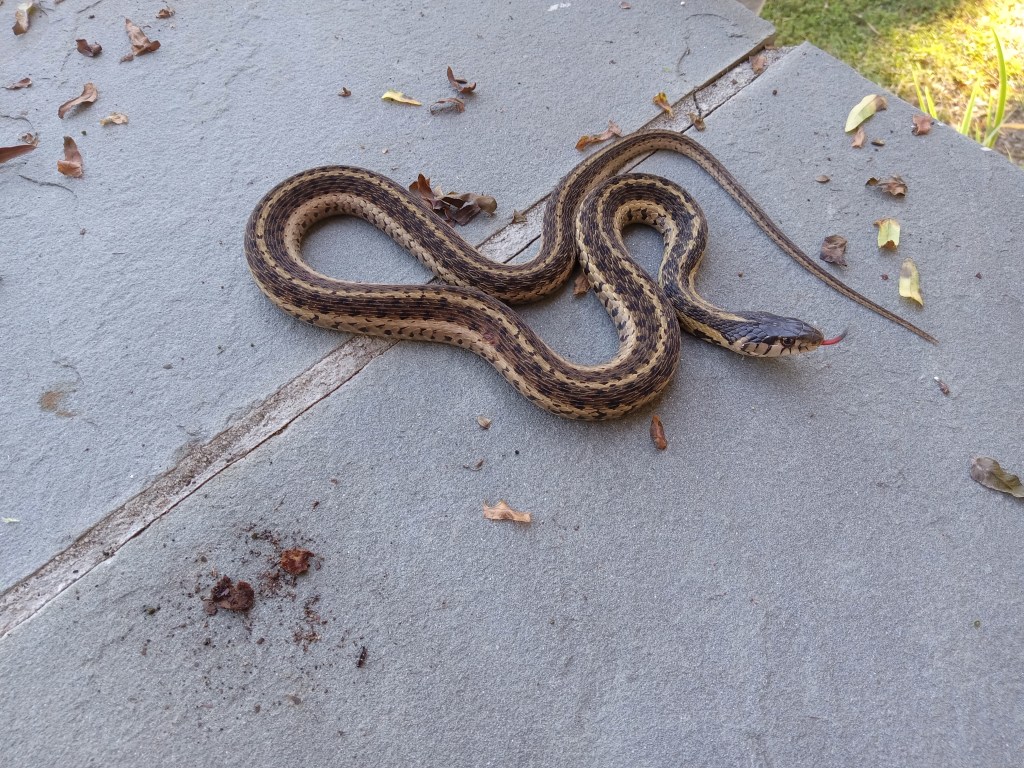
This week, the question was: This little guy was hiding under a flower pot. What kind of snake is it, and is it venomous? This is an Eastern garter snake. These nonvenomous snakes are pretty common in South Carolina and are active most of the year. They feed primarily on frogs, toads, worms, slugs, and…
-
Question of the Week – Squash Beetle Trenching
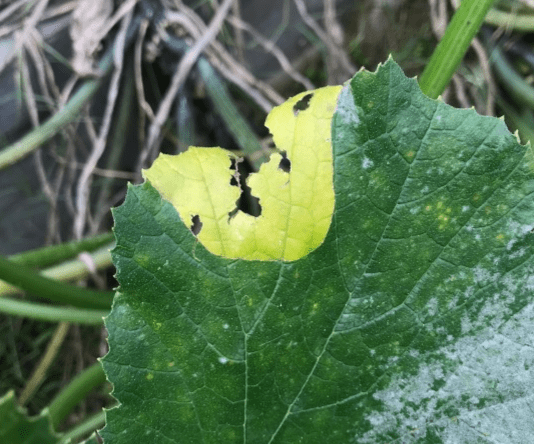
This week, the question was: Why is a portion of this squash leaf discolored? The light-colored tissue we see here is the result of squash beetle behavior known as “trenching.” Trenching cuts off (at least temporarily) the translocation of cucurbitacin defense compounds, to preserve the palatability and quality of the squash foliage feeding site. The beetles…
-
Question of the Week – Large Leaf Spot
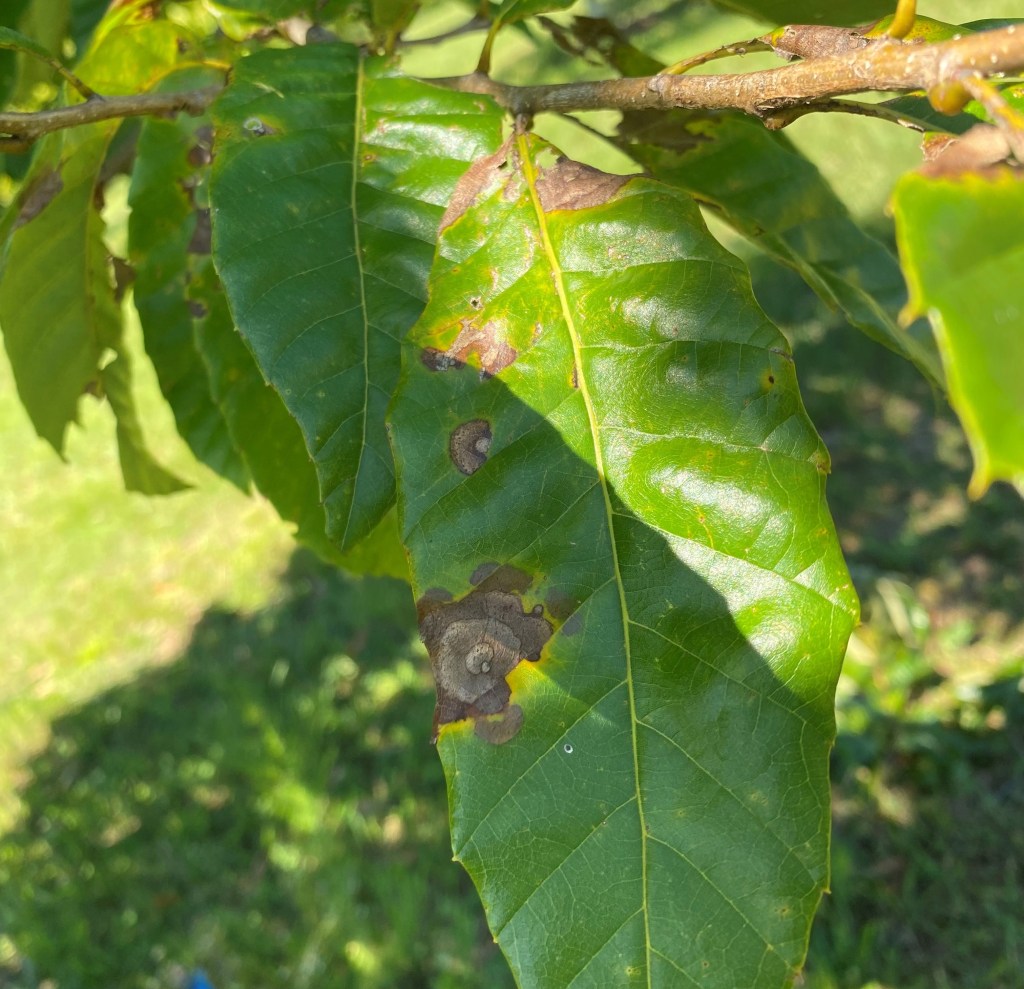
This week, the question was: What is wrong with this chestnut leaf? This leaf is showing symptoms of a fungal disease called large leaf spot (Monochaetia sp.) that affects oaks and chestnuts. The appropriately named spots may reach 2 inches wide and stretch across the entire leaf, killing large amounts of tissue. This disease is…
-
Question of the Week – Bee Fly
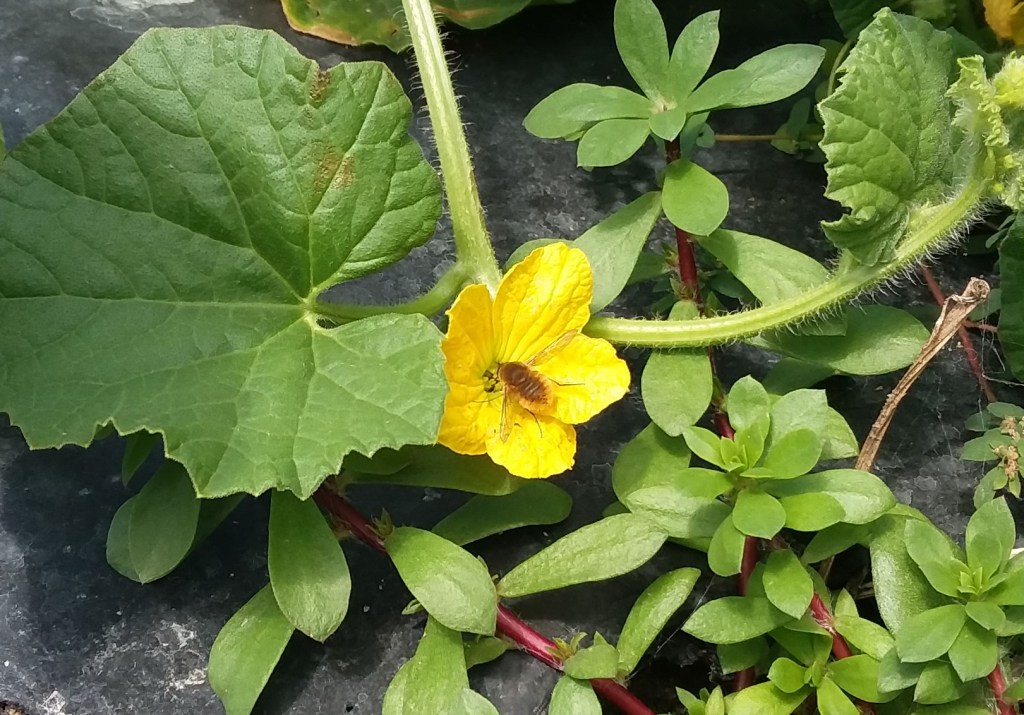
This week, the question was: What is foraging in this cantaloupe flower? This little critter looks a lot like a bee (it’s yellow, fuzzy, and foraging flowers), but if you look closely, you’ll see it has only one pair of wings (bees have two). This feature distinguishes this as a fly, specifically a bee fly…
-
Question of the Week – Paraquat Drift
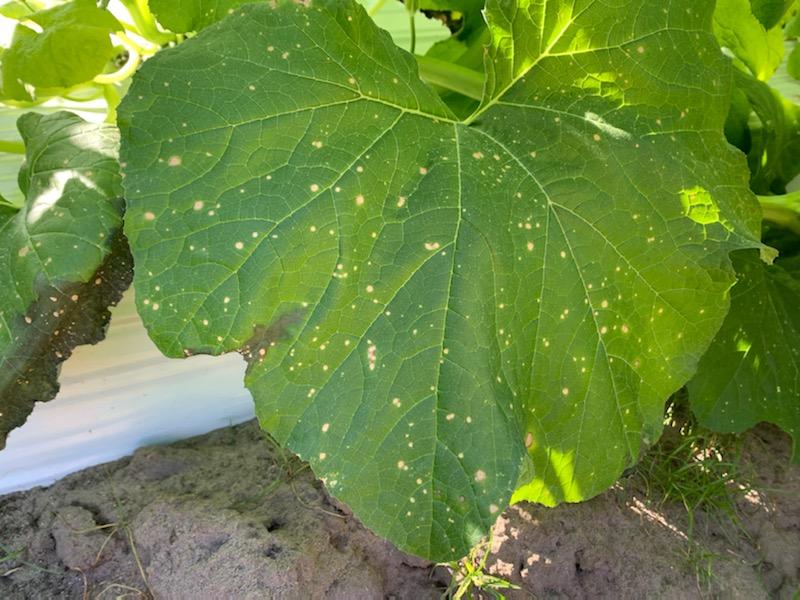
This week, the question was: What are the spots on this squash leaf? These spots are from a small amount of paraquat drift that occurred while the adjacent field was being sprayed in preparation for planting. Paraquat is a contact-only herbicide, so this damage will not spread to new growth. This small amount of damage…
-
Question of the Week – Unmanaged Apple Issues

This week, the question was: Can you name one problem with this apple? A quick glance at this ‘Gala’ apple shows signs of bitter rot, sooty blotch, and fly speck to name a few. The point of this question of the week is not really to name specific pests or pathogens but to talk about…
-
Question of the Week – Hickory Horned Devil
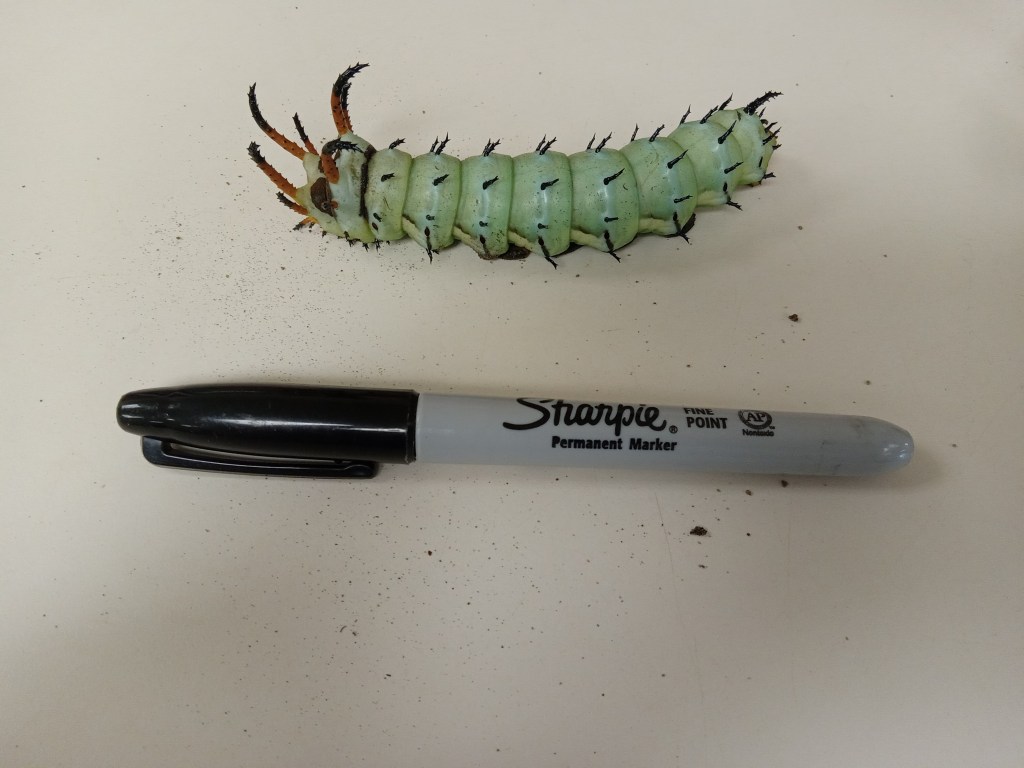
This week, the question was: What is this wild-looking critter? This is a caterpillar known as the hickory horned devil. The adult is a beautiful moth known as the regal moth (Citheronia regalis), but it is rarely seen due to its nocturnal habit. The hickory horned devil commonly feeds on the leaves of walnut, hickory,…
-
Question of the Week – Glyphosate

This week, the question was: What happened to this young tomato plant? This young tomato plant is suffering from glyphosate damage that occurred when row middles were being sprayed. Glyphosate is a systemic herbicide, so damage shows up at the growing point. At this stage of growth, it is unlikely the plant will grow out…
 The South Carolina Grower