Tag: Question of the Week
-
Question of the Week – Luffa Gourd
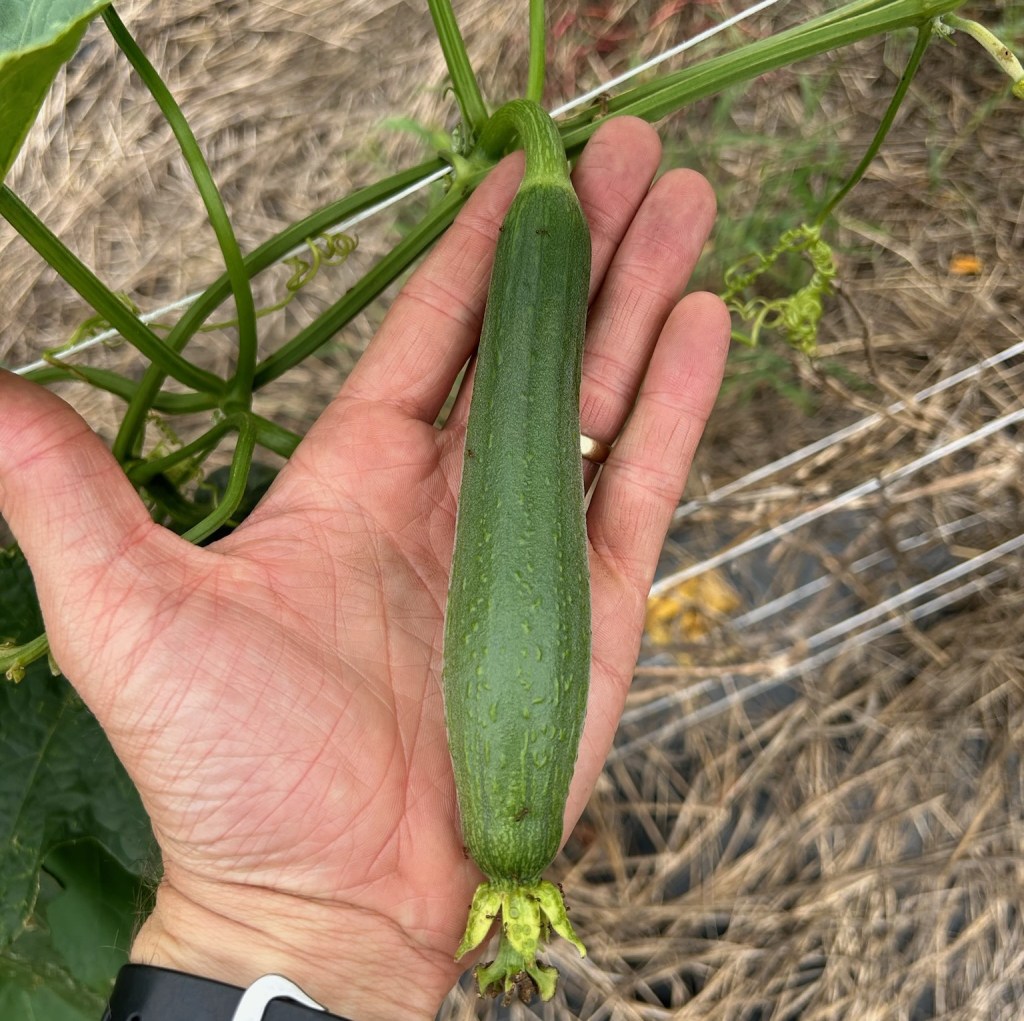
What crop is this? This is a luffa gourd (Luffa aegyptiaca). A similar species, (Luffa acutangula) is sometimes also called Chinese okra because of its okra-like shape and pronounced ribbing of its fruit. Both are members of the cucurbit family. Luffas may be harvested for eating while still tender, though the species pictured is very…
-
Question of the Week – Joro Spider

What kind of large, colorful spider is this? This is the invasive joro spider (Trichonephila clavata). Joro spiders are native to East Asia and were first found in Northern Georgia in 2014. Since then, they have been spreading across the Southeast and are common in the Upstate of South Carolina and making their way into…
-
Question of the Week – Sandblasting
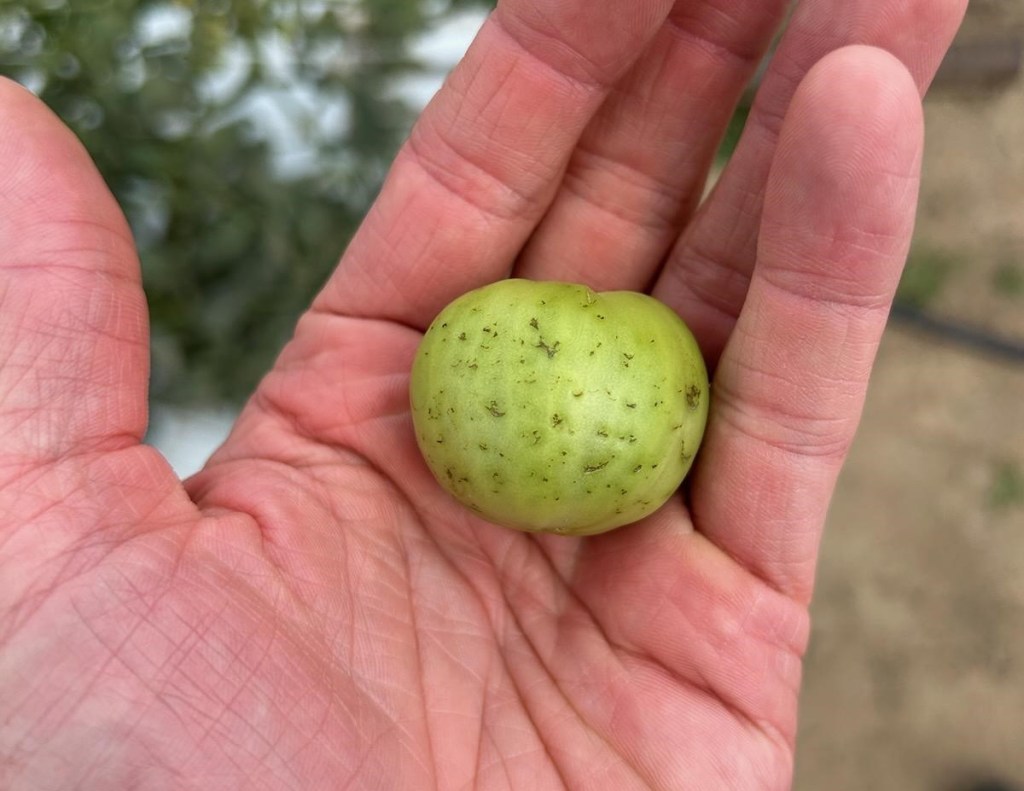
Why does this tomato appear scarred on one side but normal on the other? This tomato is scarred on the side facing the prevailing winds. It was found on the outside row, next to a dirt drive row and an open field. It had also not rained in quite a while, so it was very dusty and…
-
Question of the Week – Tachinid Fly Eggs
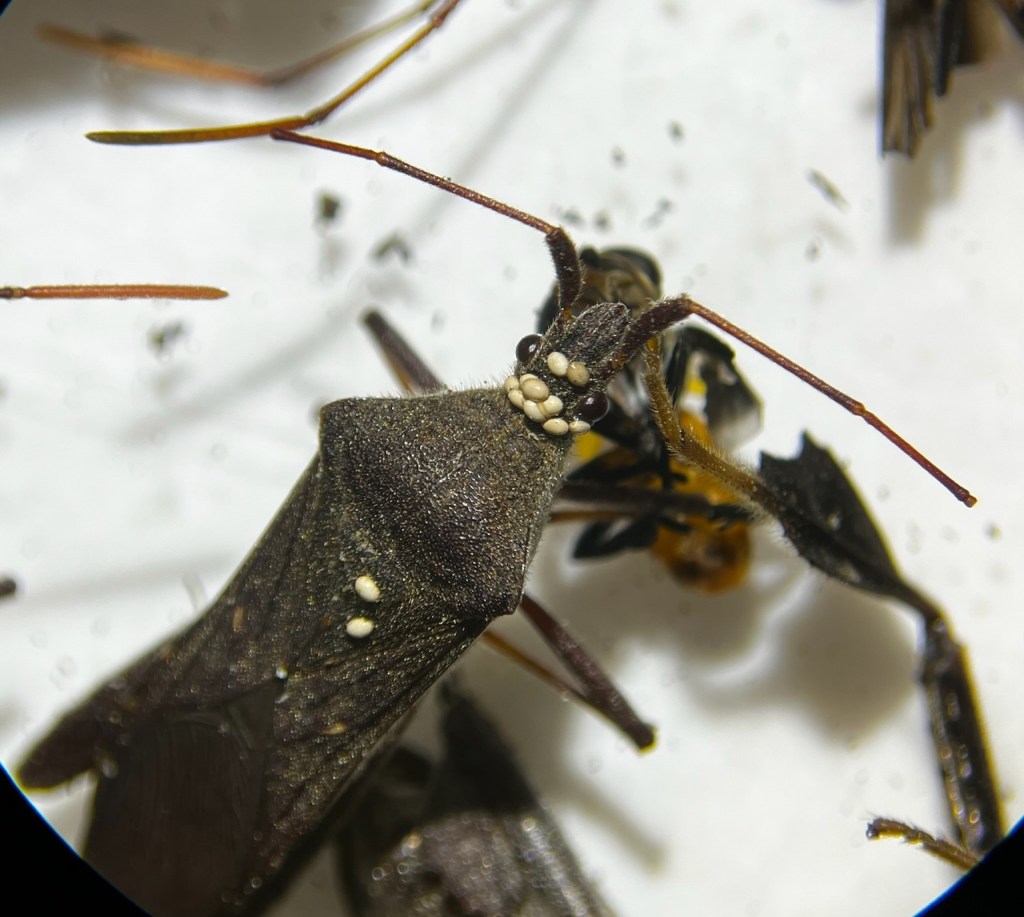
What is on the head and back of this leaffooted bug? The oblong, white objects on this leaffooted bug (Leptoglossus oppositus) are eggs of a parasitoid fly (Trichopoda pennipes), which will hatch and consume the leaffooted bug. Usually when we discuss parasitoids in pest management we are referring to small wasps, but flies in the…
-
Question of the Week – Southern Blight
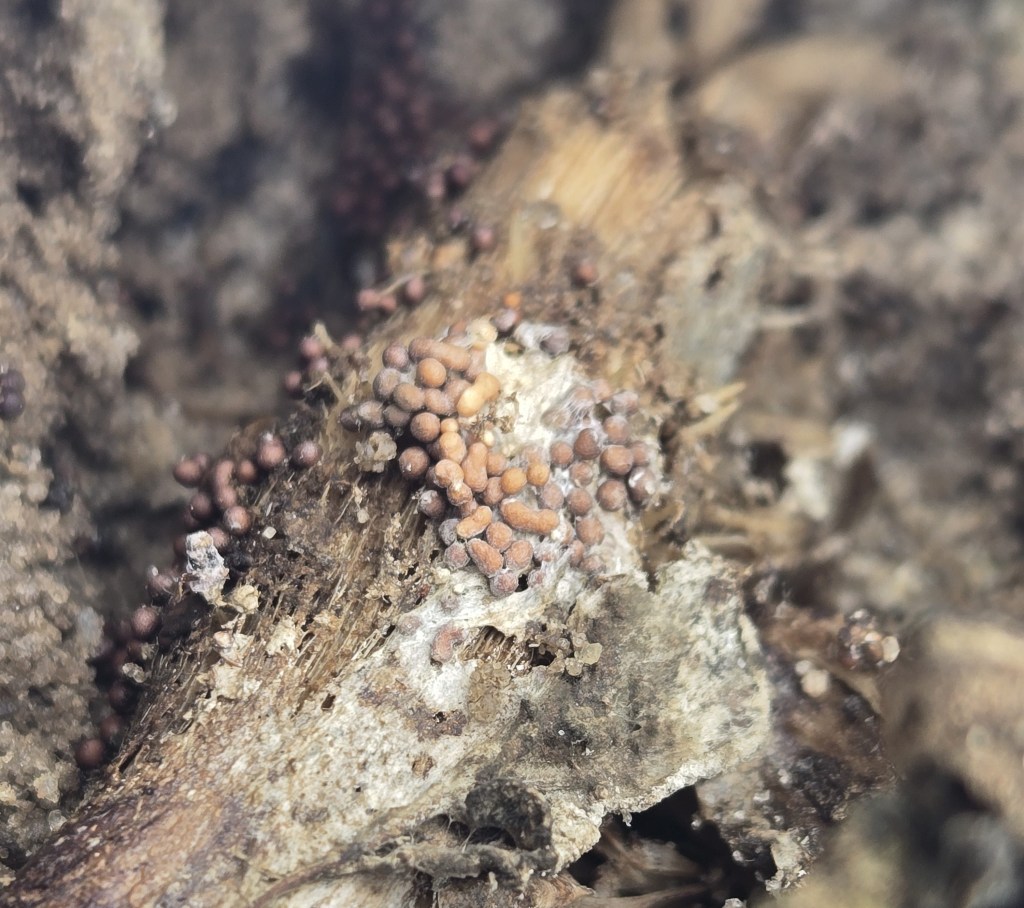
What are these brown pellets found on the base of a tomato plant? These brown pellets are sclerotia from the soil-borne fungus Athelia rolsii, commonly called Southern blight. The photograph was taken from a tomato plant displaying wilting with a good fruit loading. Sclerotia are survival structures that allow the fungus to survive in the…
-
Question of the Week – Southern Purple Mint Moth
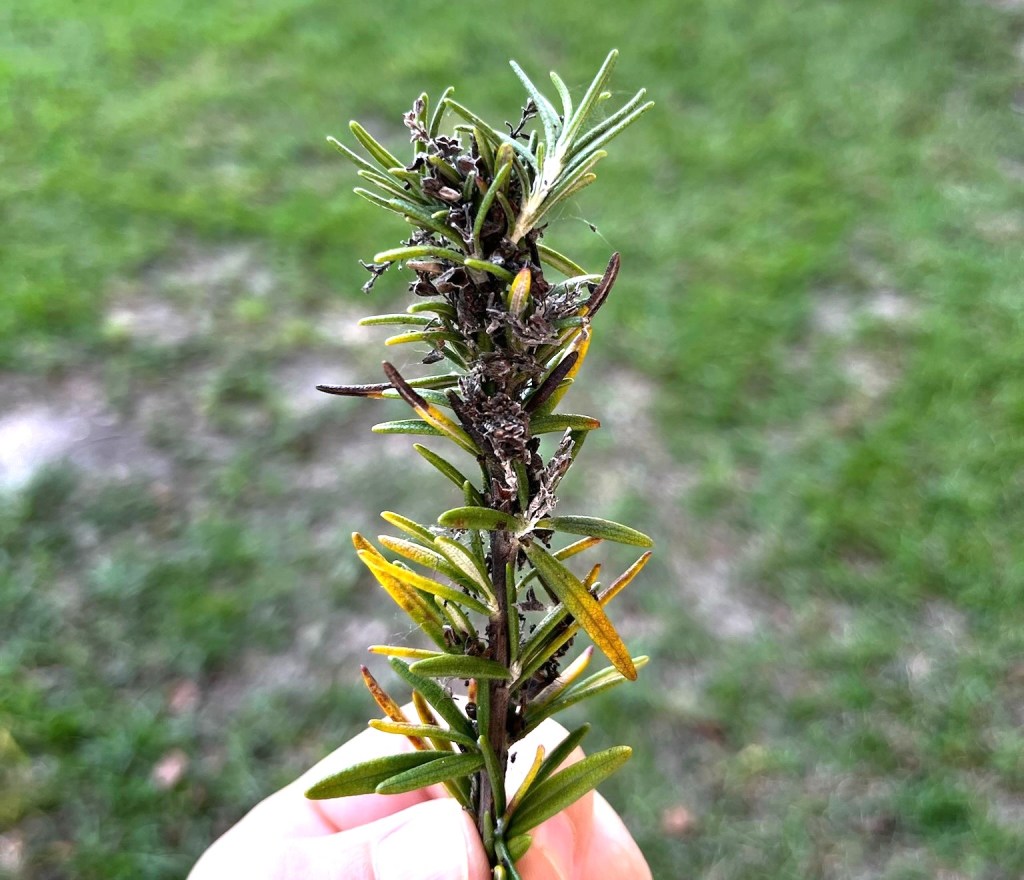
Where did all the webbing and frass on this rosemary come from? This is from the Southern purple mint moth caterpillar (Pyrausta laticlavia). This caterpillar has been seen on rosemary throughout the Charleston area for over 10 years. Commonly called “rosemary webworm,” this pest can affect the foliage on over half the plant and likely…
-
Question of the Week – Puss Caterpillar
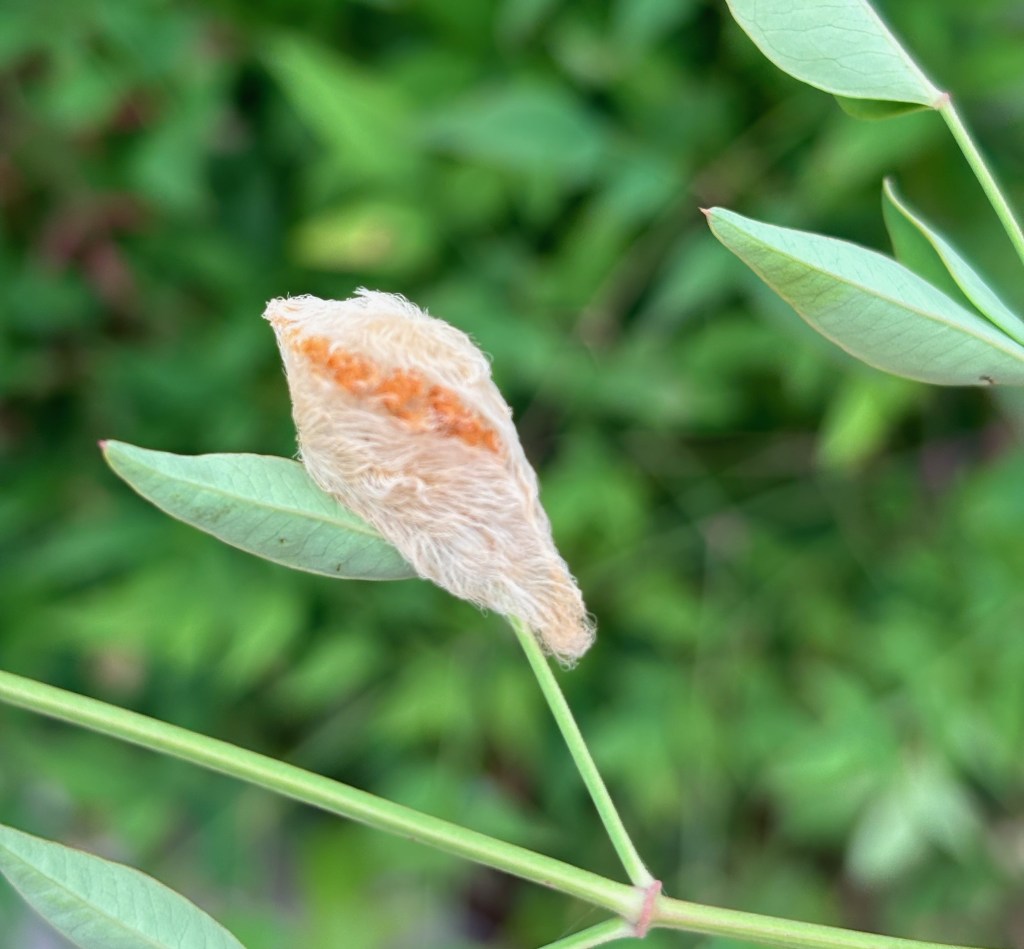
What is this hairy-looking thing? This is a puss caterpillar (Megalopyge opercularis). While they may look huggable, puss caterpillars are one of the most venomous caterpillars native to the United States. Hidden amongst the hairs that cover the insect’s body are rows of venomous spines. Each spine is hollow with a venom gland at its…
-
Question of the Week – Leaffooted Bug Eggs
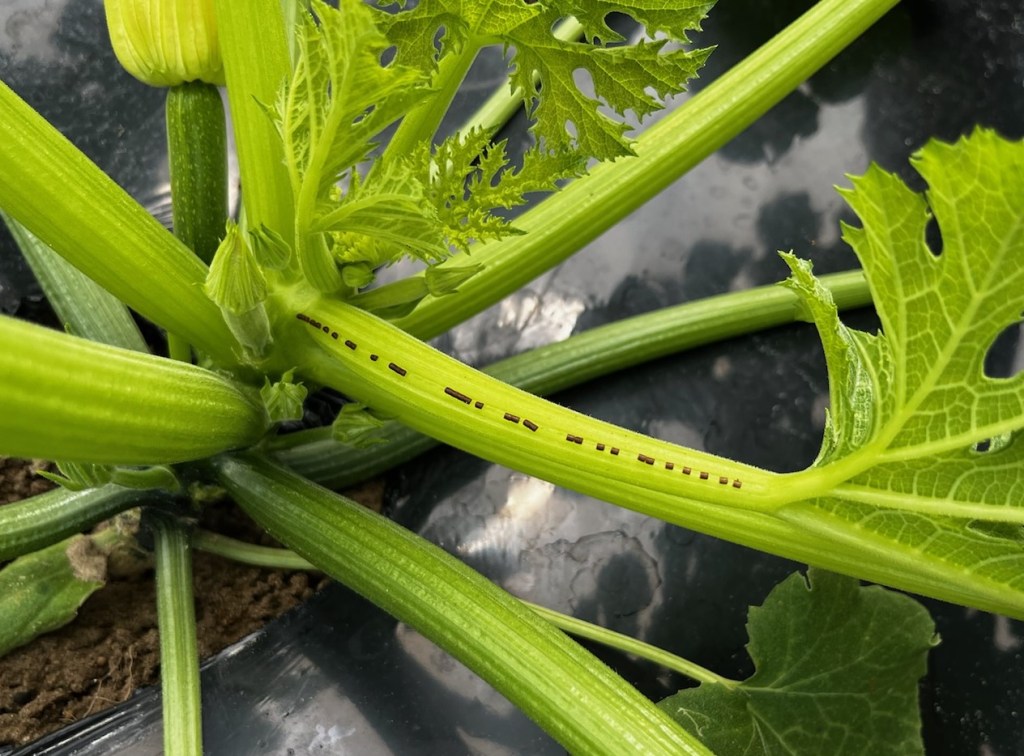
What is on this zucchini stem? These are eggs of a leaffooted bug (Leptoglossus phyllopus) found on a zucchini stem in a field in Charleston. Several species occur in SC that show up in fruiting vegetables. The eggs are laid in a line, sometimes very continuous and sometimes broken up (like here). Leaffoted bugs have…
-
Question of the Week – Milkweed Tussock Moth
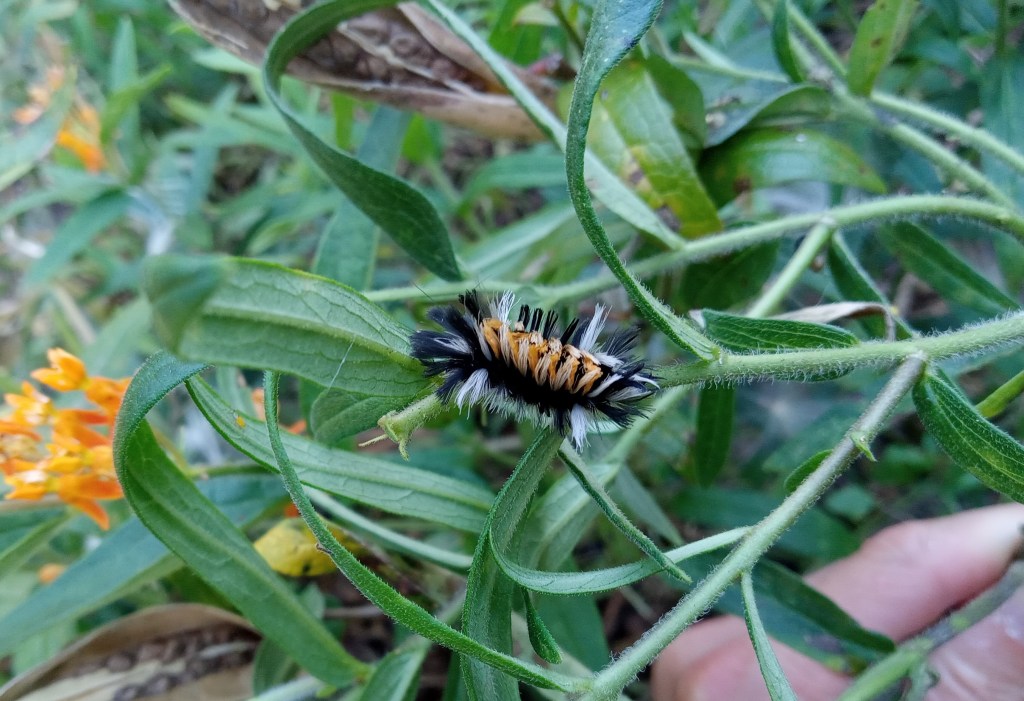
What is this crazy-looking thing found on butterfly milkweed? This hairy thing is the caterpillar of the native milkweed tussock moth (Euchaetes egle), also called the milkweed tiger moth. Like the monarch butterfly, the milkweed tussock moth lays it’s eggs on milkweed for its larvae to feed and develop on. The hairs on this caterpillar…
-
Question of the Week – Timber Rattler

What kind of snake is this and is it poisonous? This is a timber rattler (Crotalus horridus), also known as a canebrake rattler. While snakes are not poisonous, this species is venomous. It is one of 6 species of venomous snakes in South Carolina. Timber rattlers can be found throughout most of the state and…
 The South Carolina Grower